Daily Life · Belarus
Belarus: Life Between the Flat and the Forest
Most Belarusians live in a Soviet-built apartment block in Minsk or a regional city, yet the family dacha and the forest around it still shape almost every weekend from spring to autumn
By Worldlore Editorial · 30 September 2026
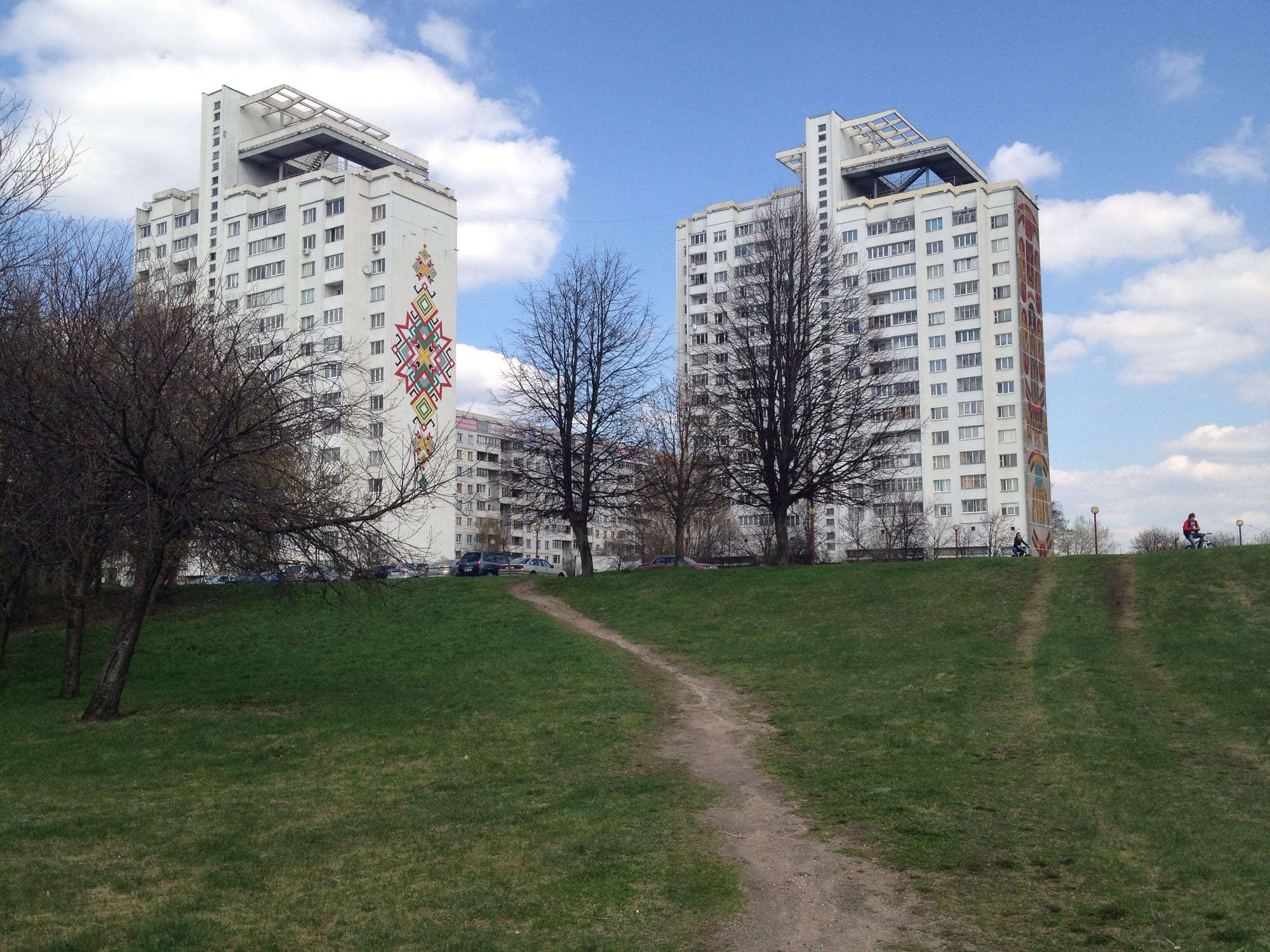
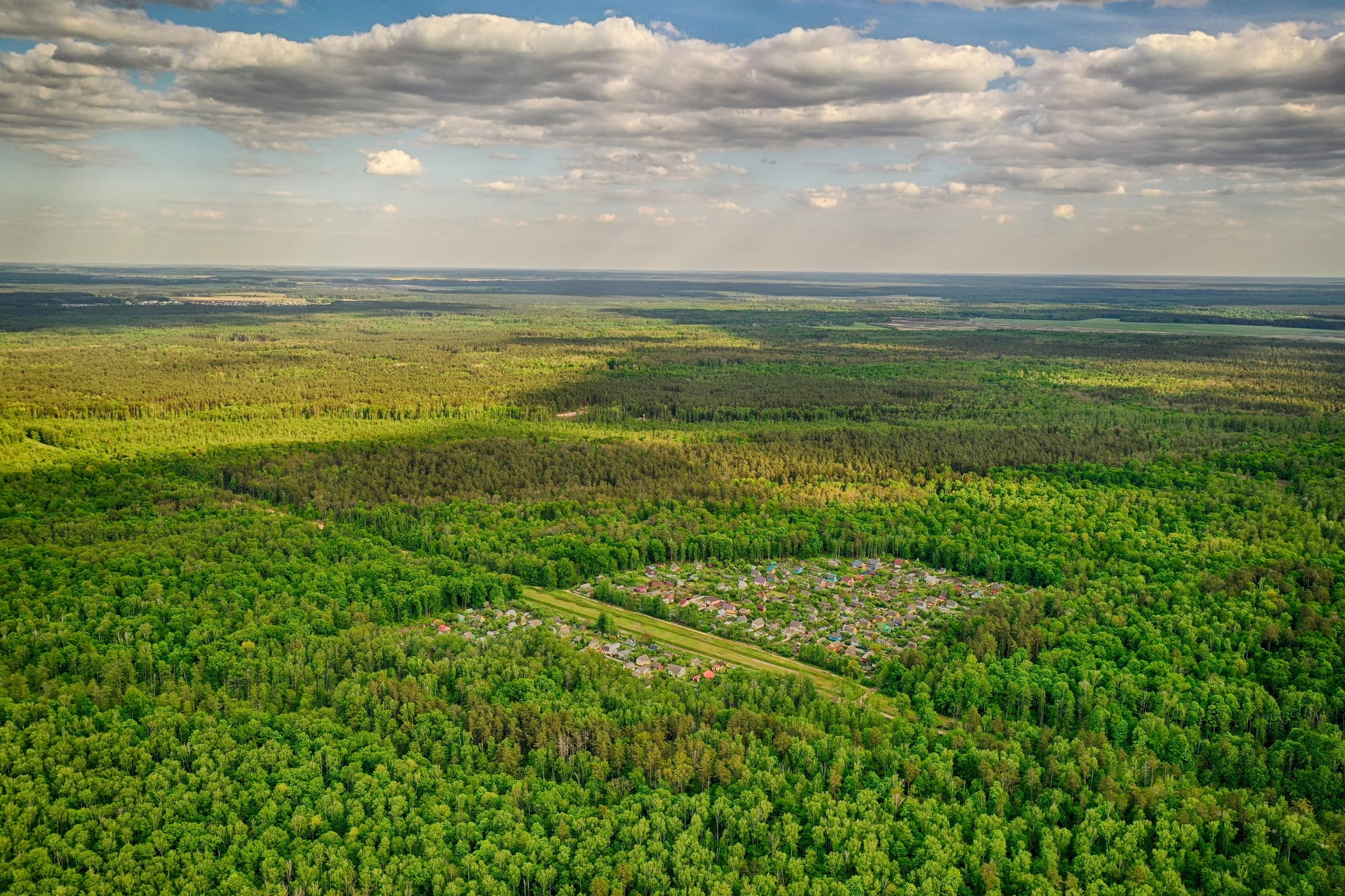
For most Belarusians, home is a flat in a Soviet-built apartment block, in Minsk or in one of the mid-sized regional cities, rather than a house with a garden. The working day runs mostly in Russian, the language of shops, offices and most everyday conversation, while Belarusian keeps a quieter, more symbolic place on street signs and in official settings. What breaks the pattern, for a large share of families, is the weekend and the pull of the dacha: a small country house and vegetable plot outside town that sits mostly empty through the working week, then fills every warm-weather Saturday and Sunday with grandparents, gardening tools and baskets for the forest beyond the fence.
Family and home life
Around three-quarters of Belarusians live in towns and cities, and the population has grown steadily older and smaller: the birth rate has fallen to about 1.2 children per woman, far below the replacement level, so households today are typically small, a real change from the larger families of earlier generations. Grandparents commonly live nearby rather than under the same roof, and it is common for them to help with childcare, particularly once a child starts school. Housing itself is overwhelmingly urban and multi-storey, blocks of flats built from the 1960s onward and still dominating most residential districts.
What extends the idea of home for many families is the dacha, a small country house with a vegetable plot that became part of Belarusian life in the Soviet period, when shortages made growing food at home a practical necessity rather than a hobby. That necessity has eased, but the habit has not: a family's own plot can still supply some of its potatoes, berries and other vegetables for the year, tended most intensively at weekends and passed down, along with the tools and the routine, between generations.
Work, school and the rhythm of the day
State employment still accounts for a large share of jobs, in the heavy industry and administration inherited from the Soviet period, alongside a growing private and IT sector based mainly in Minsk. As in most of the region, the working week generally runs Monday to Friday, with the school and office day starting early, by eight or nine in the morning. School itself begins at six years old, with nine years of education compulsory to around age fifteen; most instruction is in Russian, though some schools, mainly in rural areas, teach in Belarusian. Around seven in ten children attend kindergarten from about age three before starting primary school, and marks are given on a ten-point scale rather than the more familiar five- or hundred-point systems used elsewhere.
Community life and public spaces
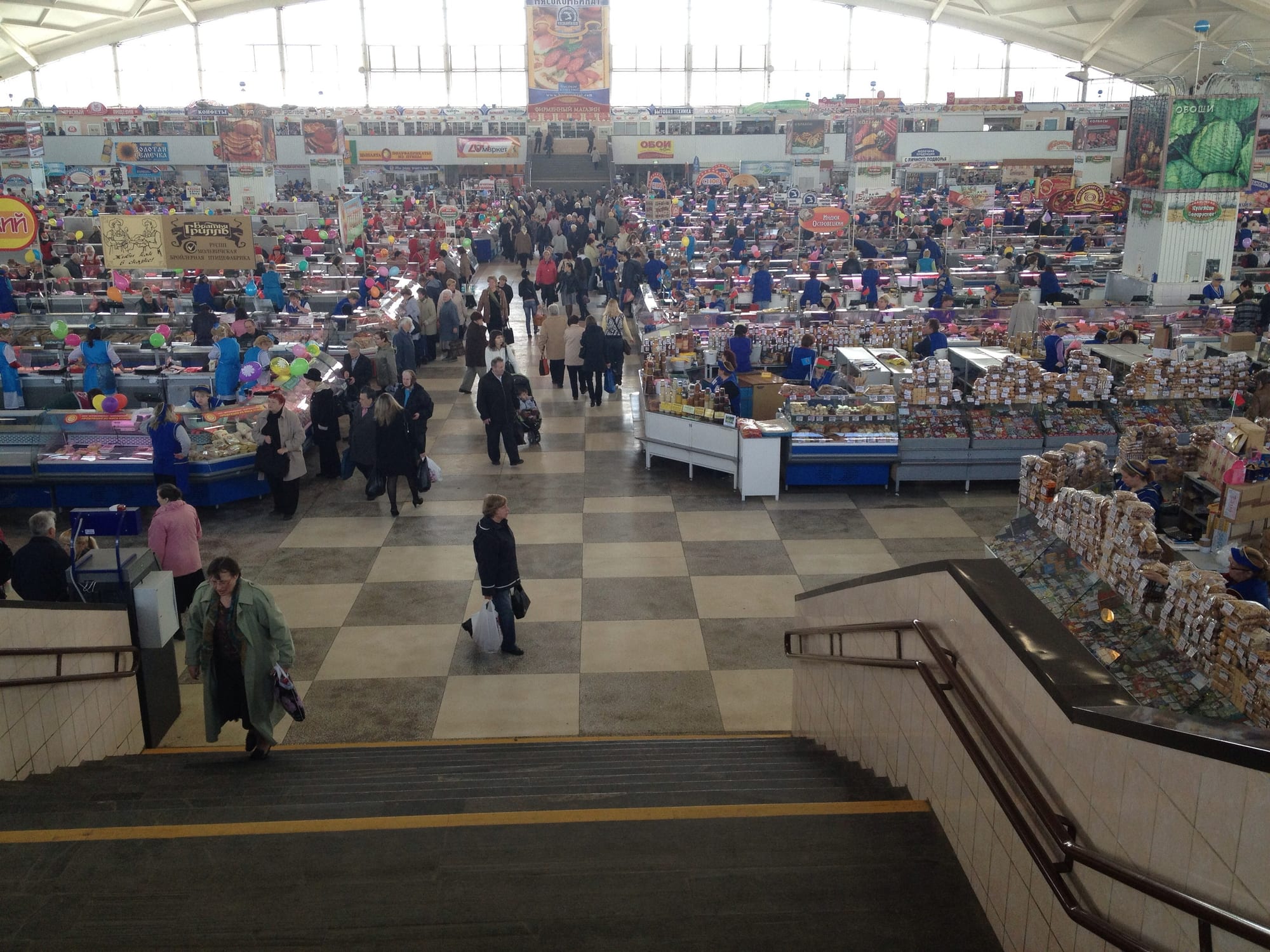
Belarusian cities have large covered or semi-covered markets that remain an important part of everyday food shopping, alongside supermarkets. Minsk's Komarovsky Market is a well-known example: rows of butchers, dairy and vegetable stalls, honey and preserves, under one roof, busy from morning into the afternoon. Getting around is cheap and well organised. Minsk is the only city with a metro, extended to three lines and 36 stations by the end of 2024 and carrying around 640,000 passengers a day in 2023, while trolleybuses, buses and, in some cities, trams serve Minsk and the regional cities alike, with Minsk's trolleybus network among the largest in the world.
Free time and weekends
From late spring to autumn, weekends belong to the dacha and, for many families, to the forest around it. Mushroom and berry picking is a popular pastime: families head out with baskets in summer and autumn, and much of what they gather is dried, pickled or preserved for the winter. Ice hockey, heavily sponsored by the state, is one of the most popular sports after football, and winter brings cross-country skiing and skating to parks once the ground freezes. Public holidays such as Victory Day on 9 May and Independence Day on 3 July, both marked with official events and fireworks, punctuate the year alongside both Orthodox and Catholic Christmas and Radonitsa, the day of remembrance for the dead that falls nine days after Orthodox Easter.
A visitor's ordinary day
Belarus is inexpensive to get around: a metro or trolleybus ride in Minsk costs very little, and trains link the regional cities cheaply and reliably. The complication is banking, not budget — Western sanctions mean many foreign-issued cards, including some major international ones, do not work in Belarus, so it is worth confirming that a card will work there before travelling and carrying enough cash, in euros or US dollars, to cover the whole trip if unsure. Shops and markets generally open by mid-morning and stay open into the evening. Signage mixes Belarusian and Russian, both in Cyrillic, and English is limited outside Minsk and the main tourist sites, so a phone with an offline translator or map is genuinely useful. Political life is tightly controlled, and open criticism of the government, in public or online, carries real legal risk for residents and visitors alike — background worth knowing, even though it rarely intrudes on an ordinary, well-behaved visit.
What to take away
Life in Belarus runs on a quiet, orderly rhythm through the working week, then resets each weekend around the same two things for a great many families: the flat they live in and the small patch of forest and garden they escape to.