Culture & Customs · Belarus
Belarus: Bread, Salt and the Midsummer Fire
Two Christmases, two days for remembering the dead, a loaf offered on an embroidered towel, and a folk calendar whose oldest rites are still kept alive in straw, paper and firelight
By Worldlore Editorial · 30 September 2026
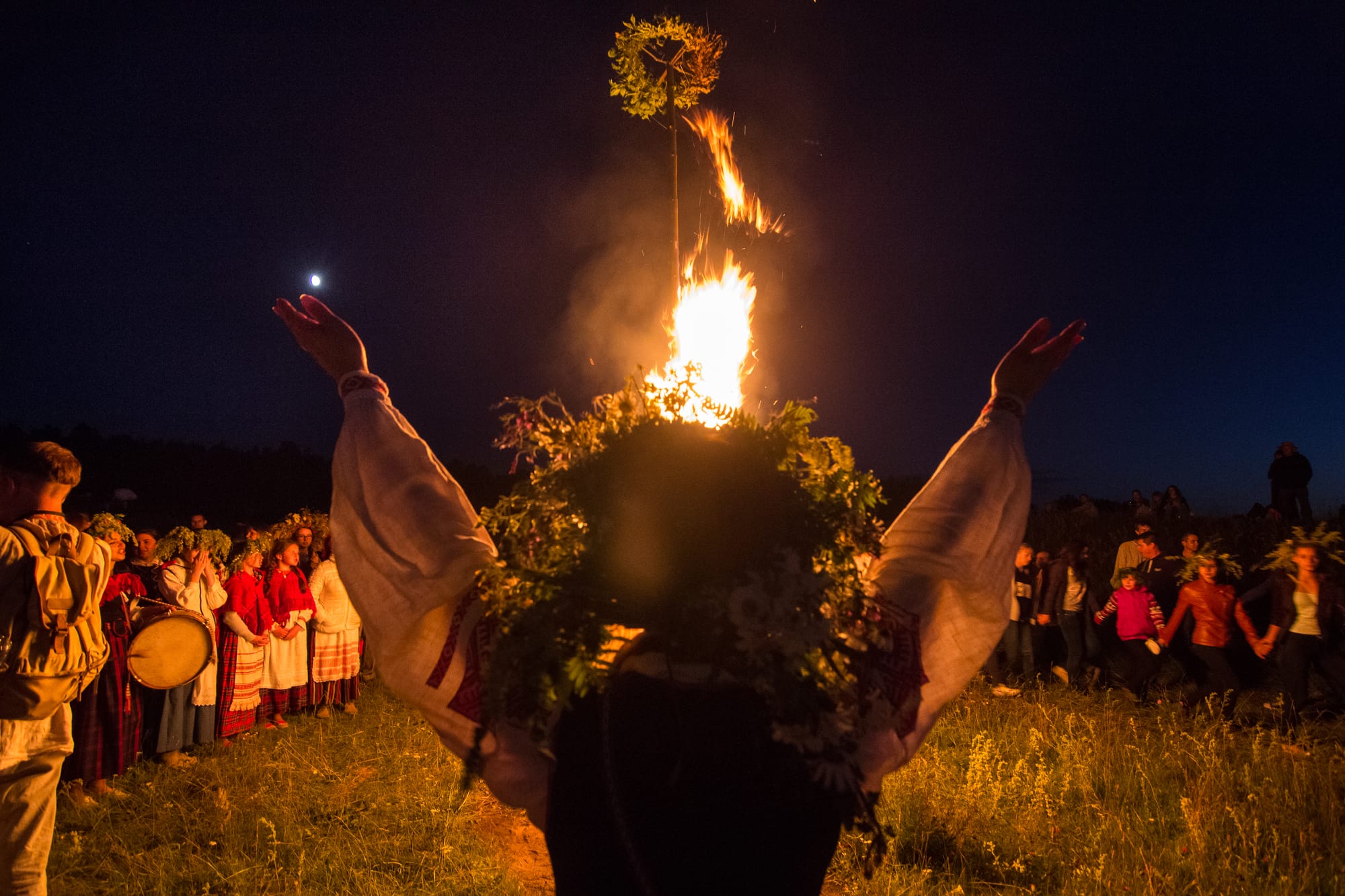
On the shortest night of the year, a bonfire is lit in a meadow at the edge of a forest. Young women have spent the evening gathering wildflowers and weaving them into wreaths; later they will set them on the river and watch where the current carries them. Couples take hands and run at the flames together, leaping across as the sparks fly up, while others slip away into the trees in search of a fern flower that, according to legend, blooms only tonight. The night of Kupalle brings together much of what matters in Belarusian culture: a church calendar laid over far older rites, a strong attachment to land, forest and water, and a habit of gathering people together around fire, food and song.
Faith, identity and values
Belarus is a predominantly Orthodox Christian country with a substantial Roman Catholic minority. A state survey cited by the US State Department put membership of the Belarusian Orthodox Church at around 53 per cent of adults and the Roman Catholic Church at around 6 per cent, with smaller Protestant, Jewish and Muslim communities. The law recognises the "determining role" of the Orthodox Church and the historical importance of Catholicism, Judaism, Islam and evangelical Lutheranism as traditional faiths.
What makes Belarus unusual is how evenly the two Christian calendars are honoured. Orthodox Christmas on 7 January and Catholic Christmas on 25 December are both official holidays, and Easter is marked according to both calendars, so the Christmas season in effect stretches across both dates.
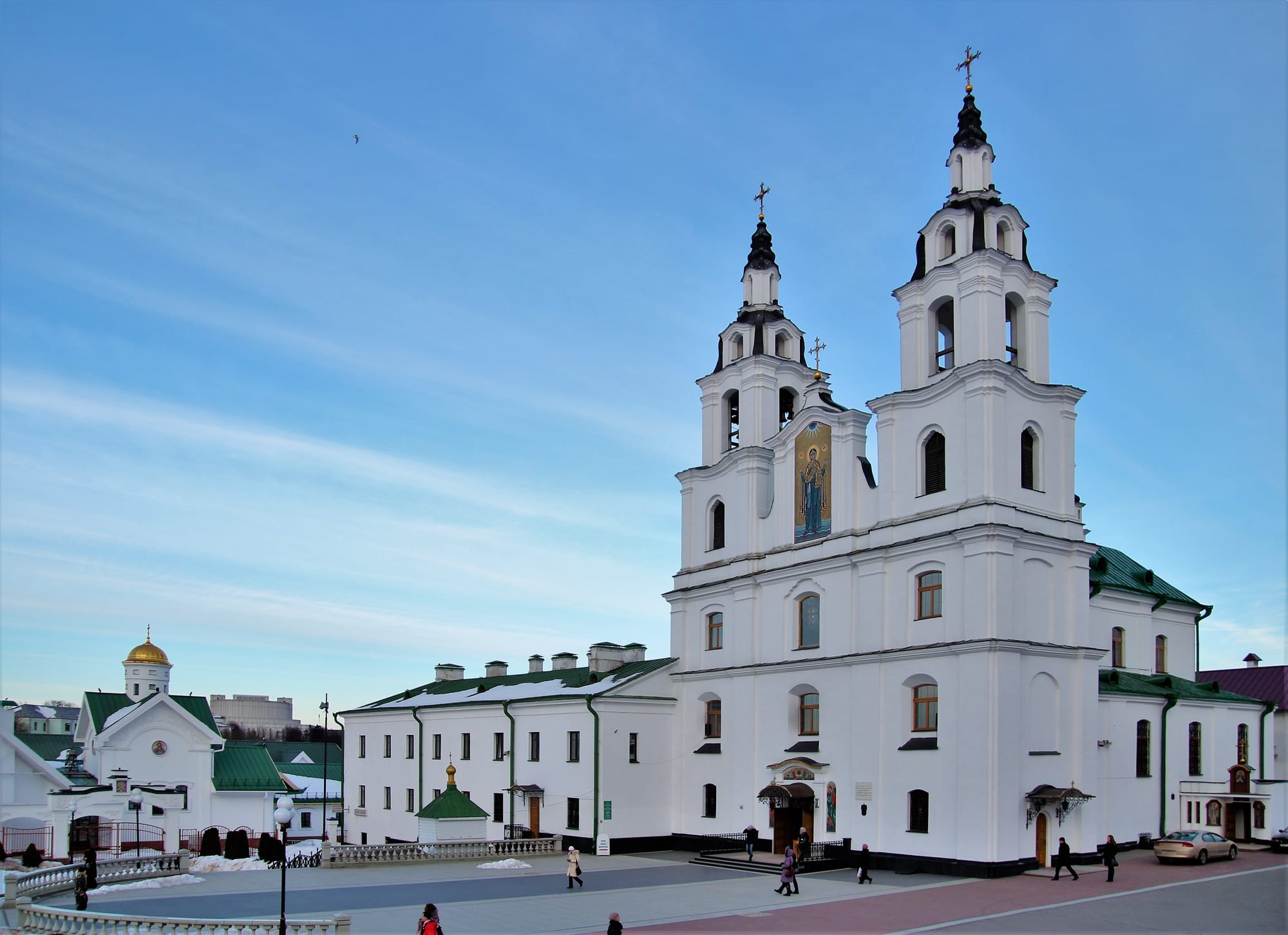
Beneath the Christian year runs an older layer of folk belief tied to the farming seasons. Many of the best-loved customs, from the midsummer fires to the winter carols, began as rites to mark the turning of the sun and the cycle of sowing and harvest, and were later absorbed into church feasts. Respect for ancestors is a thread through all of it: the dead are remembered at the table and at the graveside on fixed days of the year, and the family is understood to include those who came before.
Hospitality is prized, and personal relationships built on trust carry real weight in both private and working life; first meetings tend to be formal, with warmth following once people know each other. Both Belarusian and Russian are official languages; Russian is the language most heard in daily life, while Belarusian carries strong associations with national culture and heritage. Politics is a sensitive subject, and the country's official guidance for visitors notes that criticising the host country is considered poor form.
Greetings and meeting people
The handshake is the standard greeting, firm and accompanied by direct eye contact. Men generally shake hands with every man present when arriving and again when leaving, and gloves are taken off first, since a gloved handshake is considered impolite. A widely held superstition says that hands should not be shaken across a threshold, so a greeting at the door usually waits until both people are on the same side of it.
Between men and women the conventions are more reserved. Among people who do not know each other well there may be little or no physical contact, and a nod or a word of greeting is enough, and a handshake between a man and a woman meeting for the first time is less usual than between two men. Women who are close friends often greet with three alternating kisses on the cheek, and good friends and family members may hug. Belarusians tend to wait for the other person to initiate this kind of contact rather than assume it.
Forms of address mark respect. Older people, and anyone in a formal or professional setting, are traditionally addressed by their first name followed by a patronymic, a name formed from their father's first name. First names alone are kept for friends, family and people of similar age in informal settings. Business meetings tend to be formal and low-key, and dressing smartly is expected.
Hospitality and being a guest
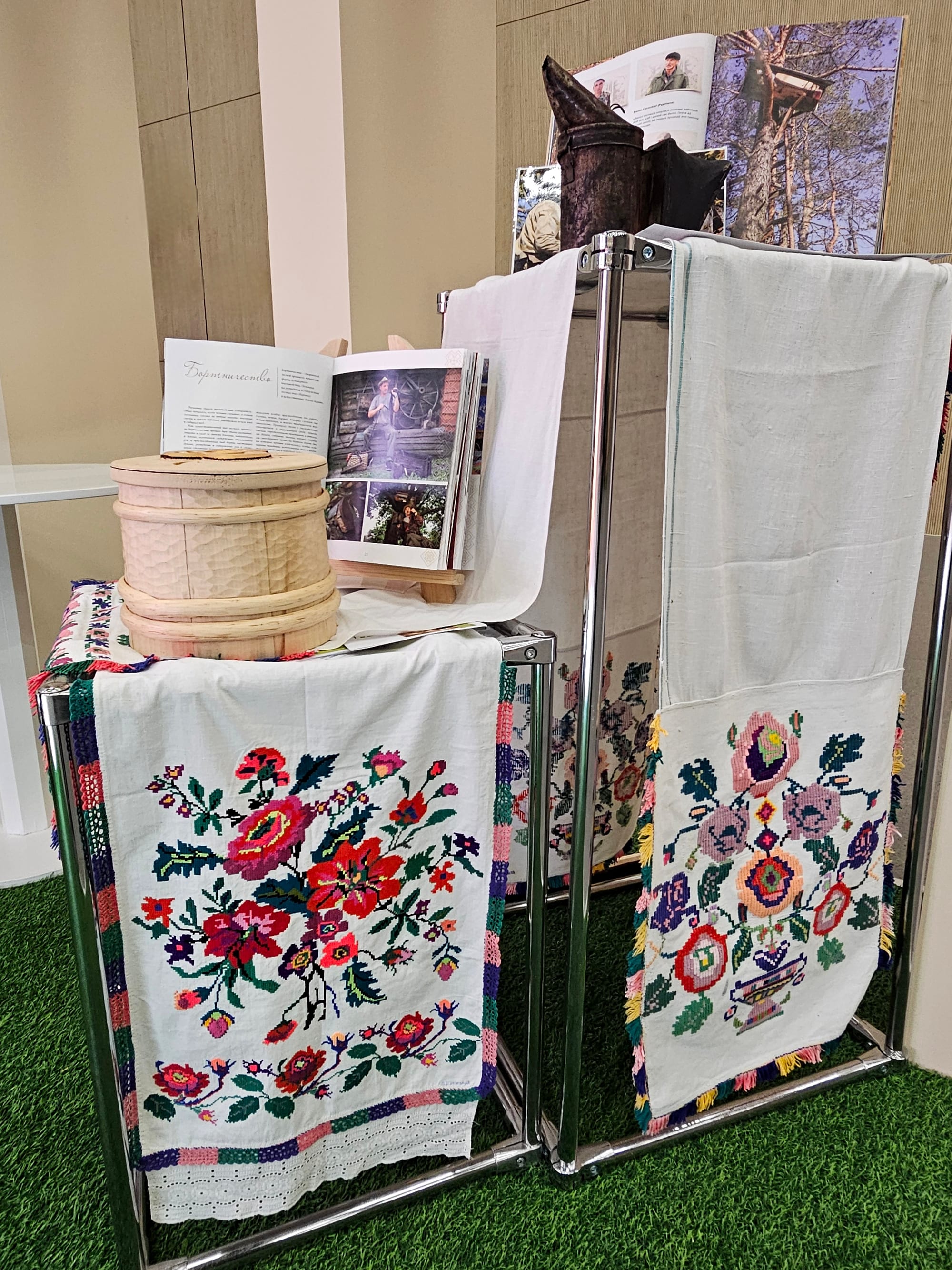
Hospitality is regarded as a duty as well as a pleasure, and its most symbolic expression is bread and salt. On special occasions an honoured guest may be welcomed with a round loaf carried on a rushnyk, an embroidered ritual towel, with salt set on or beside it. The guest breaks off a small piece, dips it in the salt and eats it. The same gesture greets newly married couples on their return home, and the loaf and towel carry old associations with prosperity, protection and the bond between host and guest.
Guests invited to a home usually bring a gift. Flowers are a common choice for the hostess, and the number of stems matters: bouquets for the living are given in odd numbers, because even numbers are associated with funerals and are laid at graves. Some people also avoid yellow flowers, which can be read as a sign of parting. A gift is best presented with both hands. Shoes are normally taken off at the door, and the host will often offer slippers.
At the table, generosity is the rule and the host's pride is bound up in how well guests are fed. Hosts are likely to offer a wide array of dishes and drinks, and it is polite to keep an open mind and try a little of everything. Toasts punctuate the meal; when one is proposed, clinking glasses and at least taking a sip is expected, and declining to join in can seem rude. Guests who offer a toast of their own in return are appreciated. Traditionally, setting the table was the work of the women of the household.
Festivals and life's big moments
The folk year turns on a handful of great festivals. Kalyady, the midwinter festival that became woven into Christmas, has traditionally run from early to mid-January, and was once a time for cleaning the house, visiting the bathhouse and putting on new clothes. On Christmas Eve, many families still spread a little hay under the tablecloth and prepare a meatless supper. Carollers in costume go from house to house singing kaliadki, songs wishing the household well, and are rewarded with treats; the goat, a symbol of fertility and vigour, is the best-known of the masked characters. One village in the Minsk region keeps up the Rite of the Kalyady Tsars, a costumed Christmas-season folk drama, which is on UNESCO's list of heritage in need of urgent safeguarding.
In late winter comes Maslenitsa, the week of feasting before the Orthodox Lent, when an effigy of winter is burned. Kupalle falls on the night of 6 to 7 July, merging an ancient summer rite with the feast of St John the Baptist: bonfires are jumped for luck and health, a burning wheel stands for the sun, wreaths are floated on the water to foretell marriage, and herbs gathered that night are believed to have special healing power. Autumn brings Dazhynki, the harvest festival. For Catholics, one of the great events of the year is Budslaŭ fest, held each year around 2 July, when tens of thousands of pilgrims, some of them on foot, gather to honour an icon of Our Lady; it has been on UNESCO's list of intangible cultural heritage since 2018.
Remembering the dead is one of the most important customs of all. On Radunitsa families clean and tend the graves of their relatives, and often share a meal at the cemetery. Dziady, whose name means "grandfathers", is the autumn day for honouring ancestors, traditionally with a family supper to which the souls of the departed are symbolically invited. After a funeral, mourners gather for a memorial meal, and further commemorations traditionally follow on the ninth and fortieth days and on the first anniversary.
Traditional weddings were long, multi-stage affairs, beginning with a visit from matchmakers sent by the groom's family, and many of their symbols survive in modern celebrations. A decorated wedding loaf, the karavai, was traditionally baked by married women and shared among relatives, and the couple is greeted with bread and salt by their parents. The rushnyk plays a part at every stage: couples have traditionally stood on an embroidered towel during the ceremony, and a rushnyk was also given at a child's birth, to accompany that person through life.
Arts, crafts and music
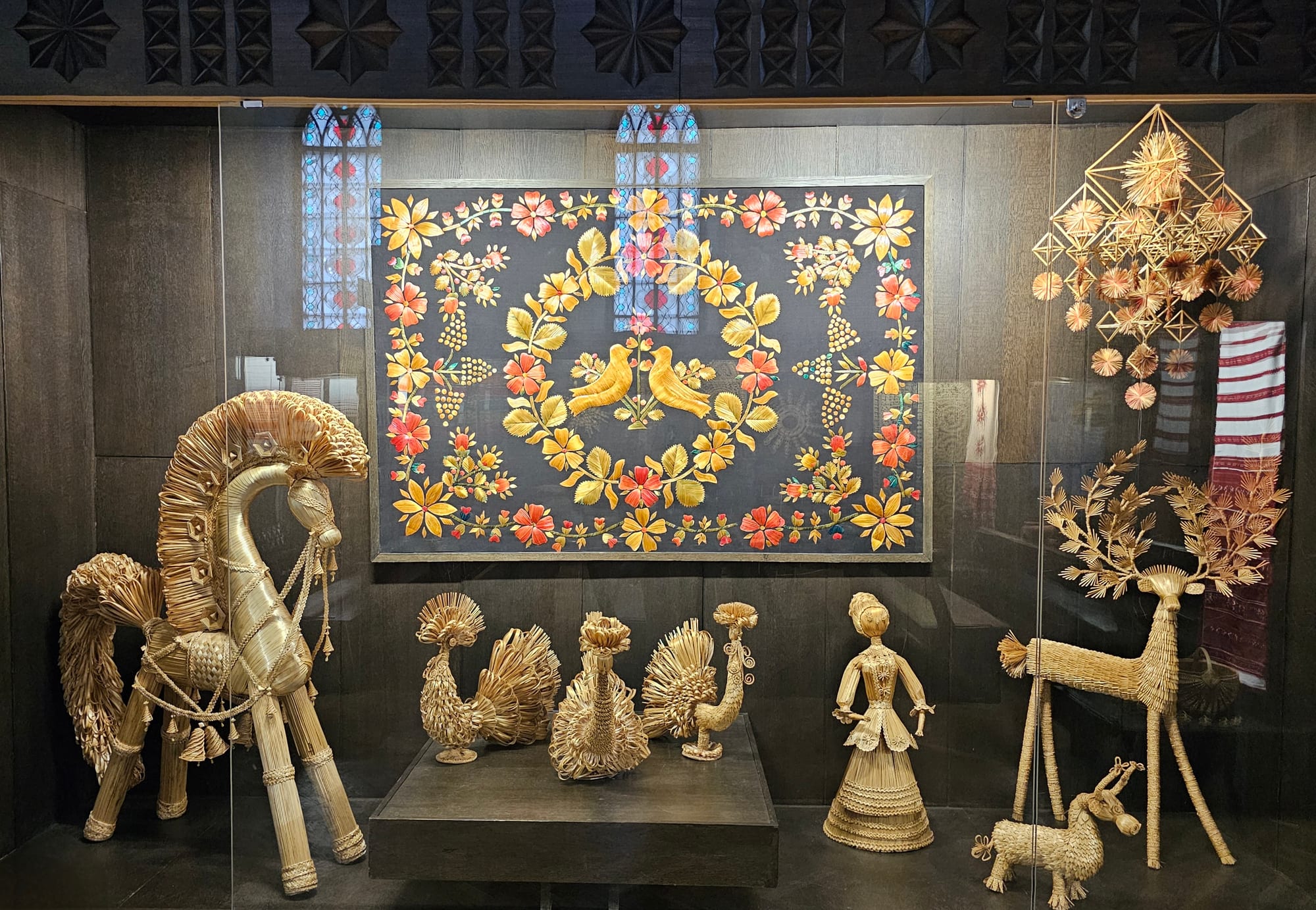
Folk art in Belarus is not simply a museum piece: several of its crafts are taught, practised and sold today, and UNESCO has recognised a number of them. Straw weaving is perhaps the most characteristic. Straw has long been tied to the rites of bread and fertility, and weavers, most of them women, turn it into boxes, baskets, hats, toys and figures, as well as objects with special meaning, such as harvest wreaths and the pavuk, a hanging structure of diamond shapes once believed to protect the household from evil and disease.
Vytsinanka, the art of paper-cutting, is also on UNESCO's list. A sheet of paper is folded and cut with scissors or a knife, and when it is opened out a symmetrical, lace-like pattern appears. Once used to decorate church interiors and icons, vytsinanka now appears in homes, cafés and offices, on calendars and postcards and in theatre sets, with themes drawn from nature, folklore and village and city life. Textiles carry their own language: on embroidered rushniki and folk costume, white, the colour of homespun linen, is associated with heaven, and red with the sun and the earth. Tree beekeeping, the ancient practice of keeping bees in hollows in living forest trees, is shared with Poland and is also on UNESCO's list.
Music grew from the same village world. The traditional instruments include the duda, a bagpipe; the zhaleika, a reed pipe; the lyre; the fiddle; and the tsymbaly, a hammered dulcimer. Village songs were tied to the seasons and to life's rites, and many are still sung at festivals by folk ensembles. In 1969 the guitarist Vladimir Mulyavin founded Pesniary, a group that blended Belarusian folk songs with rock and became one of the best-known bands of the Soviet era; it remains a point of pride. Today the country holds dozens of music festivals each year, many with a folk element.
Dos and don'ts for visitors
- Do check the latest government travel advice before any trip; several governments advise against all or all-but-essential travel to Belarus.
- Do shake hands firmly and with eye contact, taking off gloves first.
- Do address older people and new professional contacts by first name and patronymic until invited to do otherwise.
- Do bring a small gift when invited to a home, and give flowers in an odd number, since even numbers are for funerals and graves.
- Do take shoes off at the door of a home unless the host says otherwise.
- Do try a little of each dish and join in the toasts, even with just a sip.
- Don't shake hands across a threshold; step inside first.
- Don't criticise the country, raise politics or go near any protest, and don't photograph government, police, military or border sites; the authorities detain people, foreigners included, on vague charges.
What to take away
Belarusian customs are rooted in the rhythm of an old farming year and in a deep regard for family, both living and dead, and visitors who accept the bread, join the toast and honour the small courtesies at the door will find that reserve quickly gives way to real warmth.