Attractions & Natural Wonders · Belarus
Belarus: Eight Attractions and Natural Wonders
Two Renaissance castles of the same magnate family, Europe's last primeval forest and its wild bison, and a capital rebuilt whole after the Second World War
By Worldlore Editorial · 9 September 2026
The country in the middle
Belarus is a flat, forested, lake-scattered country between Poland and Russia that most travellers have never had a reason to visit. It has been fought across repeatedly — it lost roughly a quarter of its population in the Second World War — and much of what a visitor sees is either a survivor of that history or a reconstruction after it. The highlights are two great magnate castles, a slice of ancient forest, and a capital that is a showcase of postwar planning.
The eight below are mostly within a couple of hours of Minsk. A note on the practicalities: since 2020, Western governments have advised against travel to Belarus and consular help is very limited; check the current guidance before planning anything.
1. Mir Castle
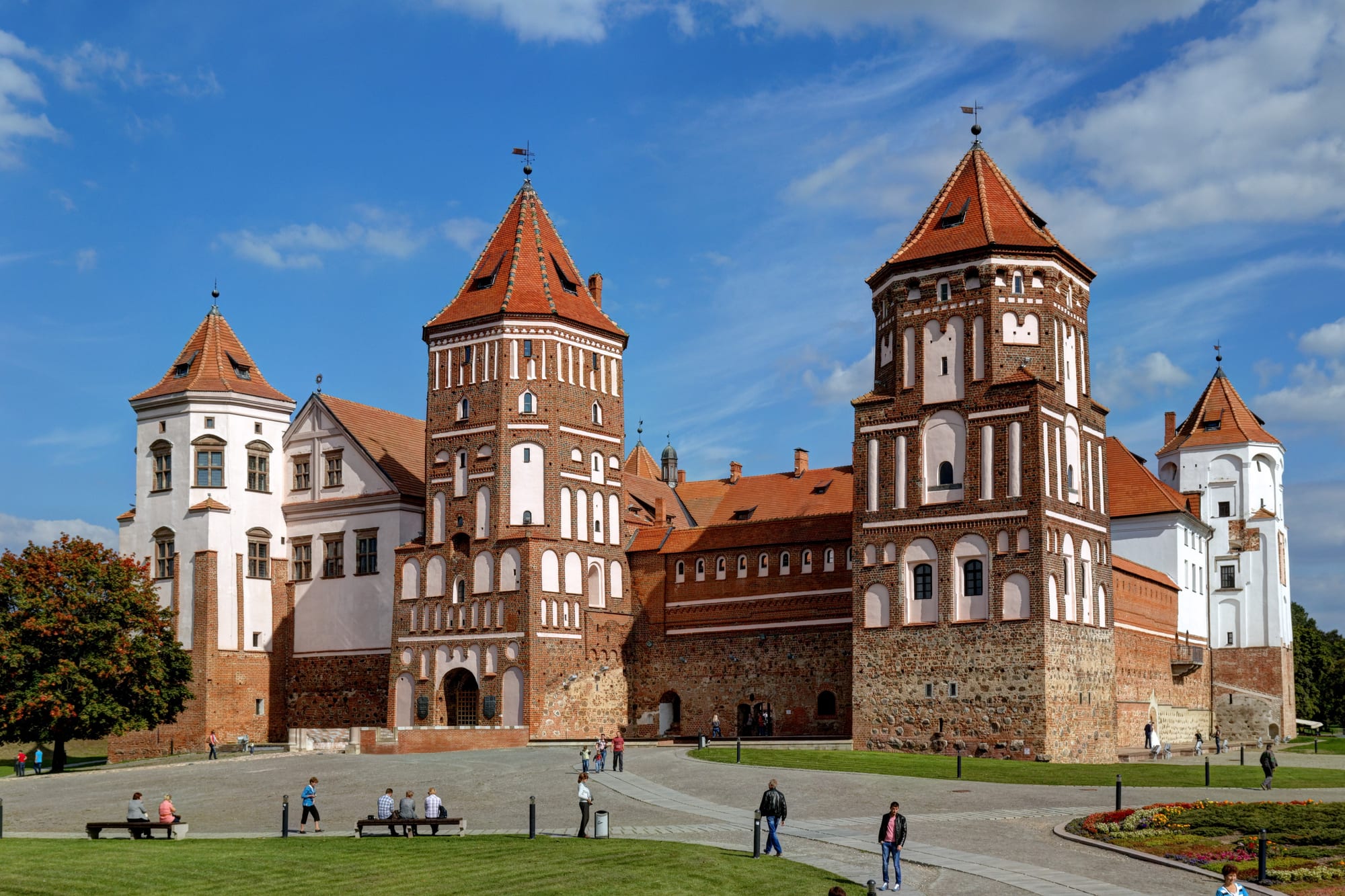
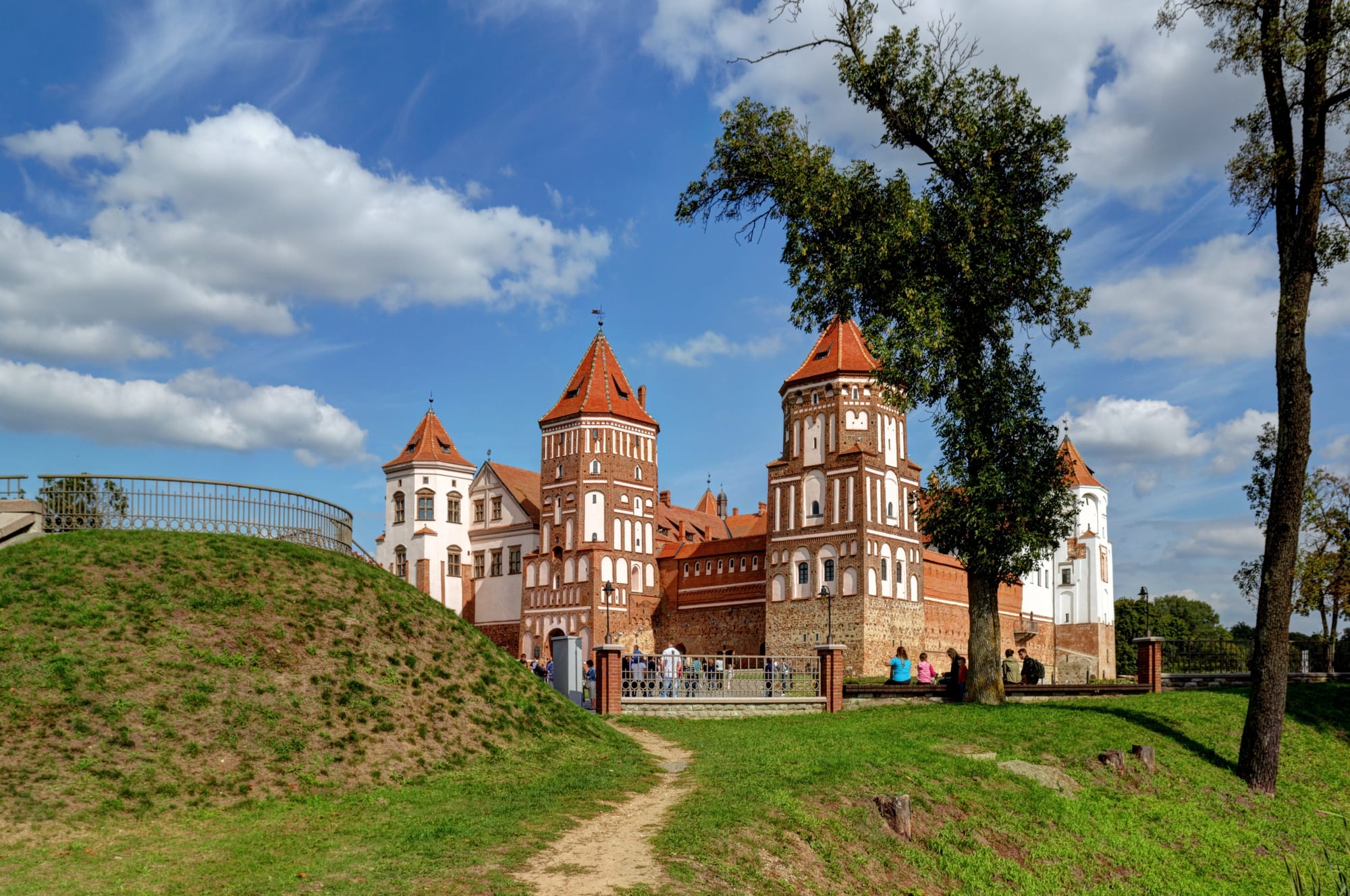
Mir Castle, about 100 kilometres southwest of Minsk, began around 1500 as a four-square brick fortress with fat corner towers and grew, under the powerful Radziwiłł family, into a comfortable Renaissance and Baroque residence. It was damaged in every major war that crossed the region and carefully restored after 1945; it is now a UNESCO World Heritage Site with a museum inside.
The setting — an earthwork rampart, a pond, a small park with the Radziwiłł burial chapel — is part of the appeal, and it is often combined with Nesvizh in a single day trip.
2. Nesvizh Castle
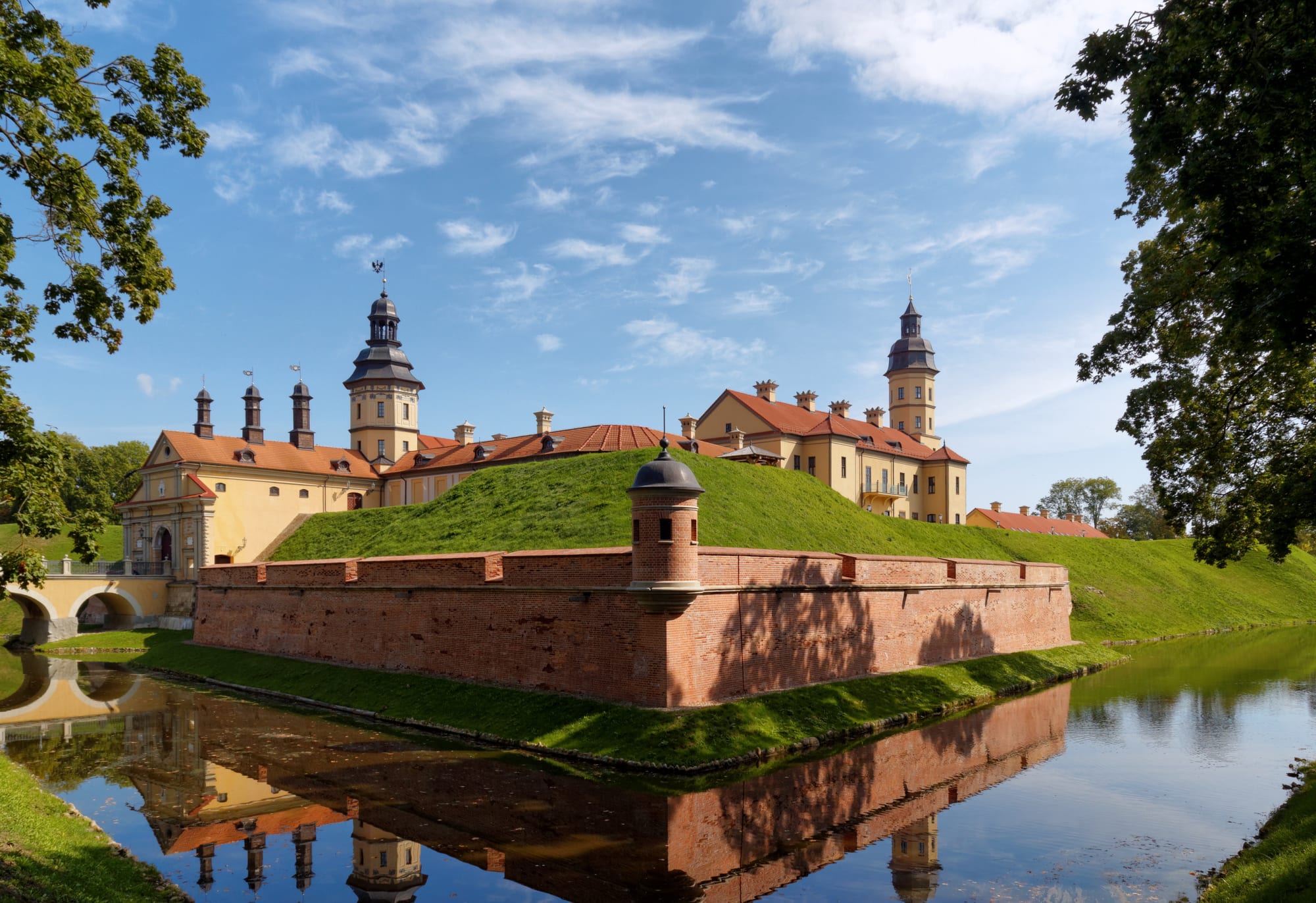
Thirty kilometres from Mir, Nesvizh was the principal residence of the same family — for a long time one of the richest and most powerful in the whole Polish-Lithuanian Commonwealth. The palace sits on an island in a chain of ponds, behind bastioned earthworks, and its restored state rooms, arcaded courtyard, and landscaped park make it grander and more polished than Mir. It too is a UNESCO World Heritage Site.
In the town, the Radziwiłłs' Corpus Christi Church (1593) is one of the first Baroque buildings in Eastern Europe and holds the family crypt, with dozens of coffins.
3. The Corpus Christi Church, Nesvizh
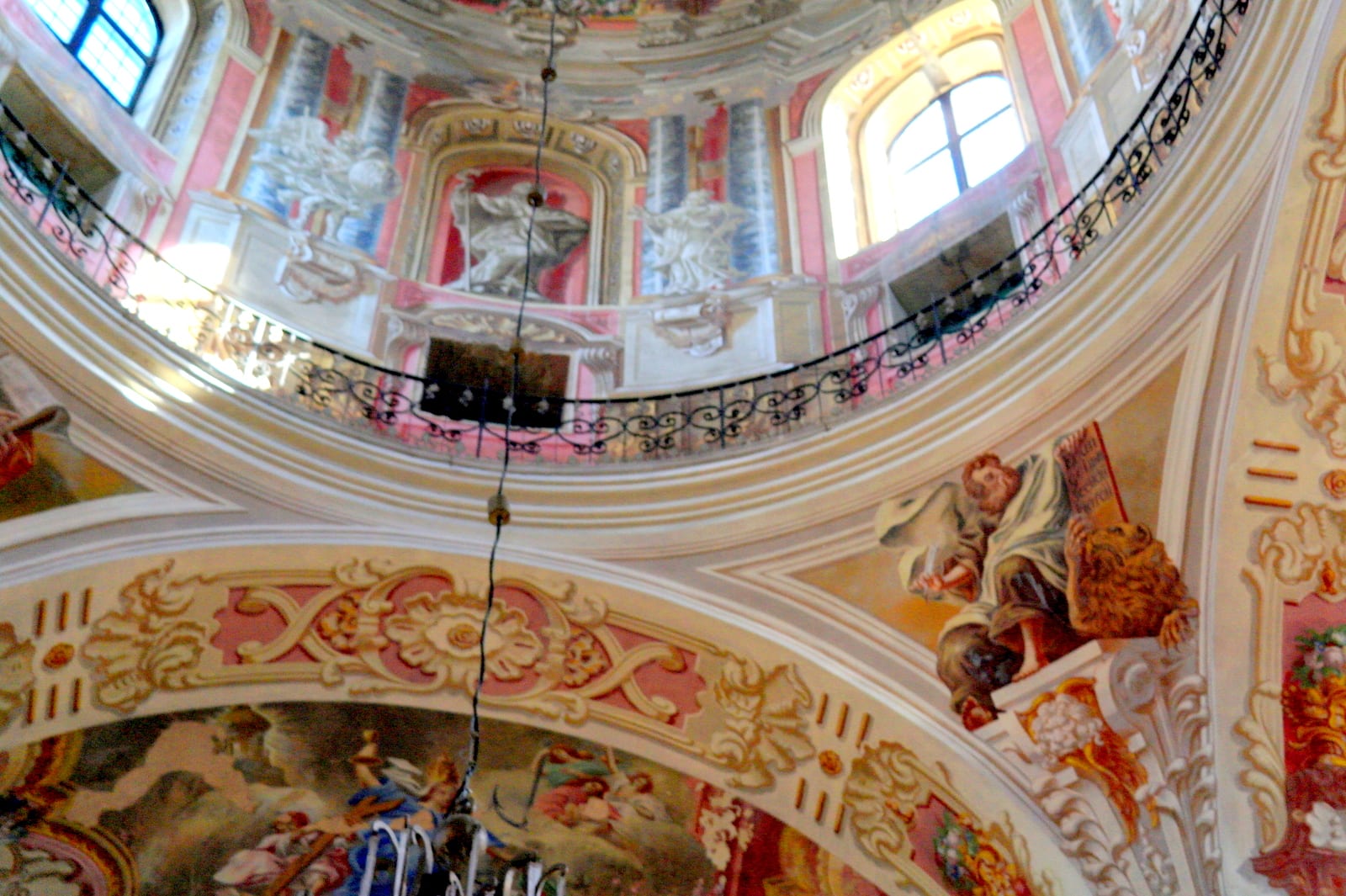
Standing just outside the castle gates, this church was commissioned by Mikołaj Krzysztof "the Orphan" Radziwiłł and built by an Italian architect on the model of the Jesuits' mother church in Rome — making it one of the earliest true Baroque buildings anywhere east of Italy. Its frescoed interior is largely intact.
Beneath it, the Radziwiłł crypt holds around 70 members of the family, one of the largest surviving aristocratic vaults in Europe. It is part of the Nesvizh UNESCO listing.
4. The Brest Fortress
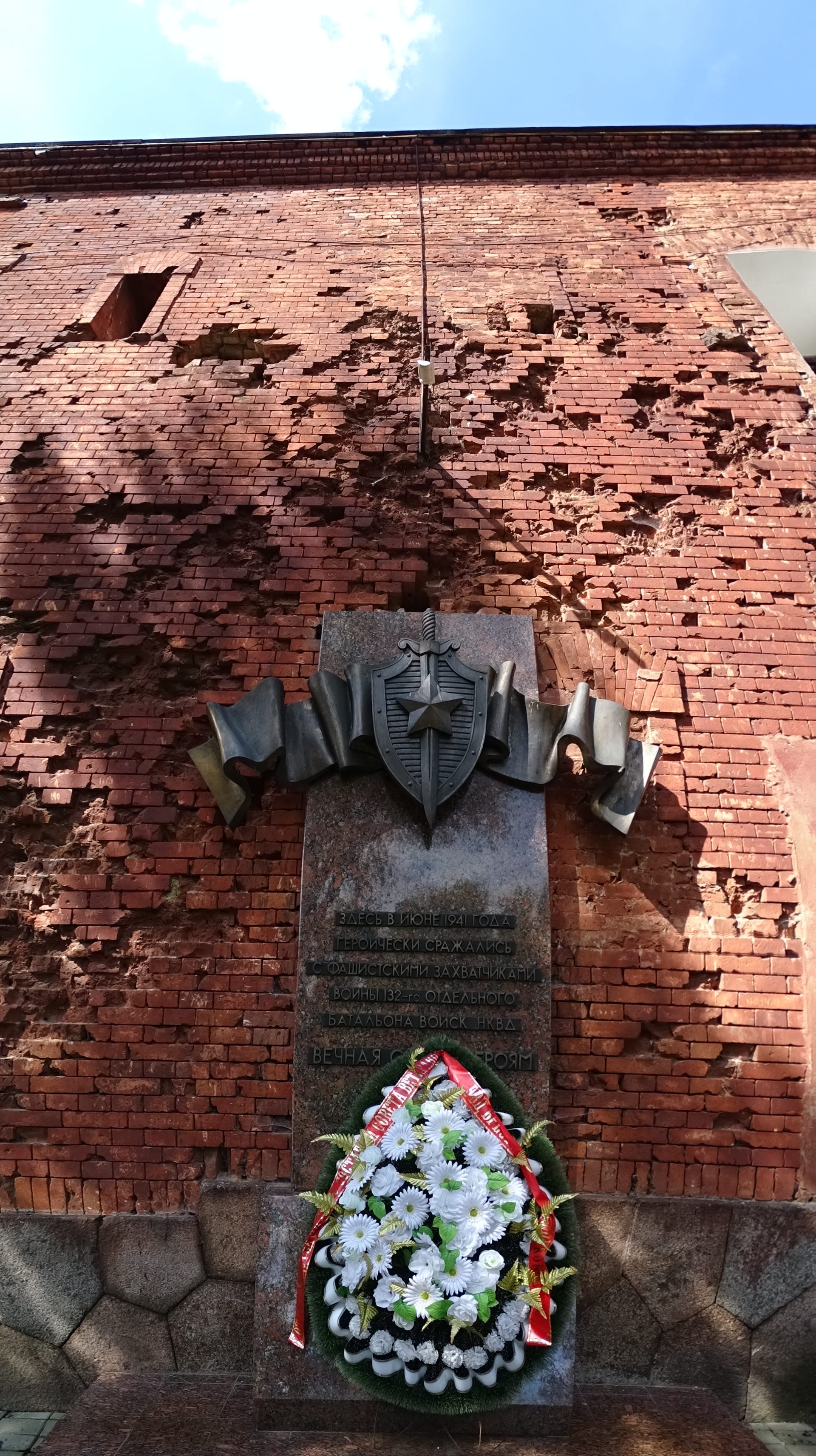
In the far southwest, on the border with Poland, the Brest Fortress was where some of the first fighting of the German invasion of the Soviet Union took place in June 1941: a small garrison held the citadel for weeks after the front had moved on. In the 1960s the ruins were turned into an enormous memorial — colossal concrete sculpture, an eternal flame, a preserved shell-scarred barracks, and museums.
It is one of the most important sites of Soviet and Belarusian war memory, and still heavily visited.
5. Belovezhskaya Pushcha
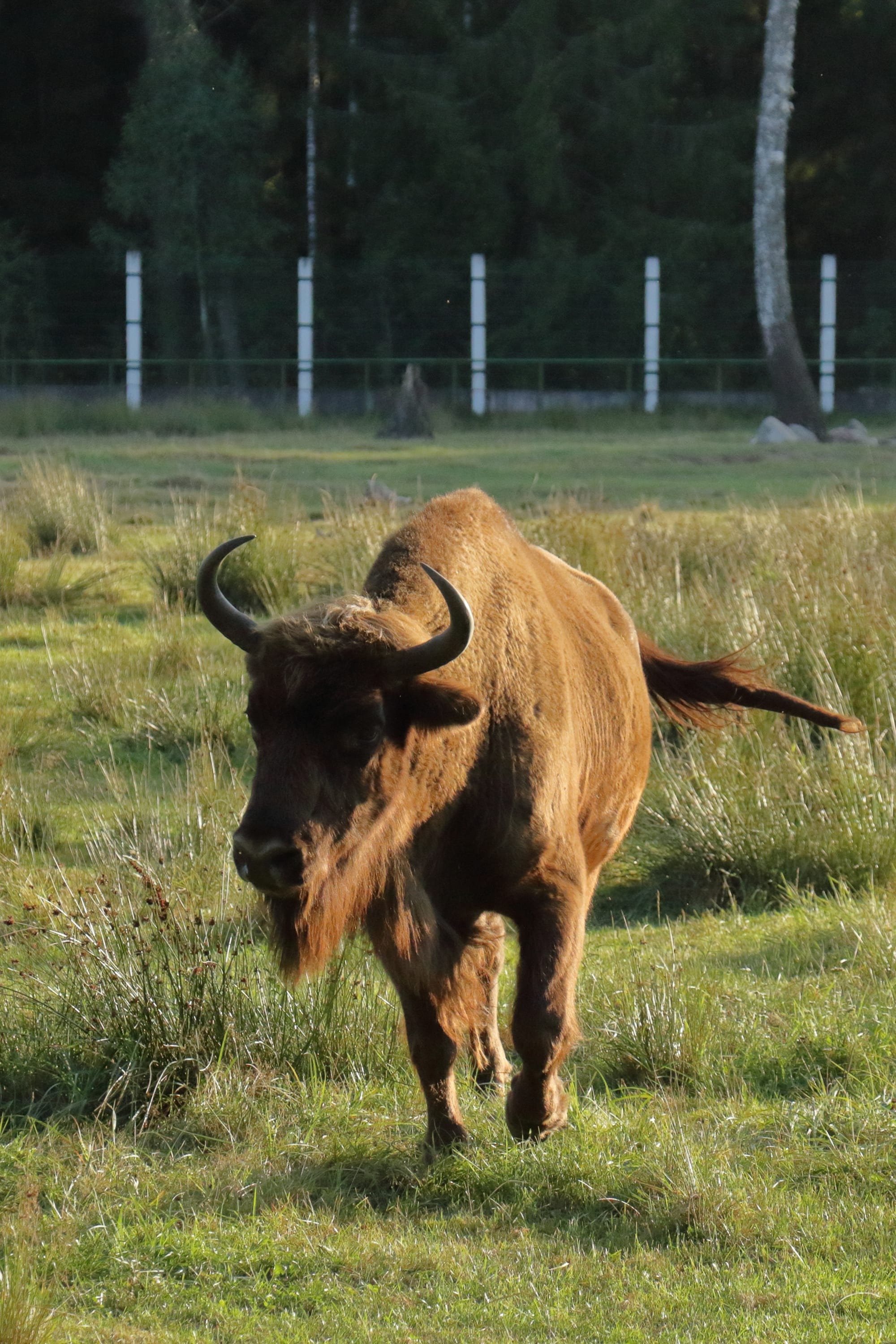
Straddling the Polish border, the Belovezhskaya Pushcha (Białowieża on the Polish side) is the largest surviving remnant of the primeval lowland forest that once covered much of Europe — a UNESCO World Heritage Site of old-growth oak, hornbeam, and spruce. It is the home of the European bison, or wisent: hunted to extinction in the wild by 1927 and rebuilt from zoo animals, with the free-ranging herd here now the largest in the world.
The Belarusian side has a visitor centre, enclosures, walking and cycling trails, and — as a curiosity — a residence of Grandfather Frost.
6. Minsk and Independence Avenue
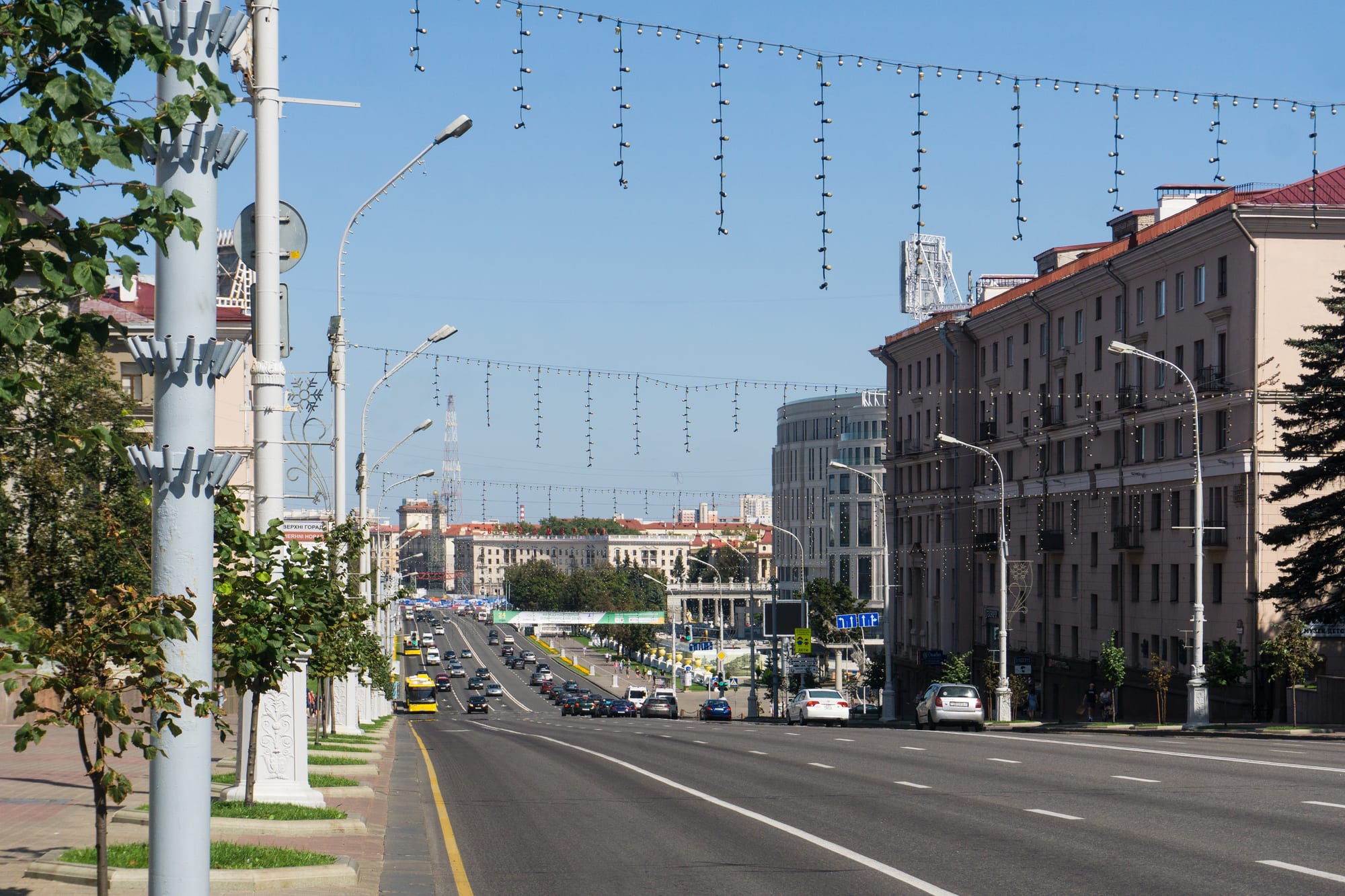
Minsk was almost entirely destroyed between 1941 and 1944 and rebuilt from scratch as a model Soviet city, its centre organised along Independence Avenue — a grand, arrow-straight boulevard of monumental neoclassical blocks, squares, and ministries, now proposed for UNESCO listing as an ensemble of postwar architecture.
Off it are the reconstructed Upper Town with its cathedrals, the moving Island of Tears memorial to the Soviet-Afghan war, the National Library shaped like a cut diamond, and a clutch of strong museums, the Great Patriotic War museum among them.
7. The Khatyn Memorial

In 1943 the occupying forces herded the inhabitants of Khatyn into a barn and burned it, then destroyed the village — one of hundreds of Belarusian villages wiped out during the war. The memorial built here in 1969 marks each vanished house with a low concrete frame and a chimney topped by a bell that tolls; a wall lists the 186 villages that were destroyed and never rebuilt.
It is a stark, quiet place about an hour north of Minsk, and central to how Belarus remembers the war. (It is often confused with Katyn in Russia, a separate event.)
8. Polotsk and St Sophia's Cathedral
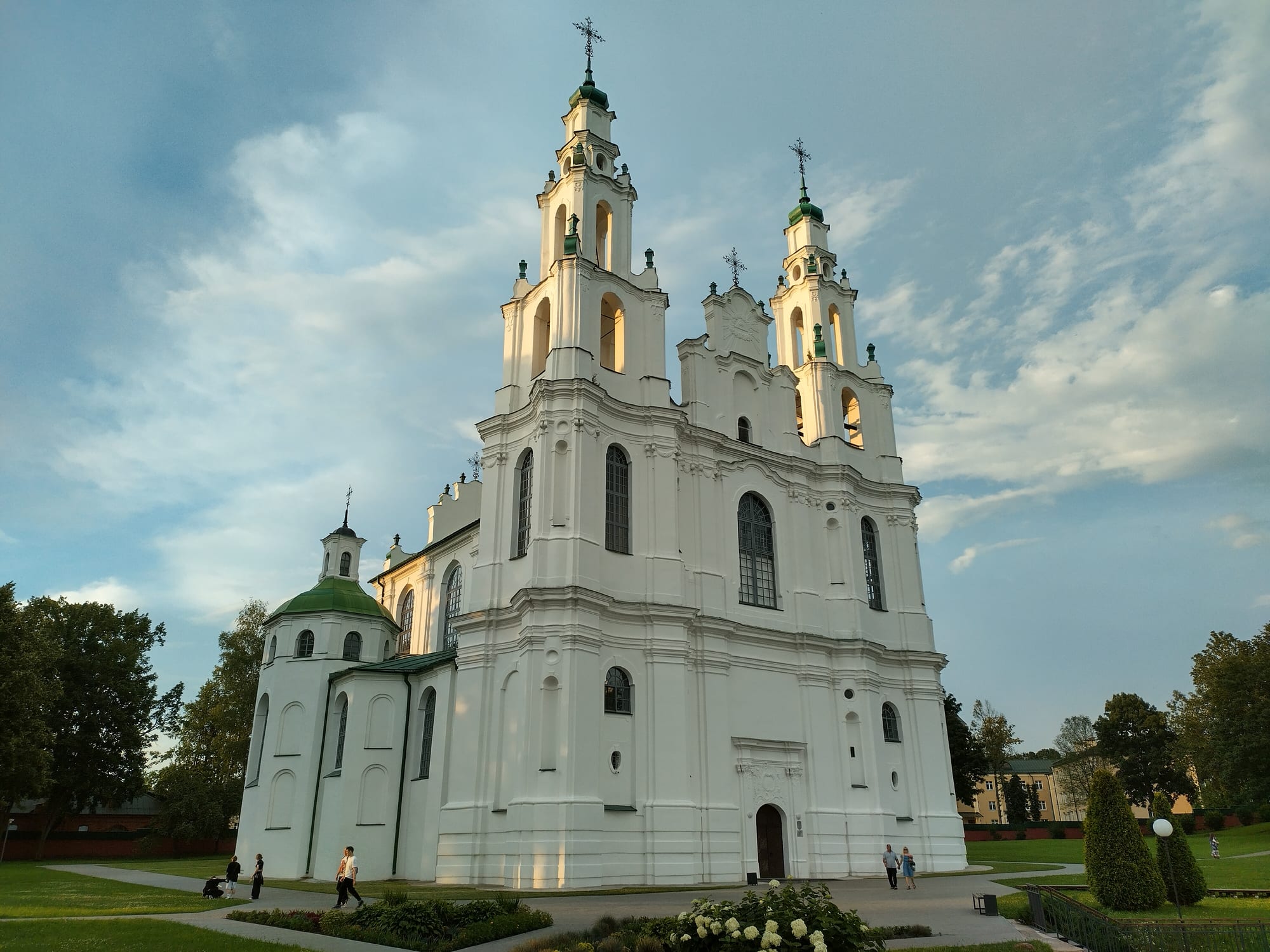
Polotsk, in the north, is the oldest city in Belarus, first recorded in 862. Its cathedral of St Sophia was one of only three raised in the 11th century in the Kievan Rus lands (with those in Kyiv and Novgorod); largely destroyed when the Russian army used it as a powder store in 1710, it was rebuilt as a graceful twin-towered Baroque church on the bluff above the Western Dvina, and now serves as a concert hall and museum.
Polotsk also marks itself as the geographical centre of Europe, one of several towns to make the claim.
Belarus is straightforward to travel once you are in — good trains, cheap, safe on the street — but entry rules and the political situation change often, so this is one to research carefully and close to the time.