Culture & Customs · Barbados
Barbados: Say Good Morning First
A greeting owed to every room, churches of many denominations, a navy that never goes to sea, and a harvest festival reborn as the Caribbean's last great carnival of the summer
By Worldlore Editorial · 30 September 2026
Someone steps into a small shop, a waiting room or a crowded bus. Before asking for anything, before even catching an eye, they say "Good morning" to the room at large. In Barbados, launching straight into a request without that greeting is considered rude, and the habit runs through every part of the day, changing to "good afternoon" and "good evening" as the hours pass. It is a small courtesy, but it says a great deal about the island: a society that values manners, formality and respect, shaped by more than three centuries of British rule, yet whose music, festivals and sense of fun draw just as deeply on its West African roots.
Faith, identity and values
Barbados has a long Christian tradition and a remarkably varied church life. According to the 2010 census, as reported by the US State Department, around 76 per cent of the population was Christian. Anglicans were the largest single group at 23.9 per cent, followed closely by Pentecostals at 19.5 per cent, with Seventh-day Adventists, Methodists, Roman Catholics, Wesleyans, the Church of the Nazarene and the Church of God among many others. Around 21 per cent of people reported no religious affiliation, and Muslims, Jews, Rastafarians, Hindus, Buddhists and Baha'is together made up less than three per cent. The 2021 census recorded a sharp rise in the share reporting no religion, to about 45 per cent. Members of the Rastafarian community have described growing acceptance in recent years, pointing to school dress codes that now permit dreadlocks. Many Barbadians attend church on Christmas Eve or Christmas morning even if they go less often during the rest of the year.
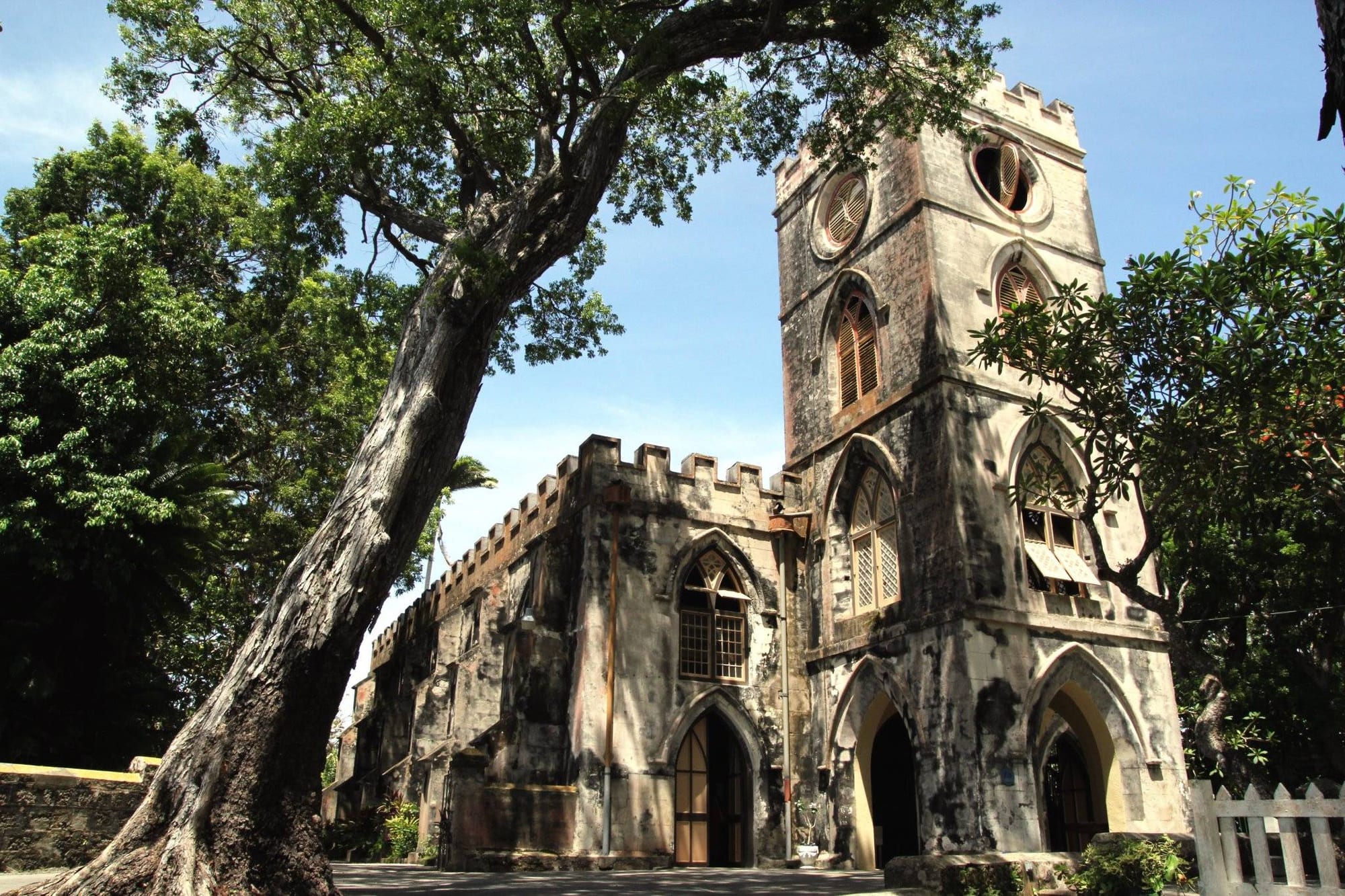
Bajan identity is often described as a meeting of two inheritances. The National Cultural Foundation traces the island's great festival to the tensions in the meeting and merging of British and West African heritage. The British side is visible enough that the island's old nicknames, Little England and Bimshire, are credited partly to some Bajans' famously correct, English-style manners. Standard English is the official language and the one taught in schools, but in everyday conversation many Barbadians speak Bajan, an English-based dialect with West African influences, in which words are often shortened and "th" frequently becomes "d".
Politeness and composure are prized. Interactions tend to be formal at first, and loud or boisterous behaviour in public, particularly where alcohol is involved, can attract disapproval. A strong tradition of mutual support also runs through Bajan social life. The friendly societies founded by working people after emancipation, the Landship among them, pooled their members' weekly contributions in a savings system known as susu, to help one another through illness, unemployment and the cost of funerals.
Greetings and meeting people
The greeting comes first, always. "Good morning", "good afternoon" or "good evening", depending on the time of day, is expected when entering a room, a shop or a vehicle, and it is usually paired with a handshake when meeting someone. The custom is taken seriously at the highest level: in 2023 the Prime Minister, Mia Mottley, urged public agencies to restore everyday courtesy, recalling Barbados as "the country that said 'good morning'", along with please and thank you, as basic civilities that make life easier for everybody. Going straight to business, especially in small shops and local restaurants, can come across as brusque, and visitors who make the greeting a habit will find conversations open far more easily.
A handshake is the usual greeting between men and women alike, while hugs and kisses on the cheek are kept for friends and family. People who are not well known to each other are addressed by title and surname, as Mr, Mrs or Miss, rather than by first name. Using a first name too soon can seem over-familiar or even slightly disrespectful, particularly with older Barbadians, and it is best to wait to be invited.
Physical affection in public is kept low-key. The UK Foreign Office notes that it is uncommon for couples of any kind to hold hands or kiss in public in the Caribbean, and that doing so may attract unwanted attention; attitudes towards LGBT+ people are mostly conservative.
Hospitality and being a guest
Dress matters more than many visitors expect. Beachwear belongs on the beach and by the pool, and covering up is expected in towns, shops and restaurants; smarter restaurants usually expect smart casual dress, and some do not allow shorts or sandals for men. Official buildings set firm standards of their own. The law courts, for example, refuse entry to anyone in shorts, strapless or revealing tops, mini-skirts, backless or midriff-baring outfits, jeans or slippers, and men must keep their shirts tucked in. One rule is a matter of law rather than etiquette: it is illegal for anyone, including children, to wear camouflage clothing or to carry items made from camouflage material, and there are severe penalties for drug offences.
Restaurants often add a service charge to the bill, so it is worth checking before adding a tip; where no charge is included, a tip is customary. Above all, a guest is expected to be courteous and even-tempered, especially where drink is involved, and to remember the greeting on arrival.
Food marks the big occasions. Great cake, a rich, rum-laced fruit cake also called black cake or Christmas cake, is made not only for Christmas but for birthdays, weddings and anniversaries, and local confectioners make sugar cakes to order for weddings and parties. At Christmas the smell of baked ham fills homes, and in many families the children are put to work grinding the fruit for the cake.
Festivals and life's big moments
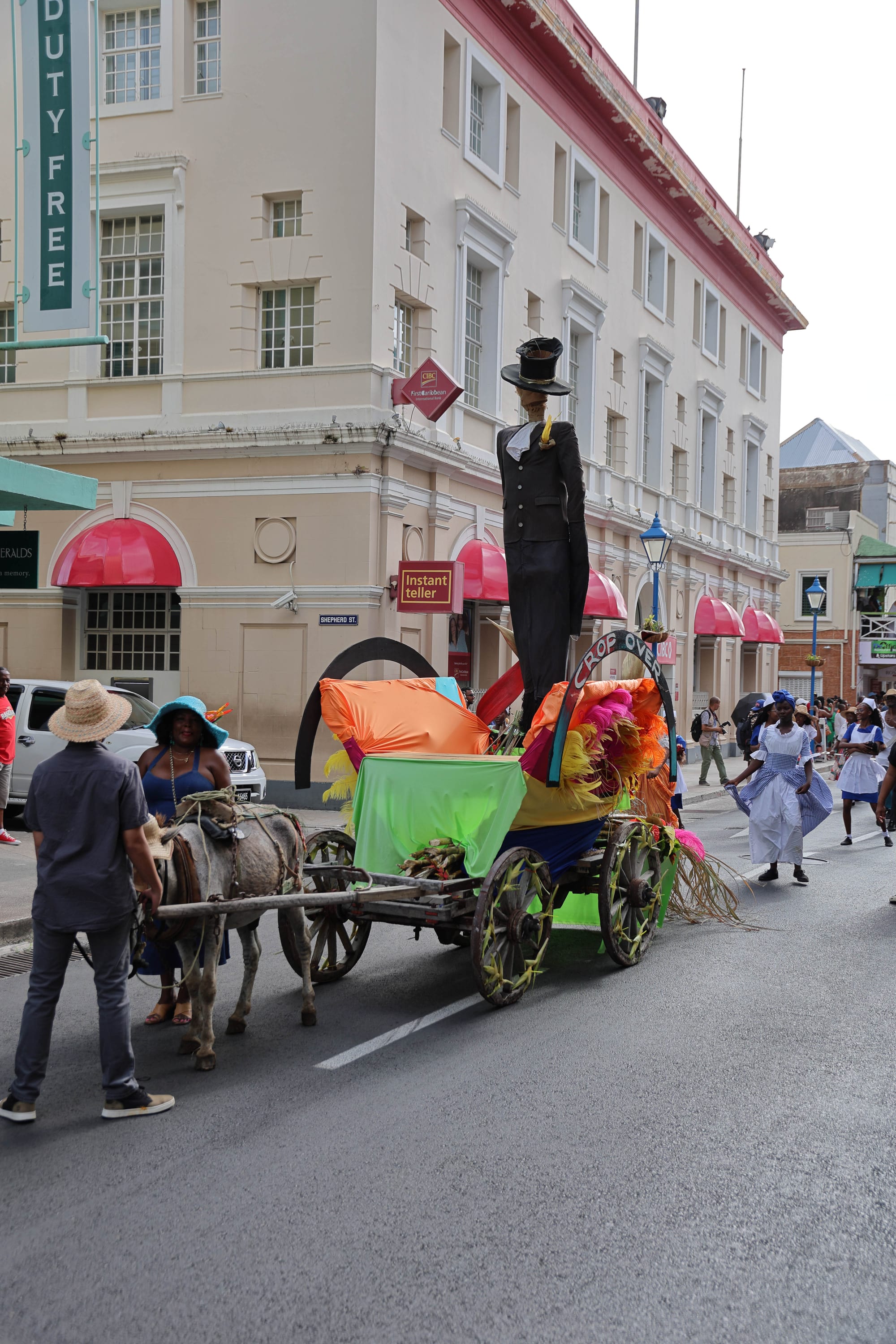
The great festival of the year is Crop Over. It began on the plantations, where the end of the sugar-cane harvest was cause for celebration; as the last carts of cane reached the mill yard, a labourer would beat a makeshift gong and declare the crop over. The plantation celebrations came to an end during the hardships of the Second World War, but the festival was revived as a national festival in 1974 and has grown into a season of music, arts and competition running through the summer. The decorated donkey-cart parade and the ceremonial delivery of the last canes survive in some form. Alongside them come calypso tents and the fiercely contested Pic-O-De-Crop calypso competition, Foreday Morning, an early-morning street party of mud, powder and paint, and finally Grand Kadooment on the first Monday in August, when masquerade bands in extravagant costumes parade through the streets.
The civic calendar is full as well. Emancipation Day on 1 August falls in the middle of the Crop Over season. National Heroes Day on 28 April honours the country's official national heroes, and Independence Day on 30 November caps a month of events that includes the National Independence Festival of Creative Arts, held every November since 1973, which showcases music, dance, drama, fine art and craft, literary and culinary arts and photography. Christmas is celebrated with church, baked ham and great cake. Many people also put on their finest outfits for a Christmas stroll in Queen's Park, where they take pictures, greet friends and family and listen to the Royal Barbados Police Force Band.
Funerals carry some of the island's oldest customs. Wakes date back to the era of slavery, as a celebration of the life of the dead and of the departure of their spirit to the afterlife, and traditionally took place at the dead person's home over nine nights. The first night was solemn, given to prayer, hymn-singing and comforting one another; the second, known as Nancy or Anansi Story Night, brought storytelling, card games, dominoes and ring games; and the ninth, often held under a large tent with a head table, was the most important of all, with Spiritual Baptists frequently leading the proceedings. News of a death once travelled by word of mouth from one villager to the next, until radio announcements took over. Most of these nightly activities have declined considerably.
Funerals themselves are generally solemn affairs, mostly held in the afternoon, with little or no procession through the streets. By law, the dead must be buried before 6 p.m., and at the graveside soil is thrown onto the coffin as the words "dust to dust, ashes to ashes" are spoken. Through the twentieth century mourners wore black, white or shades of purple, but any colour is now acceptable, and some families hire bands, the police band among them, to turn the day into a joyful celebration of the life of the person who has died.
Arts, crafts and music
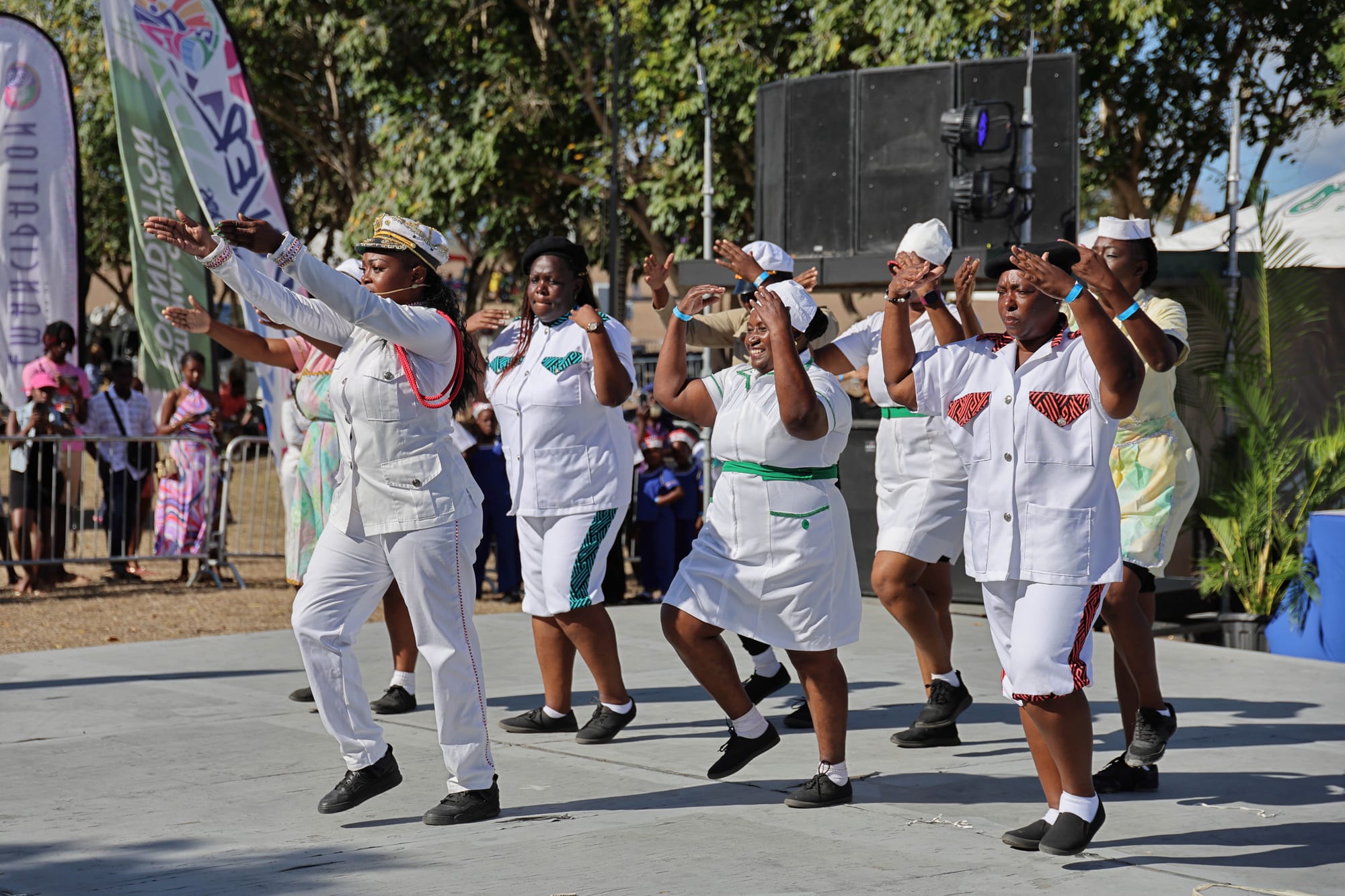
The Landship is the most distinctive of Barbados's traditions. Each crew meets at a base known as a dock, holds social evenings called dock nights, and is organised in naval ranks, from Lord High Admiral and Commander to Kit Inspector. In performance, members in white naval-style uniforms act out life at sea in drills with names such as "rough seas", in which the crew rocks from side to side across the parade ground with arms circling like windmill sails, and the maypole plait, in which eight dancers braid coloured ribbons around a pole, has become one of its best-known sights. In the 1930s, when its membership was first recorded, some 3,800 men and women belonged to sixty "ships" in three fleets; it later declined sharply, which is why its survival now depends on programmes in schools and community groups.
The Landship moves to the sound of the tuk band, a small ensemble of bass drum, kettle drum and penny whistle. Researchers trace tuk to imitation of the European military fife-and-drum bands of the British garrison, reshaped by African rhythmic improvisation into something distinctively Barbadian. Once looked down upon, tuk and the Landship were later championed as symbols of national culture, and tuk bands now play at the island's festivals, including Crop Over.
Calypso is the island's great medium of commentary. The Mighty Gabby won the calypso crown in 1968, the first of several titles, and went on to write protest songs about social situations he believed were wrong; in 2004 he was named a Cultural Ambassador of Barbados. Spouge, a home-grown popular style, is credited to the singer Jackie Opel, often called the Father of Spouge, whose admirers have long argued that he deserves greater national recognition.
Dos and don'ts for visitors
- Do say "good morning", "good afternoon" or "good evening" before asking for anything, including in shops and on buses.
- Do address people by title and surname until invited to use first names, especially older Barbadians.
- Do keep swimwear for the beach and cover up in town, in shops and in restaurants.
- Do dress conservatively for government offices and the courts, where shorts, strapless tops and similar clothing are refused entry.
- Do check the bill for a service charge before leaving a tip.
- Don't wear or carry anything made from camouflage material; it is against the law, even for children.
- Don't be loud or rowdy in public, particularly after drinking, and keep displays of affection low-key.
What to take away
Barbadian customs rest on courtesy, faith and a quiet pride in a heritage that is both British and West African, and visitors who begin every exchange with a proper greeting will find the island's warmth follows naturally.