History · Bangladesh
Bangladesh: The Delta Nation
The world's largest river delta — Buddhist and Hindu kingdoms, the wealth of Mughal Bengal, Partition, and a war of independence in 1971
By Worldlore Editorial · 19 September 2026
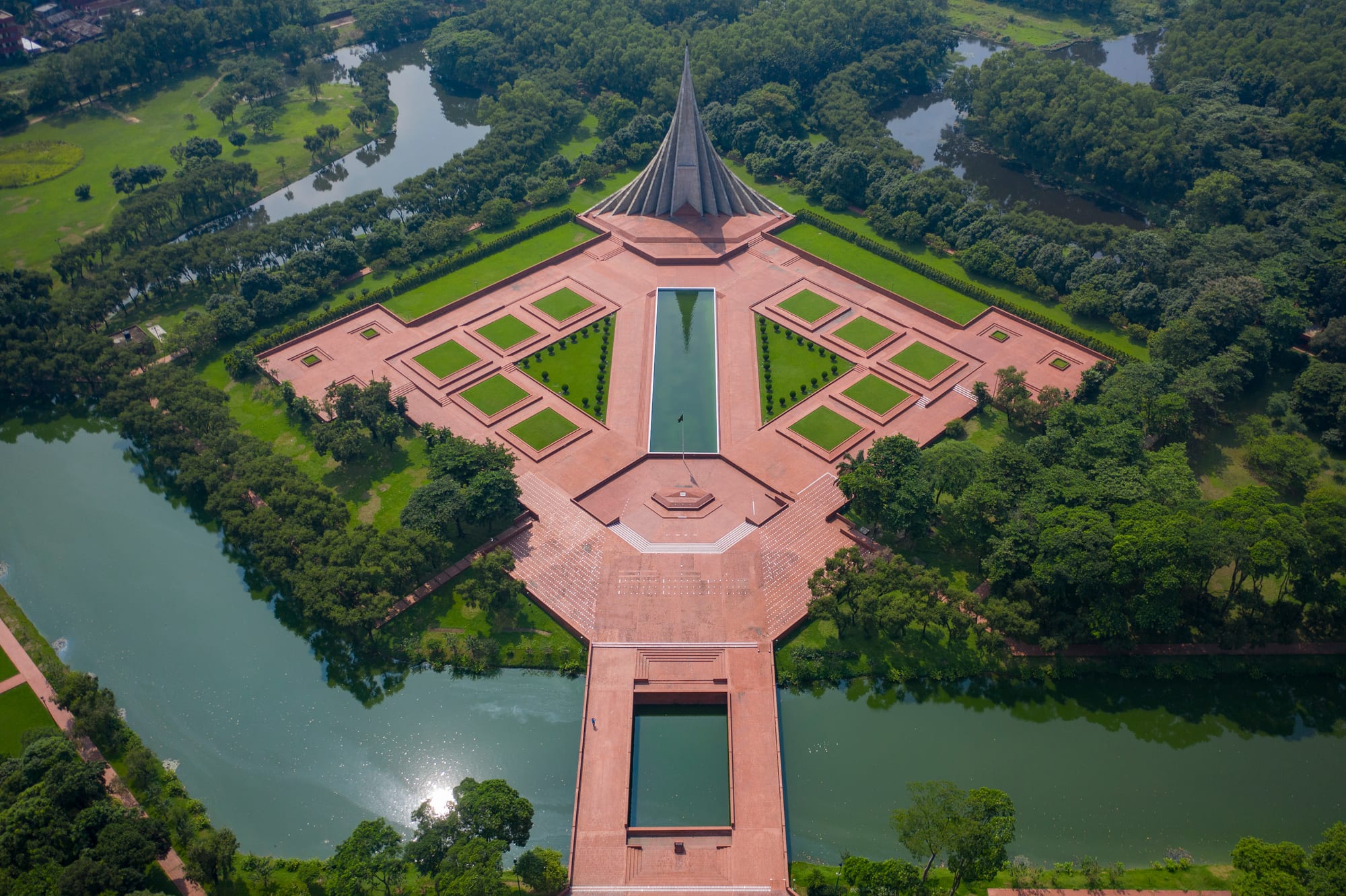
A country made of rivers
Bangladesh is, more than almost any other country, a product of water. It sits on the combined delta of the Ganges, the Brahmaputra and the Meghna — the largest river delta on earth — a flat, fertile, densely settled plain where the land is rebuilt every monsoon by silt and torn apart by flood. About 170 million people live in an area smaller than the American state of Iowa, which makes it one of the most crowded countries in the world. Its history is the history of the eastern half of Bengal: a region rich enough to be worth conquering again and again, and divided, in 1947 and again in 1971, along lines of religion and then of language.
A short history
- 8th–12th c.
The Pala empire
A Buddhist dynasty rules Bengal and much of northern India; Somapura is built.
- 1204
Islam arrives
A general of the Delhi Sultanate conquers Bengal; a Muslim society takes root in the east.
- 1352–1576
The Bengal Sultanate
An independent, prosperous state trading with China, Arabia and Europe.
- 1576–1757
Mughal Bengal
The empire's richest province, a global exporter of muslin and rice.
- 1757–1947
British rule
The East India Company takes Bengal; famine, deindustrialisation, and the Bengal Renaissance.
- 1947
Partition
Bengal is split; the Muslim-majority east becomes East Pakistan.
- 21 February 1952
The Language Movement
Police kill students demanding status for the Bengali language.
- 1971
The Liberation War
Nine months of war and mass atrocity end with an independent Bangladesh.
- 15 August 1975
The coup
Sheikh Mujibur Rahman is assassinated; years of military rule follow.
- 2024
Uprising
A student-led revolt topples the 15-year government of Sheikh Hasina.
Buddhist and Hindu Bengal
The lower Ganges plain held kingdoms for over two thousand years, but its golden age was the Pala empire, a Buddhist dynasty that ruled Bengal and stretches of northern India from the 8th to the 12th century and poured resources into learning. The monastery at Paharpur, Somapura Mahavihara, was one of the great universities of the Buddhist world; the monk Atisha, who carried a reformed Buddhism to Tibet in the 11th century, came from Bengal. The Palas were followed by the Hindu Sena kings, and then, in 1204, by a small cavalry force from the Delhi Sultanate that overturned the Sena state and opened Bengal to Muslim rule.
Sultanate and Mughal wealth
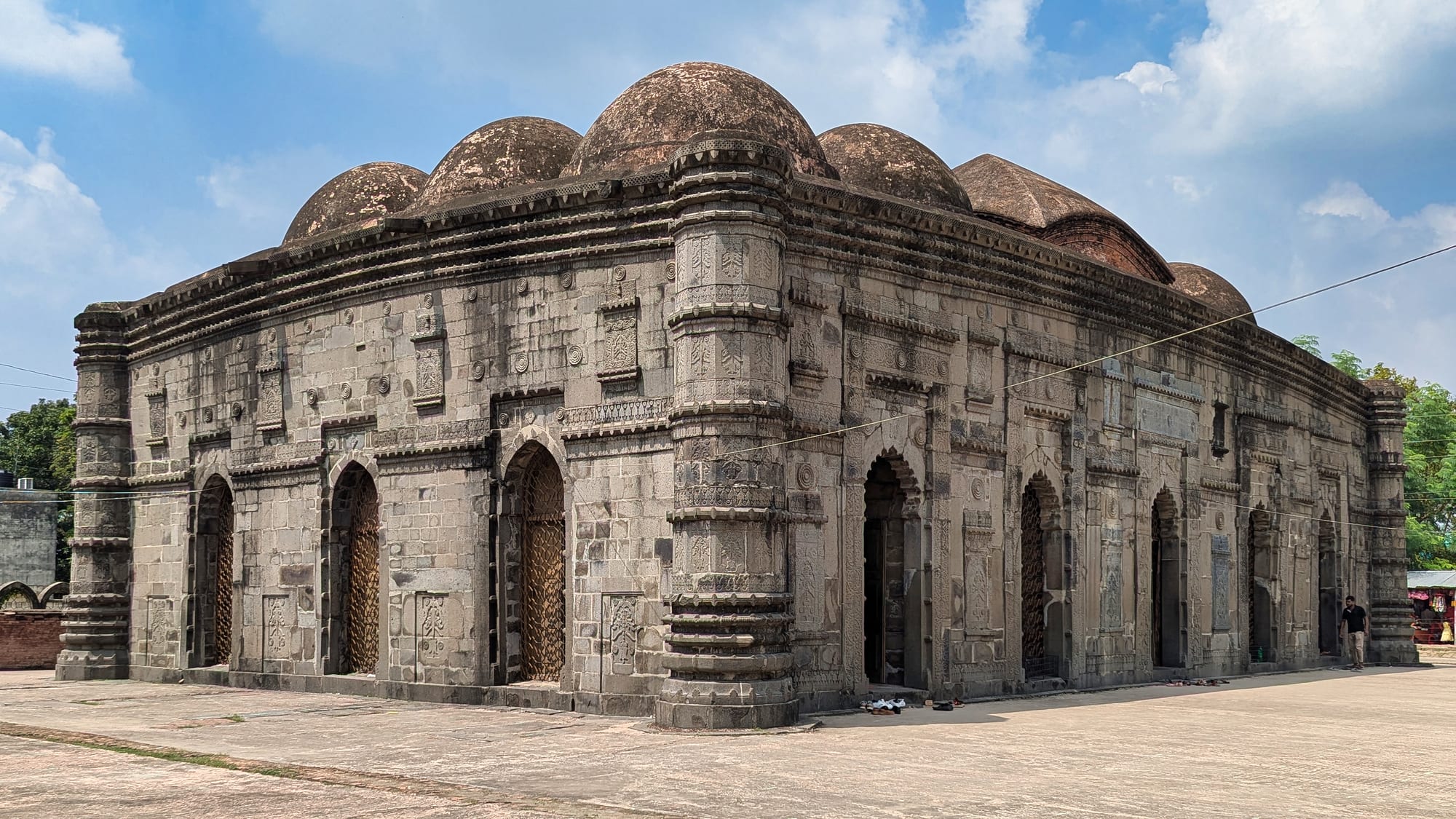
For most of the next 350 years Bengal was an independent sultanate, rich on trade and rice, ruling from a series of capitals in the west of the region. Its rulers patronised Bengali as a literary language and built a distinctive brick architecture, of which the finest survival is the Sixty Dome Mosque at Bagerhat, raised by a saint-administrator around 1450 in a planned city hacked out of the mangrove forest.
The Mughals conquered Bengal in 1576 and made Dhaka their provincial capital. Mughal Bengal was the wealthiest part of the empire — a byword for abundance — and a hub of world trade, exporting fine Dhaka muslin, silk, saltpetre and rice to Asia and Europe. It was also where Islam became the religion of the rural majority in the east, spread over centuries by Sufi preachers and by the very process of clearing and settling the shifting delta.
The Company, famine, and the British century
Bengal's wealth drew the East India Company, which after its victory at Plassey in 1757 seized control of the province's tax revenues. Company rule began with catastrophe: the Bengal famine of 1770 killed perhaps a third of the population while the Company kept collecting taxes and exporting grain. Over the following century Bengal's muslin industry was destroyed by British tariffs and machine cloth, its landholding was reorganised to favour a class of tax-farming landlords, and the region became the administrative centre of British India.
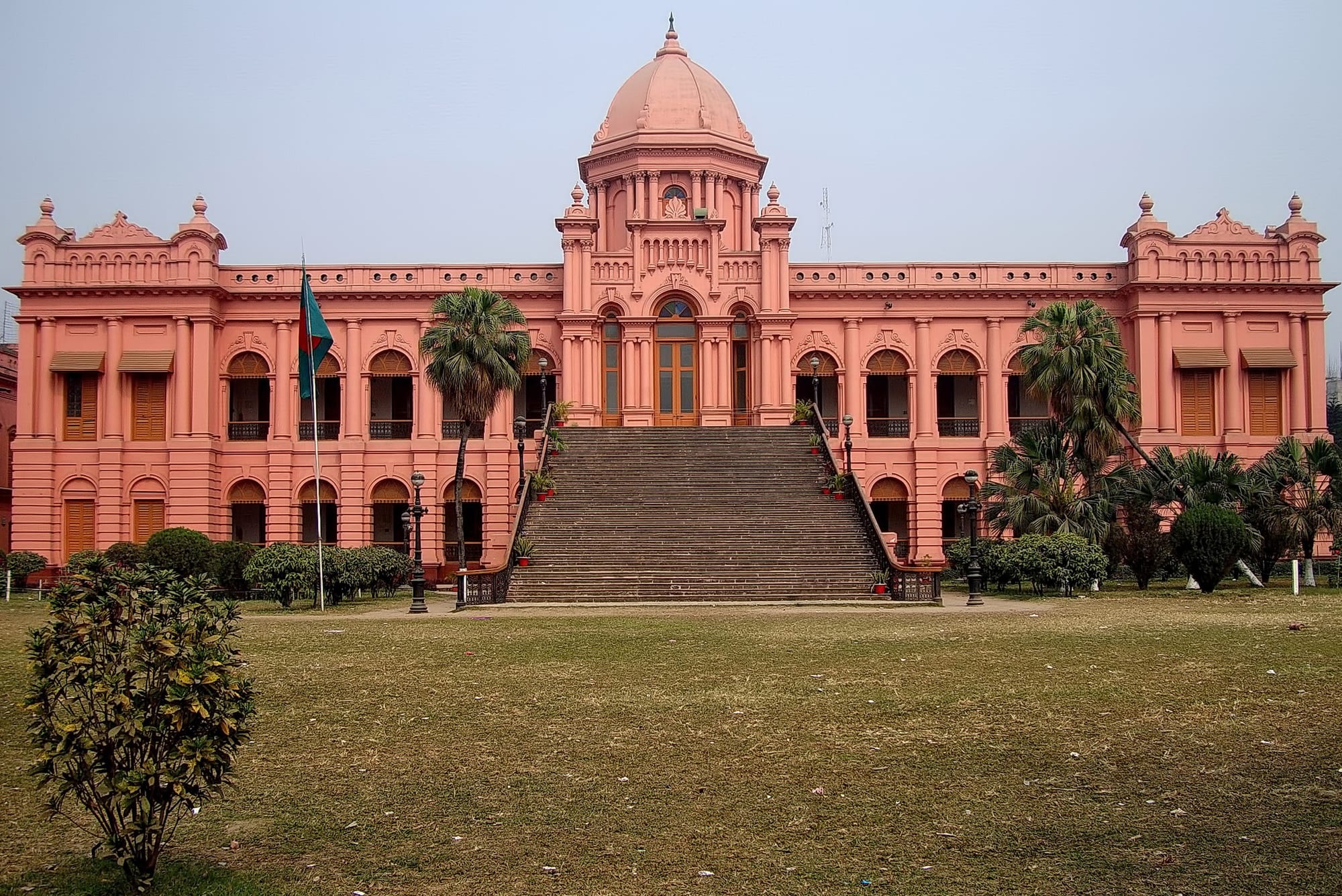
Bengal produced both the 19th-century cultural revival known as the Bengal Renaissance and, in 1943, a second man-made famine that killed two to three million people during the Second World War. In 1905 the British had tried to split Bengal into two provinces, one of them Muslim-majority in the east; the outcry forced them to reverse it in 1911, but the idea of a separate eastern Bengal did not go away.
Partition and East Pakistan
When British India was divided in 1947, Bengal was cut in two along religious lines: the Hindu-majority west went to India, and the Muslim-majority east became East Pakistan — a province with no land connection to the rest of Pakistan, 1,600 kilometres away, and little in common with it beyond Islam. The relationship quickly soured. East Pakistan held the majority of the country's people and earned most of its foreign exchange, through jute, but power and investment stayed in the west.
The first open break was over language. In 1948 Pakistan's leaders declared Urdu the sole national language; Bengali speakers, who were the majority of all Pakistanis, protested, and on 21 February 1952 police shot dead several student demonstrators in Dhaka. The Language Movement became the seed of Bengali nationalism, and the day is now marked worldwide as International Mother Language Day.
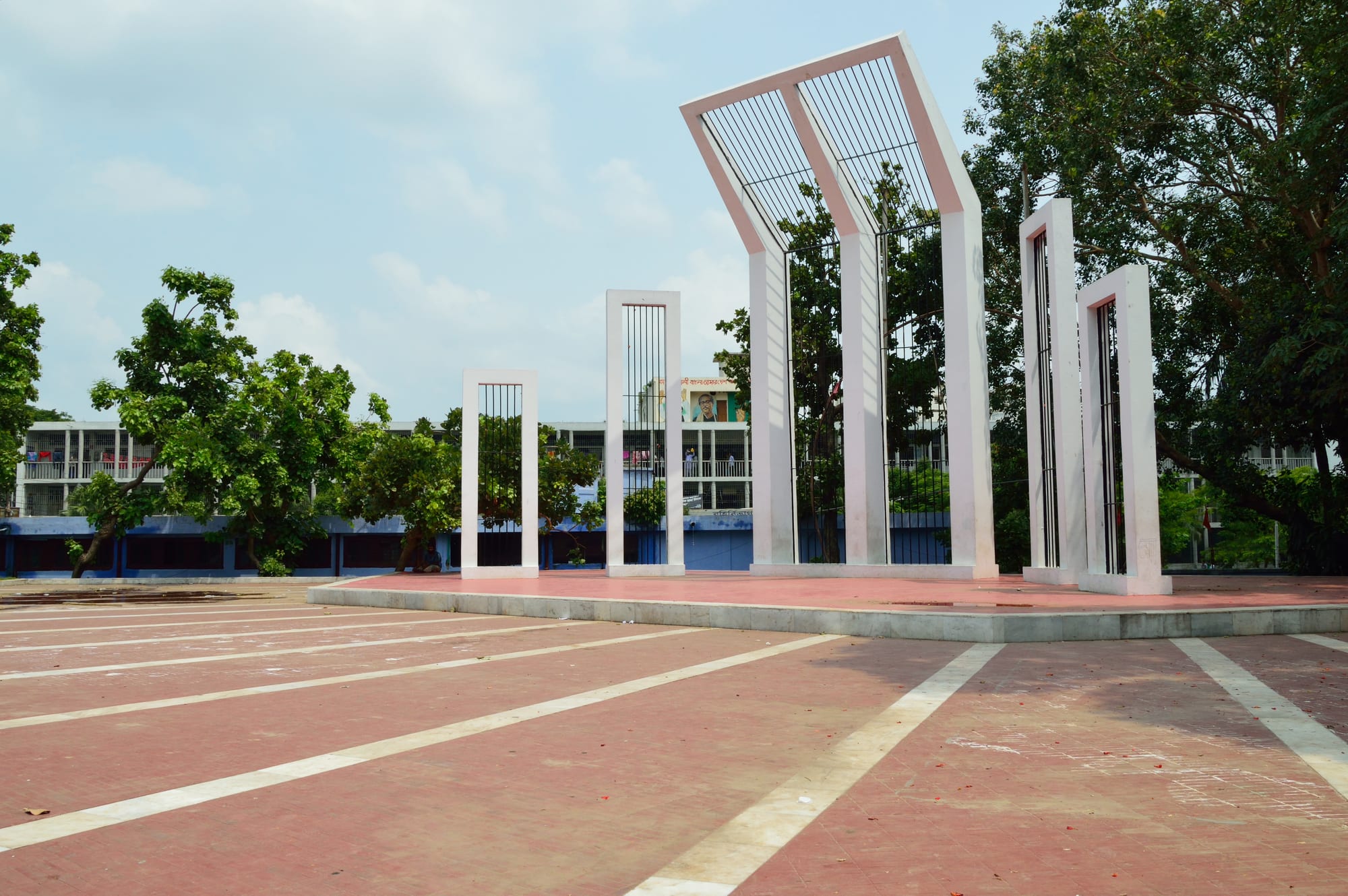
Every 21 February, Bangladeshis lay flowers at the monument barefoot, and the day is observed around the world, at the country's urging, as International Mother Language Day.
The Liberation War
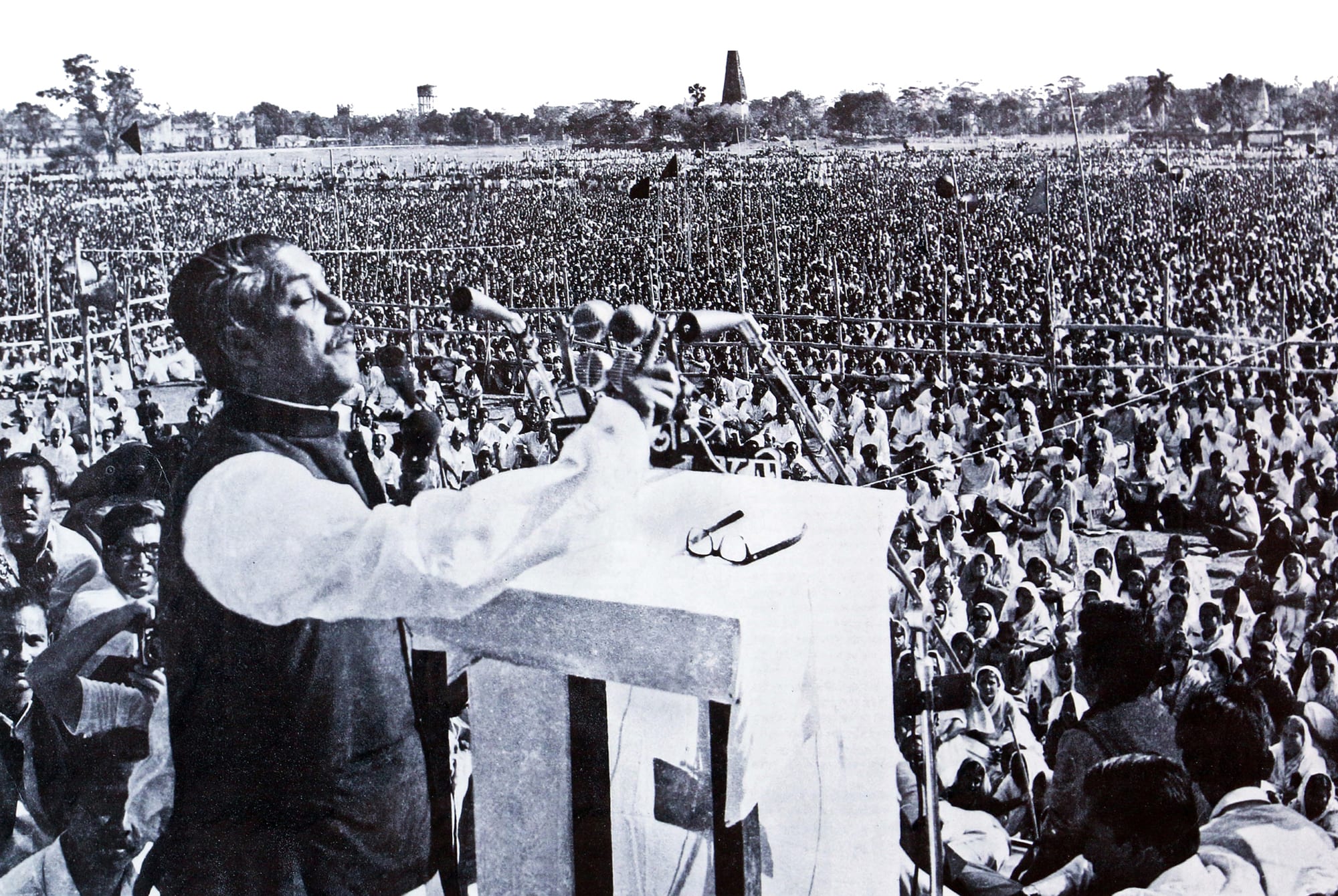
The Awami League, led by Sheikh Mujibur Rahman, built a movement for Bengali autonomy, and in Pakistan's first direct election, in December 1970, it won an outright majority of the seats in the national assembly. The military rulers in the west refused to let it take power. On 7 March 1971 Mujib told a vast crowd in Dhaka that "the struggle this time is the struggle for our freedom", and on the night of 25 March the Pakistan Army launched a crackdown on the city that killed thousands and arrested Mujib.
1971
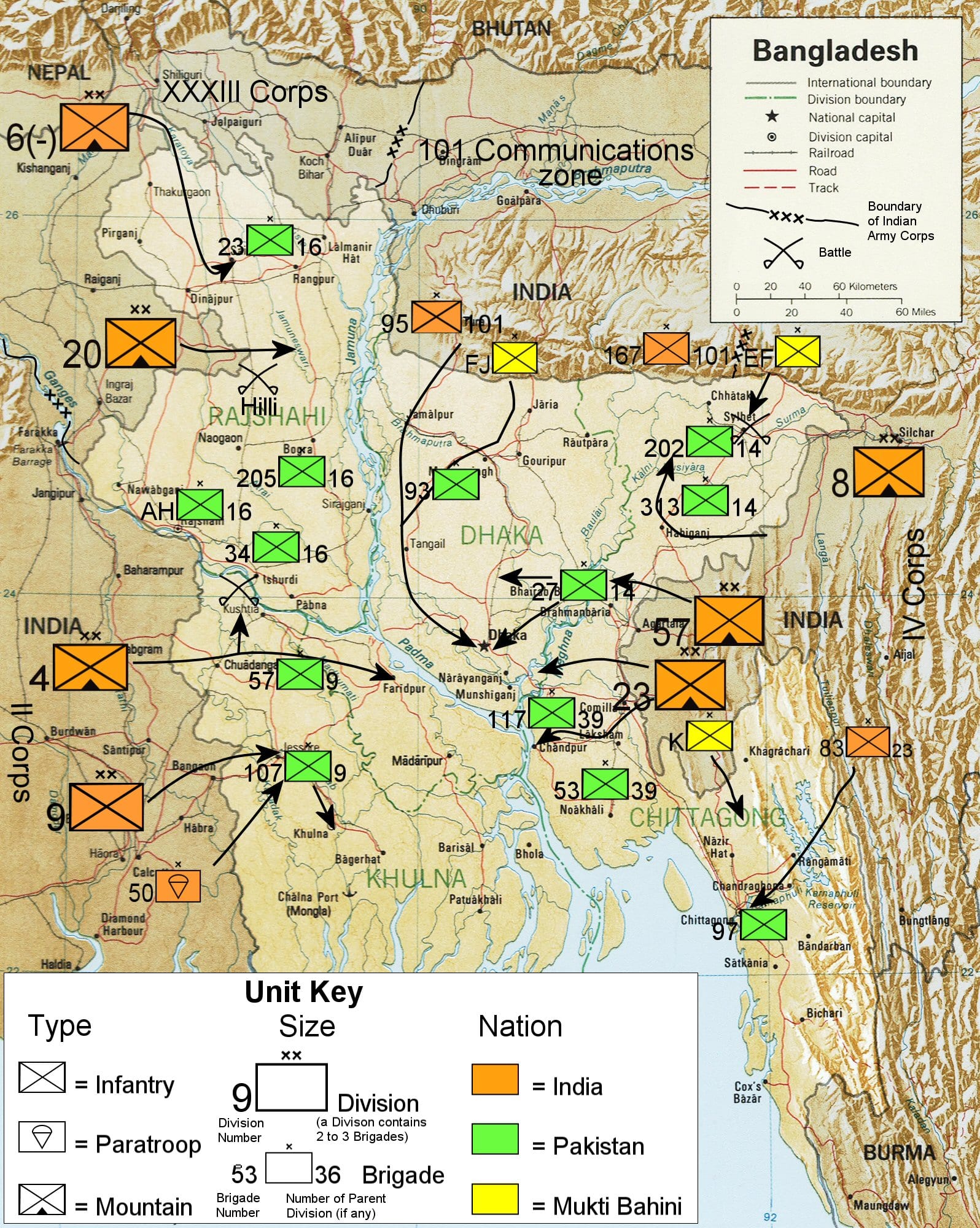
The war lasted nine months. The Pakistan Army and local collaborator militias carried out mass killings, systematic rape, and the deliberate murder of Bengali intellectuals; Bangladesh remembers three million dead, and although historians debate the figure, the scale of the atrocity is not in doubt. India, overwhelmed by refugees, intervened militarily in December 1971, and after a 13-day war the Pakistani forces in the east surrendered on 16 December — some 93,000 troops, the largest military surrender since the Second World War. Bangladesh was free.
Coups, democracy, and the 2024 revolt
Independence was followed by devastation and instability. A famine struck in 1974, and on 15 August 1975 Sheikh Mujib and almost his entire family were killed in a military coup; two of his daughters, abroad at the time, survived. Years of coups gave way to the long military rule of General Ershad, who was forced out by a democracy movement in 1990.
Democratic politics since 1991 has been a hard-fought rivalry between two parties led by two women — the Awami League under Mujib's daughter Sheikh Hasina, and the Bangladesh Nationalist Party under the widow of a later military ruler — marked by strikes, boycotts and violence. Hasina held power without interruption from 2009, through elections the opposition rejected, and her government grew steadily more repressive even as the economy boomed on garment exports, remittances and sharp gains in health and literacy. In July and August 2024 a student protest over government job quotas escalated into a national uprising; a crackdown killed hundreds, and on 5 August Hasina fled to India, ending 15 years in power.
What Bangladesh carries
Bangladesh is a nation defined twice by division — once by faith, in 1947, and once by language and exploitation, in 1971 — and it fought a genuinely terrible war to exist. Since then it has gone from a country written off as hopeless to one of the clearer development successes in the world, while remaining acutely exposed: to cyclones and rising seas on the delta, to political violence, and to the pressure of hosting a million Rohingya refugees. The rivers that made the land continue to shape everything about it.