Daily Life · Bangladesh
Bangladesh: Never Really Alone
Three generations under one roof, tea stalls that double as the neighbourhood's living room, and an ordinary day lived at close quarters in the world's most densely populated large country
By Worldlore Editorial · 30 September 2026
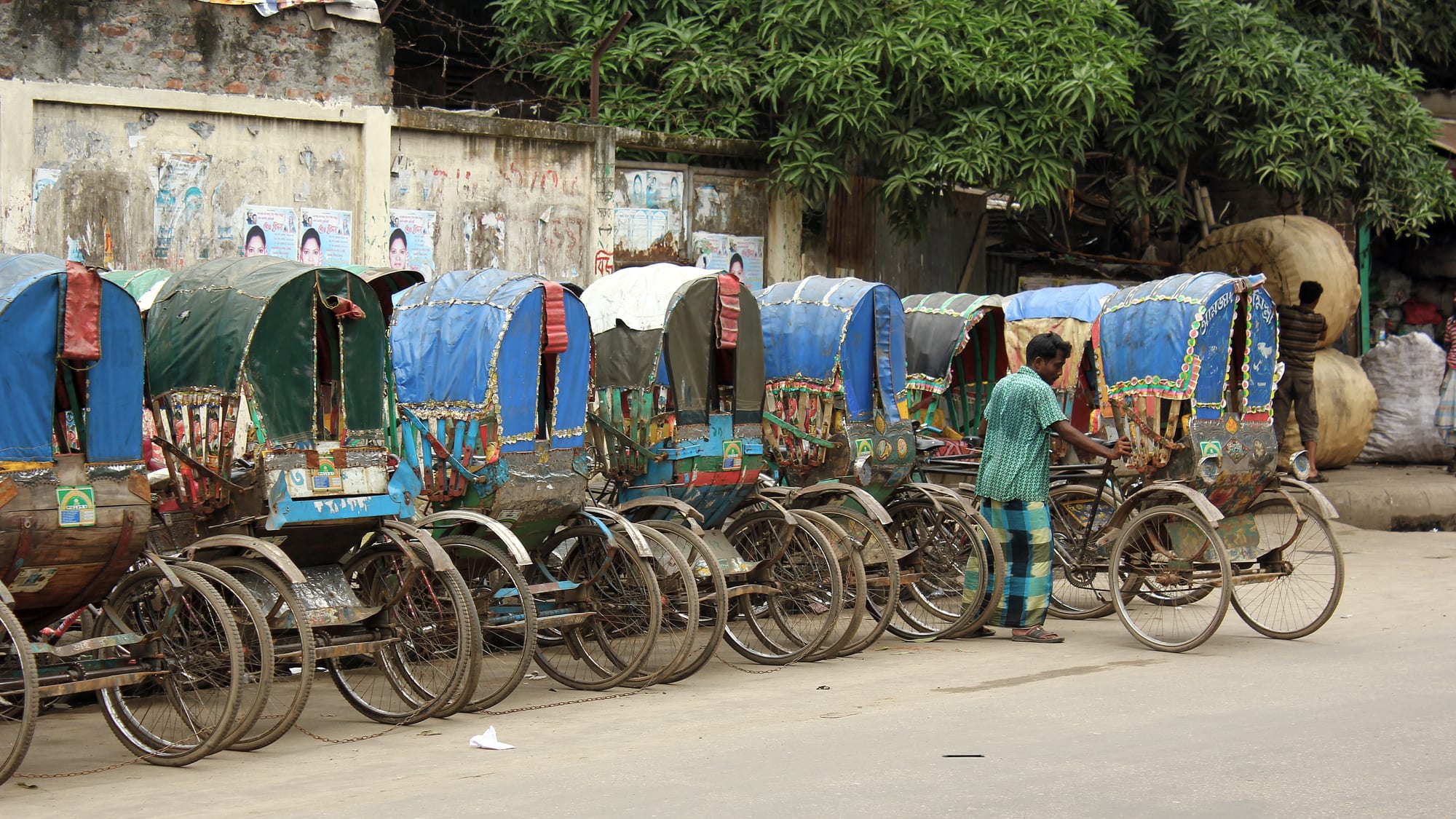
Bangladesh packs around 170 million people into a delta roughly the size of the US state of Iowa, and an ordinary day here is rarely a solitary one. Households share a courtyard rather than each keeping to a private plot, roadside tea stalls fill within minutes of opening, and a short walk to the market means moving through a crowd rather than around one. The rhythm of the day is set less by the clock than by the people close at hand — family at home, vendors and neighbours in the street, and, for a large share of the population, still the rice fields and rivers that the whole country is built around.
Family and home life
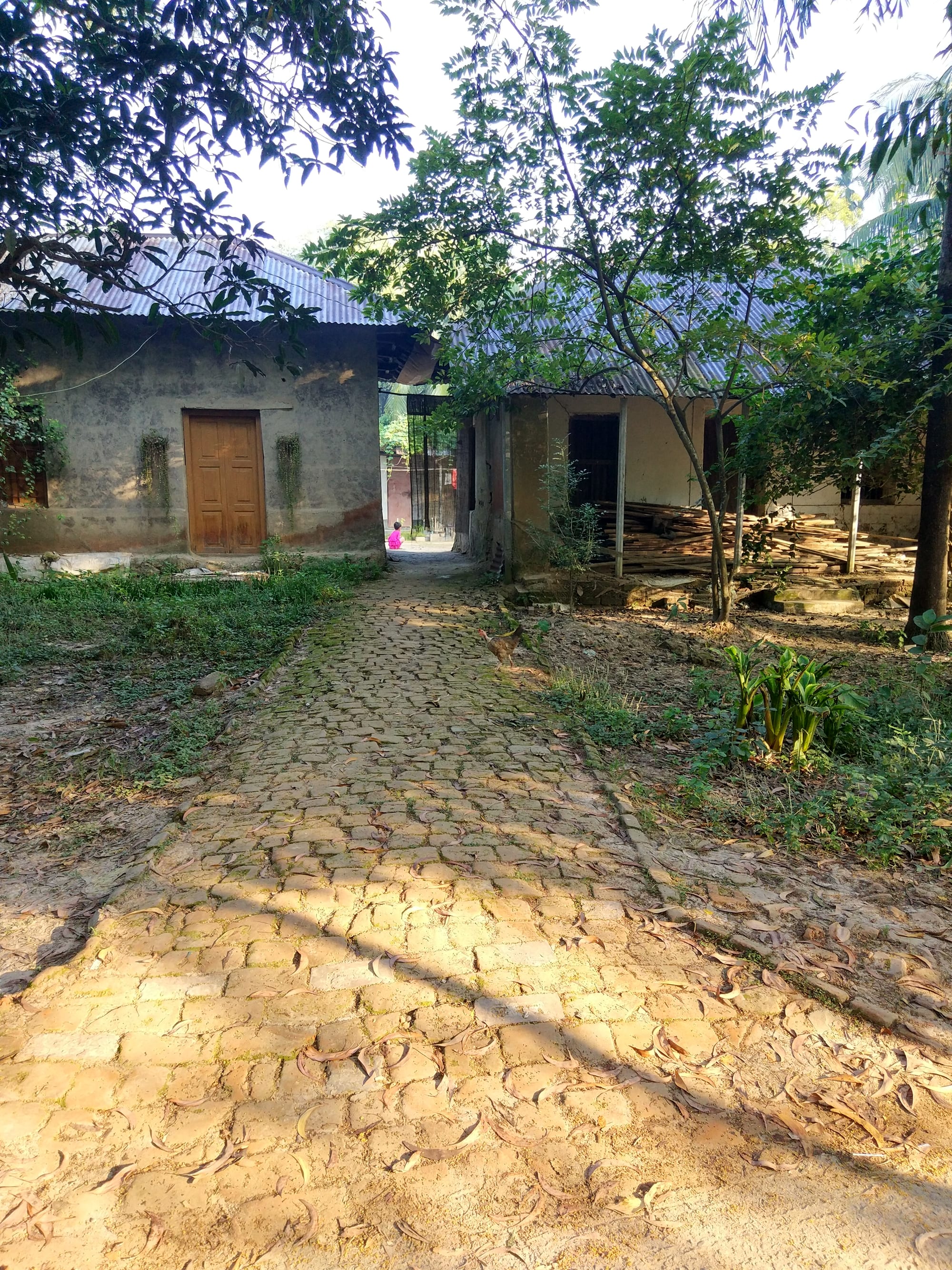
The traditional household, known as a bari, is patrilineal and often multigenerational: a couple, their unmarried children, and their married sons with their own wives and children, sometimes alongside grandparents, all sharing one homestead. In rural areas a bari is commonly arranged as several houses facing each other around a shared courtyard, where cooking, washing and childcare happen in view of the whole extended family rather than behind a single closed door. Traditionally, the oldest man holds authority over major decisions and finances, while the oldest woman oversees domestic life, and younger couples are generally expected to contribute their income to the household rather than keep it separate. In cities, this pattern is loosening: smaller, nuclear households are increasingly common as younger Bangladeshis move to Dhaka and other cities for work, though grandparents often still live nearby and help raise grandchildren.
Work, school and the rhythm of the day
The working week generally runs Sunday to Thursday, with Friday and Saturday now the standard two-day weekend for government offices and many private employers, a shift from the single Friday holiday of earlier decades. A typical office day runs from around nine to five; the Bangladesh Labour Act sets a standard 48-hour week and allows up to 60 hours including overtime, and long overtime shifts are common in the garment industry, especially ahead of shipment deadlines. That industry, the world's second-largest garment exporter, employs millions of workers nationwide, most of them women, and is one of the main reasons paid work outside the home has grown so quickly for Bangladeshi women in recent decades. Outside the garment belt and the cities, a large share of the population still works the land, with the timing of the day and the year still set by planting, harvest and the monsoon. Schools long followed a six-day week, and in recent years primary and secondary schools have also been given a Friday-Saturday weekend, like government offices.
Community life and public spaces
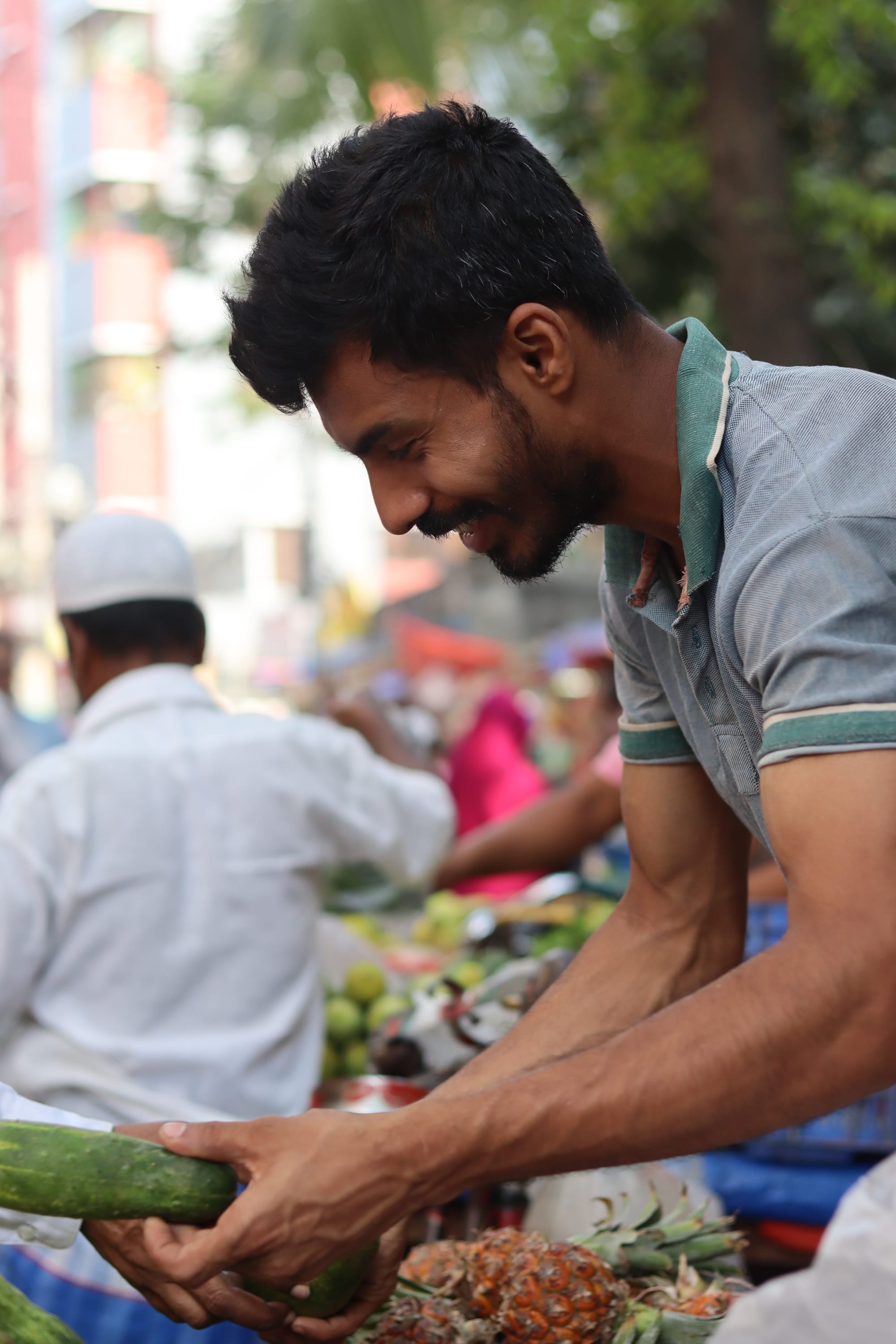
Markets are where the density of daily life is most visible: a kacha bazar, or wet market, opens early with fresh vegetables, fish and spices laid out on the ground or on low stalls, and stays busy through the morning as many households buy food for the day rather than the week. Roadside tea stalls, reckoned to number in the hundreds of thousands nationwide, are smaller but just as constant a fixture, opening from early morning to late at night and serving a strong, sweet, milky tea for a few taka a cup. They function as one of the most open public spaces in the country, requiring no membership, no appointment and very little money to sit down in. Rickshaws and their motorised cousins, auto-rickshaws known locally as CNGs, thread through almost every street in every city and town, doubling as a kind of moving public space in their own right, given how much of an ordinary day is spent travelling short distances in one.
Free time and weekends
Cricket is the country's dominant sporting passion, followed closely by football, and a big international match is one of the few things that empties streets and fills tea stalls and living rooms alike, everyone gathered around whatever screen is nearest. With Friday and Saturday now a shared weekend for most of the country, time off tends to centre on extended family visits, since so many relatives live close enough to reach easily, along with televised dramas and, where a park, riverbank or stretch of open ground is within reach, an afternoon outdoors. Long-distance travel spikes sharply around the two Eid holidays, when millions travel between cities and home villages within the space of a few days, briefly overwhelming buses, trains and river launches nationwide.
A visitor's ordinary day
Cash, in taka, is still how most everyday spending happens outside Dhaka and Chattogram, so it is worth carrying small notes, since street food and rickshaw rides rarely come with change for a large bill. Mobile payment services such as bKash are used constantly by Bangladeshis but are generally need a local mobile number and identity documents to set up, so visitors should not expect to use them. Rickshaw fares, and in practice most CNG fares even though the vehicles carry meters, are agreed before the ride, so it helps to ask a hotel or shopkeeper what a fair local price sounds like first. Traffic, particularly in Dhaka, can turn a short crossing-town trip into an hour or more, so it is worth building in extra time for anything with a fixed departure, and during the June-to-October monsoon, heavy rain can disrupt roads and river transport with little warning. Markets and small shops generally open by mid-morning and stay open into the evening most days of the week.
What to take away
An ordinary day in Bangladesh is rarely spent alone: family fills the house, neighbours fill the tea stall, and the street outside is never really empty either.