Food · Bangladesh
Bangladesh: Food and the National Dish
A river-delta nation raised on the saying "fish and rice make a Bengali," a New Year's plate built from yesterday's leftovers, and biryani serious enough to start arguments
By Worldlore Editorial · 16 September 2026
A nation of rivers, rice and fish
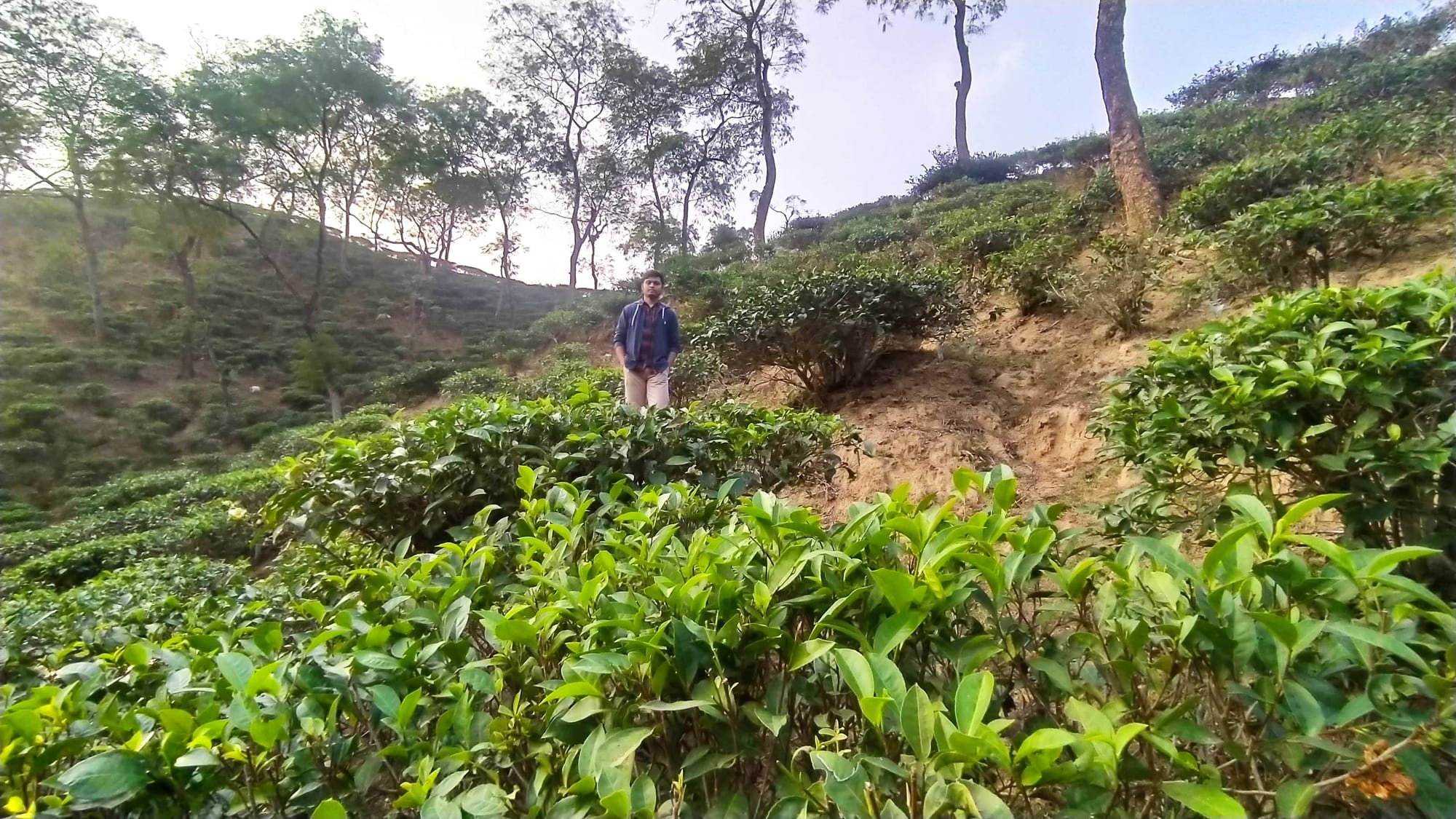
Bangladesh sits on the vast delta where the Ganges and Brahmaputra rivers meet the sea, criss-crossed by so much water that fish and rice have long been treated as the twin foundations of Bengali identity — there is an old saying, machhe bhate bangali, "fish and rice make a Bengali." Mustard oil, a five-spice blend called panch phoron, and a fondness for fermenting and drying fish for the leaner months all follow from that same river-delta geography, alongside a Muslim-majority food culture that eats meat far more freely than the Hindu Bengali tradition across the border in West Bengal.
The national dish: hilsa and rice
Hilsa, or ilish, is Bangladesh's national fish, and a meal of hilsa curry with rice is about as close as the country comes to a single dish that stands for the whole cuisine. The fish is bony and oily in a way that takes getting used to, but prized for a rich flavour that most Bangladeshis grew up on; shorshe ilish, hilsa cooked in a pungent mustard-seed paste, is the best known version.
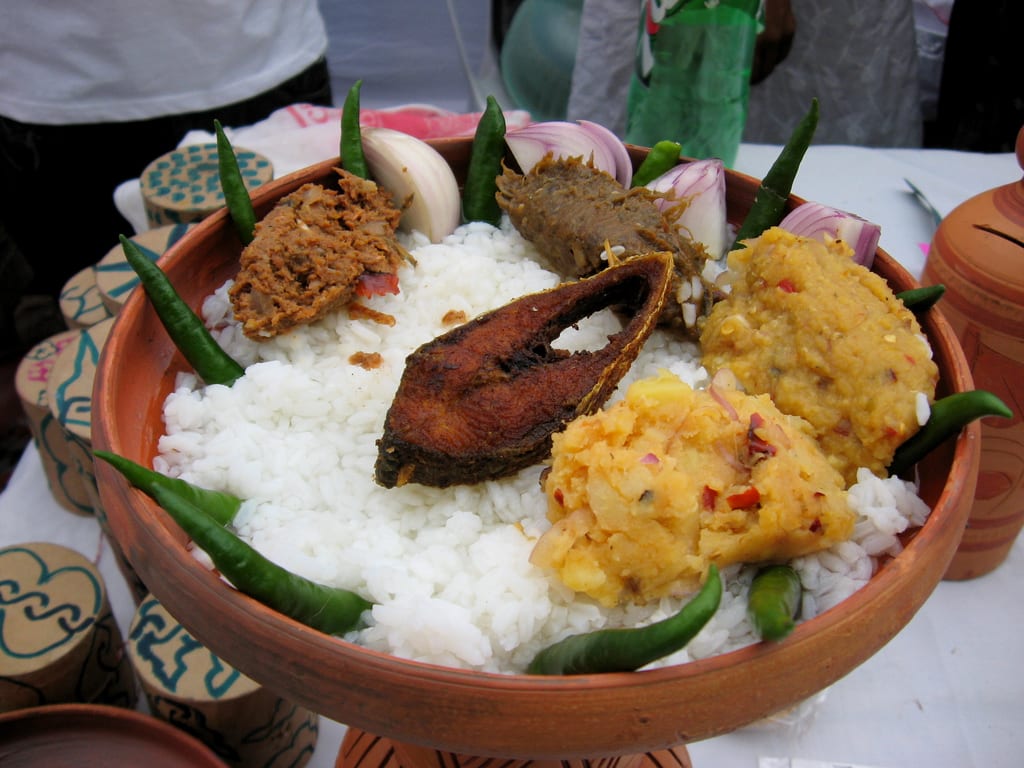
The clearest expression of that fish-and-rice identity is Panta Ilish — rice soaked or lightly fermented in water overnight, served cool with a piece of fried hilsa, green chilli and onion. Once a simple way rural households used up the previous day's rice, it has become the defining dish of Pohela Boishakh, the Bengali New Year on 14 April, eaten now by rich and poor alike as a deliberate gesture back toward rural roots.
Biryani, bhorta and the everyday plate
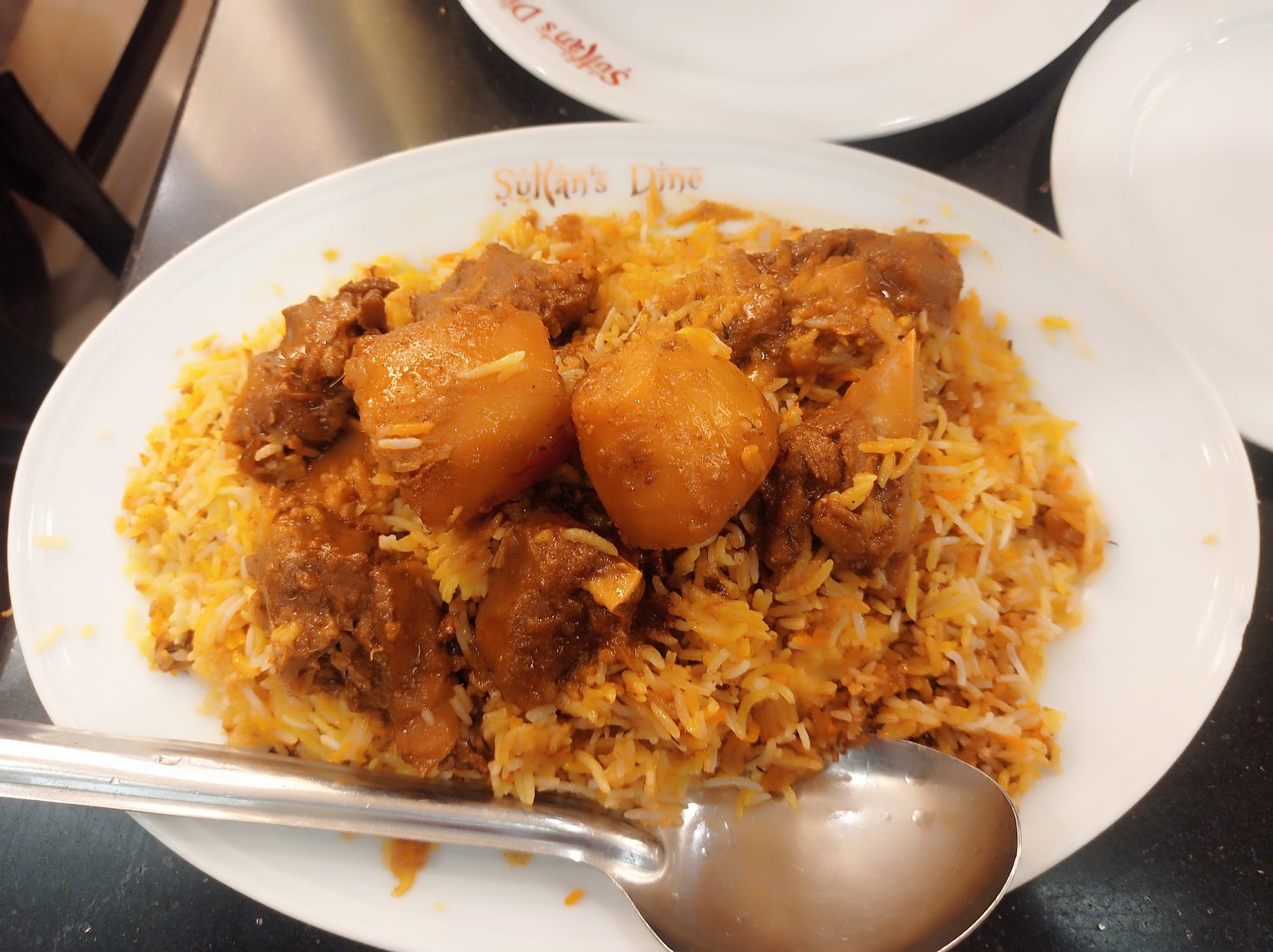
Kacchi biryani — meat and basmati rice cooked together, sealed and slow cooked rather than layered and mixed afterward — is Dhaka's great festive dish, at the centre of weddings and celebrations and served by restaurants famous enough to have loyal followings and real rivalries.
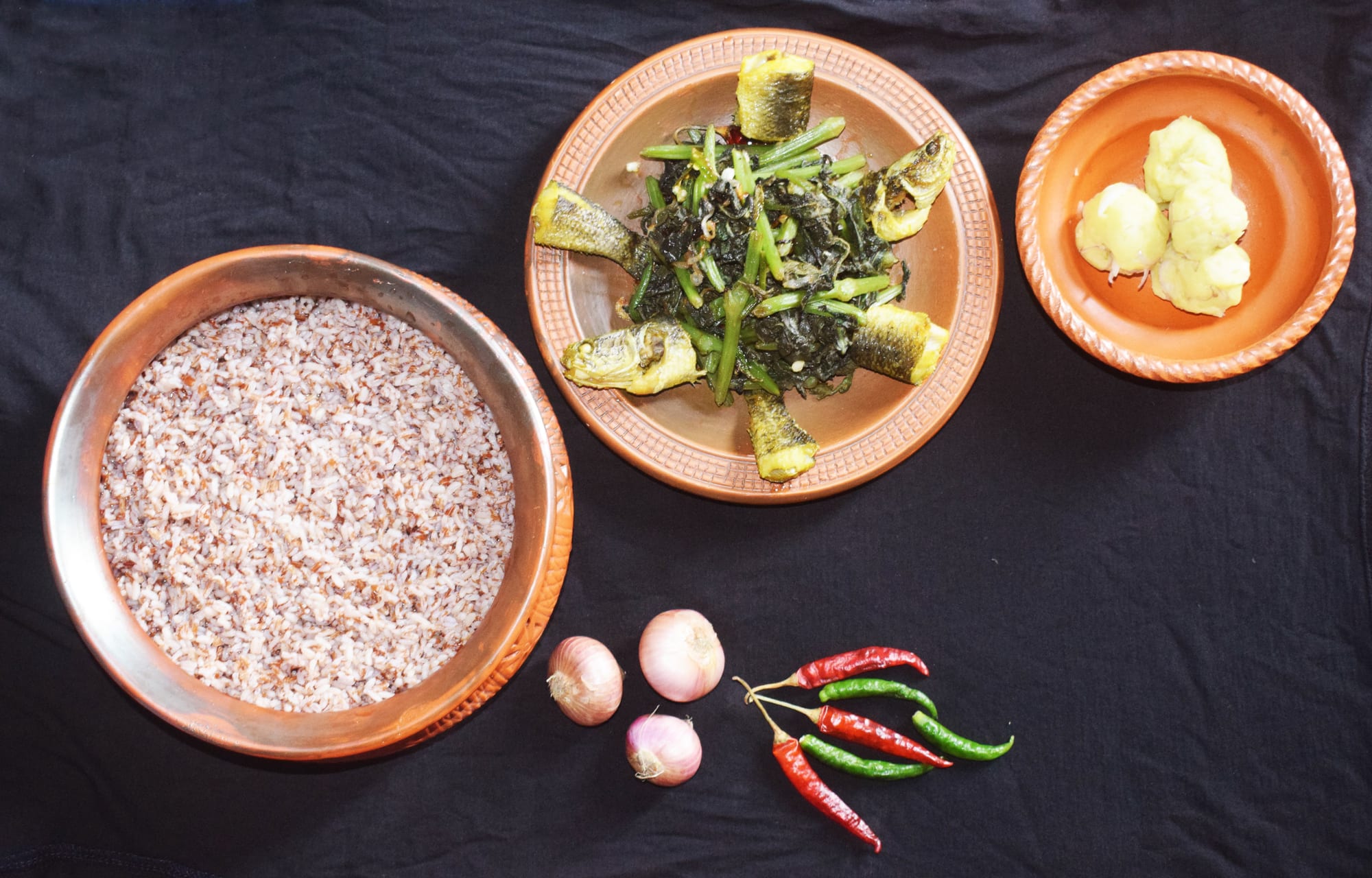
Bhorta — vegetables, fish or dried fish mashed with mustard oil, chilli, garlic and onion — is the everyday counterpart: aloo bhorta (potato), begun bhorta (aubergine) and shutki bhorta (pungent dried fish) all turn up on ordinary lunch and dinner tables, usually several kinds at once alongside rice, dal and a vegetable curry.
Dishes to know
Five more to recognise anywhere in Bangladesh:
- Khichuri — rice and lentils cooked together into a soft, comforting dish,
especially popular on rainy days.
- Pitha — rice-flour cakes, sweet or savoury, steamed, fried or griddled,
strongly associated with winter and rural festivals.
- Fuchka — crisp hollow shells filled with spiced potato, chickpea and
tangy tamarind water, the Bangladeshi member of the pani-puri family of street snacks found across South Asia.
- Roshogolla and sandesh — soft, spongy milk-based sweets, part of a shared
Bengali sweet-making tradition also strongly associated with West Bengal across the border, with both regions claiming the finest versions.
- Mezban — a Chittagong tradition of communal feasting, historically thrown
by wealthy families and now often for whole neighbourhoods, built around a hot, deeply spiced beef curry.
Tea, borhani and drinks
Bangladesh grows its own tea in the hills around Sylhet, in Bangladesh's north-east, and tea is drunk constantly and strongly, often with milk and sugar. Borhani, a spiced, salted yoghurt drink, is served specifically alongside biryani at weddings and celebrations to cut through its richness. Lassi and fresh fruit juices are common in the heat, and Sylhet has also become known for a novelty "seven-colour tea" that layers different infusions by density in one glass.
Eating as a traveller
Nearly all food is halal, and pork is essentially unavailable outside a few international hotels. Vegetarians can rely on dal, vegetable bhorta and curries, though fish appears constantly and even vegetable dishes are sometimes cooked with fish stock or dried fish for depth. Tap water is not safe to drink; stick to bottled or boiled water. Street food — fuchka, jhalmuri (spiced puffed rice) and fried snacks — is cheap, plentiful and, in Dhaka especially, a genuine highlight if your stomach can handle it.
What to take from the table
Hilsa and rice, in whatever form it arrives — a mustard curry on an ordinary evening or a plate of Panta Ilish on New Year's morning — is the dish that best explains how Bangladesh sees its own food, and its own identity.