Food · The Bahamas
The Bahamas: Food and the National Dish
A giant sea snail turned into everything from raw salad to fried fritters, pigeon peas and rice on every plate, and a rolled guava pastry unlike any other Caribbean dessert
By Worldlore Editorial · 16 September 2026
An archipelago that eats from the sea
Bahamian food is built around what a shallow, warm archipelago of more than 700 islands actually provides: seafood above almost everything else, backed by rice, beans and tropical fruit, and seasoned in a style that blends British colonial cooking with the West African and wider Caribbean traditions brought by enslaved people and later immigration. Only about three dozen of the islands are inhabited, and the food culture still varies noticeably between Nassau, the crowded capital on New Providence, and the quieter Out Islands, where fishing supplies far more of what ends up on the table. It shares a great deal with its Caribbean neighbours, but one ingredient in particular has become inseparable from Bahamian identity.
The national dish: conch
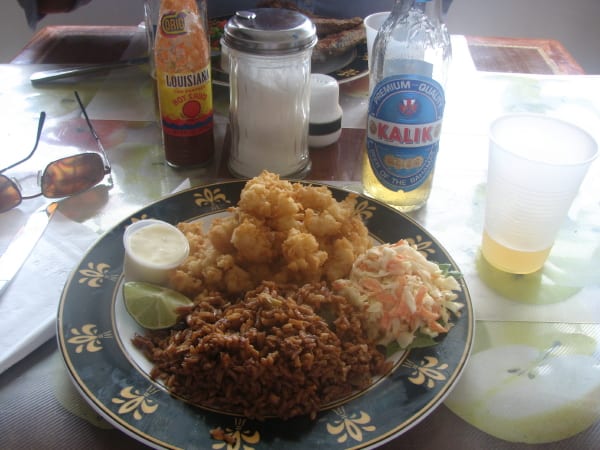
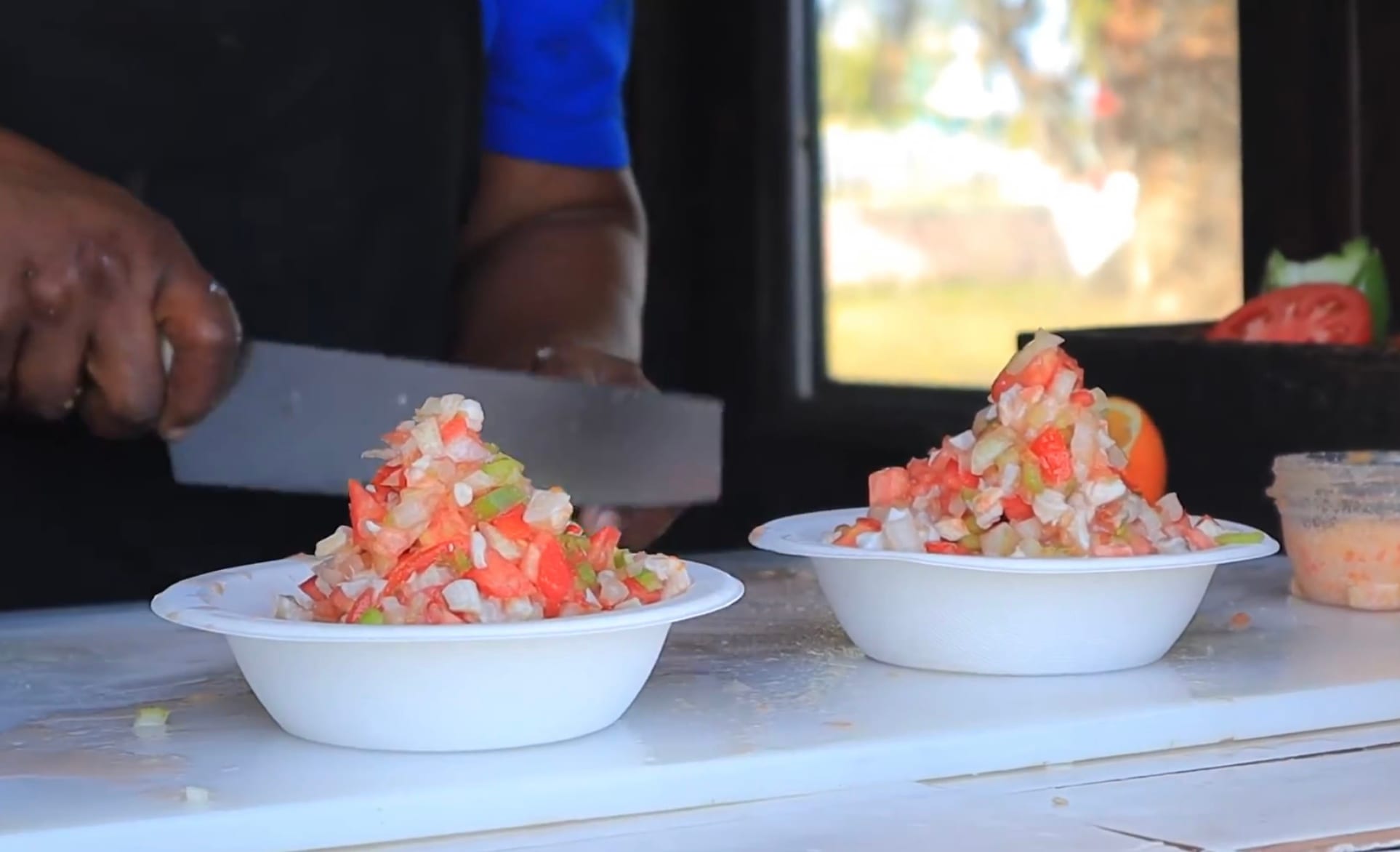
Conch — a large marine snail pulled live from its shell — is as close to an official national dish as the Bahamas has, and it is eaten in more forms than almost any single ingredient anywhere in the Caribbean. Conch salad is the most iconic preparation: the raw meat is diced fine and "cooked" only by a marinade of lime and orange juice, mixed with chopped onion, tomato, celery and hot pepper, and made to order at conch stands and fish markets.
Cracked conch — the meat pounded tender, breaded and fried, much like a schnitzel — is the other classic version, along with conch fritters and conch chowder. Nassau's Arawak Cay, known locally as "the Fish Fry", is the best-known place to try several styles side by side, from stalls that have been doing it for generations.
What sits alongside it
Peas and rice — pigeon peas and rice cooked together with tomato paste, thyme and usually a little salt pork — is the standard Bahamian starch, the equivalent of a side of rice anywhere else, and it appears on almost every plate that also carries fish, chicken or conch. Johnnycake, a dense cornmeal bread, and grits with fried or boiled fish are common breakfasts. Souse, a light, limey broth built on pig's feet, chicken or sheep tongue, is a traditional weekend-morning dish, eaten as much for its reputation as a cure for a heavy Saturday night as for the taste itself.
Dishes to know
Five to recognise anywhere in the Bahamas:
- Peas and rice — pigeon peas and rice with tomato and thyme, the default
starch alongside almost any main.
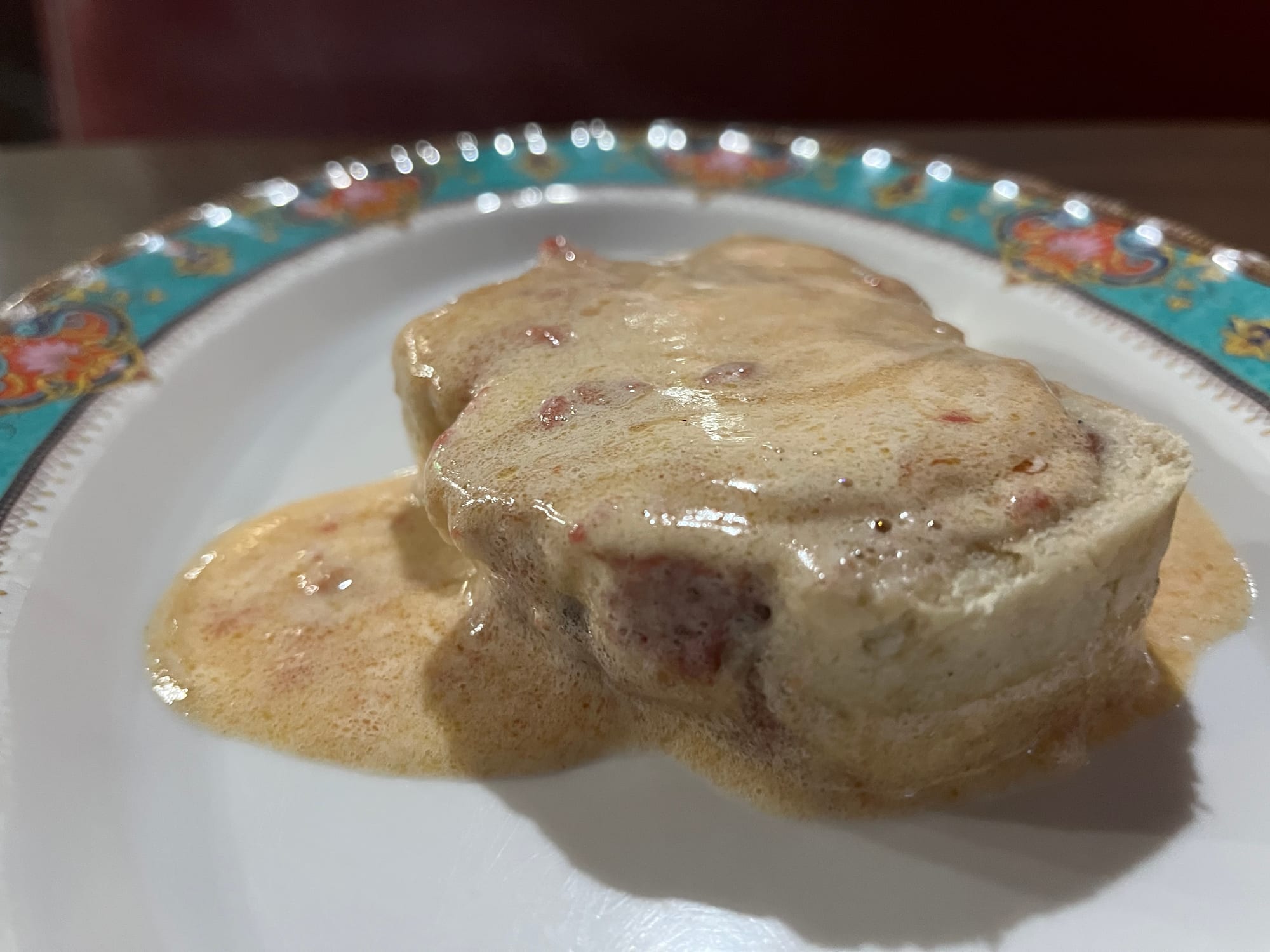
- Guava duff — a rolled pastry filled with guava, boiled or steamed, and
sliced to serve with a warm rum-butter sauce. The best-known Bahamian dessert, and unlike anything else in the Caribbean.
- Souse — a light, limey broth with pig's feet, chicken or sheep tongue, a
weekend breakfast tradition.
- Bahamian mac and cheese — baked firm enough to slice, heavily seasoned, and
a fixture of Sunday dinner alongside baked chicken or turkey.
- Johnnycake — a dense cornmeal bread served with fish and grits at
breakfast.
Drinks and festivals
Kalik and Sands are the two Bahamian beer brands, named with genuine local pride — Kalik takes its name from the sound of cowbells at Junkanoo, the country's Boxing Day and New Year's street parade, which brings its own wave of food stalls and celebratory eating. The Goombay Smash, a rum cocktail associated with the Out Islands, and switcha, a simple limeade, round out the drinks list alongside rum more generally.
Where it all comes from
The overharvesting of conch is a real, ongoing concern across the region, and the Bahamas has been at the centre of efforts to manage the fishery more sustainably, since the animal that anchors so much of the national cuisine takes years to mature and cannot simply be farmed at scale. Rice and pigeon peas, by contrast, arrived through the same colonial trade routes that shaped food right across the English-speaking Caribbean, and the West African cooking techniques enslaved people brought with them — long, well-seasoned simmering, and a willingness to use every part of an animal, as souse shows — still underpin how these staples are actually cooked at home.
Eating as a traveller
Seafood, above all conch and grouper, is the highlight and usually very fresh. Vegetarians will find the going harder, since peas and rice is often cooked with pork and most mains are seafood or meat. Tap water is generally safe in Nassau and the more developed islands, though bottled water is common practice. Prices in Nassau and the resort areas run high; the Out Islands and local fish fry spots offer better value and, often, better food.
What to take from the table
Conch, in whatever form it arrives — raw and citrus-marinated, fried and crisp, or simmered into a chowder — is the dish to build a Bahamian meal around, and Junkanoo is the moment to see the whole food culture turned up to full volume.