Culture & Customs · The Bahamas
The Bahamas: Crepe Paper and Cowbells
A pre-dawn street parade built by hand over the best part of a year, a nation of churchgoers, and island manners that rest on courtesy, humour and a proper respect for seniority
By Worldlore Editorial · 30 September 2026
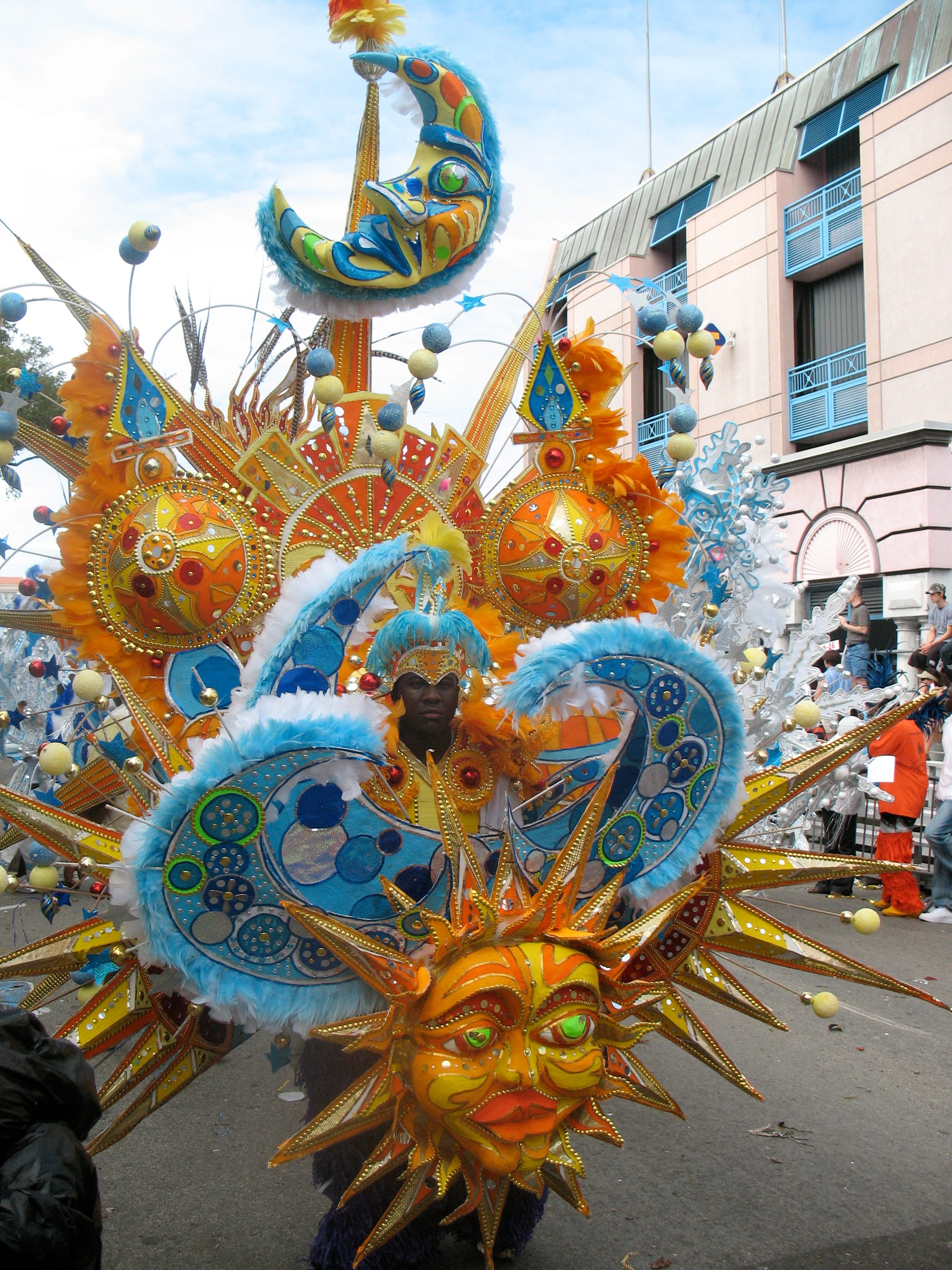
It is the small hours of Boxing Day, long before sunrise, and the main street of the capital is packed. Out of the darkness comes the sound first: goatskin drums, clanging cowbells, whistles and horns, a rhythm that hits the chest before the parade itself comes into view. Then the costumes arrive, towering frames of cardboard and wire covered in thousands of strips of brightly coloured paper, shaped into suns, sea creatures and scenes from history, each carried by a single dancer. Behind them come hundreds more members of the same group, all in matching colours, all moving to the same beat. Many of them have spent most of the year building what they wear tonight, and by morning the judges will have decided whose work was best. Junkanoo is the Bahamas at full volume: proud of its African roots, competitive, communal and fiercely creative, with a sense of occasion that runs through daily life too.
Faith, identity and values
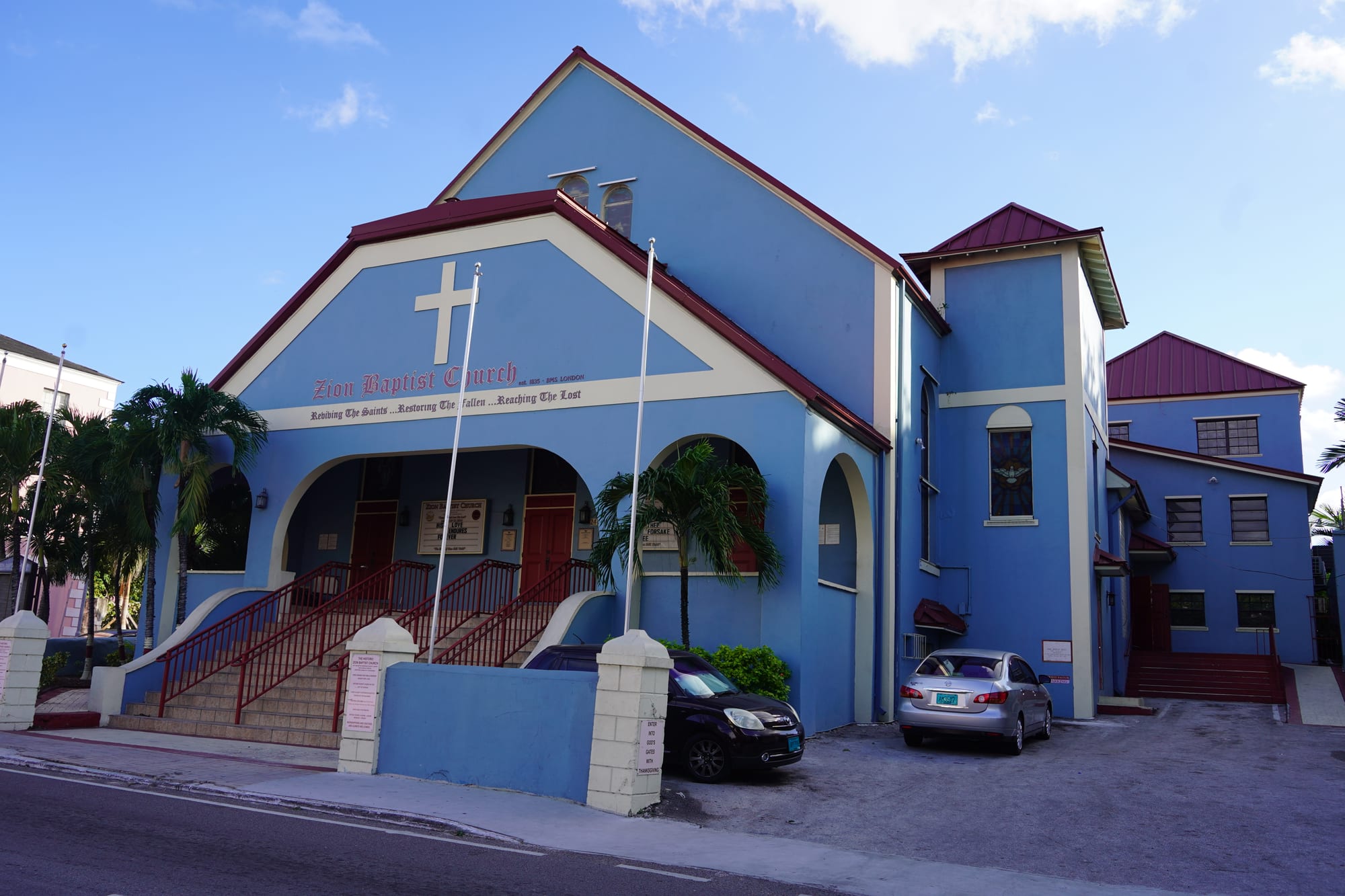
The Bahamas is a strongly Christian country, and religion shapes both the calendar and the way people speak. At the 2010 census, which remains the most recent to record religion, about nine in ten Bahamians said they professed a religion. About 70 per cent were Protestant, with Baptists the largest single group at around 35 per cent, followed by Anglicans at 14 per cent, Pentecostals at 9 per cent, and smaller numbers of Seventh-day Adventists, Methodists and others; around 12 per cent were Roman Catholic. Sunday churchgoing is common, and biblical phrases turn up naturally in everyday conversation. Worship is not confined to buildings: immersion baptisms in the sea and outdoor revival meetings are part of religious life, and some congregations practise faith healing and speaking in tongues. Alongside mainstream Christianity, some Bahamians also hold beliefs drawn from obeah, an African-derived spiritual tradition, which is practised privately; it remains illegal on paper, though the law is traditionally not enforced.
The great majority of Bahamians are of African descent, and pride in that heritage is a thread running through national culture, most visibly in Junkanoo, whose roots lie in the celebrations of enslaved people. Other values are closer to everyday manners. Bahamian society is relaxed on the surface but attentive to seniority and titles, and older people and those in senior positions expect to be treated with deference. Humour matters a great deal: people tease, joke and tell stories freely, and storytelling has long been regarded as an art in its own right. Family and community ties are strong, particularly on the smaller islands, and the weekend gathering, the church service and the regatta or festival bring people together across generations.
Greetings and meeting people
A warm handshake with direct eye contact is the usual greeting between people meeting for the first time. Titles matter more than the easy-going atmosphere might suggest: adults are addressed as Mr, Mrs or Miss with their surname until they invite the use of first names, and in a group it is courteous to greet the most senior person first before moving on to everyone else.
Conversation is direct but friendly, and often laced with humour. Visitors sometimes mistake teasing or blunt remarks for rudeness, when they are usually a sign of ease and goodwill. English is the official language and is spoken everywhere, but everyday speech is Bahamian dialect, an English-based creole with its own rhythm and vocabulary. Among friends, greetings tend to be brief, cheerful and delivered in dialect. Haitian Creole is also widely spoken within the country's large Haitian community.
Hospitality and being a guest
Bahamians are known for their hospitality, and the country has built part of its welcome to visitors around it. When invited to a home, a guest usually brings a modest gift such as fruit or flowers, and presents are generally opened as soon as they are received. Guests are expected to arrive on time for a dinner invitation, to sit where the host suggests and to wait for the host to begin before starting to eat. Finishing the food on the plate is taken as a sign of appreciation, while leaving a great deal can look wasteful.
Dress is a form of respect as well. Beachwear belongs on the beach or by the pool; the official tourism guidance is that swimsuits should be covered with shorts or a shirt in town, and that beachwear is inappropriate in churches, restaurants and casinos. In the evening, some of the smarter hotels, restaurants and casinos in the larger towns expect men to wear a jacket. Bahamians themselves tend to dress smartly when going out, and particularly for church.
The Ministry of Tourism's People-to-People programme turns this hospitality into a formal invitation. Visitors who sign up are matched with a volunteer Bahamian host according to age, occupation, hobbies and interests, and the host introduces them to island life in whatever way suits them both, from a home-cooked meal to a favourite historic site. The hosts are unpaid, and the programme is free. In Nassau, the programme also holds a complimentary tea party at Government House on the last Friday of several months of the year, with live music, a fashion show by Bahamian designers and Bahamian refreshments.
Festivals and life's big moments
Junkanoo is the heart of the festive year. Its origins lie in the days of slavery, when enslaved people were given a short holiday at Christmas and celebrated with music, dance and masks; the name itself is of debated origin, often linked to a West African figure known as John Canoe. For generations the parade took place on Christmas morning, but in 1938 it was moved to Boxing Day after objections from the churches, and it is now held on Boxing Day and New Year's Day, starting in the early hours after midnight. Organised groups of up to a thousand people prepare for almost the whole year, building costumes that are now made largely of cardboard, wire and crepe paper, and they compete fiercely for prizes. Junkanoo also appears at Independence Day and summer festivals, and anyone may take part provided they follow the rules of the National Junkanoo Association.
The parade has always meant more than a party. Its music, dance and masquerade are thought to draw on West African traditions, possibly those of the Ahanta, Igbo or Yoruba peoples, and during slavery and colonial rule it gave Black Bahamians a rare chance to take over the streets, including spaces otherwise reserved for white residents, and to assert an identity of their own. That history helps explain the pride and seriousness with which Junkanoo is still treated, and why the judges' verdict matters so much to the groups.
The national calendar also marks the country's own history. Majority Rule Day on 10 January, a public holiday since 2014, commemorates the day in 1967 when the Bahamas gained majority rule for the first time. Emancipation Day, on the first Monday of August, recalls the emancipation of slaves in the British colonies in 1834 and is marked with a Junkanoo rush-out, days at the beach, sailing and regattas. Independence Day, 10 July, celebrates the country's full independence from the United Kingdom in 1973: the evening before brings an ecumenical service and a cultural show, and at midnight the national flag is raised to the anthem and fireworks, followed by a Junkanoo rush. Beyond these, island festivals, regattas and homecomings give each community its own moment in the year.
Weddings are generally held in church. When someone dies, a wake is held at the family home, the funeral takes place in church, and burial follows in a churchyard or cemetery. The church and the wider community rally around the bereaved, cooking for the family, praying with them and helping to organise the funeral, and Bahamian churches have a long tradition of expressing grief openly and at length rather than holding it back.
Arts, crafts and music
Rake-and-scrape is the country's traditional folk music, born in rural island communities and built on handmade and repurposed instruments. Its defining sound comes from a ridged carpenter's saw scraped with a screwdriver or a nail, played alongside the goatskin goombay drum, an accordion and maracas, and the accordion in particular is regarded as integral to the genre. The music goes hand in hand with quadrille dancing and village gatherings, and it is celebrated each year over the Labour Day weekend in early June at a festival on Cat Island, which the tourism ministry calls its birthplace. Alongside a battle of rival bands, the festival includes a gospel concert and quadrille dancing, and it forms part of a deliberate effort to keep a new generation playing.
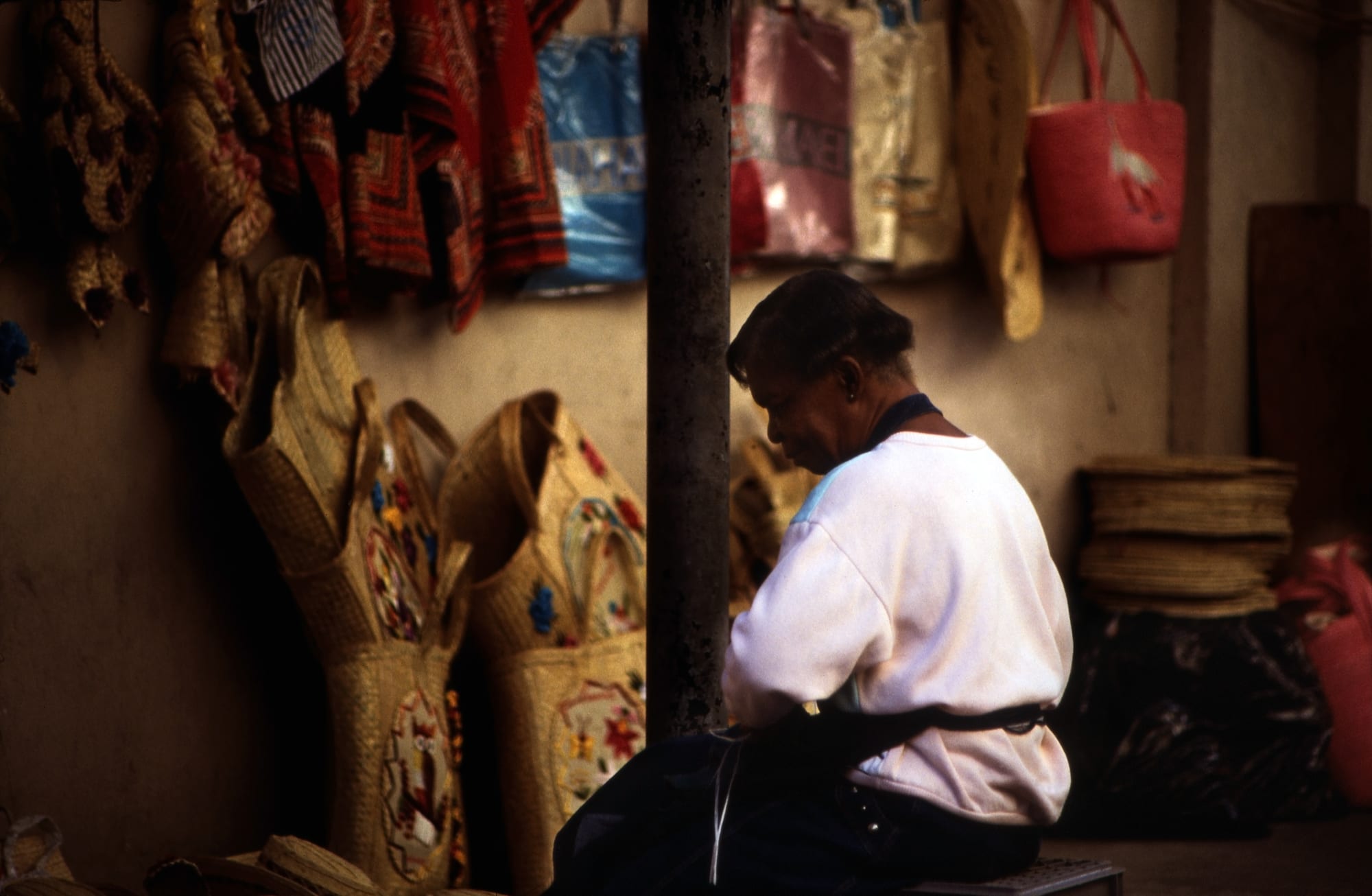
Straw work is the best-known craft. The skills of plaiting and weaving palm fronds and grasses came with enslaved Africans, their descendants and Seminole people who settled in the islands, and for generations women made baskets, mats, hats and dolls for their own households. As tourism grew, the craft turned towards goods for visitors, and straw markets became fixtures of the larger towns. Artisans today face competition from cheap imported goods sold as souvenirs, and many work long, hot hours both making and selling their pieces, which makes a genuinely handmade item all the more worth seeking out.
Junkanoo itself is also a craft, and arguably the country's largest art form. The costumes are designed and built by hand in group workshops, and the skills involved, from wire-bending to the painstaking fringing of paper, are passed down within the groups. Bahamian painters have long favoured landscapes, seascapes and scenes from history, and theatre, concerts and gospel music all have a loyal following.
Dos and don'ts for visitors
- Do shake hands and use Mr, Mrs or Miss with a surname until invited to use first names.
- Do greet the most senior person in a group first.
- Do cover swimwear with shorts or a shirt away from the beach or pool.
- Do dress smartly for church, and expect some smarter restaurants to require a jacket for men in the evening.
- Do bring a small gift such as fruit or flowers when invited to a Bahamian home.
- Do consider signing up for the free People-to-People programme to meet Bahamians on their own ground.
- Don't take teasing or blunt humour as hostility; it is usually a sign of friendliness.
- Don't wear beachwear into churches, restaurants or casinos.
What to take away
Bahamian culture is relaxed but never careless, and visitors who show courtesy to elders, dress with respect away from the beach and embrace the country's love of music, faith and celebration will find the welcome is genuine.