Daily Life · The Bahamas
The Bahamas: A Nation Run on Nassau Time
About three in four Bahamians live on a single island working a nine-to-five day, while the rest of the archipelago keeps its own pace, set by market days, ferries and the weekly mail boat instead of an office clock
By Worldlore Editorial · 30 September 2026
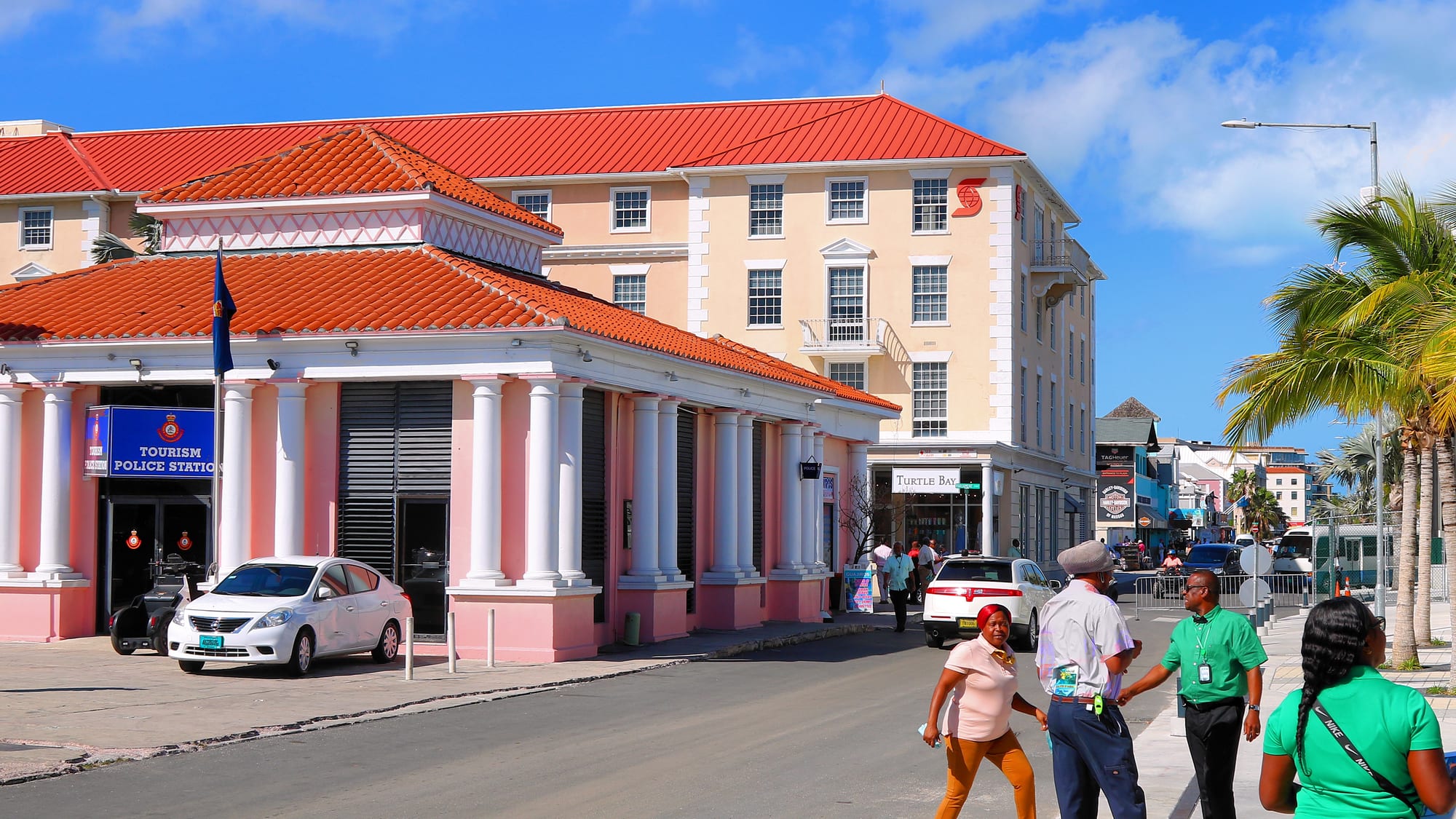
For most Bahamians, an ordinary day runs on Nassau time: up early, onto a shared jitney bus or into the car, a nine-to-five job in tourism, banking or government, and home again through the same traffic that residents complain about as much as the heat. For the smaller number who live scattered across the Family Islands, the day runs by a different clock entirely, set by the tide, the boat schedule and whichever shop happens to be open. Both versions of the day are still recognisably Bahamian: church-going, family-centred, and shaped by an economy that depends, one way or another, on the sea and on visitors arriving from across it.
Family and home life
Households vary considerably by income and location. In many families, especially where parents have moved to Nassau or Freeport for tourism work, children are raised partly or mainly by grandparents, and single-parent households are common. Some middle- and upper-income families employ a maid or other domestic help, while in poorer households the work of running the home is shared among family members rather than hired out. Housing across the islands tends to be modest in height and built with hurricane safety in mind, with porches and plenty of windows for ventilation a common feature of older homes in particular.
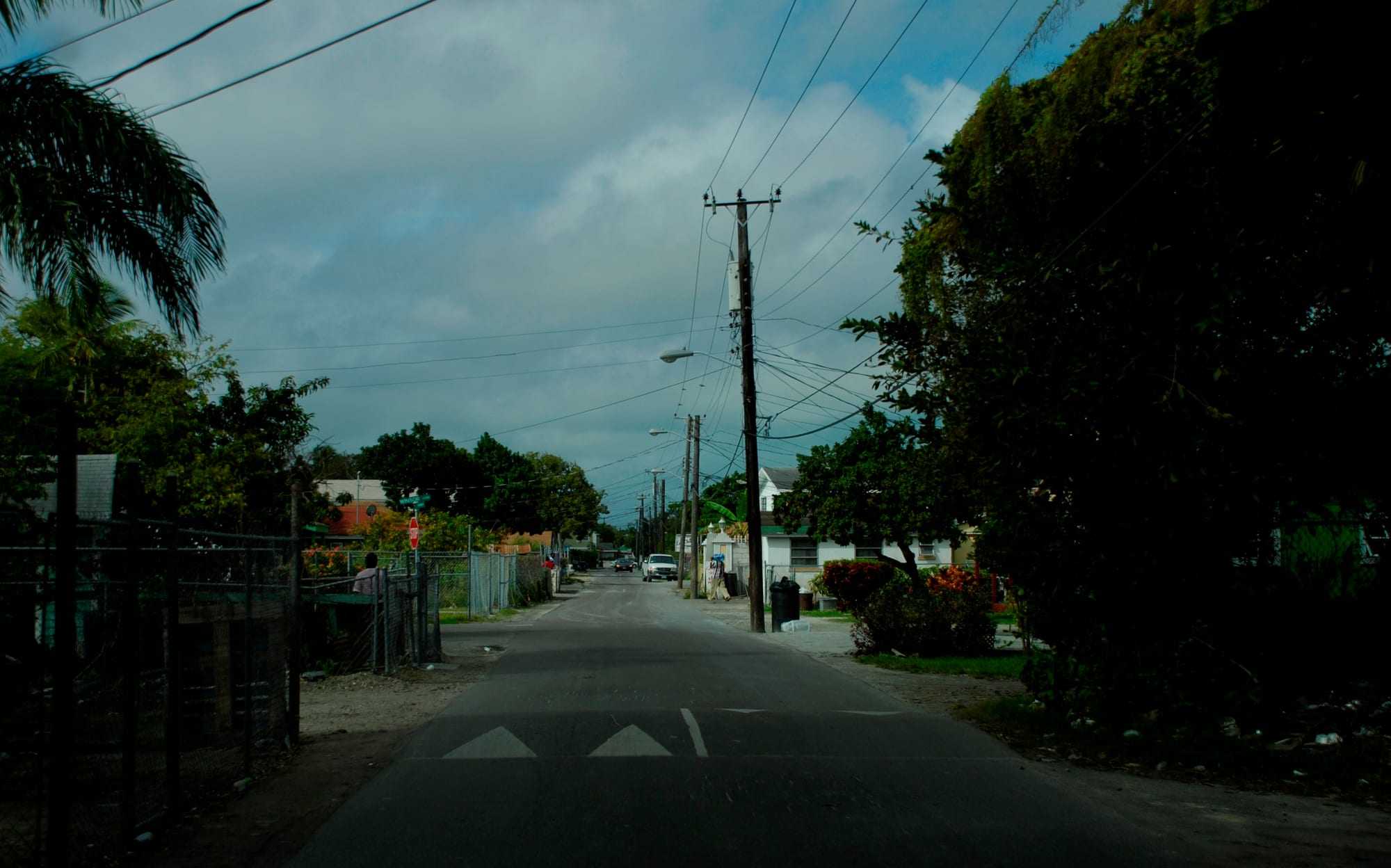
Family life is still organised around such neighbourhoods rather than any single household, with relatives often living close enough to share childcare and daily errands.
Work, school and the rhythm of the day
The standard working week runs Monday to Friday, roughly nine to five, in line with the legal norm of an eight-hour day and a forty-hour week that applies across most of the public and private sector. The school year mirrors this rhythm at a slower pace, running from late August or early September to late May or early June, with the school day generally following the same morning-to-mid-afternoon shape as the adult working day. Nassau's economy runs on cruise tourism, stopover visitors, banking and government work; on the Family Islands, fishing, small-scale farming, boatbuilding and tourism guiding do the same job on a much smaller scale. A large Haitian community, some of its members in a precarious legal position, supplies many workers for lower-wage jobs such as construction, gardening and domestic service.
Community life and public spaces
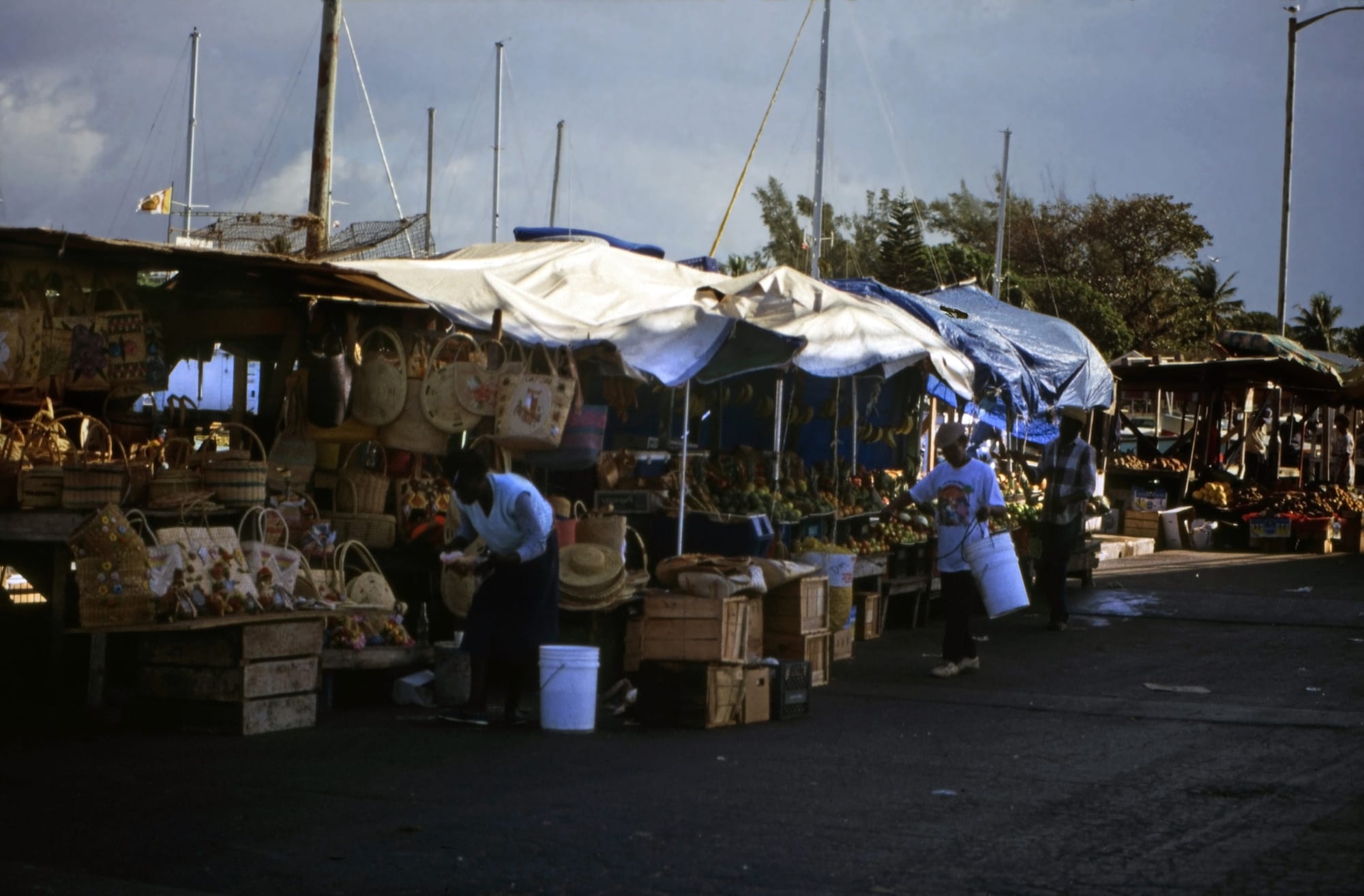
Potter's Cay, tucked beneath one of the bridges linking Nassau to Paradise Island, is the clearest public space showing how the city actually runs day to day: a produce market, dozens of small conch and fish stalls, and, at the same dock, the mail boats that load flour, fuel, building supplies and passengers before setting out for the Family Islands. Nassau's other markers of public life are its jitney buses, privately run minibuses that are the island's main form of public transport, stopping at shaded roadside kiosks and often for riders who wave them down, and its church buildings, which anchor almost every neighbourhood whether or not a service is underway that day. On the Family Islands, public life is smaller in scale by necessity: a dock, a church, a shop or two, and whatever gathers around the mail boat's arrival that week.
Free time and weekends
Dominoes is a popular pastime, played mostly by men at folding tables set up on sidewalks, street corners or under a shade tree, usually in pairs against pairs, with the slap of tiles a familiar background sound in the early evening. Weekends, where money and weather allow, tend to mean the beach or a boat rather than staying in. Sailing has a particular hold: the National Family Island Regatta, held at George Town in Exuma each year since the 1950s, and other events such as the Long Island Regatta and the Cat Island Regatta, draw crowds for days of racing, food stalls and music, and are treated as major social occasions rather than niche sporting events. For many involved in Junkanoo, the country's Boxing Day and New Year's parade, free time for much of the rest of the year goes into the "shacks," workshops where costumes and floats are built by hand from cardboard, wire and crepe paper well before the parade itself.
A visitor's ordinary day
The Bahamian dollar is pegged one-to-one with the US dollar and the two circulate together, so paying in either currency is normal and change may come back in a mix of both. In Nassau, a jitney ride costs between one and three dollars, each bus shows its route number, and riders can board at the shaded roadside stops or often flag one down along the way. Potter's Cay's stalls open early in the day, and shops and banks generally keep weekday business hours, with shorter opening or closures on Sundays. Moving between islands means a domestic flight, the passenger-carrying mail boat, or a faster ferry service, and schedules, especially for mail boats, can shift from week to week depending on cargo and weather, so it pays to build in spare time around any inter-island connection.
What to take away
The Bahamas runs on two clocks at once: a nine-to-five, jitney-bus rhythm on the one crowded island where most Bahamians actually live, and a slower, boat-and-tide rhythm on the many smaller islands where far fewer do, with family, church and the sea holding both versions of the day together.