Attractions & Natural Wonders · The Azores
The Azores: Eight Attractions and Natural Wonders
Twin crater lakes, a mountain that makes its own weather, hot springs you cook dinner in, and vineyards planted in fields of black lava
By Worldlore Editorial · 19 September 2026
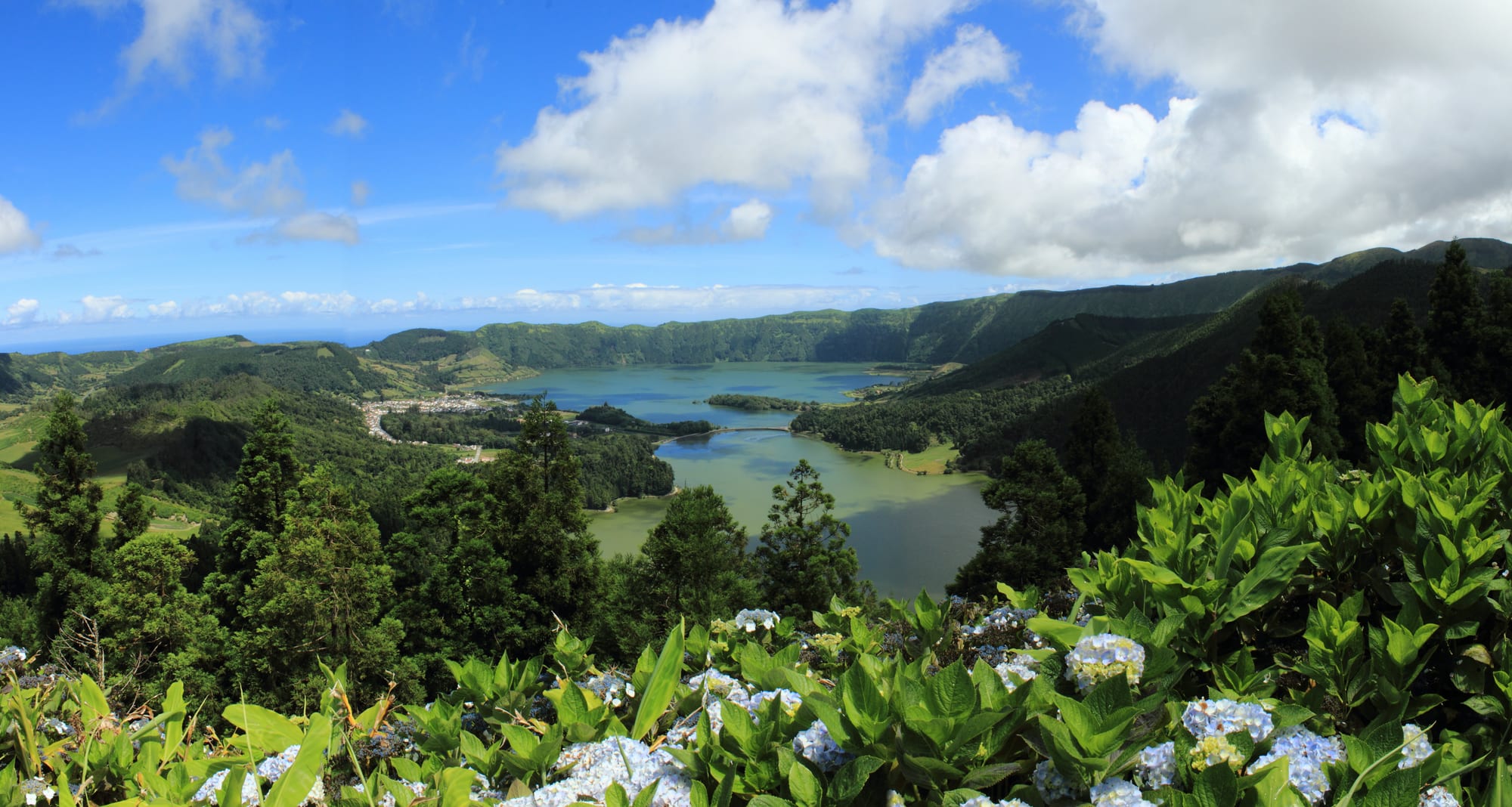
Nine green islands in the middle of the Atlantic
The Azores are an autonomous region of Portugal — nine volcanic islands about 1,400 kilometres out into the Atlantic, roughly a third of the way to North America. They are green, wet, mild, and thinly populated, with pasture and hydrangeas over old lava, and a landscape of craters, hot springs, and sea cliffs. The mid-Atlantic position also makes them one of the best places in the world for whale watching.
The eight below are spread across three islands — São Miguel (the largest and easiest), Terceira, and Pico/Faial. Interisland flights and ferries connect them. Weather changes constantly; late spring to early autumn is the most settled, and whale season peaks April–June.
1. Sete Cidades
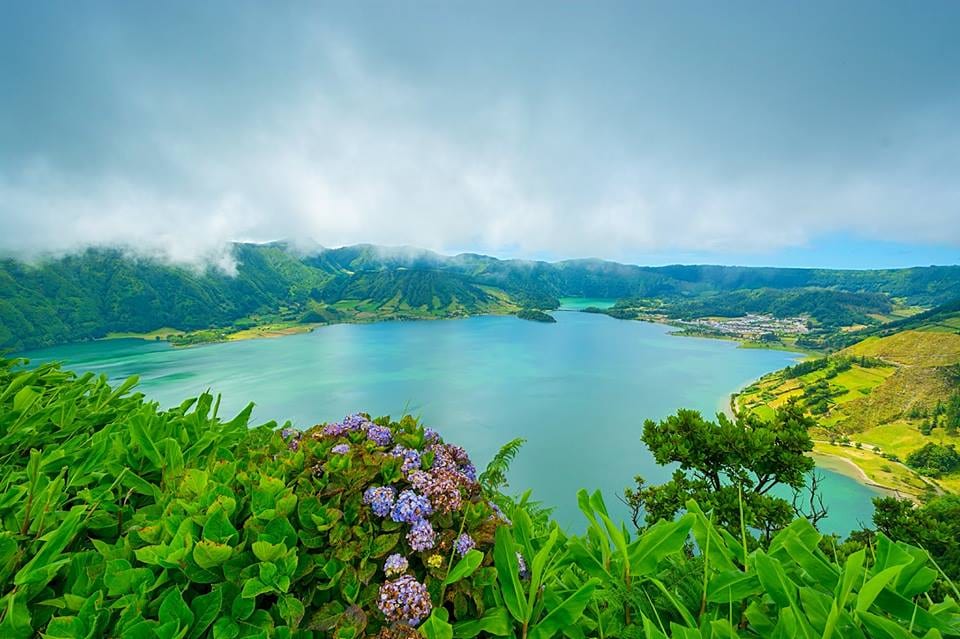
At the western end of São Miguel, a 5-kilometre-wide caldera holds two lakes that meet at a narrow bridge — one traditionally described as blue, the other as green, a difference of light and depth that a local legend explains with the tears of two doomed lovers. A village sits on the isthmus between them.
The classic view is from the Vista do Rei on the rim, near an abandoned hotel; a walking and cycling track runs the whole way around the crater edge, and you can kayak on the lakes below.
2. Lagoa do Fogo
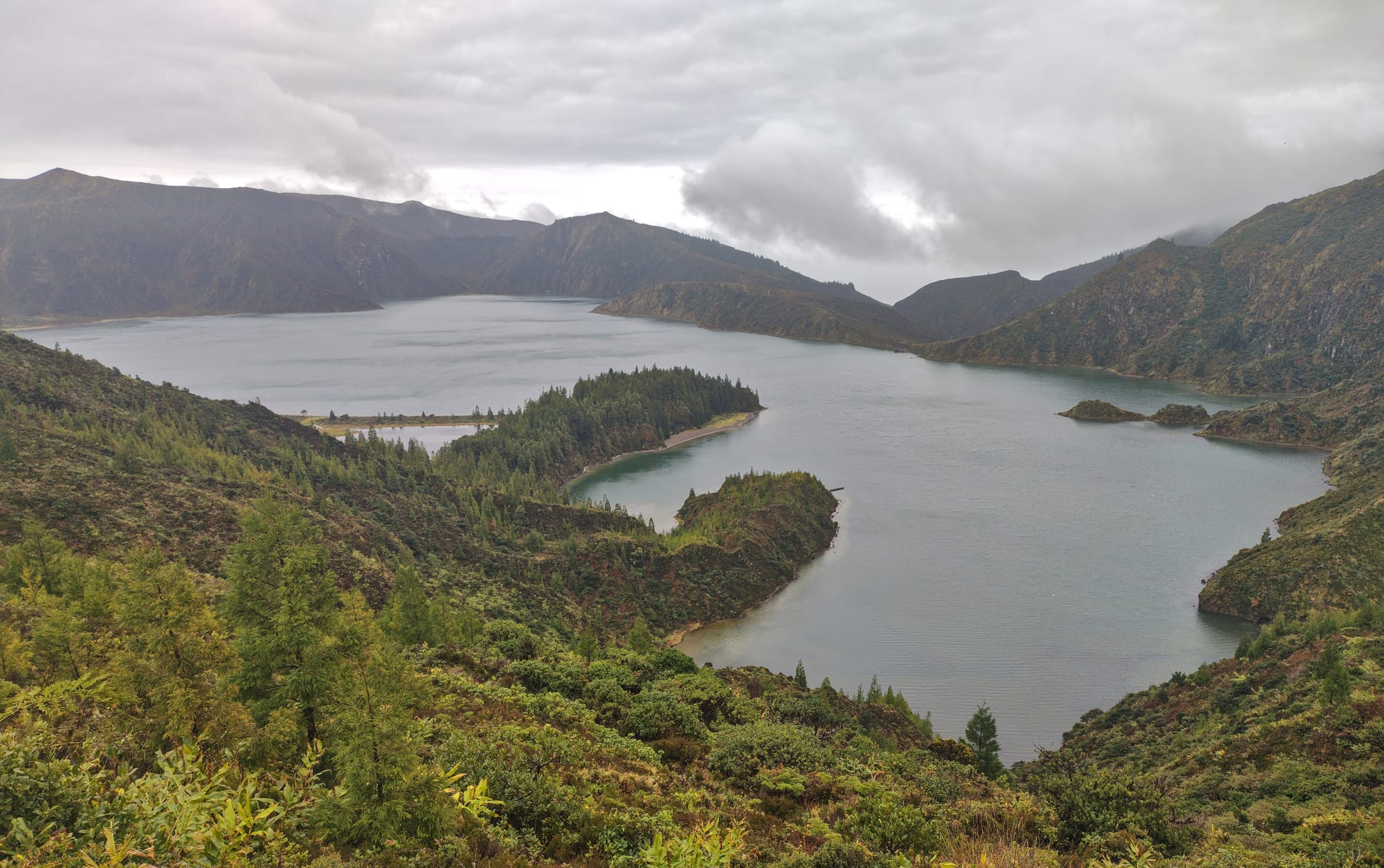
Lagoa do Fogo fills the crater of the Água de Pau volcano at the heart of São Miguel, and it is the least developed of the island's big lakes — a nature reserve with no buildings, just a blue sheet of water with a pale sandy beach at one end. It sits high and catches cloud, so views come and go.
Two trails descend to the shore from the road, one longer and gentler, one steep; the water is cold but swimmable in summer.
3. Furnas
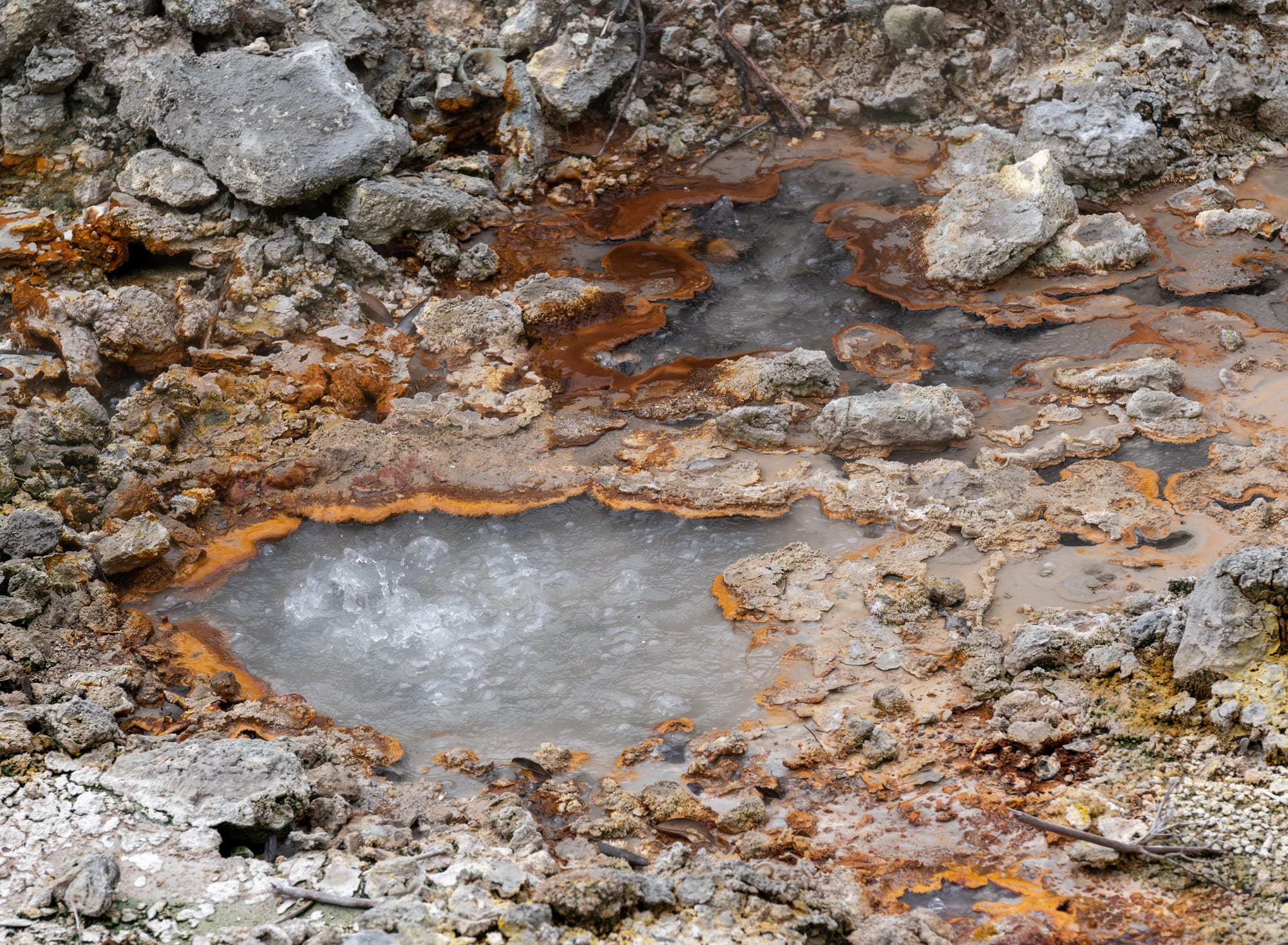
The village of Furnas, in a caldera on eastern São Miguel, is where the island's volcanism is closest to the surface: fields of boiling mud pools and fumaroles, mineral springs bubbling up all over town, and a lakeside pit where cooks lower pots of cozido — meat and vegetables — to steam underground for hours before lunch.
Also here: the huge botanical garden and thermal pool at Terra Nostra, the orange-brown iron-rich bathing pool at Poça da Dona Beija, and dozens of drinking fountains each with a different mineral taste.
4. Pico: the vineyards and the mountain
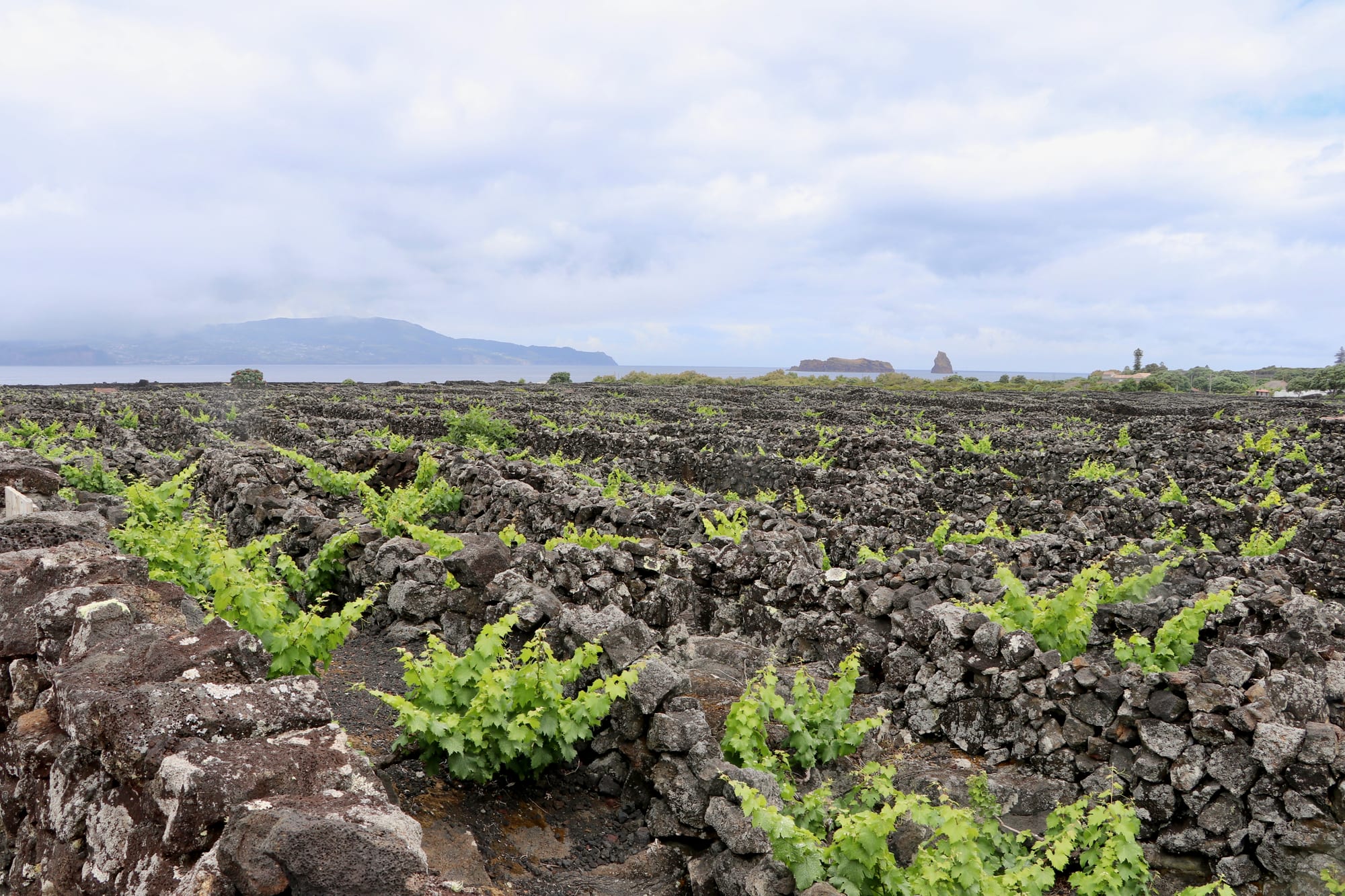
Pico island is dominated by the 2,351-metre volcano that gives it its name — Portugal's highest mountain, a steep six-to-eight-hour climb from the trailhead for those who register with the park. Around the coast, generations of islanders built a UNESCO-listed landscape of tiny vineyard plots walled with black lava to protect the vines from the Atlantic wind, producing a distinctive volcanic wine.
The island also has lava-tube caves (Gruta das Torres), whaling museums at Lajes and São Roque, and some of the best whale watching in the archipelago.
5. Angra do Heroísmo, Terceira
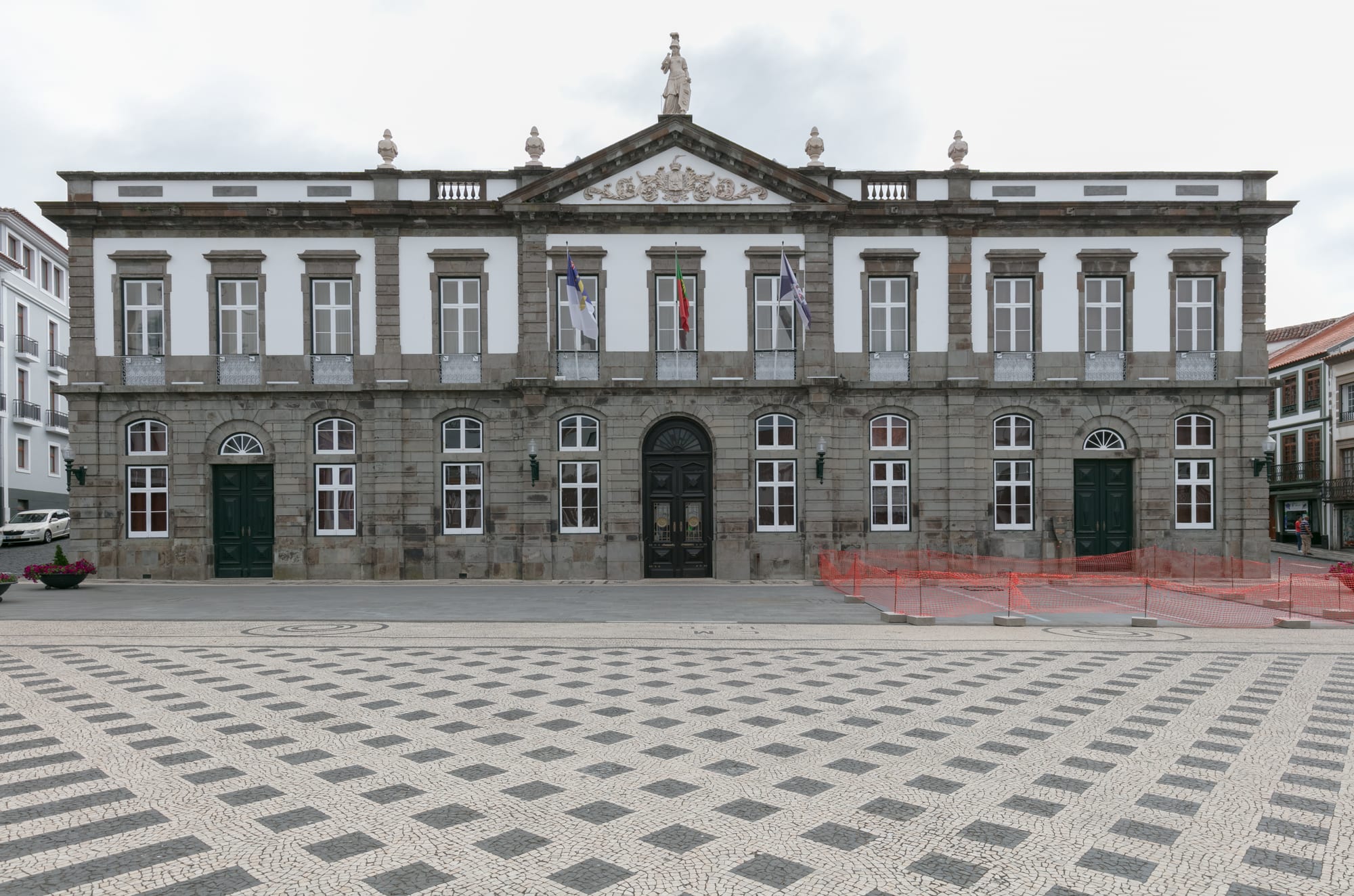
Angra was founded in the 15th century as the mandatory stopover for ships carrying treasure back from the Americas and the Indies, and it grew rich guarding them, with two big fortresses over a double harbour. Its grid of pastel townhouses, churches, and palaces is a UNESCO World Heritage Site, rebuilt carefully after a 1980 earthquake.
Climb the volcanic cone of Monte Brasil beside the town for the view, and use Angra as a base for the rest of green, cattle-farming Terceira.
6. Algar do Carvão
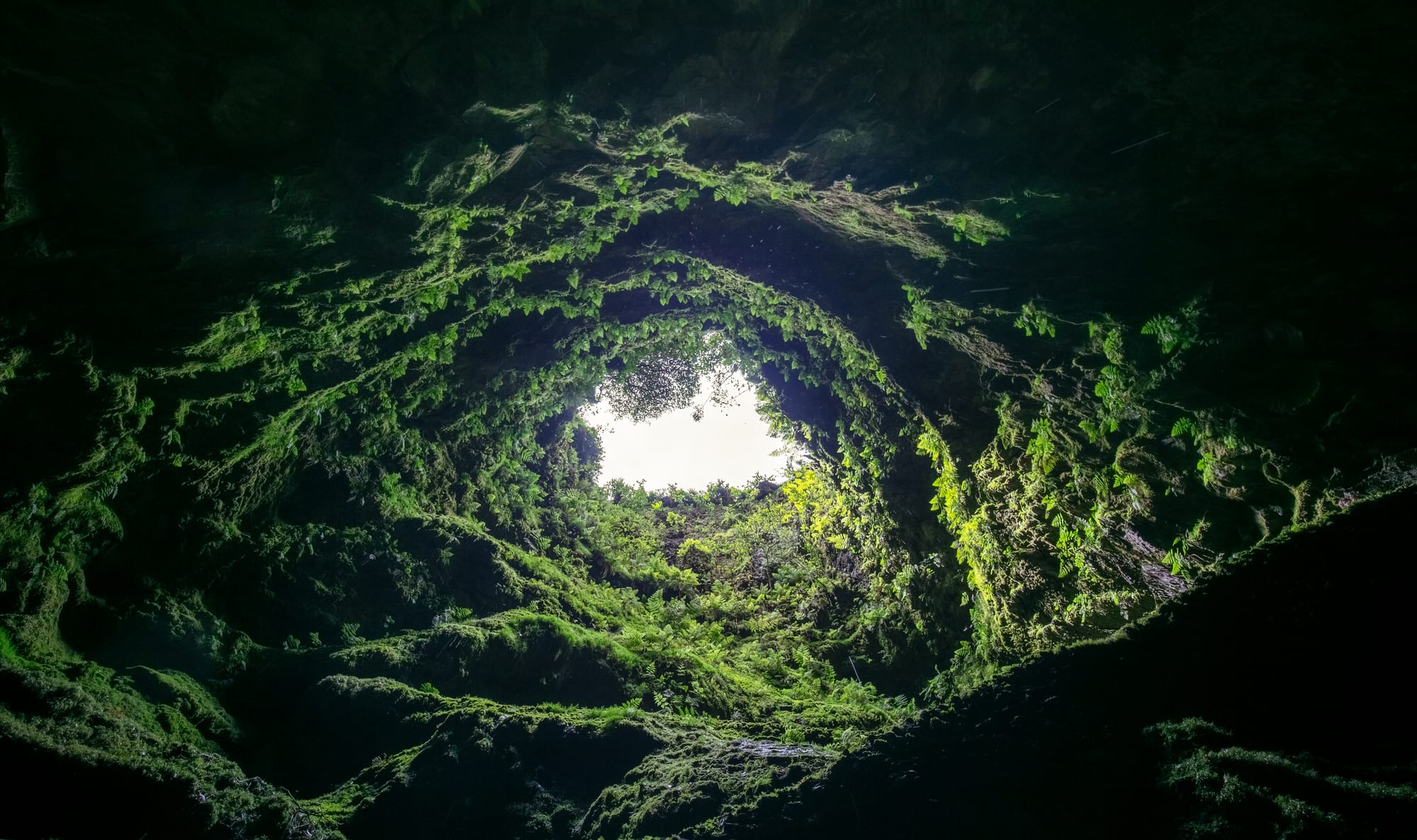
In the middle of Terceira, the Algar do Carvão is the chimney of an extinct volcano: a shaft about 90 metres deep that you climb down by a lit staircase, past walls hung with ferns and mosses and unusual silica formations, to a rainwater lake at the bottom. Daylight pours in through the opening far above.
Nearby is the Gruta do Natal, a horizontal lava tube you can walk through, and the Furnas do Enxofre, a boardwalk over hissing sulphur vents.
7. The Capelinhos volcano, Faial
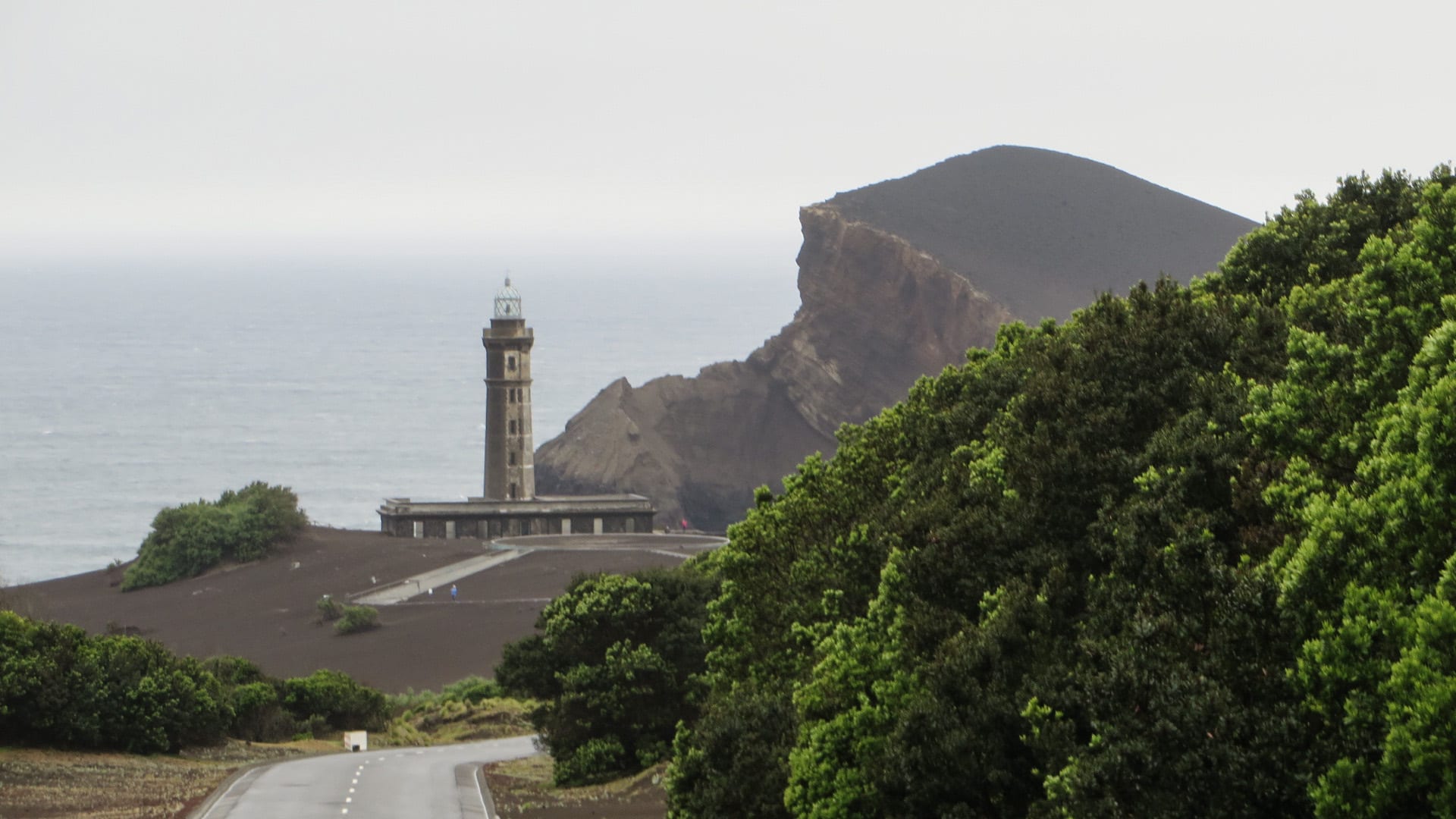
On the western tip of Faial, an underwater eruption in 1957–58 built a new peninsula of black ash, buried farmland and a village, half-swallowed a lighthouse, and drove a wave of emigration to the United States. Today it is a raw grey moonscape slowly being colonised by plants, with an award-winning interpretation centre built underground so as not to disturb the view.
The rest of Faial is greener, centred on the yacht harbour of Horta — where transatlantic sailors paint murals on the sea wall — and the deep Caldeira crater at the island's heart.
8. Ponta Delgada
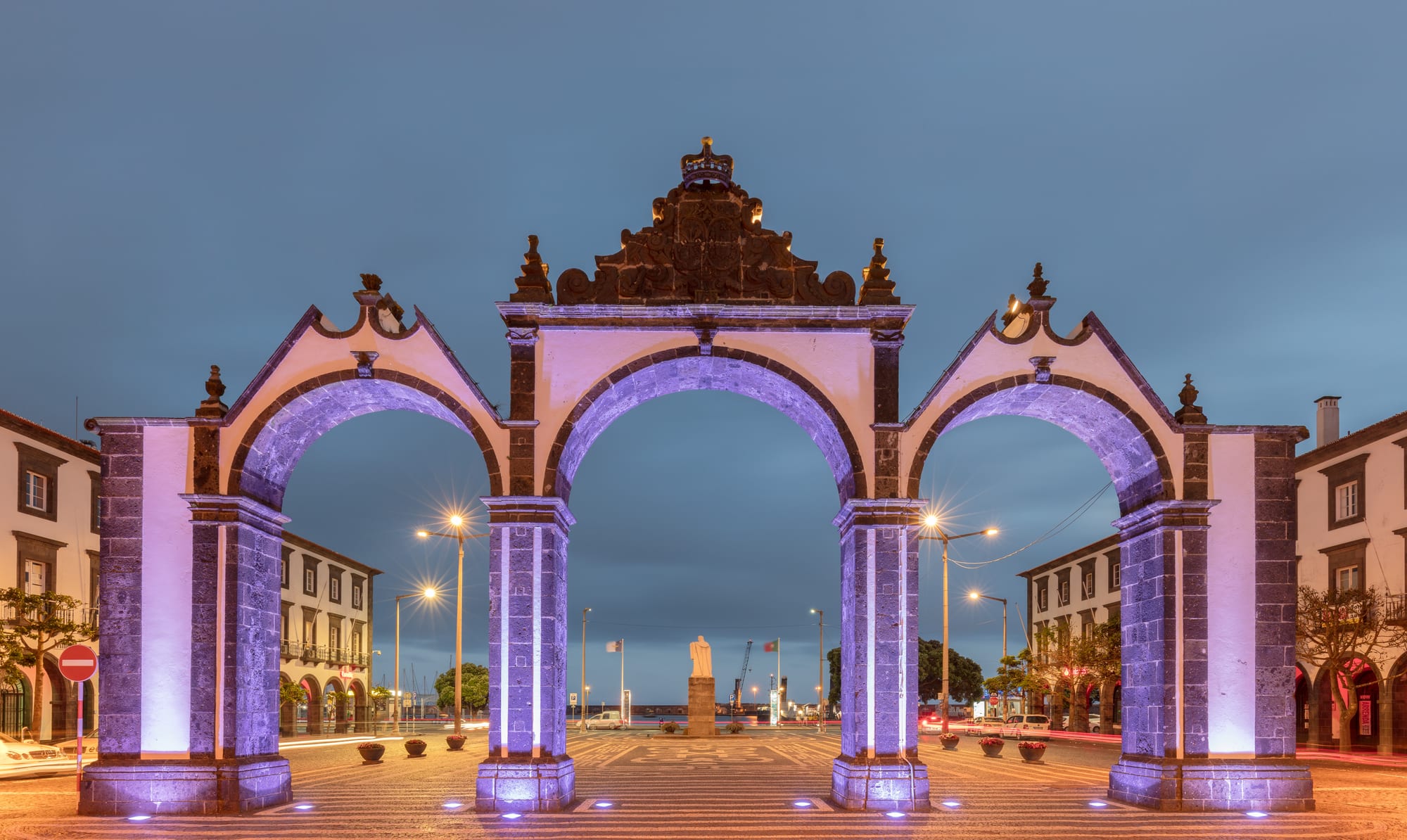
Ponta Delgada is the main city of the Azores and the arrival point for most visitors: a low waterfront town of black-and-white basalt-and-limewash churches, cobbled squares, and the triple-arched city gates on the harbour front. The pineapple greenhouses on the edge of town, the fort, and the market are the set sights.
Mostly it is a base — for the São Miguel lakes and the Furnas valley, for whale-watching boats, and for the tea plantation at Gorreana, the only one in Europe.
The Azores work at a slow pace: a week on São Miguel covers most of this list, with a couple of days added for Pico and Faial, and the weather forcing you to keep your plans loose.