History · Armenia
Armenia: The First Christian Nation
Three thousand years between empires on the Armenian Highland — from Urartu and the first state church to genocide, Soviet rule, and independence
By Worldlore Editorial · 19 September 2026
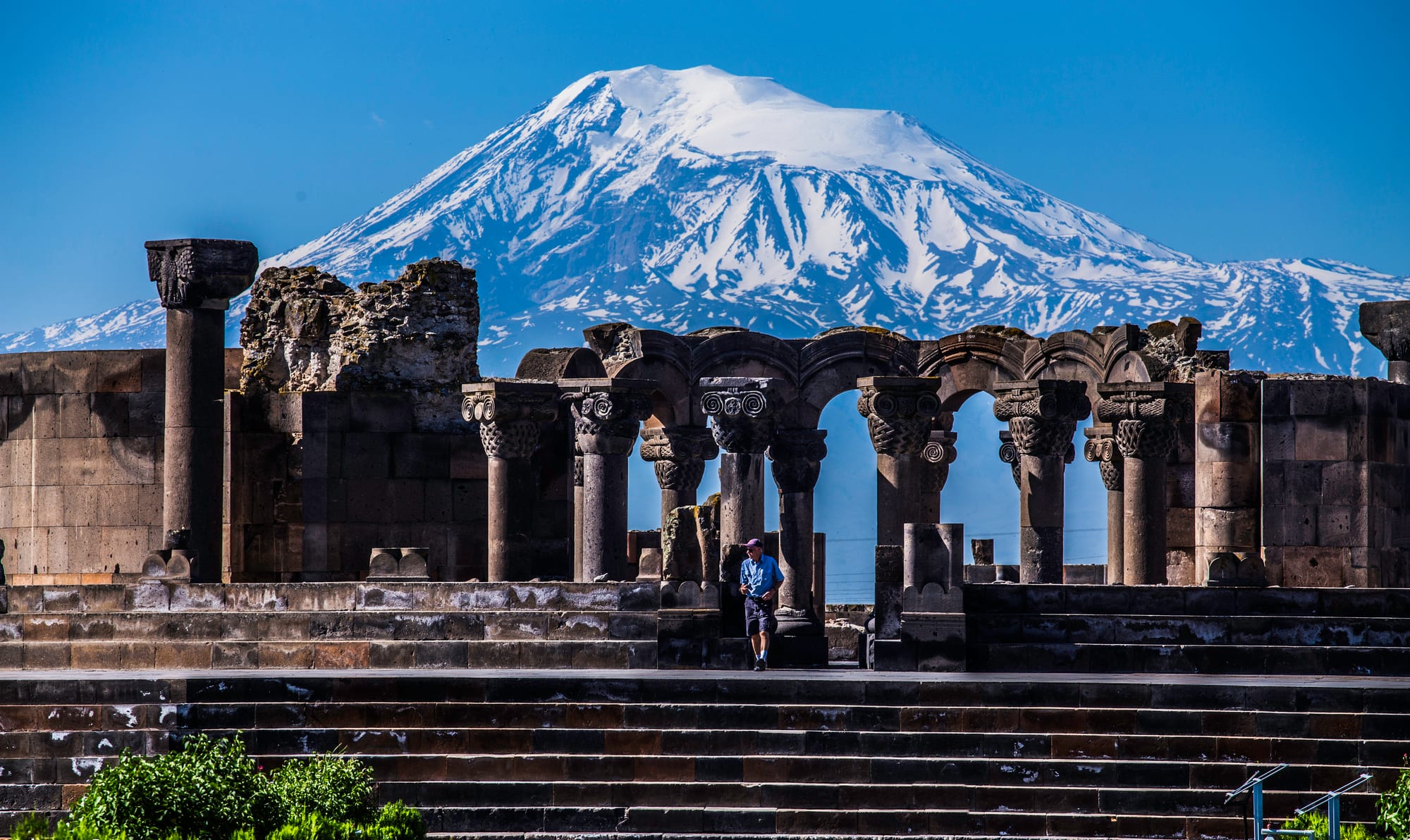
The highland between empires
Armenia sits on a high, mountainous plateau where the Caucasus, Anatolia and the Iranian world meet — well watered, defensible in its valleys, and impossible to ignore. Every empire in the neighbourhood has wanted it: Assyria and Persia, Rome and Parthia, Byzantium and the Arab caliphate, the Ottomans and the Russians, and finally the Soviet Union. Historic Armenia was far larger than the small landlocked republic of today, most of which was drawn by the Soviet border of 1921. What carried through all of it was not a state — Armenians spent most of their history without one — but a language with its own alphabet, and a church older than any other national church on earth.
Three thousand years, in brief
- 9th–6th c. BCE
Urartu
The kingdom of Van builds fortress cities on the highland, including Erebuni, the ancestor of Yerevan.
- 190 BCE – 1st c. CE
The Kingdom of Armenia
Under Tigranes the Great it briefly reaches the Mediterranean, then becomes a buffer between Rome and Persia.
- c. 301 CE
Christianity
Armenia adopts Christianity as its state religion, the first country to do so.
- c. 405
The alphabet
Mesrop Mashtots devises the Armenian script.
- 885–1045
The Bagratid kingdom
A revived Armenian state, with its capital at Ani.
- 1080–1375
Cilician Armenia
A last Armenian kingdom on the Mediterranean coast, allied with the Crusaders.
- 1828
Russian rule
Russia takes eastern Armenia from Persia; western Armenia stays Ottoman.
- 1915–1916
The genocide
The Ottoman government deports and kills a million or more Armenians.
- 1920–1991
Soviet Armenia
After a two-year first republic, Armenia is absorbed into the USSR.
- 1991 onward
Independence
Renewed statehood, and three decades of war over Nagorno-Karabakh.
Kings, Rome, and the pit at Khor Virap
The first great state on the highland was Urartu, a rival of Assyria that raised fortress cities from the 9th century BCE; one of them, Erebuni, founded in 782 BCE, is why Yerevan claims to be older than Rome. Armenians as a distinct people, with their own branch of the Indo-European language family, are clearly attested by the 6th century BCE. A Kingdom of Armenia emerged around 190 BCE and reached its peak under Tigranes the Great, who for a few years in the 1st century BCE ruled from the Caspian to the Mediterranean before Rome cut him down. Thereafter Armenia spent centuries as a contested client kingdom, its throne fought over by Rome and the Parthian and Sasanian empires of Iran.
Its lasting turn came around 301 CE, when King Tiridates III, converted by Gregory the Illuminator — whom he had earlier imprisoned for 13 years in a pit at Khor Virap — made Christianity the religion of the state. No country had done this before. A century later Mesrop Mashtots invented an alphabet for the Armenian language, the Bible was translated, and a national literature and liturgy took shape that bound the church and the people together.
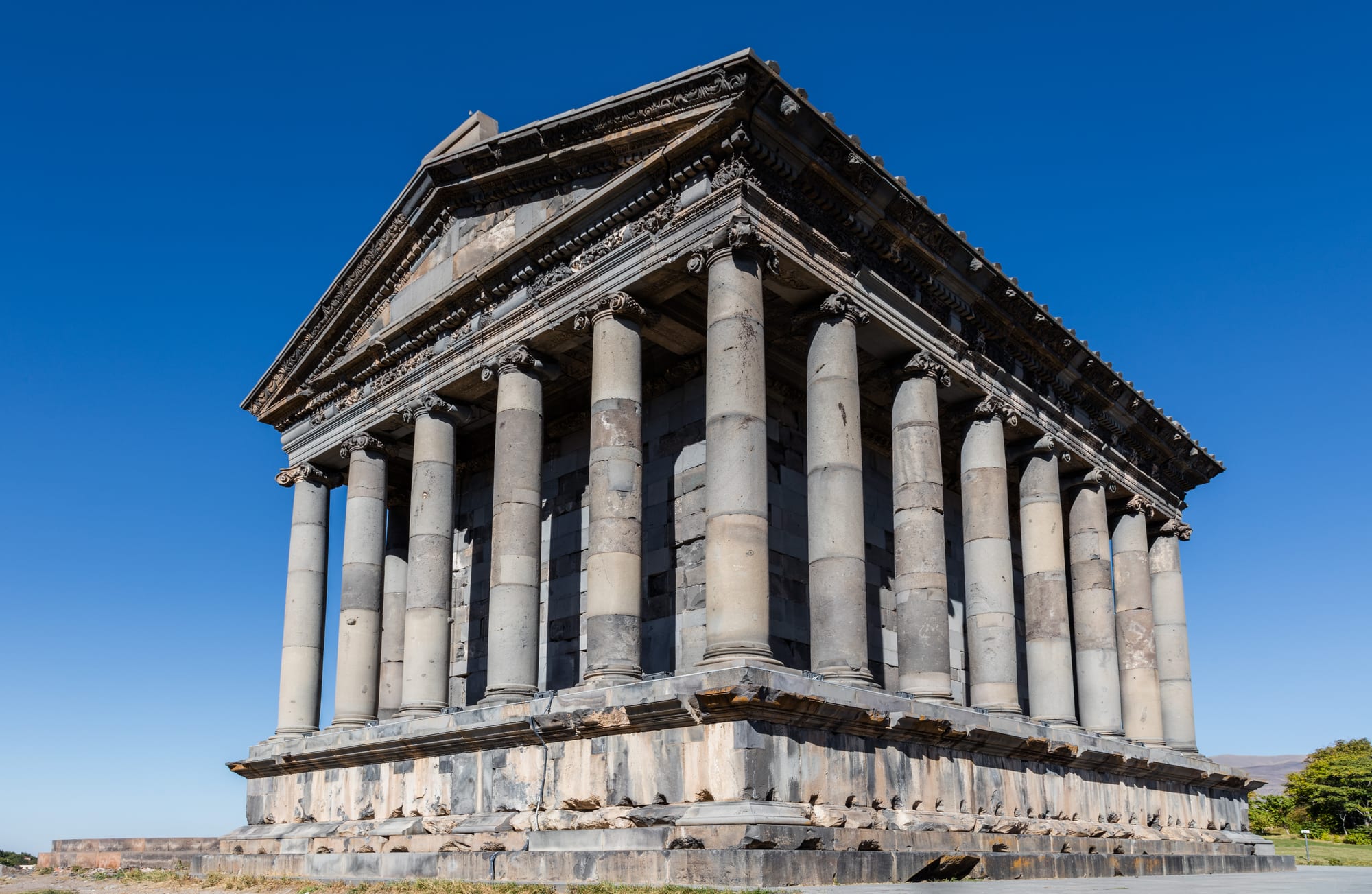
Built by an Armenian king in the Roman style, probably as a temple to a sun-god, Garni was later a royal summer house. It was toppled by an earthquake in 1679 and rebuilt from its own fallen stones in the 1970s.
A church of its own, a kingdom lost and found
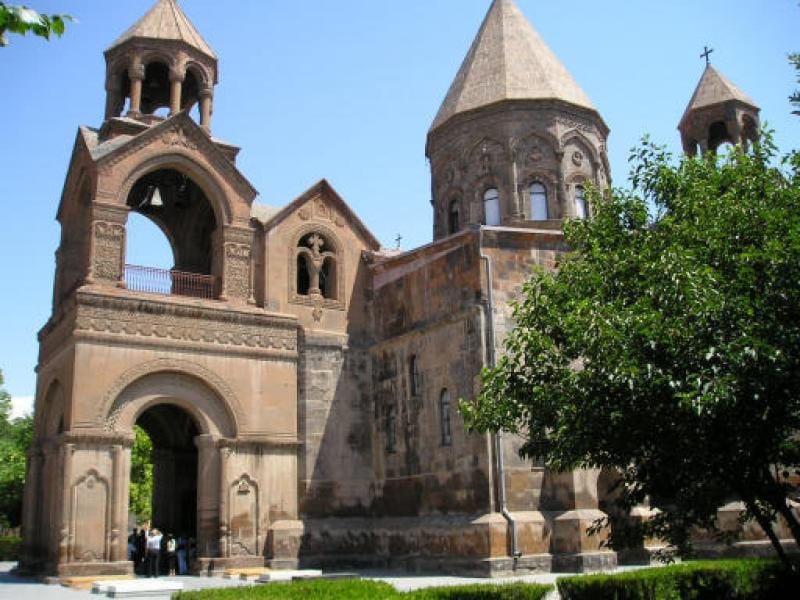
In 428 the Armenian kingdom was abolished and its territory split between Byzantium and Sasanian Persia. When Persia tried to impose Zoroastrianism, Armenians fought a losing battle at Avarayr in 451 that nonetheless won them the right to keep their faith. That same year the wider church met at Chalcedon and defined the nature of Christ in terms the Armenian church did not accept; Armenia went its own way, and the Armenian Apostolic Church has been a separate communion — neither Catholic nor Eastern Orthodox — ever since. Its mother cathedral at Etchmiadzin, founded at the conversion, is one of the oldest churches in the world.
Statehood returned in 885 with the Bagratid dynasty, whose capital, Ani, grew into a medieval city famous for its churches before Byzantium annexed it in 1045 and the Seljuk Turks sacked it in 1064. A final Armenian kingdom took root far to the south-west, in Cilicia on the Mediterranean, from 1080; it allied with the Crusader states and lasted until the Mamluks destroyed it in 1375. After that, Armenians had no state of their own for more than five centuries.
The stone record
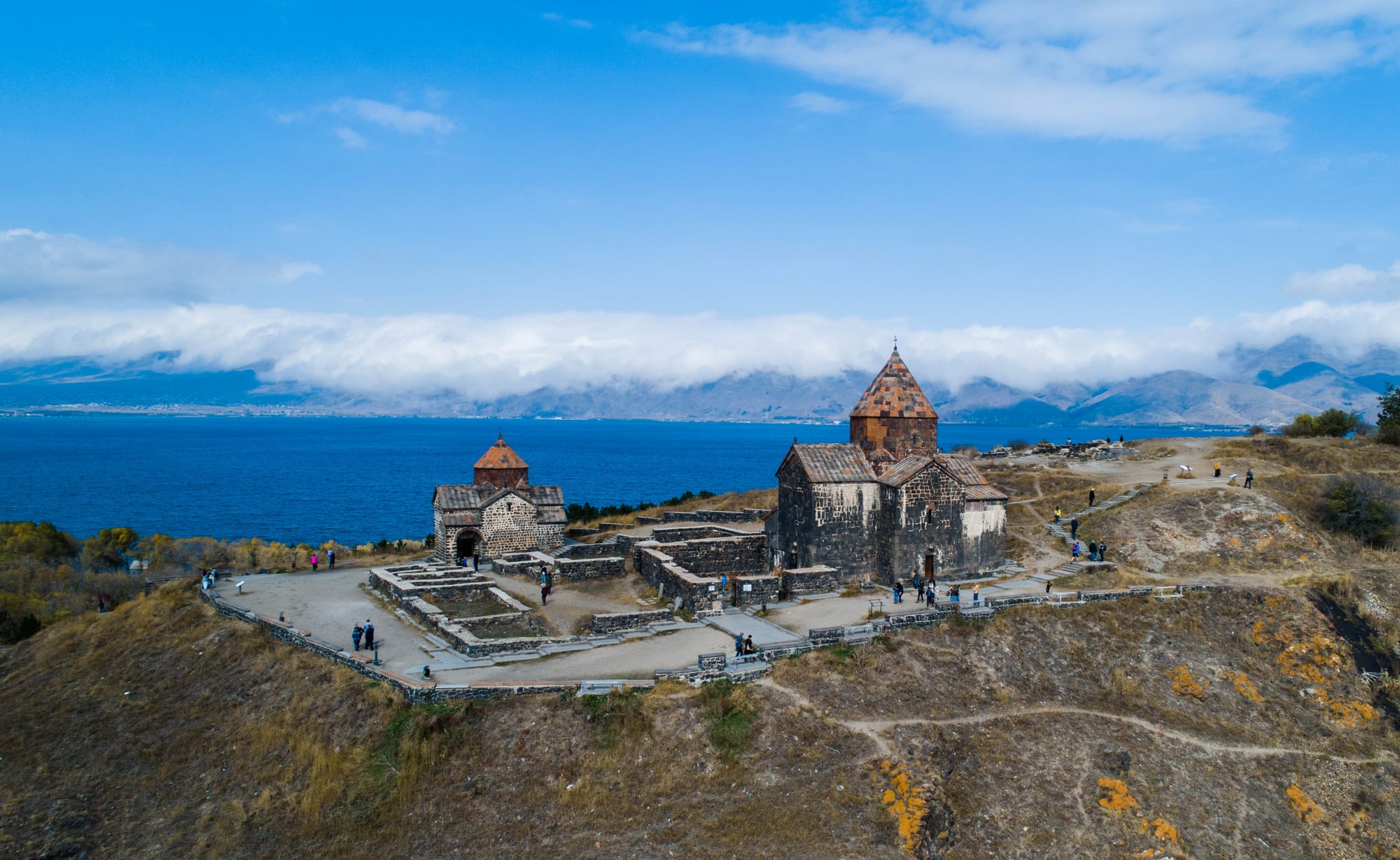
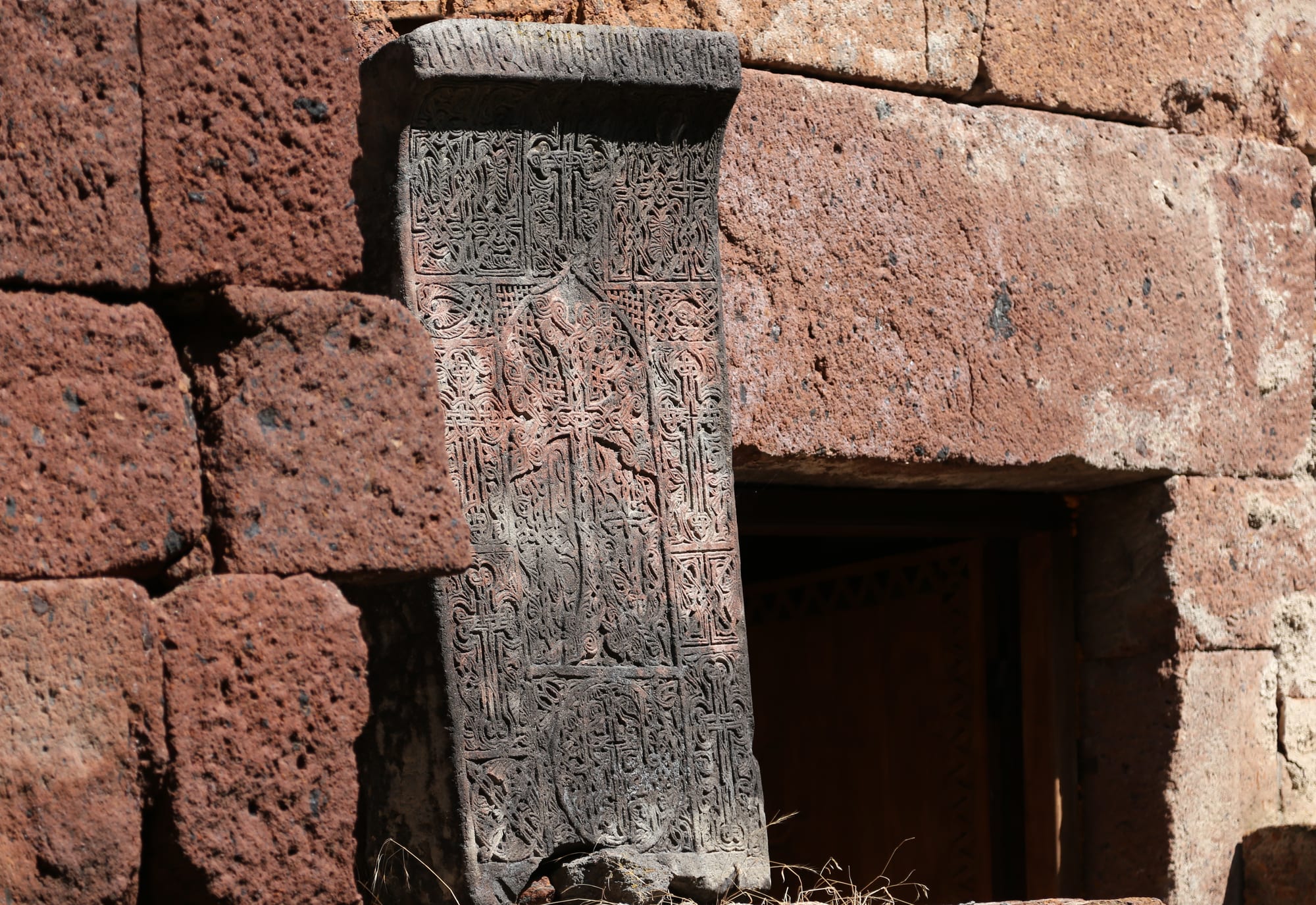
Armenian identity survived through the church and its architecture: hundreds of monasteries, and the carved cross-stones called khachkars.
Between the Ottomans and the tsars
From the 16th century the highland was divided between the Ottoman Empire and Safavid Persia, its people scattered further by forced deportations — Shah Abbas moved much of the population of the Armenian town of Julfa to his capital, Isfahan, in 1604. In 1828 the Russian Empire took the eastern, Persian-ruled part — including Yerevan and Karabakh — while the larger western Armenian population remained under the Ottomans.
It was the western Armenians who bore the catastrophe. Ottoman Armenians pressing for reform and protection were met instead with mass violence: the Hamidian massacres of 1894–96 killed well over 100,000. Then, during the First World War, the ruling Young Turk government treated the Armenians as an internal enemy. From April 1915 it arrested community leaders, disarmed Armenian soldiers, and deported the population of the eastern provinces on death marches into the Syrian desert. Between one and one and a half million people died. The Armenian presence in eastern Anatolia, some 3,000 years old, was effectively ended, and a worldwide diaspora — today larger than the homeland — was created out of the survivors.
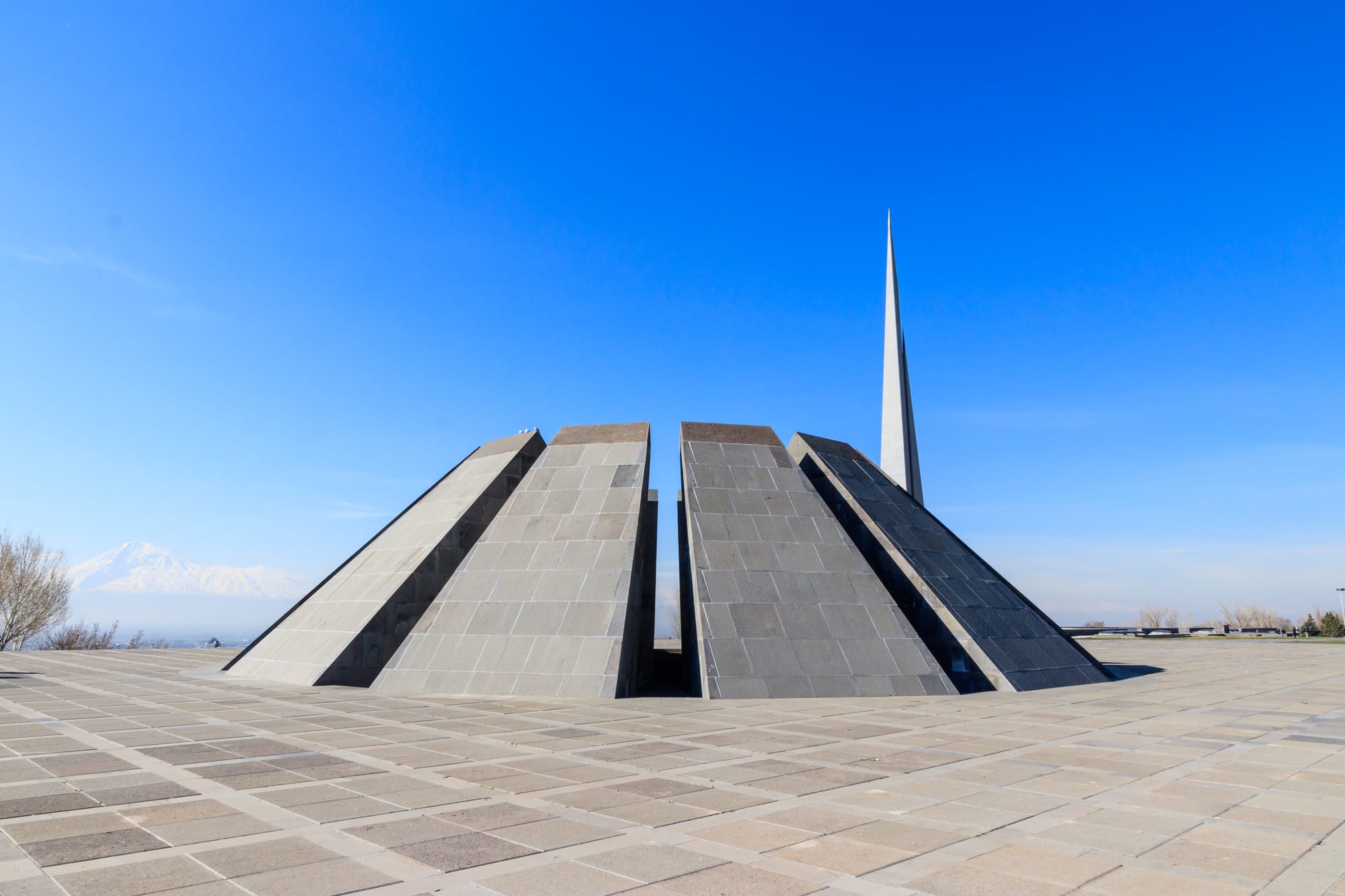
More than 30 countries, and most historians of the period, recognise the killings as genocide. Turkey, the Ottoman Empire's successor state, rejects the term and disputes the scale.
First republic, then the USSR
As the Russian and Ottoman empires collapsed, Armenians in the Russian Caucasus declared an independent republic on 28 May 1918. It survived barely two years, squeezed between a Turkish nationalist advance and the Red Army. In late 1920 the Soviets took over; the Treaty of Kars in 1921 fixed the border with Turkey where it still runs, leaving Kars and Mount Ararat on the Turkish side. Armenia spent the next 70 years as a Soviet republic — industrialised, urbanised and educated, its capital rebuilt on a grand neoclassical plan in pink volcanic stone, but with its church suppressed and its history off-limits. When Armenians filled the streets of Yerevan in 1965 to mark the 50th anniversary of the genocide, unsanctioned, it was one of the boldest national demonstrations the Soviet Union had seen; the memorial was built two years later.
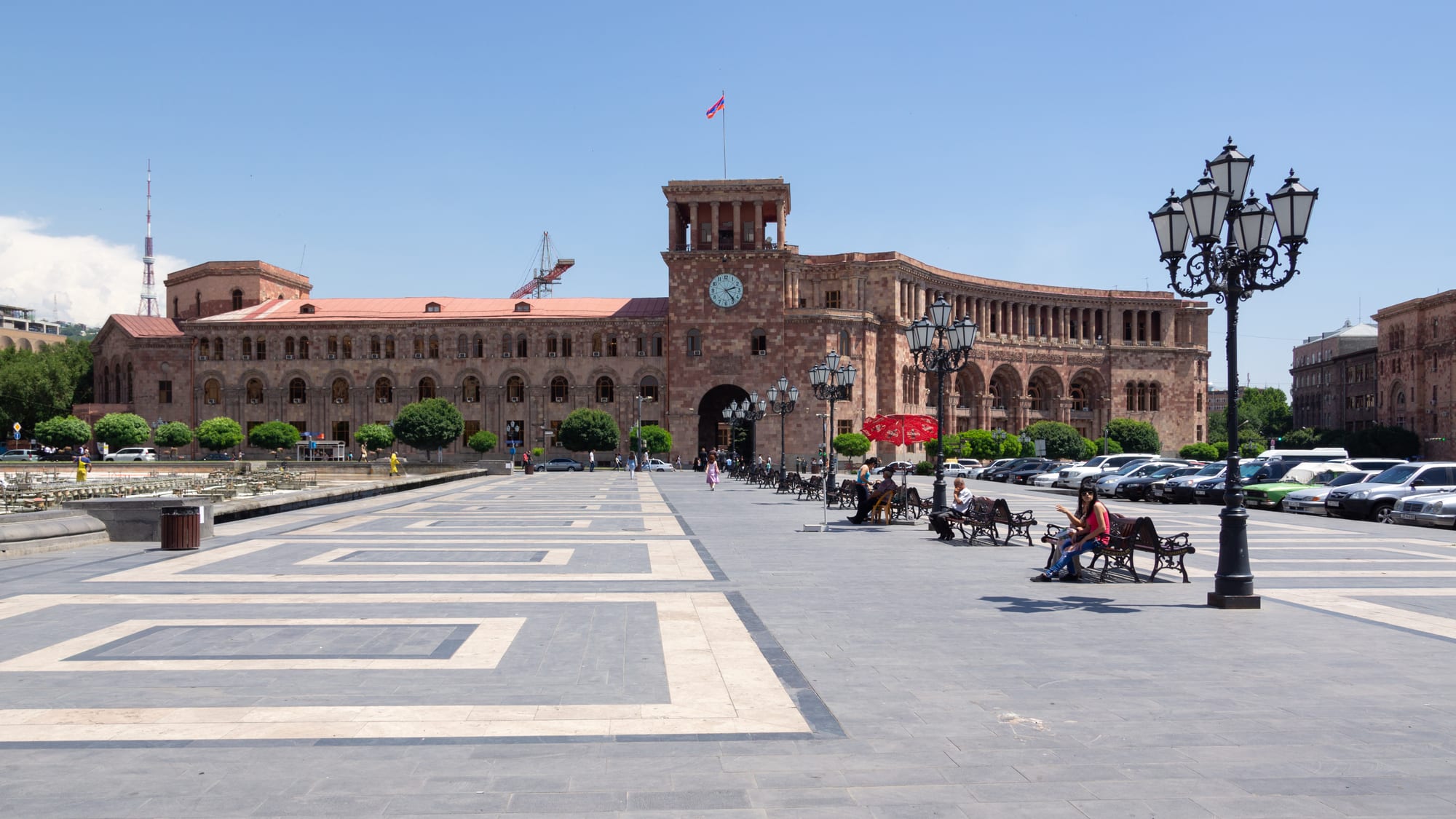
Yerevan was a town of a few thousand people when it became the capital in 1918. Under Soviet rule it grew into a city of more than a million, laid out in concentric avenues around this square.
Independence and Karabakh
Armenia's move out of the Soviet Union was bound up with Nagorno-Karabakh, a mountainous, Armenian-majority district that Soviet authorities had placed inside Azerbaijan. In 1988 its assembly voted to join Armenia; anti-Armenian pogroms in Azerbaijan followed, and the two republics slid toward war. That December, a massive earthquake in northern Armenia killed tens of thousands and destroyed whole towns. Armenia declared full independence in September 1991, and the first Karabakh war, from 1992 to 1994, ended with Armenian forces holding the enclave and a belt of surrounding territory, hundreds of thousands of Azerbaijanis displaced, and the borders with both Turkey and Azerbaijan sealed shut.
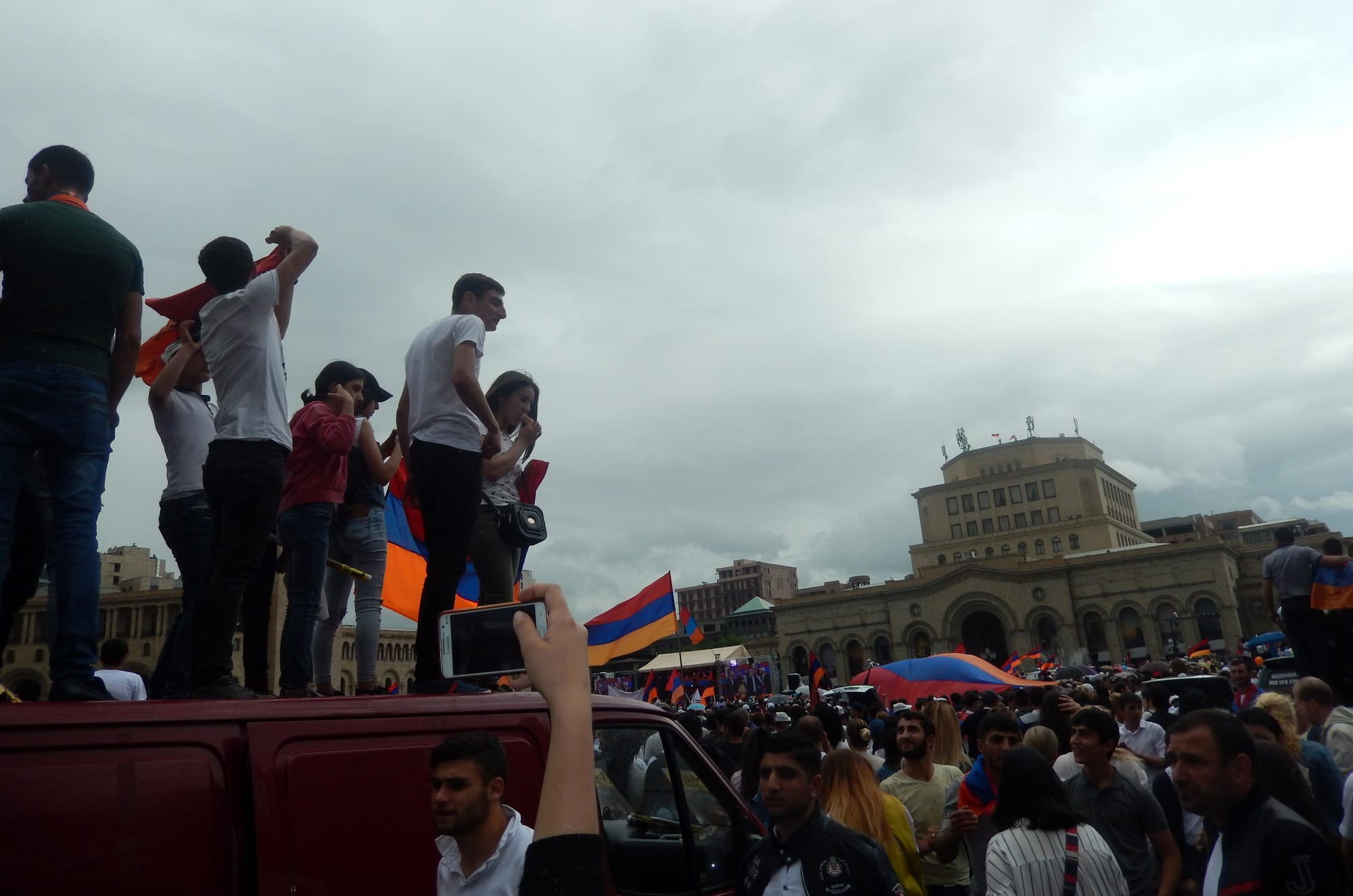
Independent Armenia leaned heavily on Russia — a military ally with a base at Gyumri — and on money sent home by the diaspora and by migrant workers. Its politics were dominated for two decades by leaders from Karabakh and marred by disputed elections, until 2018, when weeks of peaceful protest forced the long-serving ruler Serzh Sargsyan from office in what Armenians call the Velvet Revolution, bringing the journalist and activist Nikol Pashinyan to power.
The Karabakh question then reversed. In a 44-day war in the autumn of 2020, Azerbaijan, backed by Turkey, retook most of the territory Armenia had held since the 1990s. Three years later, in September 2023, a one-day Azerbaijani offensive ended the enclave altogether: almost its entire Armenian population, more than 100,000 people, fled to Armenia, and the self-declared republic there dissolved. Since then Armenia has pulled away from Russia and moved, cautiously, toward the West, while negotiating a peace with Azerbaijan and Turkey after a century of closed borders.
What Armenia carries
Armenia's history is one of continuity without a state: a distinct church, a distinct script, and a strong idea of nationhood that outlasted the loss of the kingdom, five centuries of foreign rule, a genocide, and 70 years inside the Soviet Union. Its central symbol, Mount Ararat, is the emblem of the country and appears on its coat of arms, and it stands just over the border in Turkey — a fair image of a nation whose homeland and whose history reach well beyond the lines now drawn around it.