Daily Life · Anguilla
Anguilla: A Village That Races Its Own Boats
A dry, flat island of some 16,000 people where villas and boutique hotels sit close to a genuinely small-town rhythm, and where hand-built wooden sailboats, not cricket, are what the whole island turns out to watch
By Worldlore Editorial · 30 September 2026
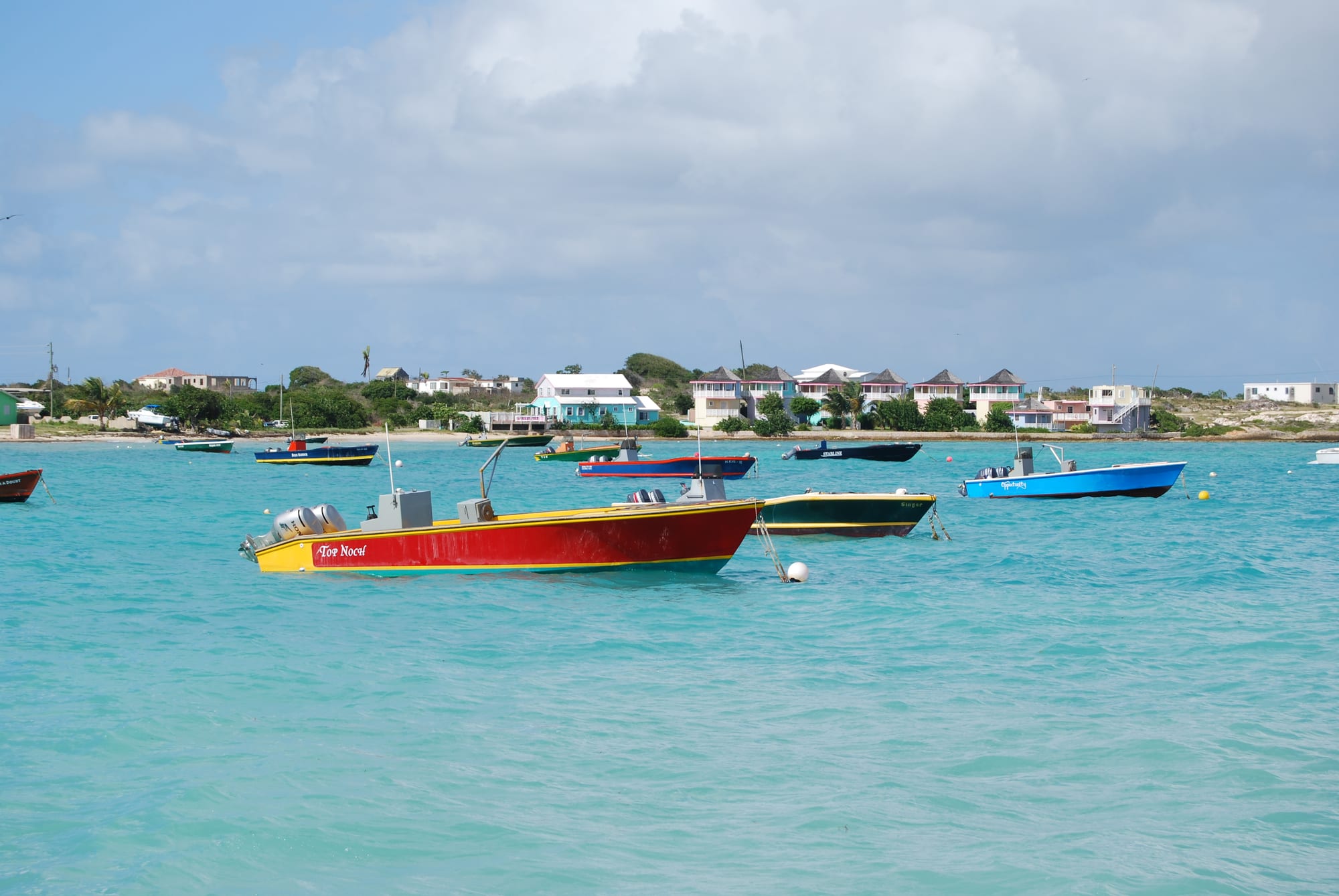
Anguilla is small enough that an ordinary day rarely involves much distance: a flat, dry, 16-mile sliver of coral and limestone with a population of around 16,000, and no city larger than a large village. Most people know most other people, at least by family name, and much of the island's income now comes from the villas and boutique hotels that line its beaches, alongside financial services and, more recently, licensing fees from its sought-after ".ai" internet domain. None of that has erased a settled, small-island rhythm built around family, church, and — on public holidays — a home-built wooden sailboat that much of the village turns out to watch.
Family and home life
Anguillian households tend to be close and extended, with grandparents, parents, and children often living near one another even when not under the same roof, and childcare commonly shared across the wider family. Family life has long been shaped by emigration, from Anguillian men who once sailed to cut cane in the Dominican Republic to relatives today in the United States, Britain, or elsewhere in the Caribbean, and money sent home still helps many households. A house plot passed down through a family carries real weight, even for the many Anguillians who live and work abroad for years before returning.
Work, school and the rhythm of the day
Tourism and the businesses that support it — hotel and villa staff, construction, transport, and increasingly financial and internet-domain services — employ most of the working population, and income tax is limited to a small levy first introduced in 2011. The island has no public bus system, so getting to work or school generally means a private car, a lift from a relative or neighbour, or, for some, a short walk in a place where few destinations are far. School events, such as children's sports days, draw families and neighbours, as they do in many small communities. The working day otherwise follows a fairly standard schedule, though restaurants, guesthouses, and the beach bars that make up much of the tourism economy keep longer and later hours than an office would.
Community life and public spaces
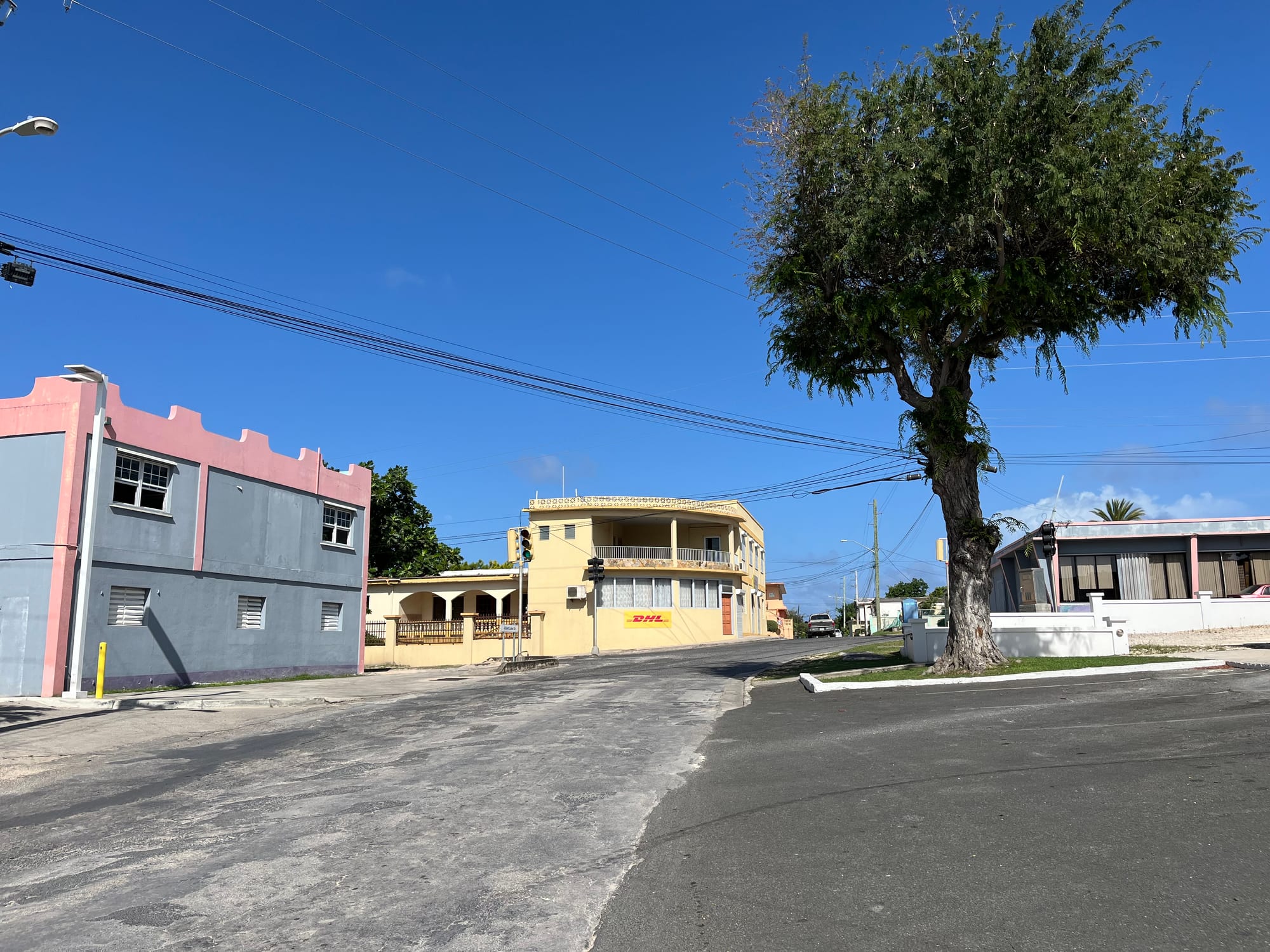
The Valley, Anguilla's capital and main town, though hardly larger than a big village, holds the main cluster of everyday public life: government offices, churches, a scatter of grocery stores and a market. Beyond The Valley, life is organised around a handful of other villages, each with its own small store, church, and stretch of coast, and Island Harbour in the east keeps fishing boats anchored just offshore alongside the boats used for tourist trips. Since there is no bus network, the road itself functions as a kind of shared space: drivers wave and stop to talk, and a car journey often doubles as a chance to catch up on news.
Free time and weekends
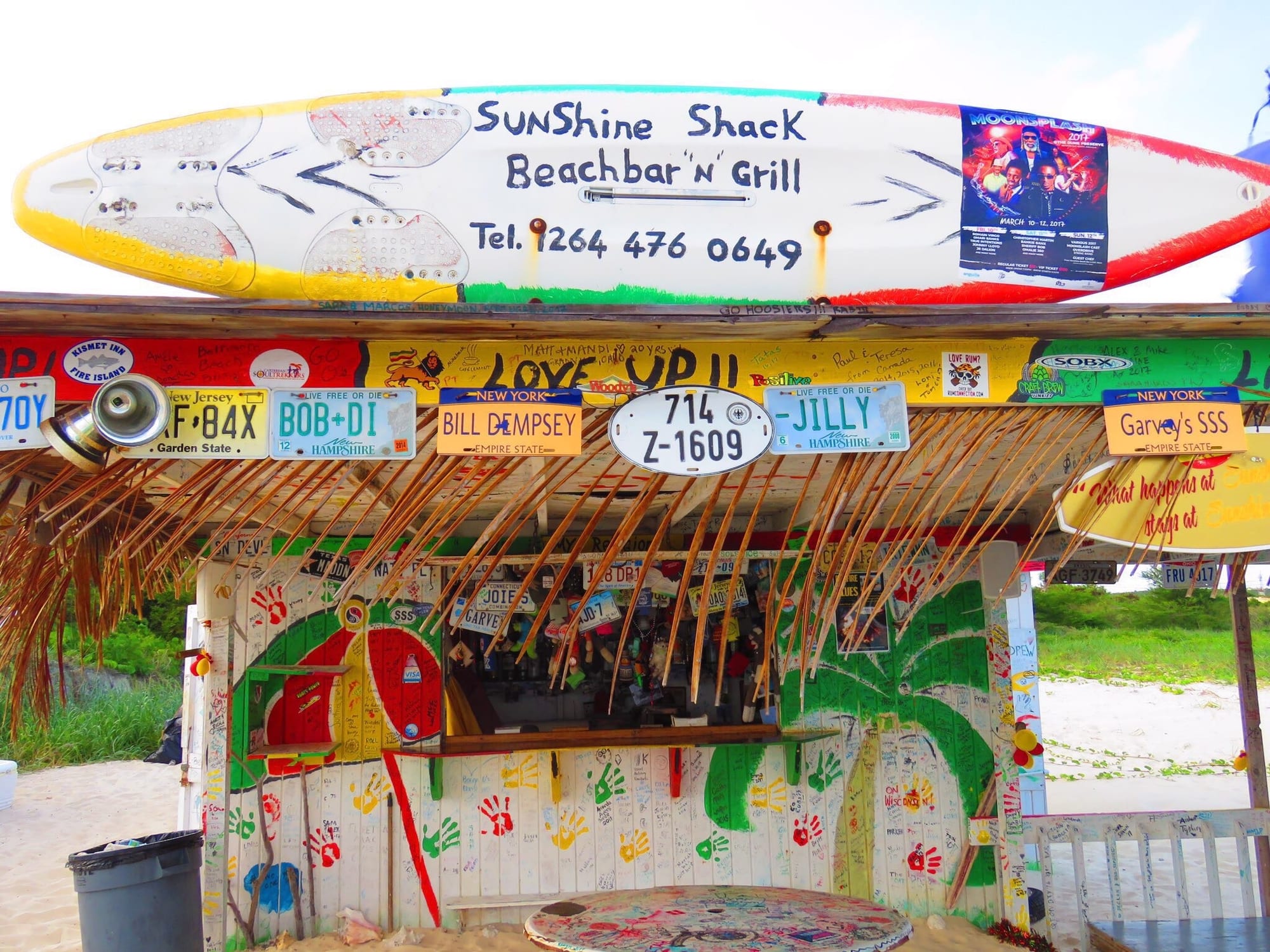
Boat racing is the closest thing the island has to a unifying weekend event: regattas are sailed through the year, built around public holidays such as August Monday, and draw crowds of onlookers who follow particular boats and crews with the loyalty other places reserve for football clubs. On quieter weekends, the beach bars at Sandy Ground and Island Harbour — often simple, hand-painted and decorated with odds and ends such as old licence plates — are where people gather for grilled fish or ribs, a rum punch, and often live music. Church remains a significant part of Sunday for many households, usually followed by a family meal, and a good share of leisure time generally, for residents as much as visitors, is simply spent at the beach.
A visitor's ordinary day
The East Caribbean dollar is the official currency, fixed to the US dollar, and US dollars are accepted everywhere, so currency exchange is rarely necessary. Cards work at hotels and larger restaurants, but cash is worth carrying for beach shacks, taxis, and the ferry. With no bus system, a hire car is the practical way to get around — a temporary local licence is issued on hiring one — and driving is on the left. Many visitors arrive not through Anguilla's own small airport but via the 20-minute public ferry from Marigot, on the French side of Saint Martin, generally the cheapest way in. Shops and the market tend to follow a fairly relaxed schedule, and since nearly everything is imported, fresh produce and grocery choice can vary from day to day.
What to take away
For an island this size, an ordinary day still runs less on infrastructure than on relationships — who is related to whom, whose boat is racing this weekend, and whose family plot the road is passing.