History · Andorra
Andorra: The Co-Principality in the Mountains
Eleven centuries of survival between two larger neighbours — from a Carolingian charter to a modern democracy with two heads of state
By Worldlore Editorial · 19 September 2026
A country made by its mountains
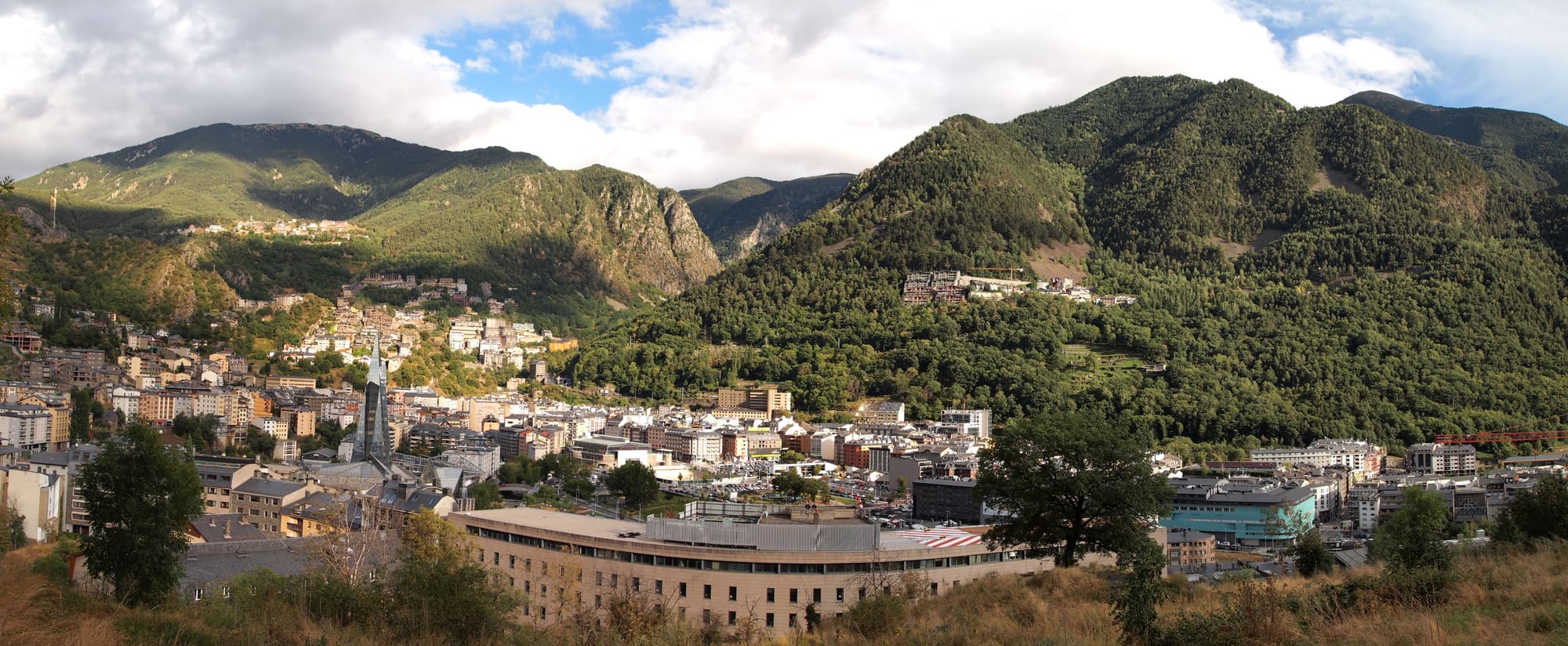
Andorra is a pocket of high valleys in the eastern Pyrenees, 468 square kilometres of it, wedged between France and Spain with no coastline, no airport and, until the 20th century, no proper roads. For most of its history that isolation was the point. The mountains were too poor and too awkward to be worth a war, and the two powers on either side found it more convenient to share the place than to fight over it. The result is one of the oddities of European politics: a country that has been jointly ruled, for more than 700 years, by a French prince and a Catalan bishop, and that still is.
A short history
- 803 / 839
The first records
Tradition credits Charlemagne with a charter freeing the Andorrans from the Moors; the earliest real document, of 839, lists the Andorran parishes.
- 11th–12th c.
Into the Church's hands
The counts of Urgell pass their rights over Andorra to the bishops of Urgell; noble families hold it as a fief.
- 1278 and 1288
The pareatges
Two arbitration treaties end a feud between the bishop of Urgell and the count of Foix by making them joint lords of Andorra.
- 1589
The French line shifts
The count of Foix's heir becomes king of France; the French co-prince's rights pass, in time, to the French head of state.
- 1748
The Manual Digest
Antoni Fiter i Rossell compiles Andorra's customary law in a single book.
- 1866
The New Reform
A reorganisation broadens the male franchise and modernises the Consell General.
- 1933–1934
Unrest
Protests over the vote; the brief episode of "Boris I, King of Andorra".
- 1993
The Constitution
A referendum turns Andorra into a parliamentary democracy; it joins the United Nations the same year.
Charlemagne, the counts, and the Church
Andorra's founding story is that Charlemagne granted the people of these valleys a charter of liberties in return for their help against the Moors, and that his son Louis the Pious confirmed it. There is no charter, but the national anthem still opens in Charlemagne's voice, and the tradition points to something real: Andorra was a frontier district of the Carolingian empire, organised into the parishes that are still its administrative units. The first solid evidence is a document of 839 that names six of them.
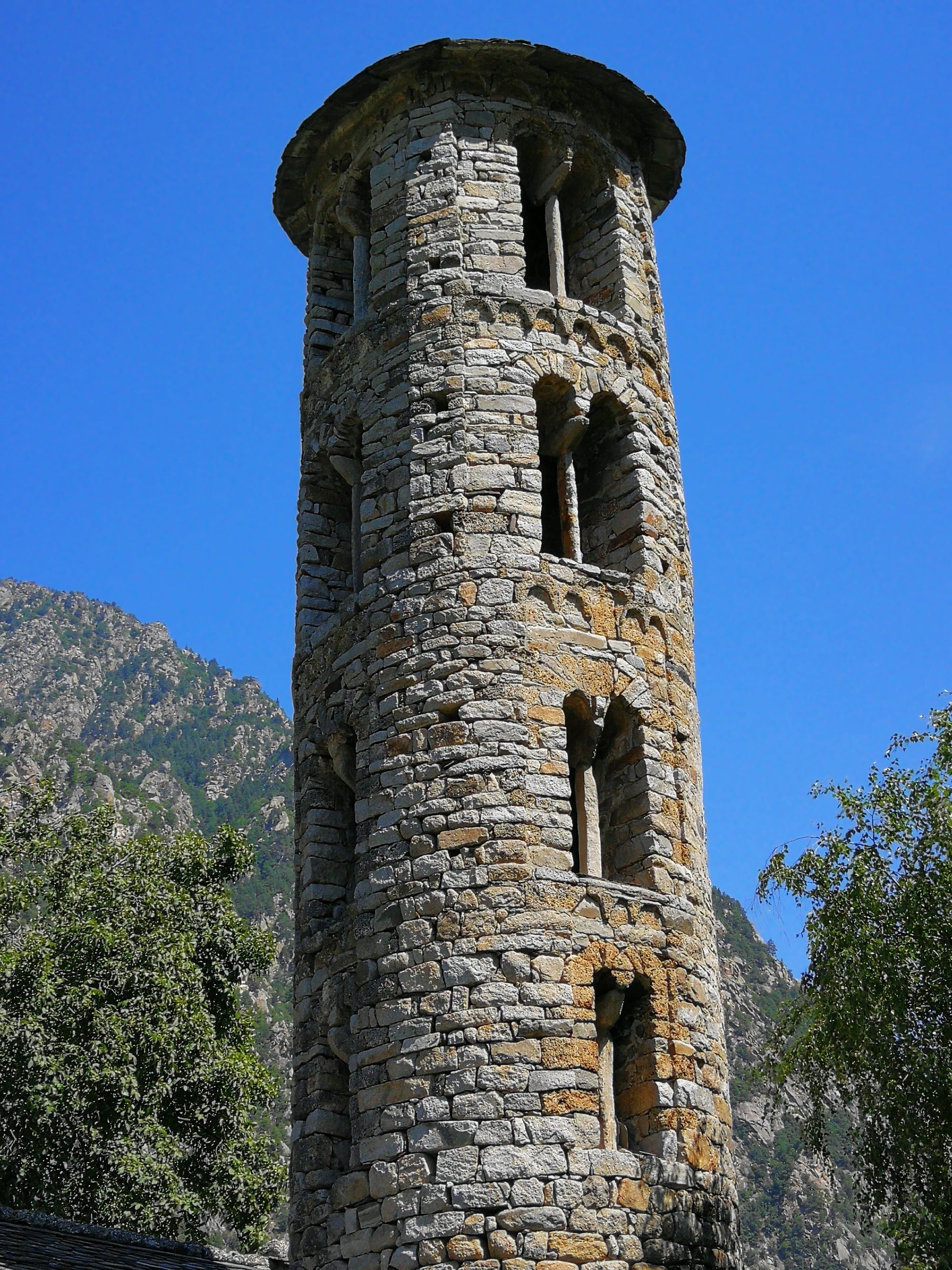
Over the 10th and 11th centuries the counts of Urgell, who held the valleys, handed their rights over Andorra to the bishops of Urgell, whose cathedral town, La Seu d'Urgell, sits just downstream in Spain. The bishops in turn let noble families administer Andorra as a fief. One of those families married into the line of the counts of Foix, on the French side of the range — and that is where the trouble started.
The parish churches
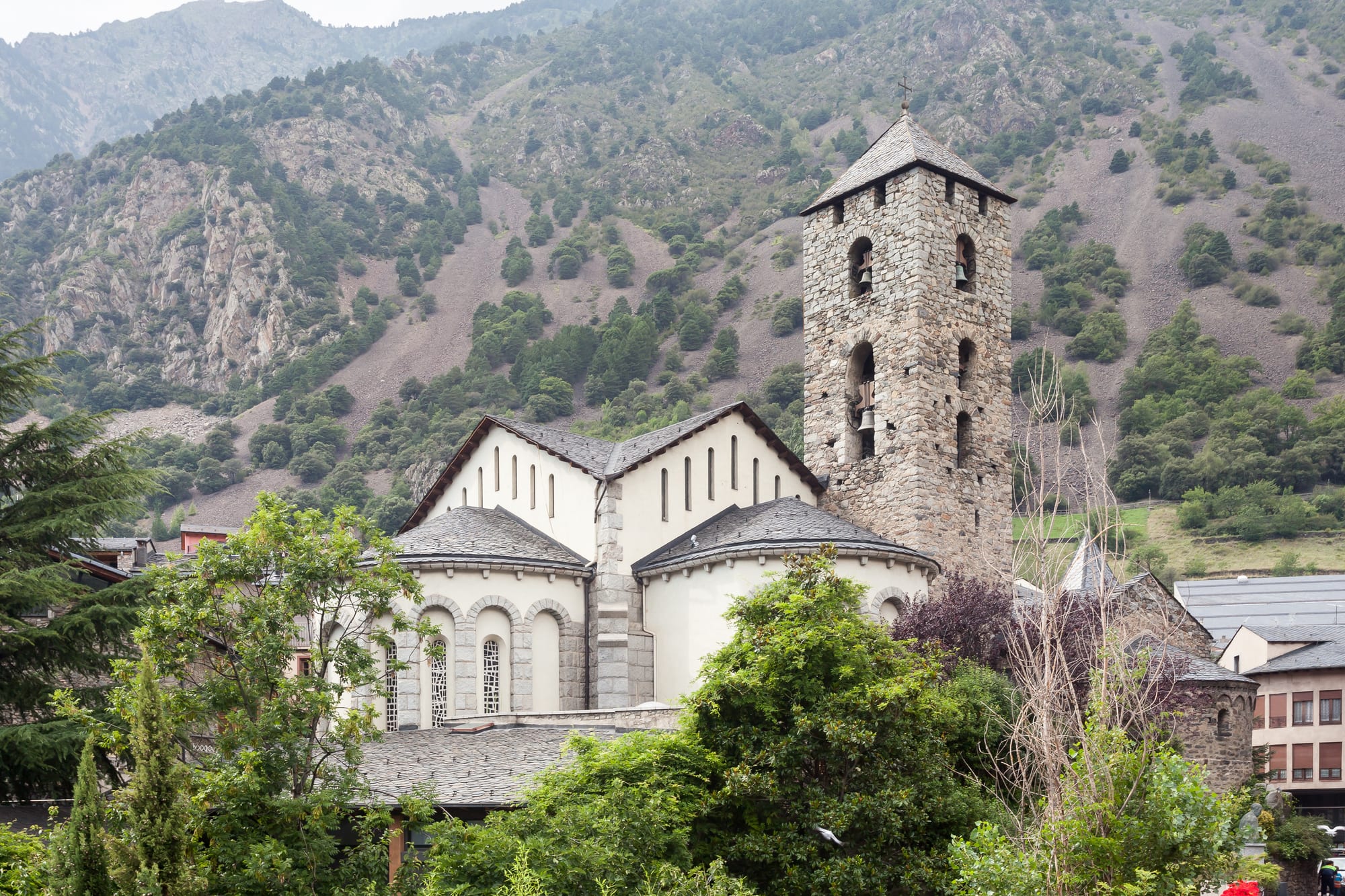
Andorra's seven parishes are still marked by their medieval churches, many built in the 11th and 12th centuries with the tall Lombard bell towers of the Pyrenees.
The pareatges and the two princes
By the 13th century the bishop of Urgell and the count of Foix both claimed Andorra, and they fought over it. The dispute was settled not by conquest but by arbitration: a first treaty, the pareatge, in 1278, and a second in 1288. Their solution was to divide nothing and share everything. Bishop and count would be joint sovereigns — co-princes — collecting the feudal dues in alternate years, appointing officials together, and leaving the Andorrans to run their own local affairs. That arrangement has never been formally dissolved.
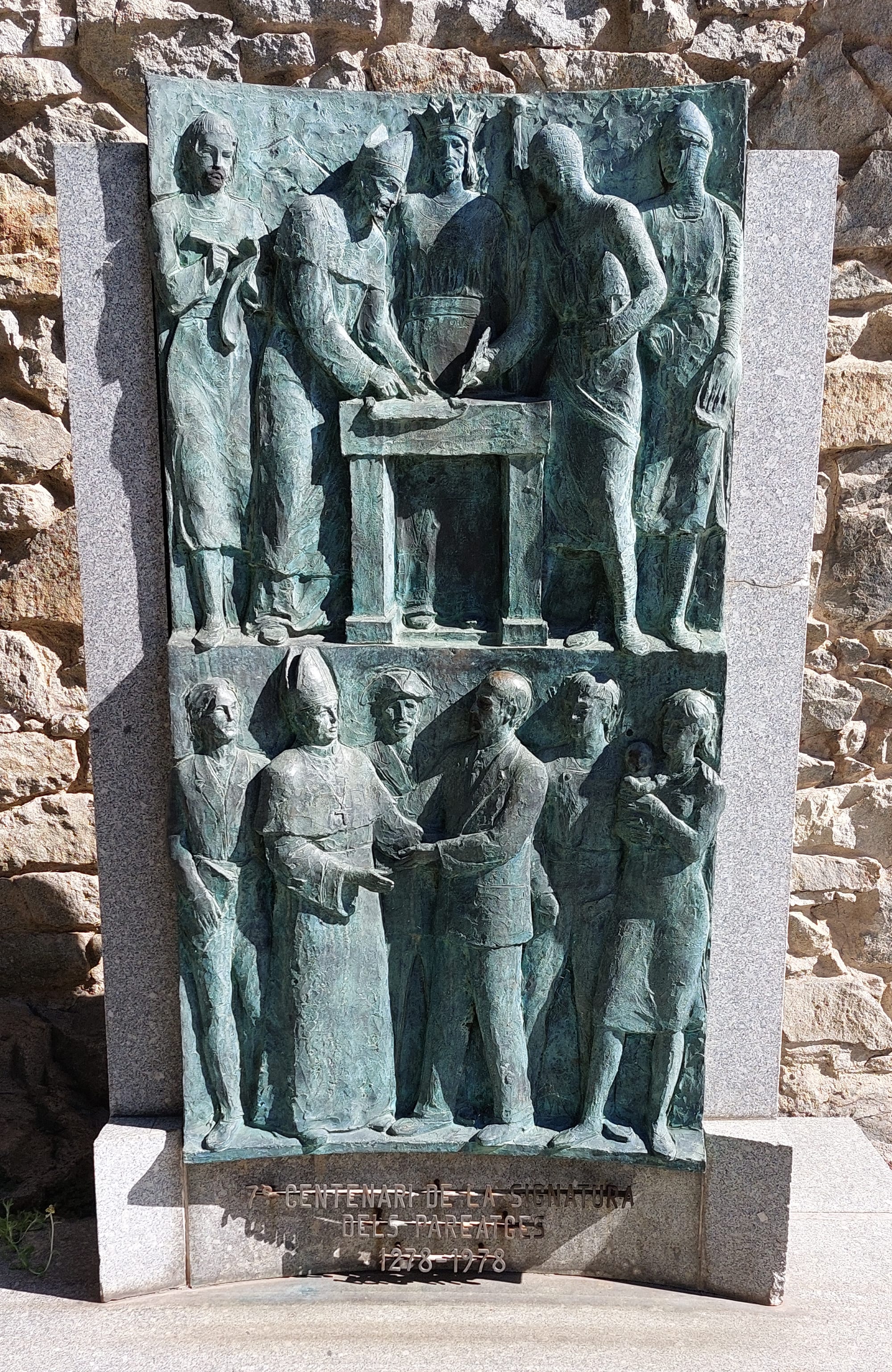
What changed was the identity of the co-princes. The rights of the counts of Foix passed by inheritance to the kings of Navarre, and when Henry of Navarre became King Henry IV of France in 1589 they were absorbed into the French crown. The French Revolution abolished the title in 1793; Napoleon restored it in 1806, after an Andorran delegation asked him to, treating the survival of the tiny state as a curiosity worth keeping. Ever since, the French co-prince has been whoever is head of the French state — today the President of the Republic — while the other co-prince remains the serving bishop of Urgell, appointed by the Pope. Andorrans built their own institutions underneath them: a Consell General, or council of the valleys, meeting from 1419, and a written digest of customary law, the Manual Digest, compiled in 1748.
Isolation, and the smugglers' century
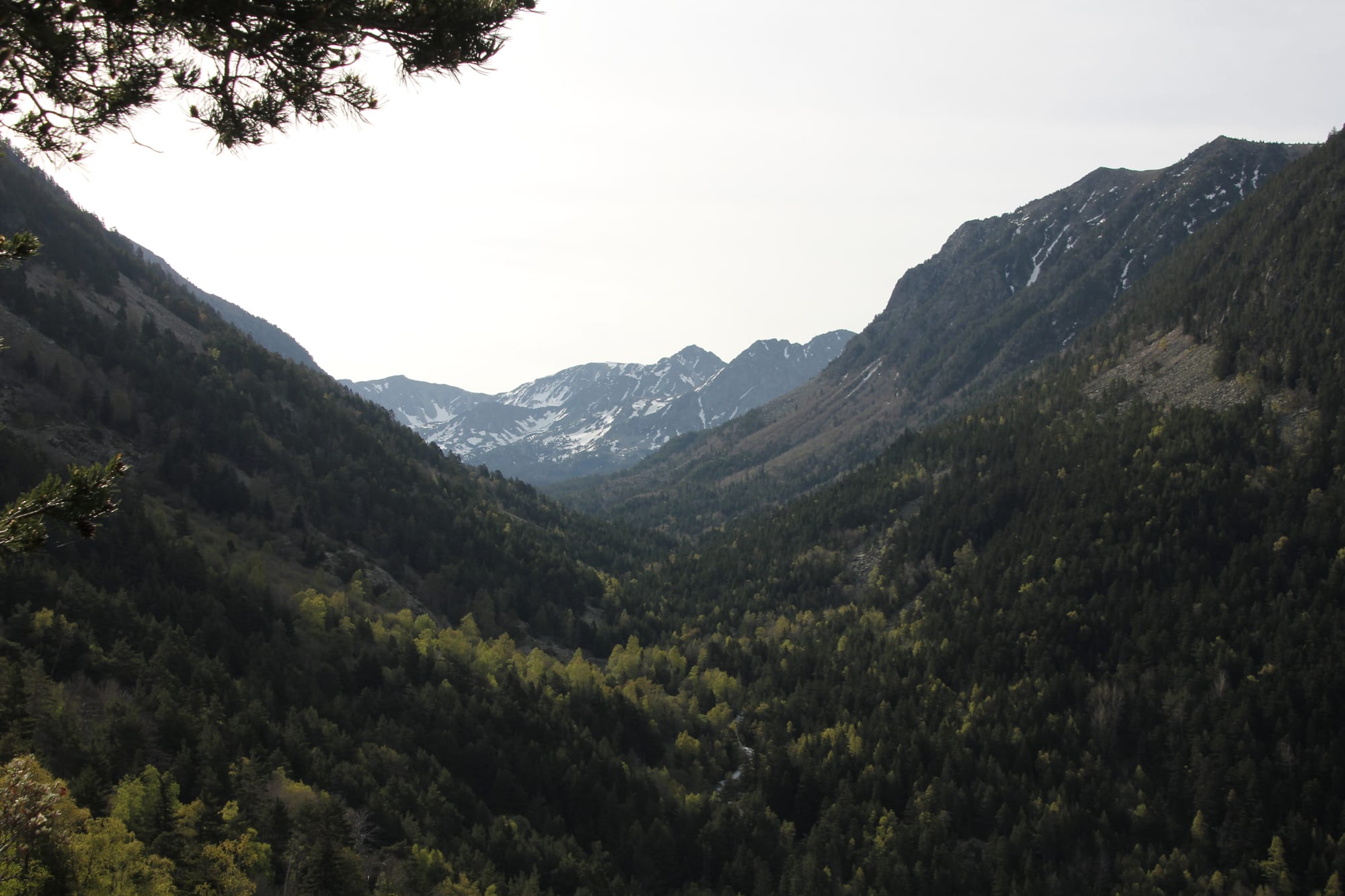
For centuries Andorra lived on livestock, tobacco grown on terraces, iron forges, and the movement of goods and people across a border that its own neutrality made useful. Cut off by snow for months at a time, it stayed outside the wars that reshaped the rest of Europe — it was not even mentioned in the 1659 Treaty of the Pyrenees that fixed the France–Spain frontier through the mountains around it. The high pastures and the stone huts and irrigation channels of valleys like the Madriu, now a UNESCO cultural landscape, preserve a way of life that barely changed for 800 years.
That neutrality had its uses. During the Second World War Andorra stayed out of the fighting and its passes became a route for smugglers, refugees and escaping Allied airmen moving between occupied France and Spain.
Becoming a modern state
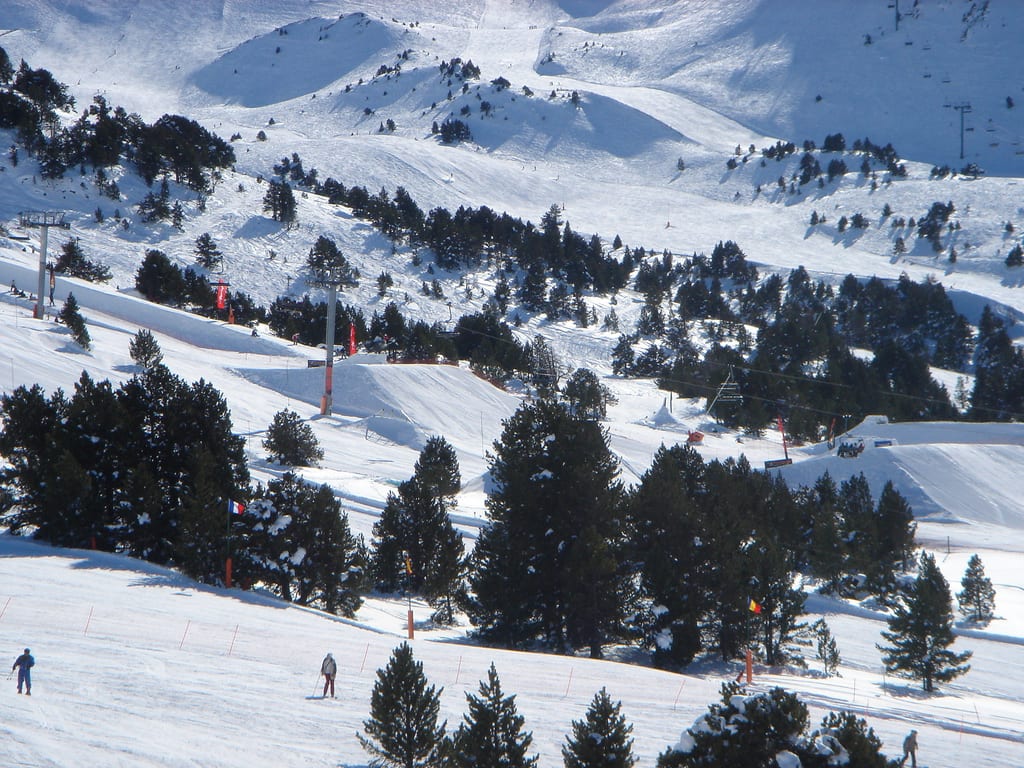
The 20th century finally reached Andorra by road. Motor routes to France and Spain opened in the 1910s and 1930s, and the country reinvented itself around what outsiders would pay for: duty-free shopping, banking, and — once the first lifts were built — skiing. Tension between that new economy and an antique political system produced periodic crises, including protests in 1933 over who was allowed to vote. Women gained the vote in 1970.
The decisive change came in 1993. A referendum approved Andorra's first written constitution, which kept the two co-princes as ceremonial heads of state but moved real power to an elected parliament and government, guaranteed civil rights, and allowed political parties and trade unions for the first time. Andorra joined the United Nations weeks later, and the Council of Europe in 1994. It uses the euro by agreement with the European Union without being a member, and it is the only country in the world with Catalan as its sole official language.
What Andorra keeps
Andorra's trick has always been to be too small and too useful to be worth absorbing. It turned a feudal compromise between a bishop and a count into a lasting constitutional form, sat out every European war within reach, and converted its poverty and its border into an economy. The pareatges of the 1270s still, in a distant way, describe how the country is governed — a 21st-century democracy that keeps a French president and a Catalan bishop as its joint princes because the arrangement has never once stopped working.