Food · Andorra
Andorra: Food and the National Dish
Mashed cabbage and potato fried with cured pork, a Christmas stew shared across the Catalan Pyrenees, mountain trout, and a pantry stocked from both sides of the border
By Worldlore Editorial · 16 September 2026
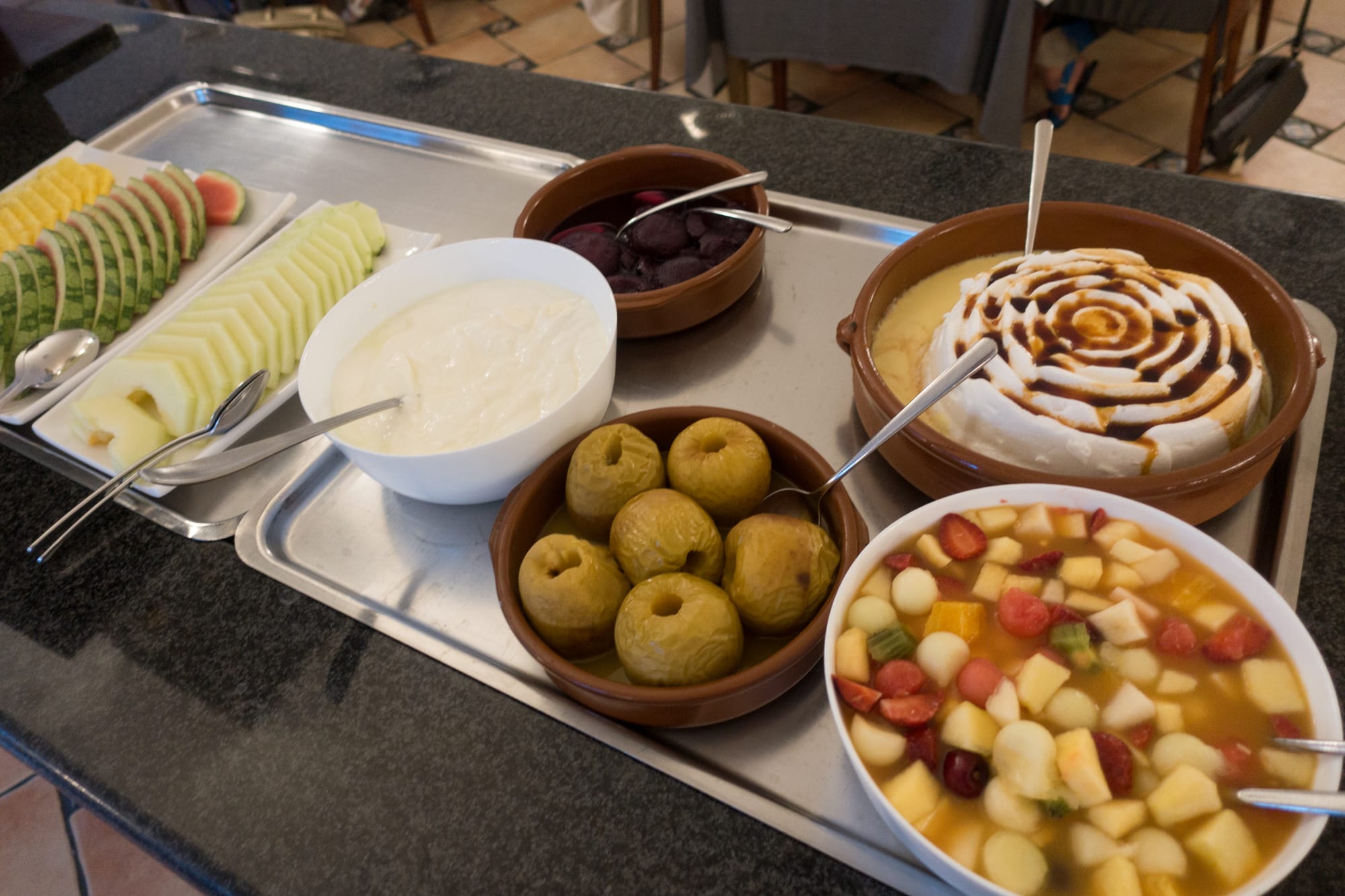
A mountain table between two countries
Andorra is a small, high, landlocked country wedged into the Pyrenees between France and Spain, and its food is Catalan mountain cooking through and through — the same tradition found just across the border in Catalonia's own Pyrenean valleys, shaped further by French influence from the north. Only a sliver of Andorra's steep, mostly-above-2,000-metre terrain can be farmed, so the cooking that developed here is built for scarcity and cold: pork preserved every way possible, cabbage and potato, dried beans, mountain cheese, and whatever could be raised or caught between the peaks.
The national dish: trinxat
Trinxat is cabbage and potato, boiled together, then mashed and pan-fried with garlic and pieces of cured pork fat until the underside turns crisp and golden. It began as shepherd and farmhouse food — a way to use a big pot of two humble vegetables and turn it into something substantial — and it is now the dish most often named as Andorra's own, even though the same recipe is claimed just as firmly across the border in the Catalan Cerdanya valley.
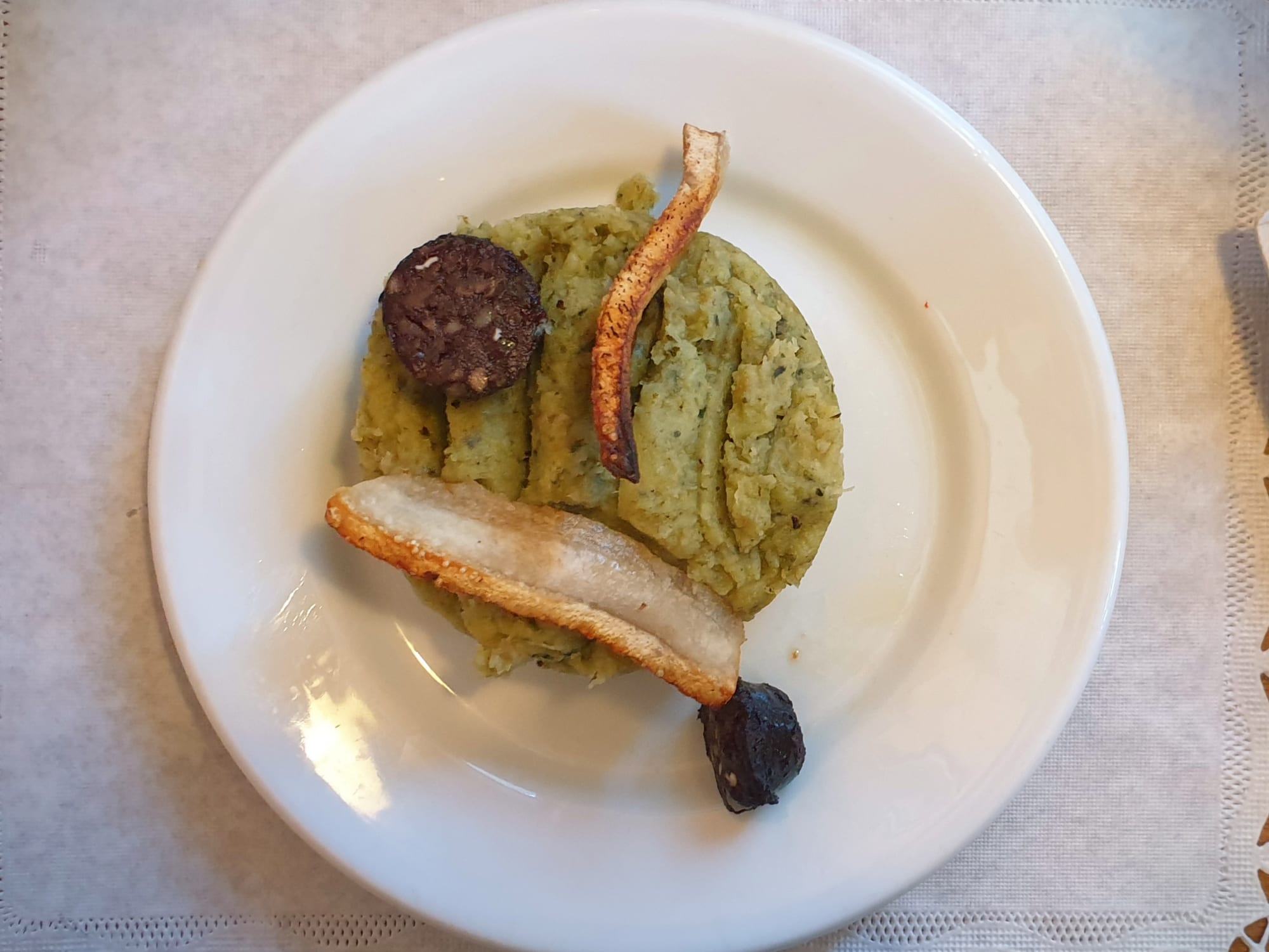
It is usually served with a slice of botifarra negra, a black pudding-style sausage, or a piece of crisp pork skin on top, and it is exactly the kind of food the country's cold, short winters call for: heavy, warming, and built almost entirely from things that keep.
What an Andorran kitchen runs on
Pork is the backbone of the pantry, above all as embotits — cured sausages such as llonganissa and botifarra — hung and dried to get a family through the months when little grows. Potatoes, cabbage and dried beans fill out most everyday cooking, alongside wild mushrooms (bolets) gathered from the forests in autumn and trout pulled from the mountain rivers and lakes. Mountain cheese and butter carry the dairy side, and game such as wild boar appears in the hunting season. Seasoning stays plain: garlic, parsley, bay and black pepper do most of the work, with olive oil more common toward the Spanish side and butter more common toward the French one.
Little of this is grown at scale inside the country today. Andorra's economy runs on finance, retail and winter tourism rather than farming, so most fresh produce now arrives by lorry from France or Spain even though the dishes it becomes are still entirely local in spirit. A handful of small farms keep the old crops and a few mountain cheeses going, mostly for restaurants that make a point of using them.
How the food got this way
The cooking is Catalan at its root, sharing its whole vocabulary of dishes — trinxat, escudella, botifarra — with the valleys just over the border in Catalonia, since the line between Andorra and Spain has never been a cultural one. France's influence comes down from the north in different ways: French bread and pastry are as normal here as Spanish tapas, and Andorra's tax status, which for decades has made it a duty-free shopping destination for both of its neighbours, means French cheese and wine and Spanish ham and cured sausage are often sold, and eaten, side by side in the same shop.
Dishes to know
Five to recognise on any Andorran menu (this is a small country without separate region pages, so this list covers what you will find countrywide):
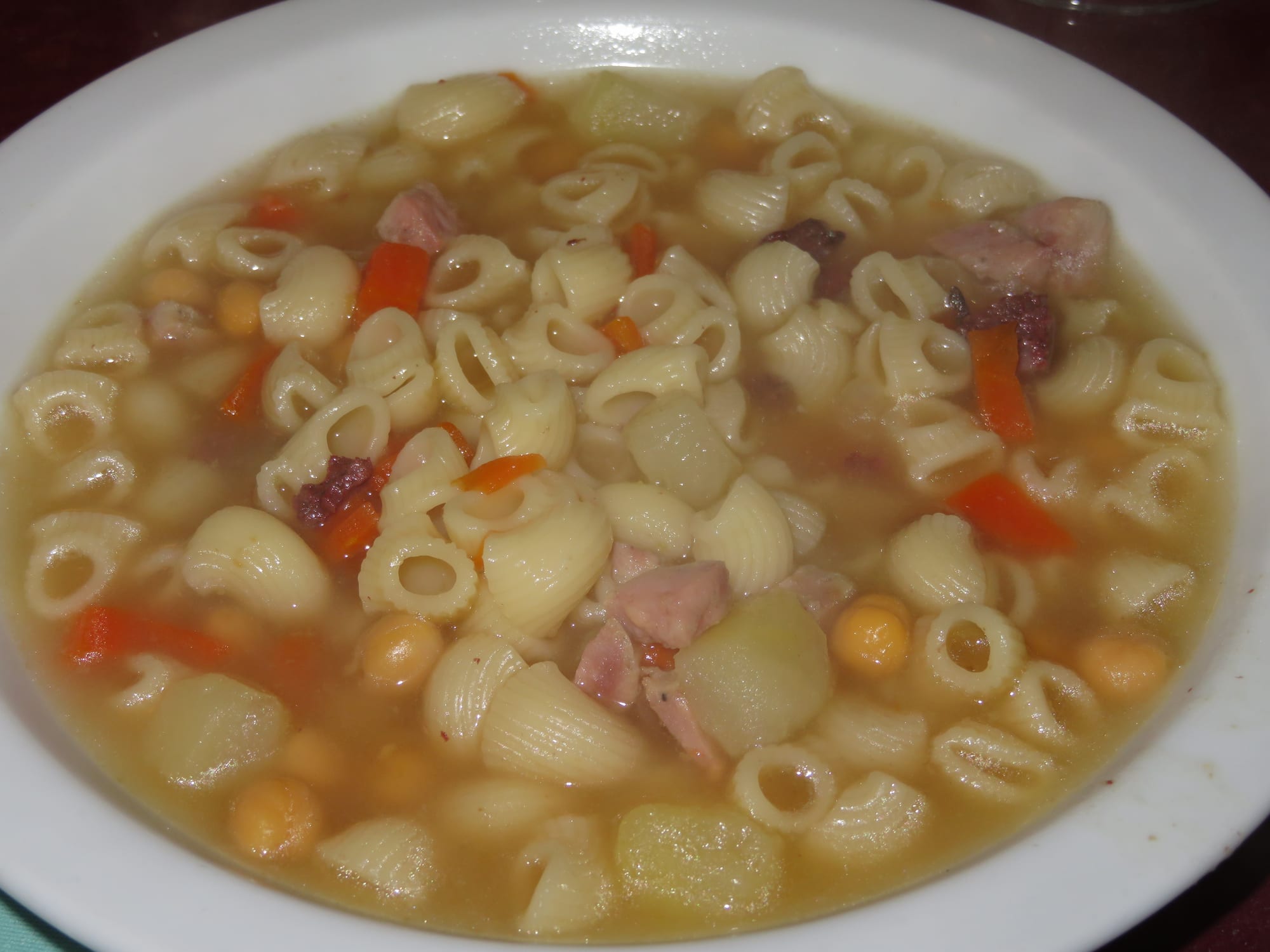
- Escudella i carn d'olla — a meat, vegetable and pasta soup-stew, traditionally
made for Christmas in a big pot and eaten as two courses, the broth with pasta first and the meat and vegetables after.
- Embotits — the cured sausage board: llonganissa, botifarra blanca and negra,
and other pork charcuterie, usually served sliced as a starter.
- Cargols — snails, cooked in a spiced tomato sauce or grilled, a mountain
delicacy shared with Catalonia.
- Truita de riu — river trout, usually pan-fried simply with ham or almonds, a
reflection of Andorra's cold, clean Pyrenean rivers.
- Coca — a flat bread or cake, savoury with vegetables and cured meat or sweet
with fruit and sugar, baked for festivals and eaten as a snack the rest of the time.
Beyond these, look for xai (roast lamb), grilled wild boar in season, and mountain cheeses served simply with bread and quince paste to finish a meal.
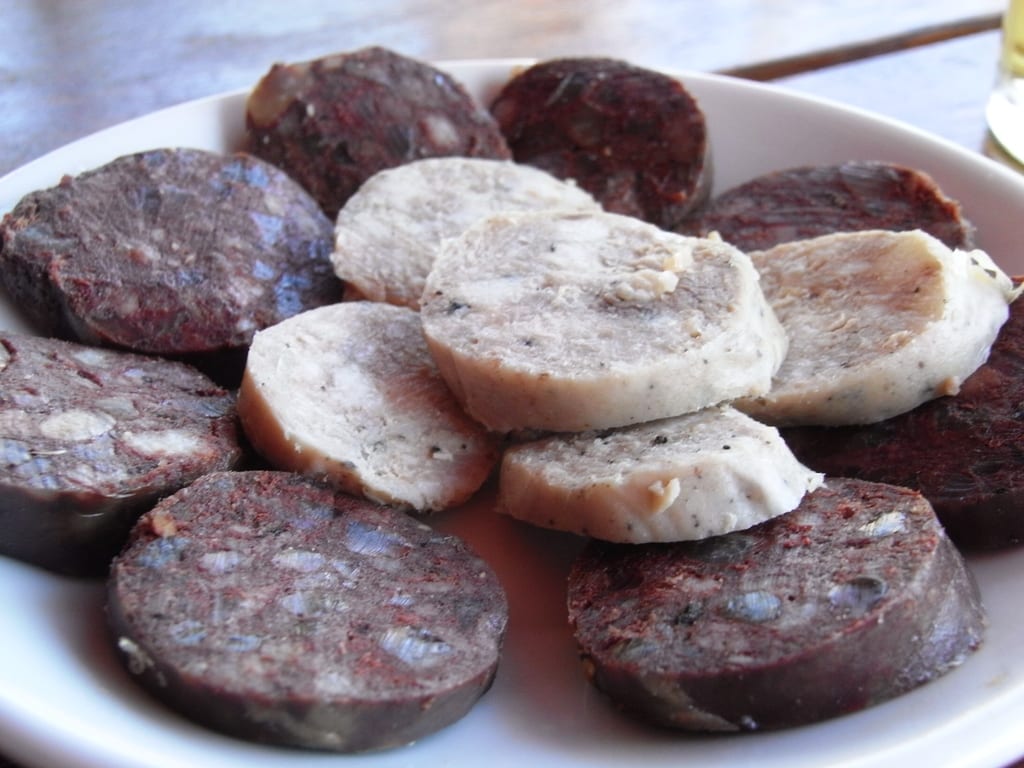
A cured meat board like this is the standard way an Andorran meal opens, whether at home or in a restaurant, and it is treated as a first course rather than a snack.
The table and the calendar
Meals follow the Catalan pattern — a light breakfast, a substantial midday dinar, and a lighter sopar in the evening — and a proper lunch, especially at weekends or in the mountains, can run long, with several courses and plenty of bread. Andorra's ski season shapes a good deal of the food calendar too: heavy, warming dishes like escudella and trinxat are as much winter comfort food for skiers as they are tradition, and mountain refuges and farmhouse restaurants (bordes) serve set menus built around exactly this kind of cooking.
Wine, herbal liqueur and coffee
Andorra grows very little wine itself, but as a duty-free country it sells an enormous amount of it, mostly Spanish and French, at prices that draw shoppers from both neighbours. After a meal, licor d'herbes — a Pyrenean herbal liqueur close to the ratafias made across the wider region — is a common digestif, along with strong coffee. Cold weather also keeps hot chocolate and mulled wine on menus for much of the year.
Eating as a traveller
Vegetarians will find the going harder here than in most of Europe: pork and cured meat run through a large share of the menu, though escudella, trout, cheese, mushrooms and bread give some room to work with. Given Andorra's duty-free status, buying cheese, wine and charcuterie to take home is a genuine part of visiting, and often cheaper than in France or Spain themselves. Portions in mountain restaurants tend to be generous and built for people who have been skiing or walking all day. Andorra is small enough that a short drive can put you in a completely different style of restaurant — French-leaning in the northern parishes near the border, more Spanish and Catalan toward the south — so it is worth trying more than one village if time allows.
What to take from the table
Andorran food is built for cold weather and small farms: a plate of cabbage and potato turned into something rich with a little cured pork, a pot of soup that stretches to feed everyone, and cheese and wine bought cheaply from whichever side of the mountains it came from. Order the trinxat, ask what is in the escudella pot that day, and eat like the winter is coming, because in Andorra it usually is.