History · American Samoa
American Samoa: The Eastern Islands
Three thousand years of Samoan settlement, one of the great harbours of the Pacific, and a border drawn by three empires in 1899
By Worldlore Editorial · 19 September 2026
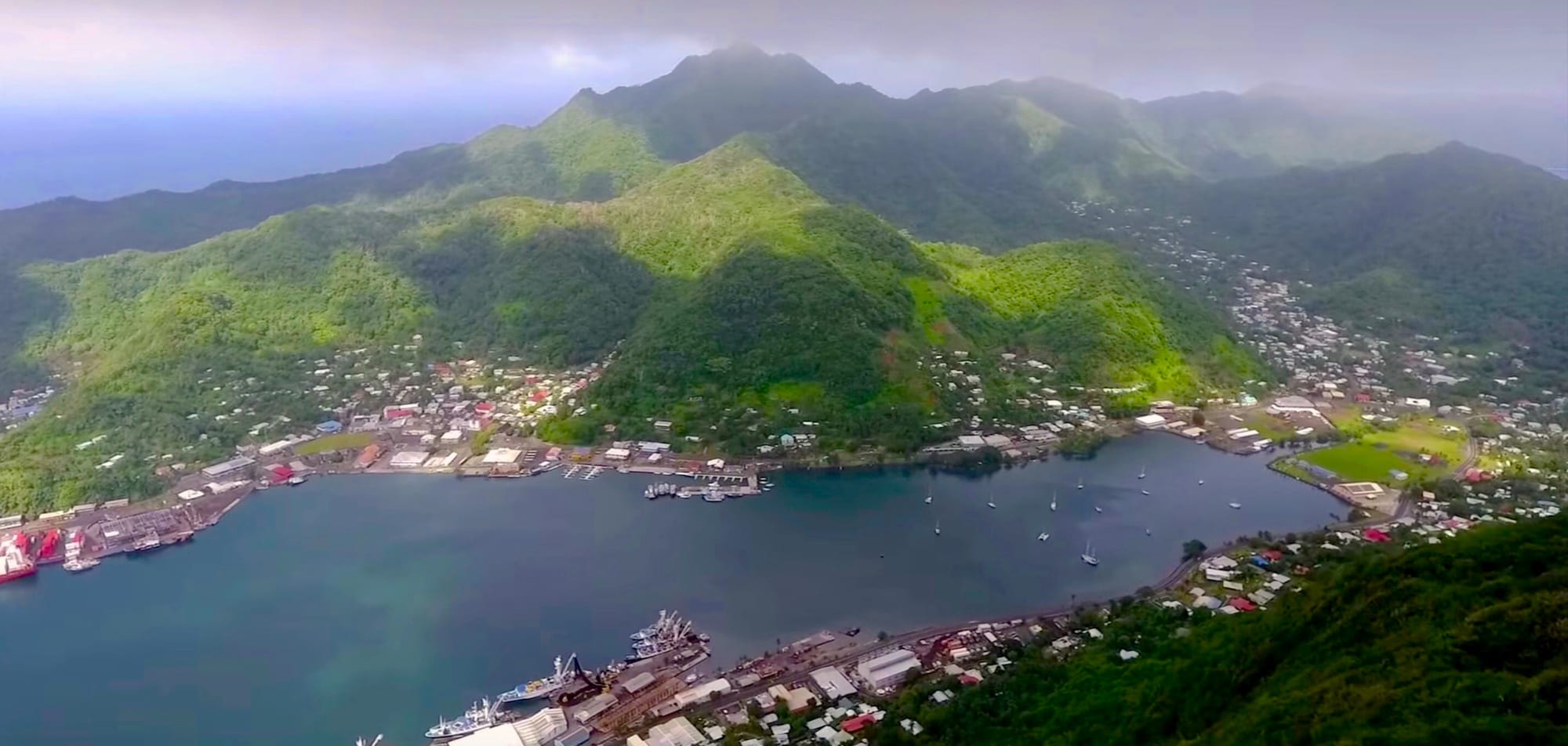
The eastern islands of Samoa
American Samoa is the eastern end of the Samoan archipelago: five small volcanic islands and two coral atolls, about 200 square kilometres of land in total, with a population of around 50,000. Nearly everyone lives on Tutuila, the largest island, strung along the shore of Pago Pago Harbour — a drowned volcanic crater so deep and so sheltered that 19th-century naval powers regarded it as one of the finest harbours in the Pacific. That harbour is the whole reason for American Samoa's existence as a separate place. The people, the language and the culture are the same as in the independent country of Samoa next door; the line between them is a border three empires drew across a single nation in 1899.
A short history
- c. 1000 BCE
First settlement
Lapita voyagers reach the Samoan islands; Samoa becomes a heartland from which much of Polynesia is settled.
- pre-1700s
The Tui Manu'a
The paramount chief of the Manu'a islands holds a title of sacred prestige across a wide stretch of the Pacific.
- 1722 / 1768
European sightings
The Dutch navigator Roggeveen, then Bougainville, who names them the "Navigator Islands".
- 1830
Christianity
The missionary John Williams lands; conversion follows within a generation.
- 1872–1878
The US and Pago Pago
The United States secures rights to a naval coaling station in the harbour.
- 1889
The Samoan crisis
A stand-off between American, German and British warships at Apia ends when a hurricane wrecks most of them.
- 1899
Partition
The Tripartite Convention splits Samoa: Germany takes the west, the United States the east.
- 1900 / 1904
Deeds of Cession
The chiefs of Tutuila, then of Manu'a, cede their islands to the United States.
- 1900–1951
Naval rule
The US Navy governs from the station at Pago Pago.
- 1951 onward
A civil territory
Administration passes to the Interior Department; an elected government develops from 1960.
Three thousand years of settlement
The ancestors of the Samoans reached these islands around 3,000 years ago, part of the Lapita expansion that carried Austronesian-speaking voyagers across the western Pacific. Samoa, together with Tonga, then became one of the homelands of the wider Polynesian world: the islands later settled as far away as Hawai‘i, New Zealand and Rapa Nui trace ancestry and language back to this region. Within the archipelago, the small Manu'a group in the east carried unusual weight, because its paramount chief, the Tui Manu'a, held a title regarded as sacred and was remembered in tradition as having once held influence over islands hundreds of kilometres away.
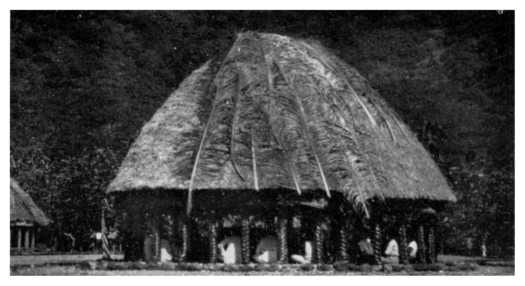
Samoan society was, and largely still is, organised around the aiga, the extended family, each headed by a matai or titled chief chosen by the family. Matai represent their families in the village fono, or council, and hold the family's land in trust rather than as personal property. This system — fa'a Samoa, "the Samoan way" — proved durable enough to survive every later change of flag.
Fa'a Samoa
The clearest expression of fa'a Samoa is the 'ava ceremony, in which a mildly sedative drink is prepared from pounded pepper root in a wide wooden bowl and served in a fixed order of precedence, the sequence itself a statement of rank and relationship. Ceremony of this kind is not folklore in Samoa; it is how authority is acknowledged and business is opened.
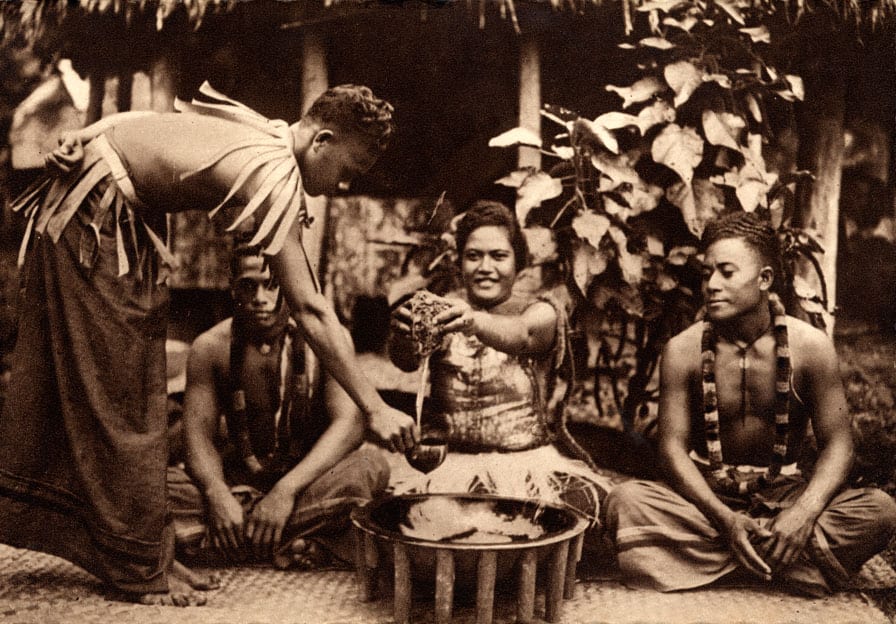
It still has practical force. Roughly 90 per cent of the land in American Samoa is communal land held under matai title and cannot be sold, and candidates for the territory's Senate must hold a matai title to run. A century of American rule has sat on top of this structure without replacing it.
Explorers and missionaries
European ships passed by from 1722, when the Dutchman Jacob Roggeveen sighted the Manu'a islands, and in 1768 Bougainville named the group the Navigator Islands for the skill of the canoes that came out to meet him. The first sustained contact was violent: in 1787 a watering party from the French expedition of the Comte de Lapérouse was attacked on Tutuila, and around a dozen Frenchmen and several times as many Samoans were killed at the place the French called Massacre Bay. The lasting change came in 1830, when the London Missionary Society landed the preacher John Williams. Christianity spread quickly through the chiefly families, and within a generation Samoa was overwhelmingly Christian — which it remains, to a greater degree than almost anywhere else on earth.
Three empires and one harbour
By the mid-19th century Samoa had become a target for three outside powers at once. American traders and the US Navy wanted Pago Pago; Britain and Germany were established around Apia, on the western island of Upolu. In 1878 the United States signed a treaty securing the right to a naval station in Pago Pago Harbour, and Germany and Britain obtained similar concessions. The powers then spent a decade backing rival claimants in Samoa's chiefly wars, until in March 1889 seven American and German warships faced each other across Apia harbour in a confrontation that looked certain to end in battle.
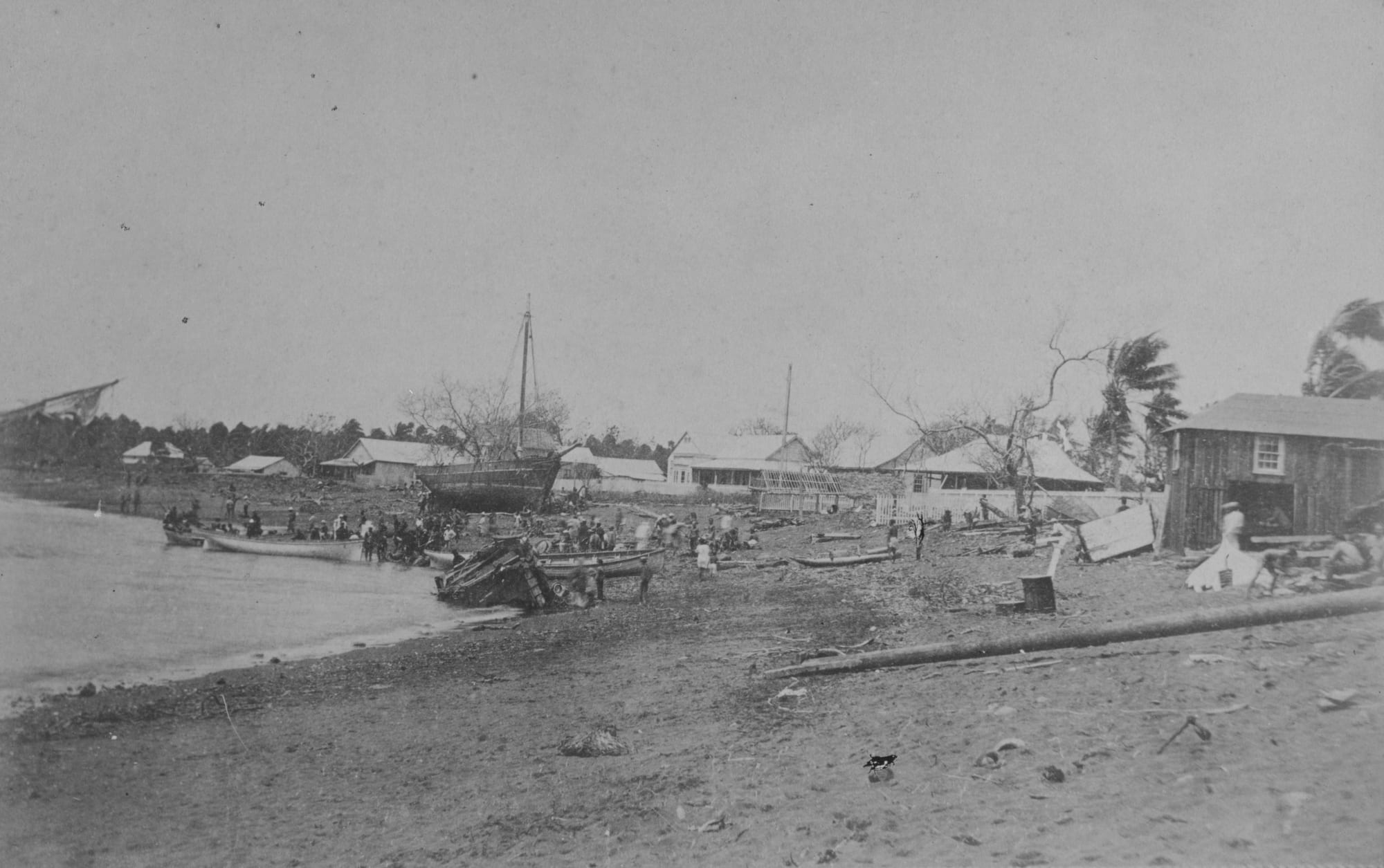
A hurricane settled the matter instead. On the night of 15–16 March 1889 it destroyed nearly the entire combined fleet on the reefs of Apia; only a British cruiser steamed clear. The powers pulled back from the brink, and ten years later, in the Tripartite Convention of 1899, they simply divided Samoa between them. Germany took the two large western islands; the United States took Tutuila, Aunu'u and the Manu'a group in the east; and Britain withdrew its claims in exchange for German concessions elsewhere in the Pacific.
Cession to the United States
The 1899 treaty settled matters between the empires but did not, in Samoan eyes, transfer anything: that required the chiefs. On 17 April 1900 the high chiefs of Tutuila and Aunu'u signed a Deed of Cession placing their islands under the United States, and in 1904 the chiefs of Manu'a and the last Tui Manu'a did the same. The US Congress did not formally accept the cessions until 1929.
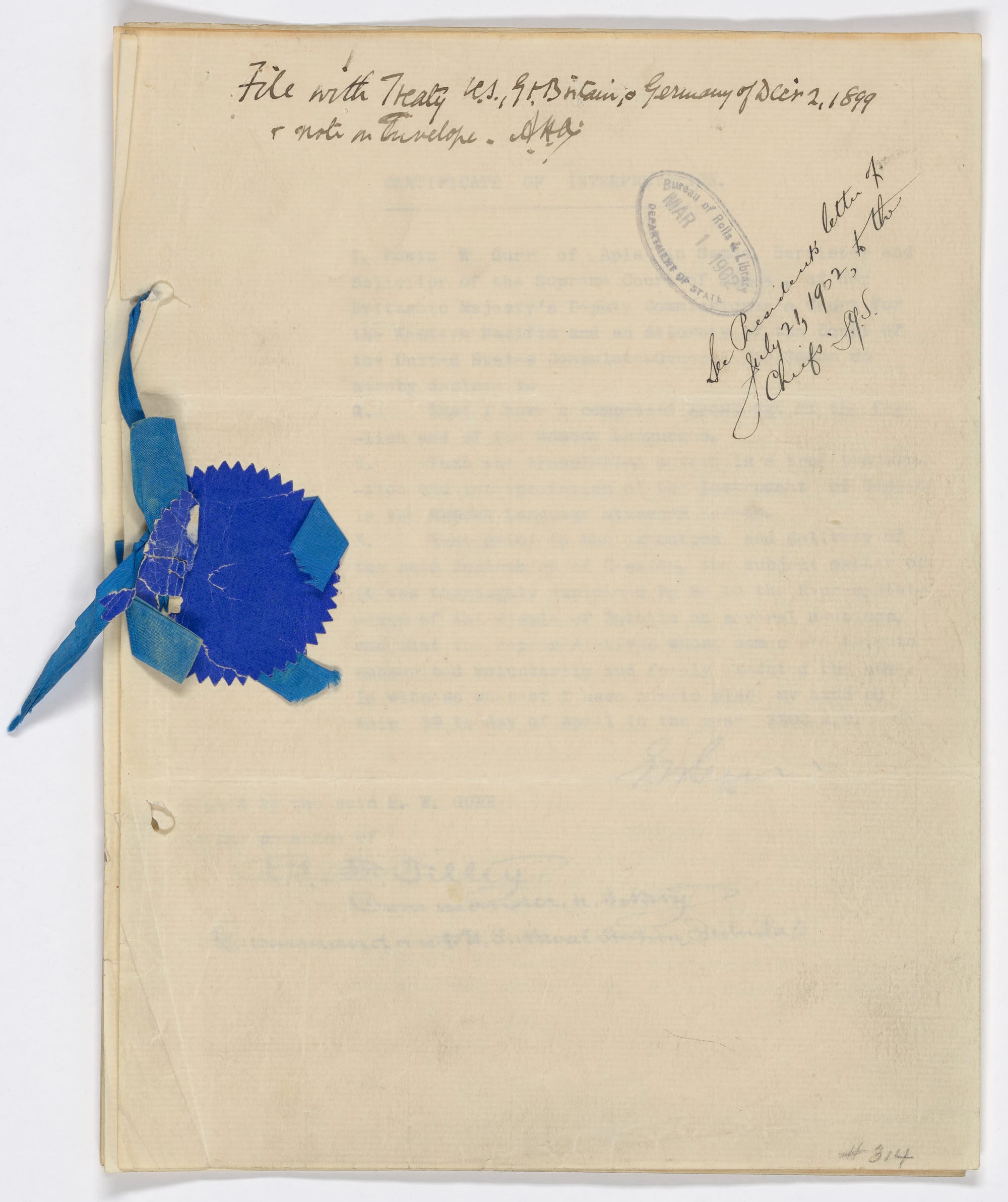
For the first half-century the territory was run by the US Navy. The commandant of the naval station at Pago Pago was also the governor, appointed from Washington, with no elected legislature beneath him. The Navy built schools and a hospital and codified Samoan law, but resisted sharing power; in the 1920s a local protest movement known as the Mau pressed, without much success, for Samoan representation.
The Navy years and the war
The Second World War transformed Tutuila. The US Marine Corps turned the island into a base, its population swelled with troops, and in January 1942 a Japanese submarine surfaced and shelled the Pago Pago area — one of the very few attacks on US-held soil in the Pacific outside Hawai‘i and the Philippines. Thousands of Samoans served in Samoan military units or worked for the bases, and the money and movement of the war years permanently changed the local economy.
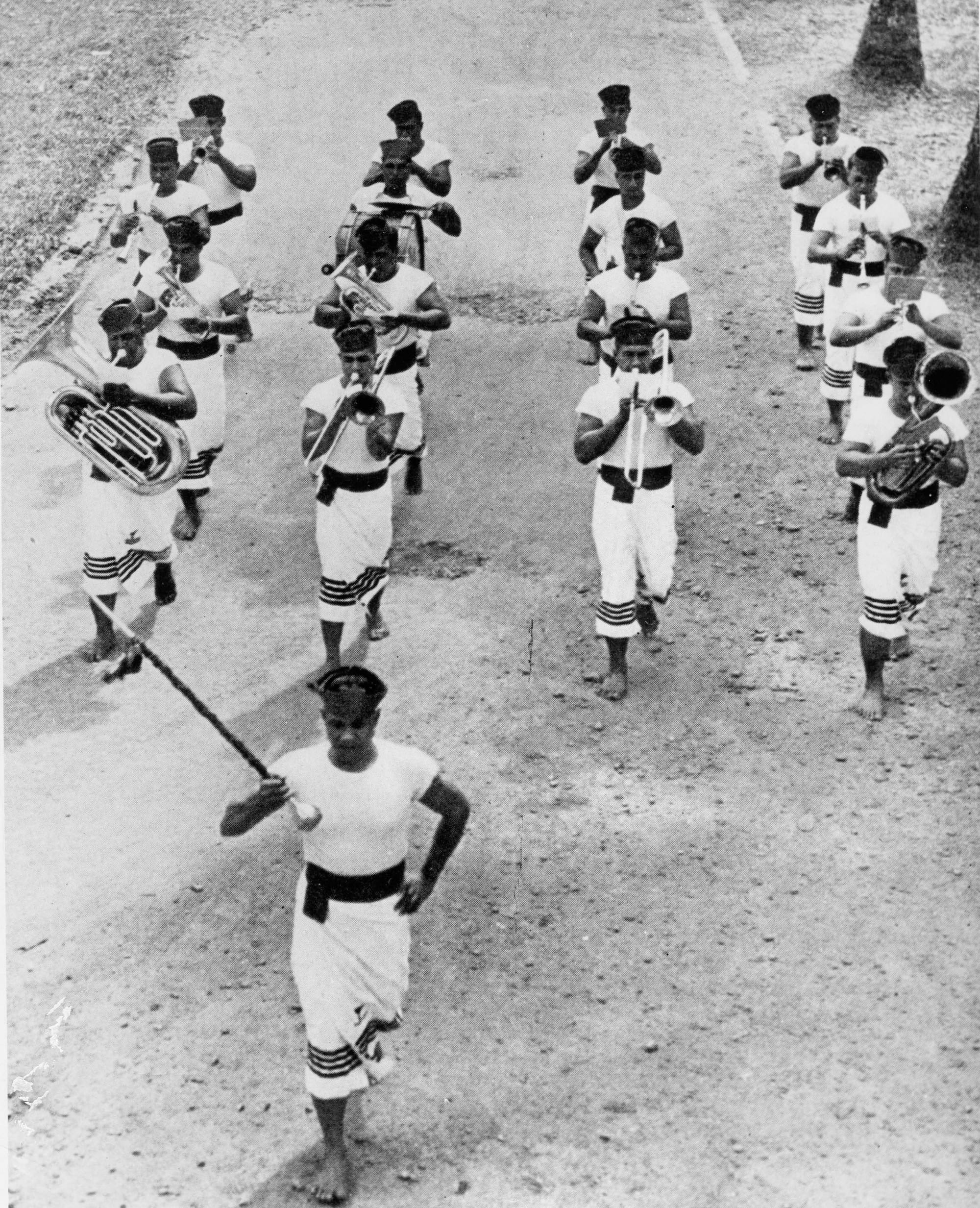
When the war ended the Navy's reason for holding American Samoa faded, and in 1951 control passed to the US Department of the Interior, which began appointing civilian governors.
A territory finds its footing
American Samoa wrote its first constitution in 1960 and revised it in 1967, creating an elected legislature, the Fono, with a Senate of matai and a popularly elected House. In 1977 the territory elected its own governor for the first time rather than receiving an appointee, and at the start of the 1980s it gained a non-voting seat in the US House of Representatives. Tuna canning at Pago Pago became the mainstay of the wage economy and for decades the largest private employer.
American Samoa's constitutional status remains unusual. It is an unincorporated, unorganised US territory, and people born there are US nationals but not US citizens by birth — the only place under the American flag where that is true, and a distinction still being fought over in the federal courts. A tsunami in September 2009 killed about 34 people on the islands, the worst natural disaster in the territory's modern history.
What American Samoa keeps
A colonial border made these islands American, and a century of US rule has left its marks — the canneries, the naval guns, the passports, one of the highest rates of US military enlistment anywhere under the flag. But the older structure has held underneath all of it. The land is still communal, the matai still govern the villages, and every 17 April the territory marks Flag Day, commemorating not the 1899 treaty of the empires but the 1900 Deed of Cession that its own chiefs signed.