Culture & Customs · American Samoa
American Samoa: Shoes Off and Seated
A Samoan way of life built on family, chiefs and respect, a church in every village, fine mats worth more than money, and manners that begin with sitting down
By Worldlore Editorial · 30 September 2026
A visitor arrives at a Samoan home. The shoes come off outside before anyone steps across the threshold. Inside, the family are seated on woven mats on the floor, and the first thing the guest does is to sit down too, cross-legged or with the legs tucked neatly to one side and covered, feet pointing away from everyone else. The most senior person in the room is greeted first. Nobody conducts a conversation standing over someone who is sitting, because to do so would be to place oneself above them. It is a small ritual, repeated in homes across the islands, and it captures the heart of Samoan custom: respect is shown with the whole body, and most of all by knowing one's place in relation to others.
Faith, identity and values
Life in American Samoa is shaped by fa'a Samoa, "the Samoan way", a code that reaches back some three thousand years and governs family, language, genealogy, the arts and social order. Its foundation is the aiga, the extended family, whose members share possessions and put the interests of the group before their own. Each aiga is led by a matai, a titled chief chosen by the family on the strength of loyalty and service rather than simply by inheritance. There are two broad kinds: ali'i, high chiefs who make decisions, and tulafale, talking chiefs whose skill is oratory. Matai have traditionally been men, but women can and do hold titles today. The matai manages family land, protects the family's interests and represents it in the village council. Fa'a Samoa places the dignity and achievements of the group above those of any individual, and it is often summed up in a handful of pillars: family, the Samoan language, genealogy, the church and fa'alavelave, the ceremonial and family obligations that bind relatives together.
Running through all of this is fa'aaloalo, respect. Deference is owed to elders and to those of higher standing, and there is even a special vocabulary of respectful speech used when addressing a matai.
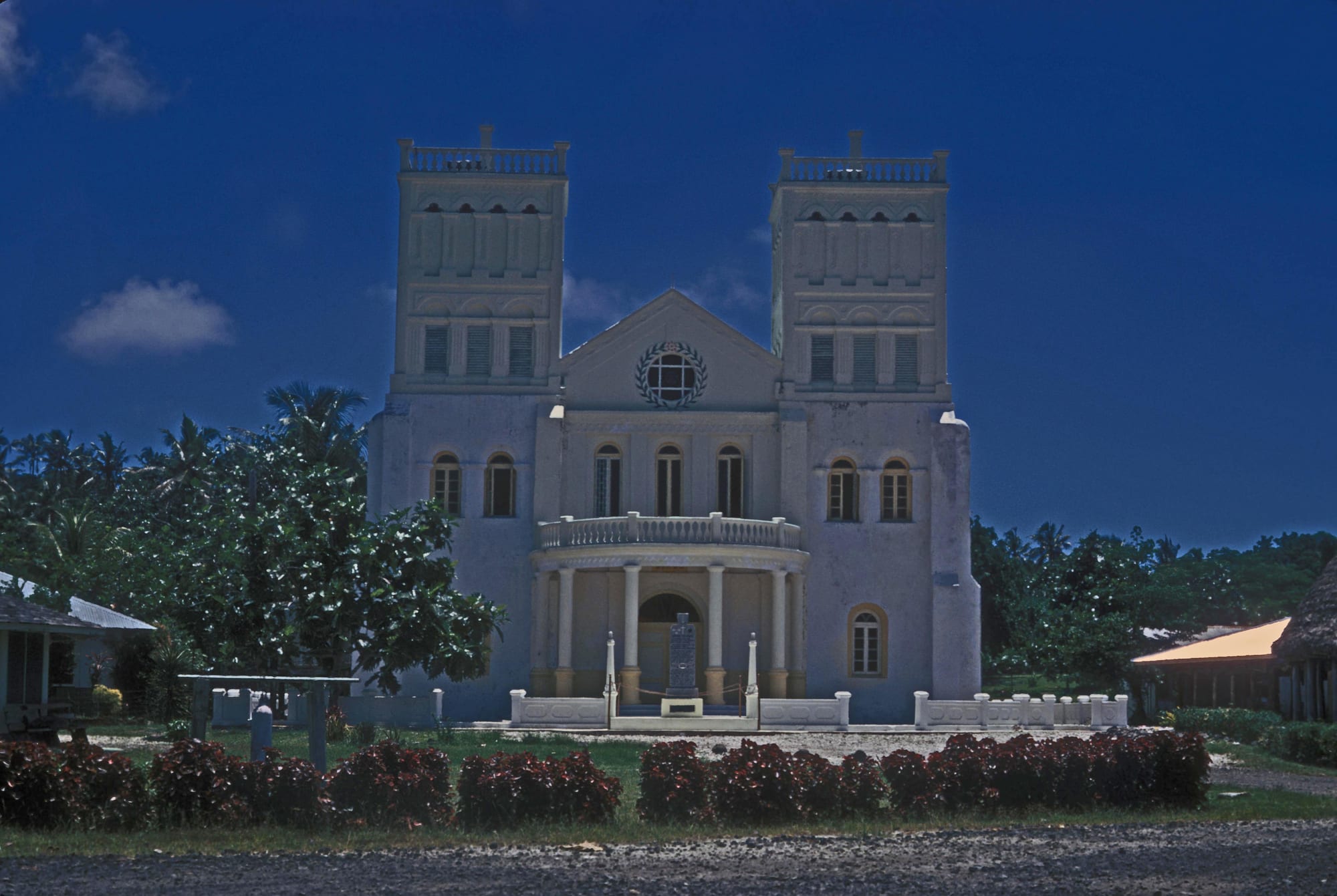
Christianity is woven through fa'a Samoa. Every village has at least one church, and the church is a major source of social cohesion. The main denominations are Congregationalist, Catholic, Methodist and Latter-day Saint. Sunday is kept for worship, family and rest: congregations are expected to attend and to contribute, no work is done, the larger shops close, and some activities, such as swimming, may be restricted. In many villages a short period of evening prayer, sa, is marked by a bell or a blown conch shell, and walking through a village while it is under way is considered disrespectful. Samoan culture also has a recognised place for fa'afafine, people born male who are raised as or live as women, and who are often described as a third gender.
Greetings and meeting people
Strangers are greeted with a handshake and a warm smile, or simply by raising the eyebrows and smiling as a sign of acknowledgement. Among friends and family the usual greeting is a hug and a kiss on the cheek, with the person's first name and "talofa", hello.
Titles matter. A matai should be addressed by his or her title, however well one knows them, and because many chiefs do not advertise their status, it is sensible to ask quietly how someone should be addressed. In a room, the person of highest rank is greeted first, and it is considered rude to stand while others are sitting, or to speak down to someone from a standing position; the courteous thing is to come down to their level.
Speech is valued highly, and the talking chiefs, the tulafale, are esteemed for exactly that skill. Everyday conversation, by contrast, is calm. Losing one's temper or raising the voice in public is frowned upon, gossip about other people's families is a serious breach of manners, and openly contradicting the word of a matai is not done. Punctuality is not a great concern, and visitors are advised to accept the slower pace of what Samoans themselves call "Samoan time".
Hospitality and being a guest
Shoes are always left outside a home, and anyone unsure should ask before stepping inside with them on. Once seated on the floor mats, guests sit cross-legged or with their legs tucked behind them, keeping their legs covered and never pointing their feet at anyone. The head is regarded as sacred, so touching someone's head, or passing an object over it, should be avoided.
Meals begin with a prayer, and elders eat first while others wait before serving themselves. A guest is expected to try every dish offered as a sign of respect, but taking a second helping can be seen as greedy. Visitors should not arrive at an event bringing food of their own, since it can suggest that the hosts have not prepared enough. Gifts need not be expensive, as the thought behind them is what counts. When receiving a gift, the polite response is to bow the head slightly and raise the gift briefly above the head with both hands.
Festivals and life's big moments
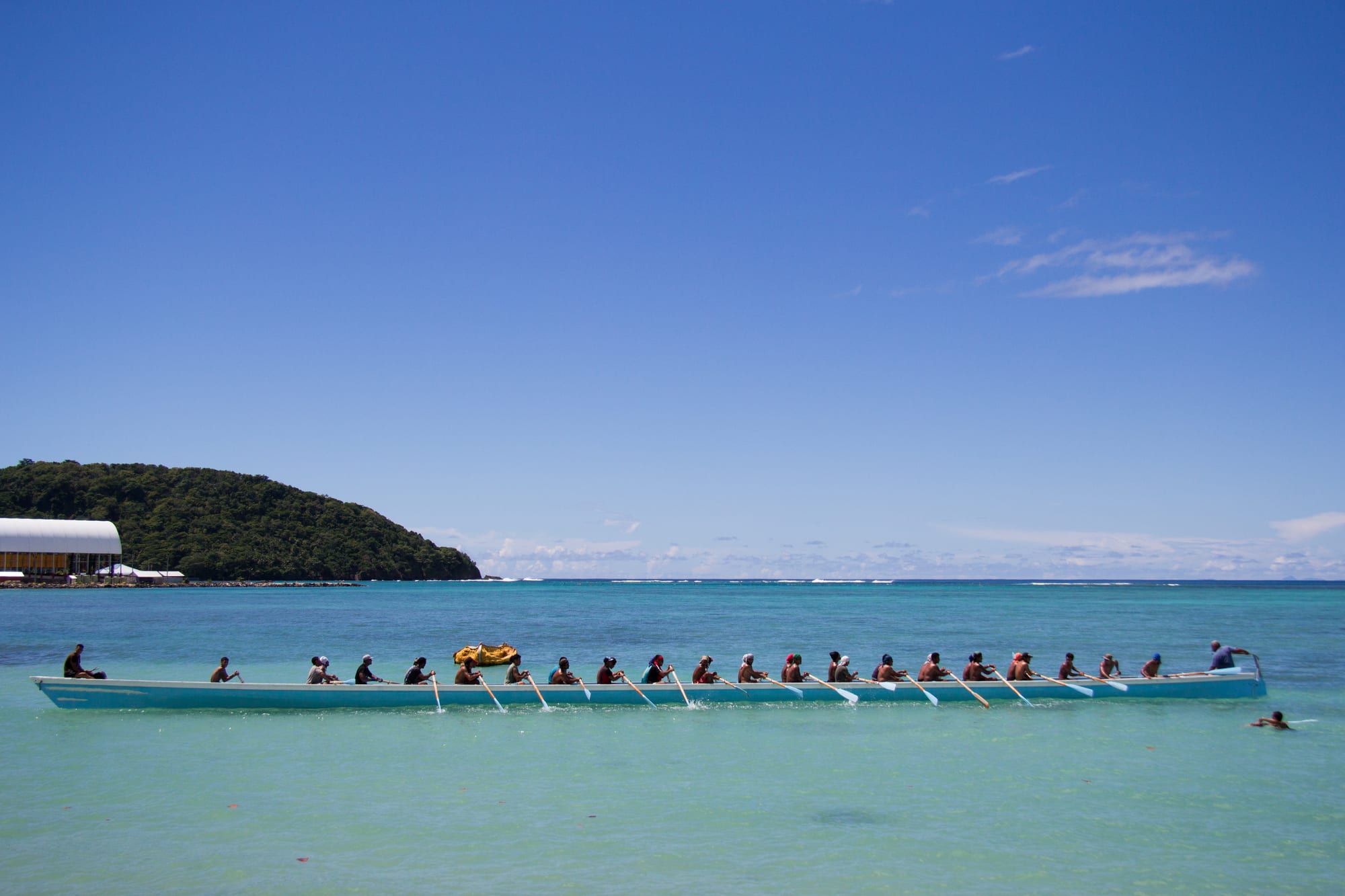
The biggest day of the year is Flag Day, 17 April, which commemorates the day in 1900 when the chiefs of Tutuila and Aunu'u signed the Deed of Cession placing their islands under the United States. It is celebrated with speeches, siva dancing and the fautasi races, contests between the crews of long rowing boats. The Manu'a islands mark their own cession on 16 July. White Sunday, Lotu Tamaiti, in October, is devoted to children, and the church calendar and village festivals fill the rest of the year.
Weddings bring two families together as much as two people. A civil registration is usually followed by a church ceremony that blends Christian and Polynesian elements, and the taualuga, the ceremonial dance traditionally performed by a chief's daughter, often closes the celebration. The families exchange lauga, formal speeches delivered by their talking chiefs, together with gifts such as fine mats and money, forging bonds between the two groups. Fine mats are presented at formal occasions of many kinds, and meeting fa'alavelave, the ceremonial and family obligations that such occasions bring, is one of the duties that holds the aiga together.
Arts, crafts and music
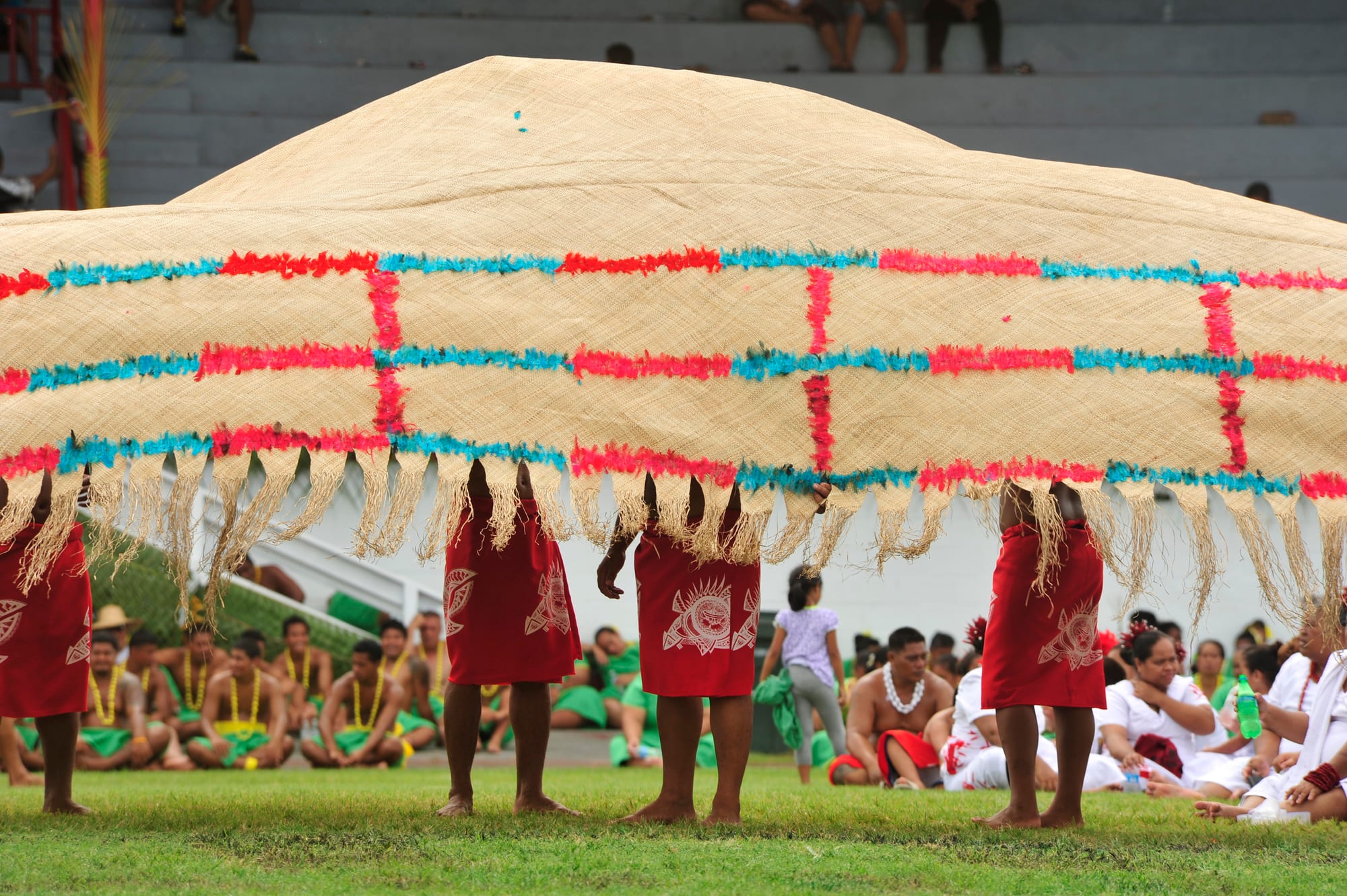
The most valued of all Samoan objects is the fine mat, 'ie tōga. Plaited from pandanus, sometimes edged with red feathers, and prized for the quality of its weave and the softness and shine of the material, a fine mat is presented at formal occasions and carries the highest cultural value in the Samoan islands. The fine mat tradition, shared across the Samoan islands, has been placed on UNESCO's list of intangible cultural heritage by the neighbouring state of Samoa.
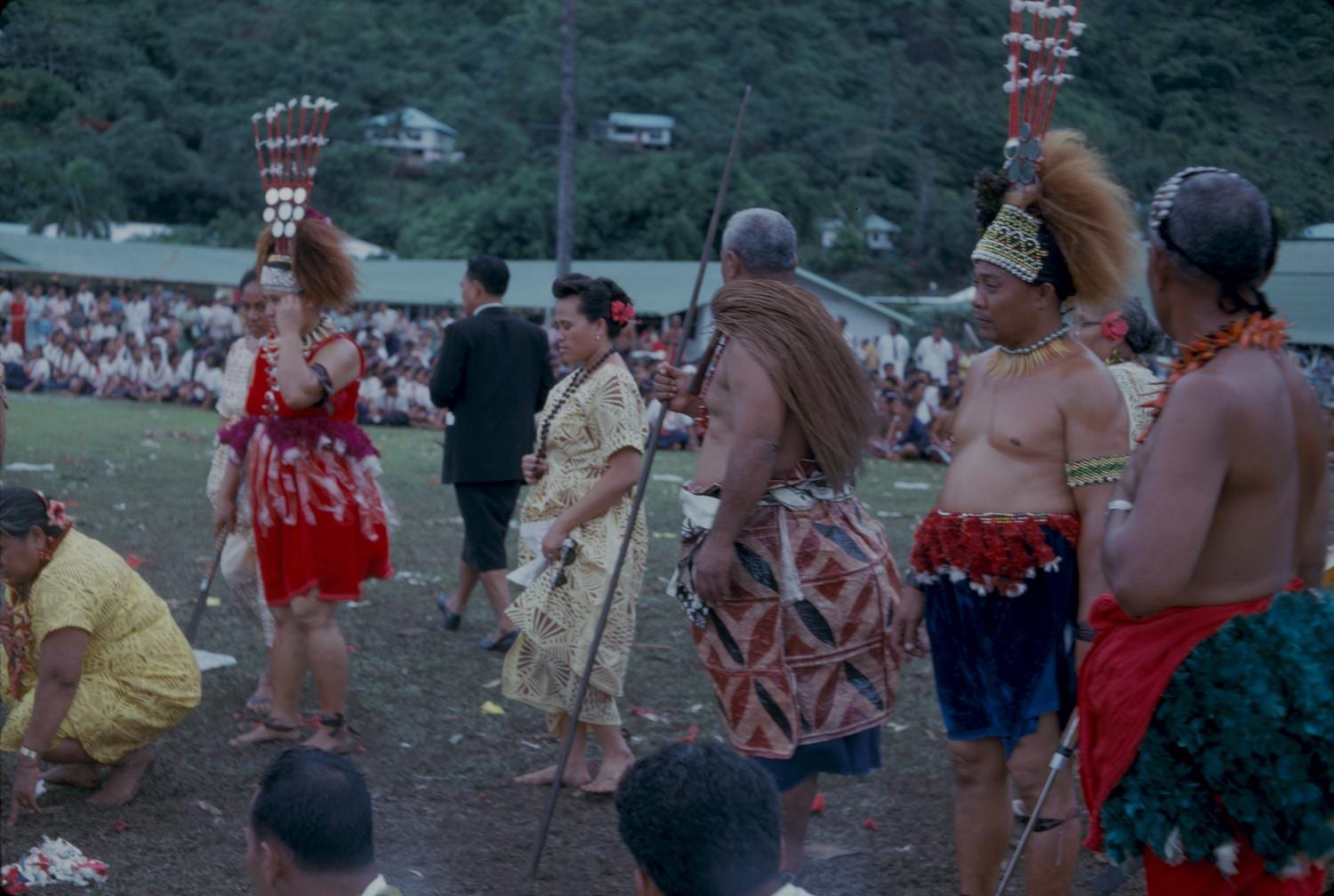
Oratory is an art in its own right. The lauga delivered by talking chiefs at weddings and other ceremonies is a central part of the occasion, and the respectful vocabulary used towards matai is part of the speaker's craft. Dance is equally central: the siva is performed at Flag Day, and the taualuga, traditionally danced by a chief's son or daughter, is often the finale of a wedding reception. The 'ava ceremony, in which the drink is prepared in a wooden bowl and served in a strict order of precedence, remains the formal way of opening important occasions.
Dos and don'ts for visitors
- Do remove shoes before entering a home, and sit cross-legged without pointing the feet at anyone.
- Don't stand while others are seated; come down to their level to talk.
- Do stop and wait quietly if passing through a village during the evening sa prayer.
- Do dress modestly in villages, with a T-shirt, shorts or a lavalava, and keep swimwear for the beach or pool, and avoid swimming at village beaches on Sunday.
- Do ask permission before taking photographs in a village or using a village beach, where a small donation may be requested.
- Do dress smartly for Sunday church, and expect the larger shops to be closed.
- Don't touch anyone's head or pass things over it.
- Don't raise the voice or lose one's temper in public.
What to take away
Samoan customs rest on respect for family, chiefs and the church, and visitors who take their shoes off, sit down and speak softly will find fa'a Samoa opening its doors to them.