Food · American Samoa
American Samoa: Food and the National Dish
Taro and breadfruit from the earth oven, reef fish and tuna, and a pantry stocked as much from US cargo ships as from the garden
By Worldlore Editorial · 20 September 2026
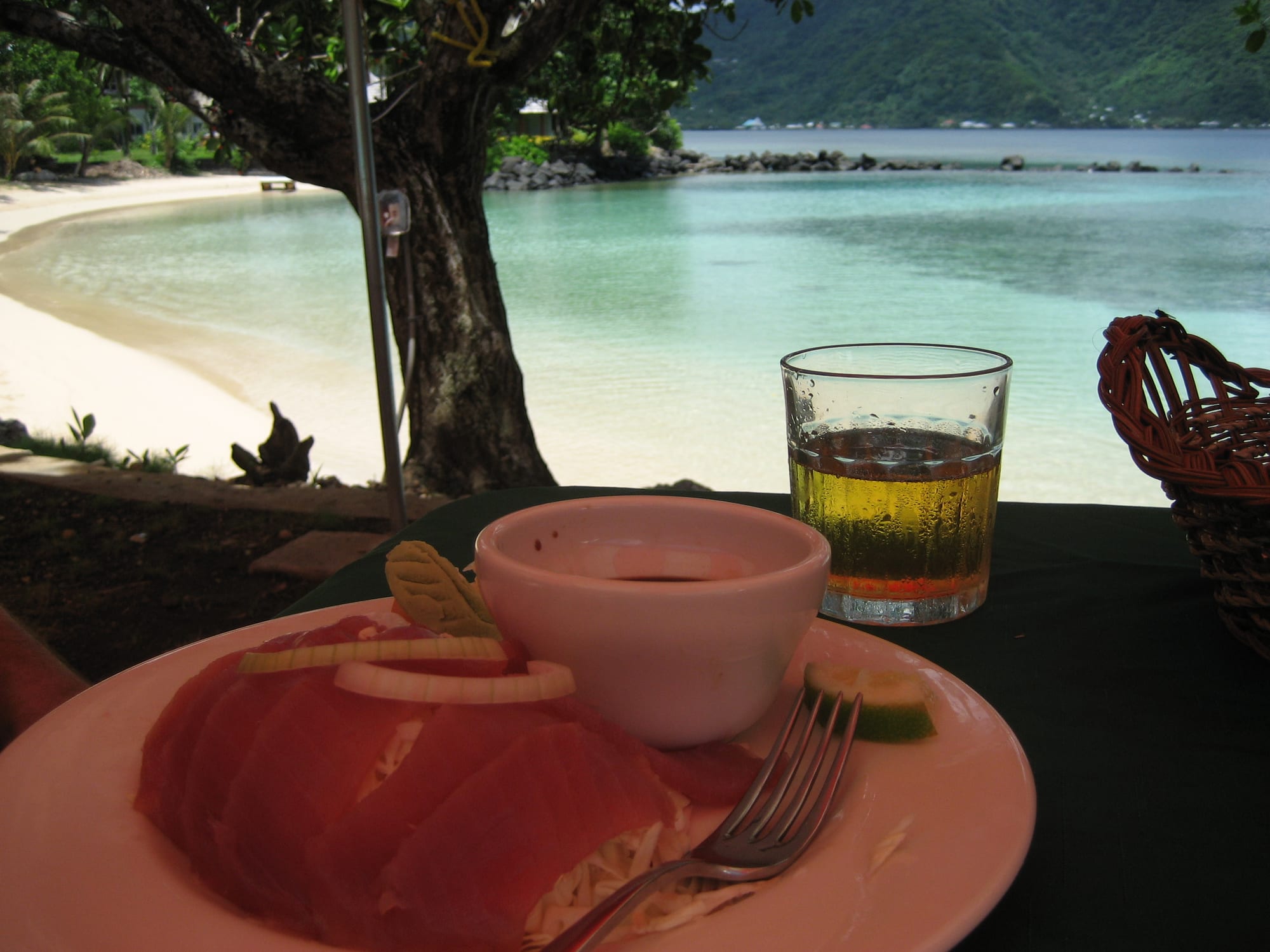
One food culture, split by a colonial line
American Samoa is the eastern end of the Samoan archipelago, separated from the independent nation of Samoa to the west by a border drawn by the United States and Germany in 1899, not by any difference of language or culture. The food on both sides of that line is the same Samoan food, built on taro, breadfruit, coconut and fish and cooked in an earth oven. What makes American Samoa's table distinct is what has arrived since 1899: as an unincorporated US territory, it gets its shelf-stable groceries from the same supply chains as the mainland United States, so a very old way of cooking sits next to tinned corned beef and imported rice, and both are treated as completely normal.
The national dish: palusami
There is no officially declared national dish, but if one Samoan food had to represent the territory it would be palusami: young taro leaves wrapped in layers around a filling of coconut cream, often with a little onion or corned beef, tied into a parcel and cooked slowly until the leaves turn silky and the cream thickens around them. It is rich, mild and slightly savoury-sweet, and it appears at nearly every feast, funeral and Sunday lunch.
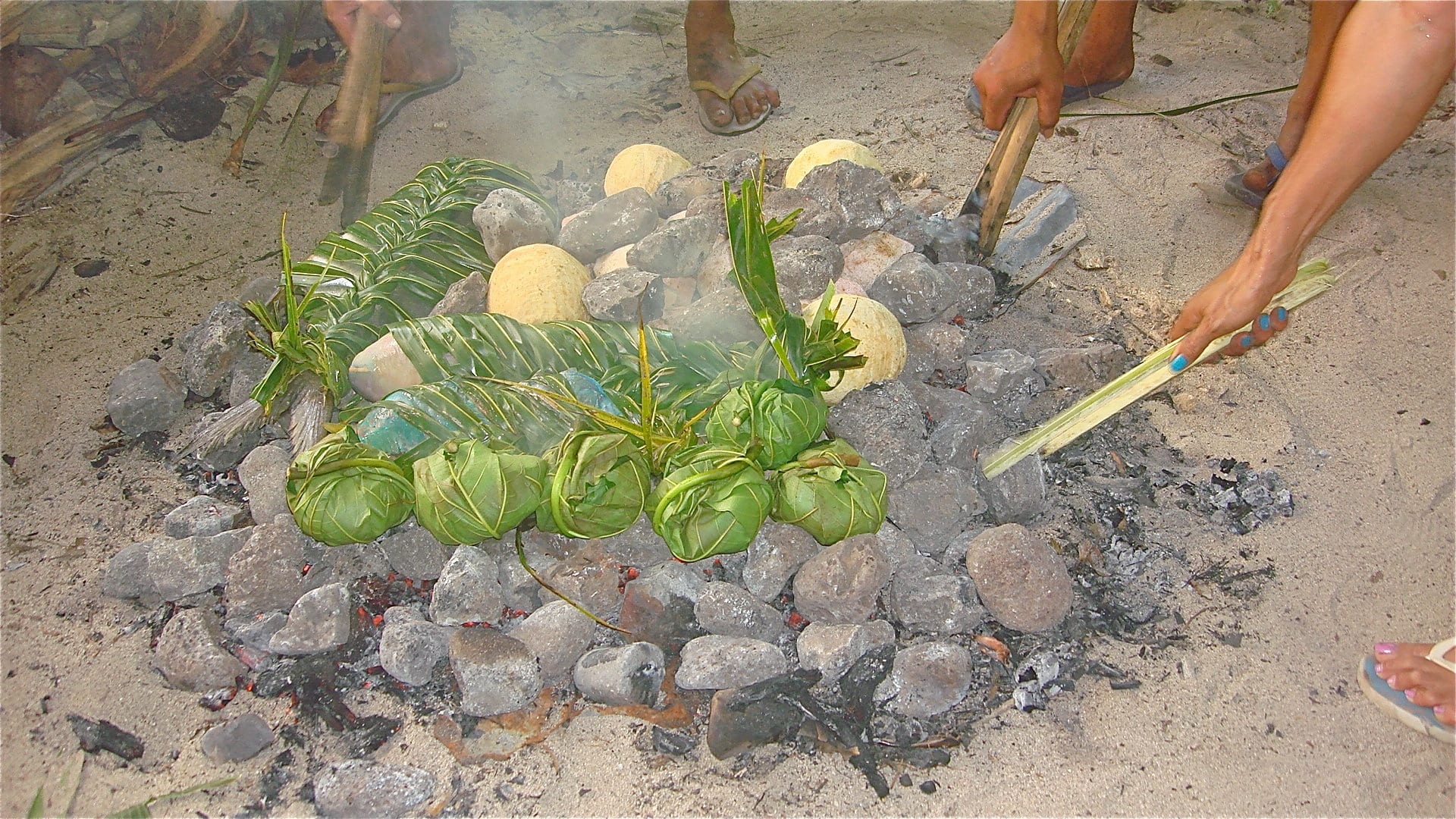
Palusami is almost never made in a single portion; it is made in a batch of parcels for a shared table, and it is one of the dishes most closely tied to the umu, the earth oven of hot volcanic stones that does most of the cooking for a Samoan feast.
What an American Samoan kitchen runs on
The garden crops are taro, breadfruit (ulu), bananas and cassava, all treated as the starch of a meal in the way rice or potatoes might be elsewhere, and often simply boiled or roasted whole in the umu. Coconut is used at every stage: young coconuts for drinking water, mature ones grated and squeezed for the thick cream (pe'epe'e) that goes into palusami and other dishes. Fish from the reef and lagoon is eaten fresh, and tuna — caught in vast quantities in the surrounding Pacific — has shaped the territory's economy as much as its table. Tuna canneries have operated at Pago Pago harbour since the 1950s, and for most of that time they were American Samoa's largest private employer by far, packing fish caught across the Pacific for export to the US mainland while leaving canned tuna a cheap pantry basic at home too. Pork is feast food, kept for the umu rather than eaten daily, and chickens are often raised in the yard rather than bought.
The two parts of the territory eat a little differently. Most people live on the main island, Tutuila, around Pago Pago harbour, where the canneries and imported groceries are close at hand. The smaller Manu'a islands to the east are more remote and more self-sufficient, with a greater share of the daily diet still coming straight from the garden, the reef and the umu.
Local food, imported food
Because American Samoa is US territory, its shops are stocked the way an American supermarket is: through cargo shipped in, not grown locally, and mostly from the United States and its Pacific trading partners. Tinned corned beef — known locally as pisupo — is probably the single most Samoan example of this: imported since the late 19th century, embraced completely, and now cooked into its own dishes rather than treated as a substitute for anything. Spam, tinned mackerel, instant noodles and American brand groceries sit on the same shelves as fresh taro and bananas from the market, and most households cook comfortably from both.
The umu and the Sunday feast
The umu — a pit of fire-heated volcanic stones, loaded with wrapped and unwrapped food and covered until everything steams through — is the traditional way to cook a large meal, and it is still used for the to'ona'i, the big Sunday meal eaten after church that is the anchor of the week for most families. A to'ona'i spread typically runs to palusami, a whole pig or reef fish, taro and breadfruit, and whatever else the family can add, shared among the extended household and often sent out afterwards to relatives, elders and church ministers — a custom central to fa'a Samoa, the Samoan way, in which food is a primary way of showing respect and maintaining relationships. Within an aiga, or extended family, it is normal for the biggest and best portions to be set aside for the matai, the family's titled chief, and for elders and visiting guests, with everyone else eating after and around that order.
Dishes to know
Five to recognise on any American Samoan table (this is a small territory without separate island-by-island region pages, so this list covers what you will find islandwide):
- Oka — raw fish, usually tuna, diced and "cooked" in lime or lemon juice, then
mixed with coconut cream, onion and chilli. The Samoan relative of poke and ceviche.
- Sapasui — Samoan chop suey: noodles stir-fried with meat, cabbage and soy
sauce, a legacy of early Chinese labourers and traders and now a home-cooking staple in its own right.
- Fa'alifu — vegetables, often banana, breadfruit or taro, simmered gently in
coconut cream until soft.
- Panipopo — soft sweet rolls baked in a bath of coconut cream and sugar, eaten
as a snack or with tea.
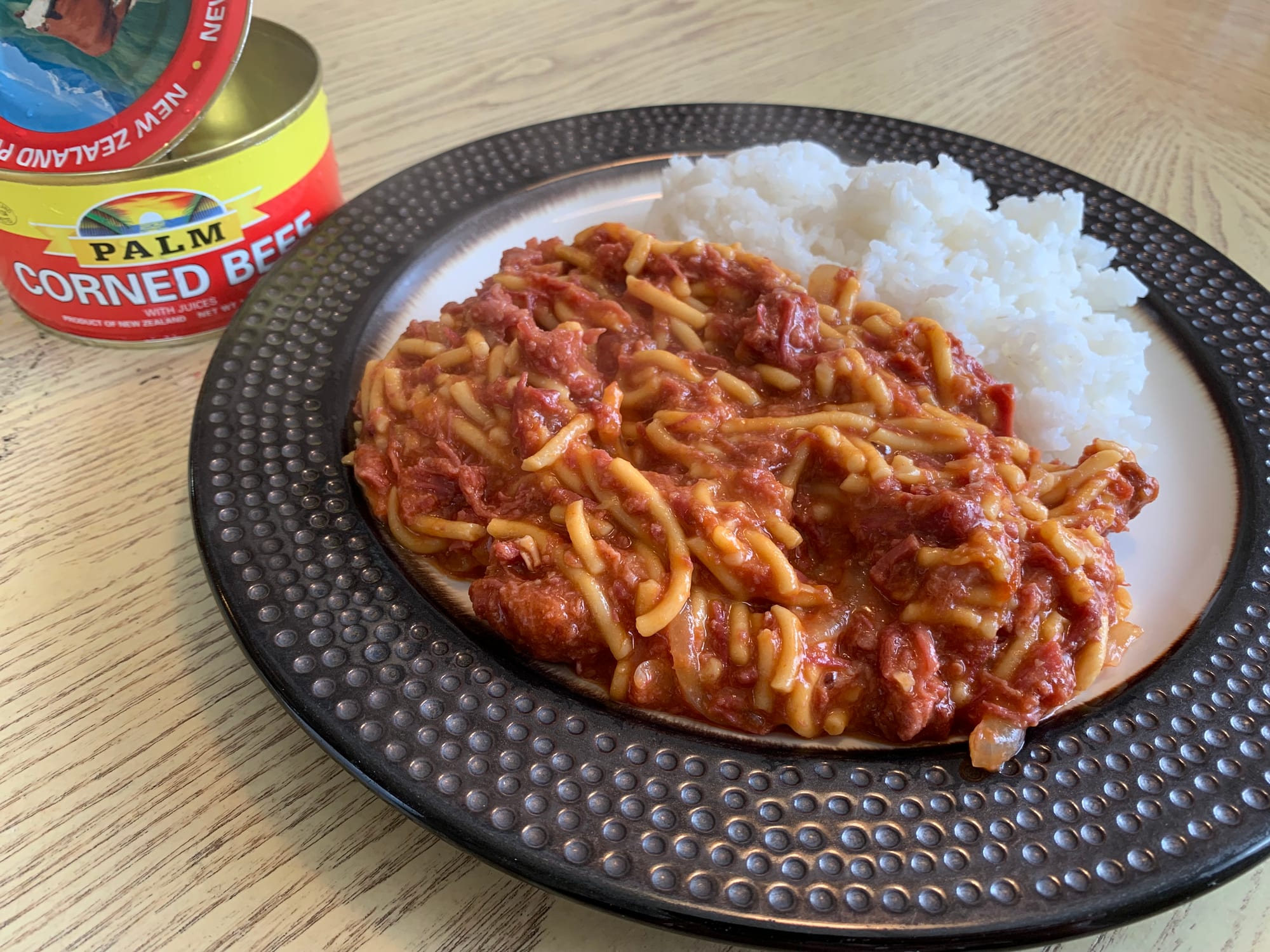
- Pisupo dishes — tinned corned beef fried up with onion, or stirred into
supoketi (a tomato-and-pasta dish born from tinned spaghetti), a direct product of the territory's imported pantry.
Look out too for koko Samoa rice, a thick, slightly bitter cocoa porridge made from locally grown and roasted cacao, traditionally a breakfast dish and a common offering to guests.
Drinks
Koko Samoa — cacao pods grown locally, then roasted, ground and pressed into balls or blocks — is drunk as a thick, unsweetened chocolate drink as often as it is cooked into porridge. Niu, the water of a young green coconut drunk straight from the shell, is the everyday refresher. Beyond that, the drinks cabinet looks American: imported soda, coffee and juice make up most of what is sold in stores, alongside the traditional options.
Eating as a traveller
Vegetarians will do best with fa'alifu, taro, breadfruit and fruit, since fish and meat are woven into most cooked dishes and broths. Seafood is usually very fresh and a safe, easy choice. Tap water on the main island is generally treated, but bottled water is widely available and often preferred. Because the food economy leans on imports, restaurant and store prices for anything not grown locally can run higher than a visitor might expect from a Pacific island. If you are invited to a to'ona'i or a family umu, accept: it is the single best way to eat well here, and turning down hospitality in Samoan culture is a bigger deal than it would be elsewhere.
What to take from the table
American Samoa's food tells its whole modern history in one meal: a taro and palusami cooked exactly as they would have been generations ago, next to a can of corned beef that has been just as thoroughly adopted as its own. Both halves are treated as equally Samoan, and that is really the point.