Food · Algeria
Algeria: Food and the National Dish
Couscous under a seven-vegetable stew, a Ramadan soup thick with cracked wheat, filo rolls fried to order, and a kitchen shaped by Berber, Arab, Ottoman and French hands
By Worldlore Editorial · 16 September 2026
A Maghreb table with a French chapter
Algerian food shares its backbone with its Maghreb neighbours — Berber grain and olive oil under Arab, Andalusi and Ottoman seasoning — but it carries its own accents too: a lighter hand with chilli than Tunisia, a strong soup and pastry tradition from the Ottoman-influenced east, and 132 years of French rule that left baguettes, pastry shops and a serious coffee habit behind. It is a cuisine built on wheat in three forms — bread, semolina and couscous — carried by lamb, chicken and merguez sausage, and finished, more often than not, with dates.
The national dish: couscous
Couscous is the dish every Algerian would put forward first: tiny steamed grains of semolina, piled up and covered with a stew of meat and vegetables and a ladle of its broth. The everyday version is couscous with seven vegetables — carrot, turnip, courgette, cabbage, pumpkin, chickpeas and whatever else is in season — over lamb, beef or chicken, though there are dozens of regional and festive versions, including one built around osbane, a stuffed sausage of tripe and offal.
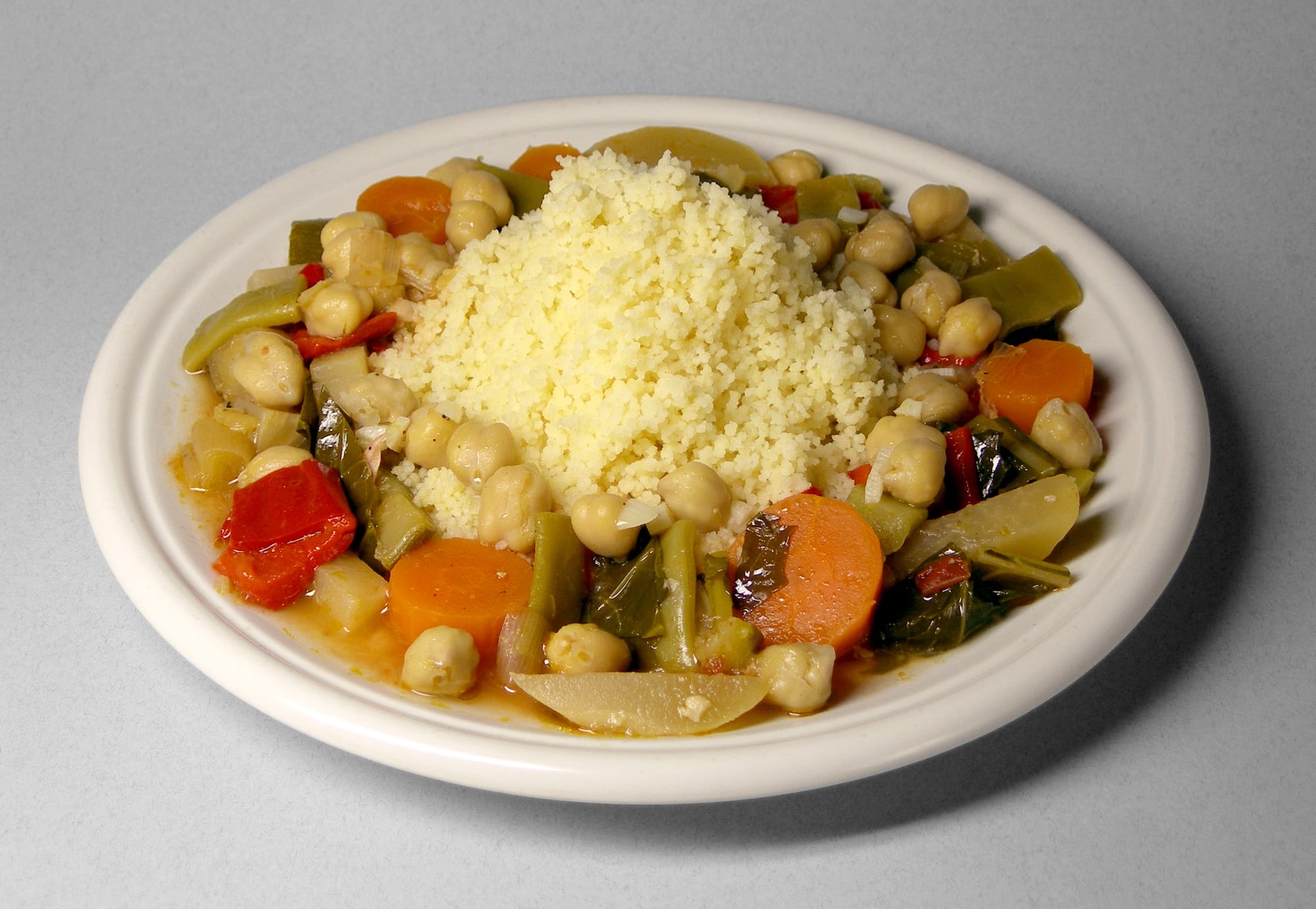
Couscous is traditionally a Friday dish, cooked after the midday prayer and eaten by the whole family from a shared platter, and it is the automatic centrepiece of weddings and religious feasts. In 2020 UNESCO recognised couscous as intangible cultural heritage on a joint application from Algeria, Morocco, Mauritania and Tunisia, which is itself a small monument to how much the dish belongs to the whole region rather than to any one country inside it.
What an Algerian kitchen runs on
Wheat carries the diet in three shapes: bread (khobz or kesra, a round or flat loaf, often made with semolina), pasta-like couscous, and hand-rolled noodles and doughs for dishes such as rechta and chakhchoukha. Lamb and chicken are the everyday meats, alongside merguez, a spiced beef-and-lamb sausage grilled over charcoal. Olive oil and smen, aged salted butter, are the working fats; onions, tomatoes, chickpeas, dried broad beans and peppers are the vegetable base.
The spicing is aromatic rather than hot: cumin, caraway, cinnamon, ginger, black pepper and a house blend close to ras el hanout, with dried mint and coriander for lift. Harissa, the chilli paste more associated with Tunisia next door, appears mainly in the east, near the border. And dates are everywhere — Algeria is one of the world's larger producers, with the Deglet Nour variety from the Biskra and Tolga oases considered the finest, eaten plain, stuffed, or stirred into both sweet and savoury dishes.
How the food got this way
The base layer, as across the Maghreb, is Amazigh — Berber grain-growing and olive cultivation going back millennia, and couscous itself is thought to be a Berber invention. Arab conquest from the 7th century and, later, Andalusi refugees from Spain added rice, almonds, orange-flower water and refined pastry work, most visible today in the sophisticated sweet-and-savoury cooking of Algiers and the eastern cities. Ottoman rule, strongest in the towns of the east such as Constantine, brought bourek pastries, richer use of butter, and elaborate festive dishes.
French colonial rule, from 1830 to 1962, added a layer few Algerians would call welcome but that has stuck to the table anyway: the daily baguette, patisserie, café culture, and — before independence — an enormous wine industry built for export to France, which has since shrunk to a small domestic trade. The long war of independence and the hard economic years that followed also entrenched a frugal, home-cooked style: a great deal of Algerian food is still built to feed an extended family cheaply from a single pot, and eating out in a restaurant is, for most households, more occasional than routine.
From Algiers to the Sahara
Algeria is large enough that its food changes sharply by region. Algiers and the coast do the most refined cooking — dziri dishes, rechta for celebrations, and elaborate sweets. Constantine and the east lean Ottoman and richer, home of chakhchoukha, trida noodles and the date-and-semolina sweet makroud. Oran and the west, closer to Morocco, favour karantika, a baked chickpea-flour flan sold from street stalls, and more seafood off the coast. The Kabylie mountains, a historically Berber region, keep a plainer diet of grain, wild greens, figs and excellent olive oil. And across the Sahara in the south, food narrows to dates, dried meat, milk, and taguella, a flatbread baked directly in the embers of a sand fire. The differences are large enough that the region pages carry the detail.
Dishes to know
Five to recognise anywhere in the country (regional specialities are covered on the region pages):
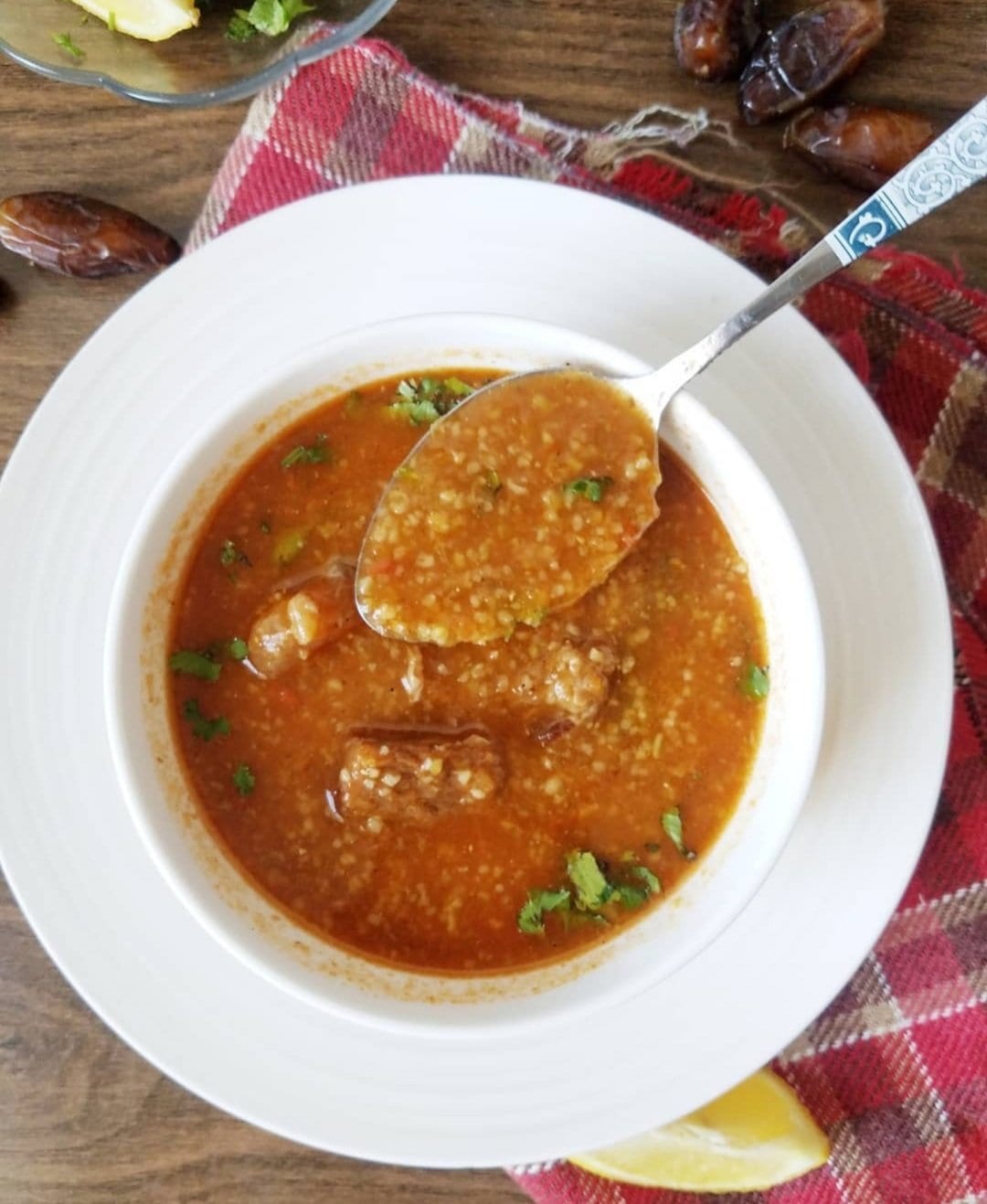
- Chorba frik — a soup of lamb, tomato and cracked green wheat, thickened and
fragrant with coriander; the dish that opens the evening meal every night of Ramadan.
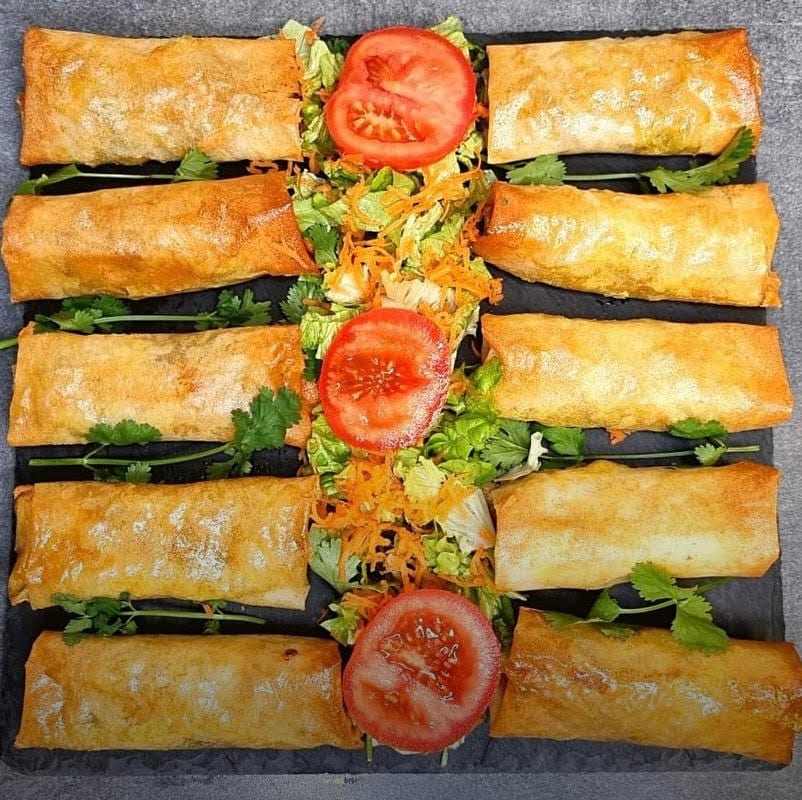
- Bourek — thin pastry rolled around minced meat, egg, cheese or vegetables and
fried until it crackles; a Ramadan staple and a party-table regular the rest of the year.
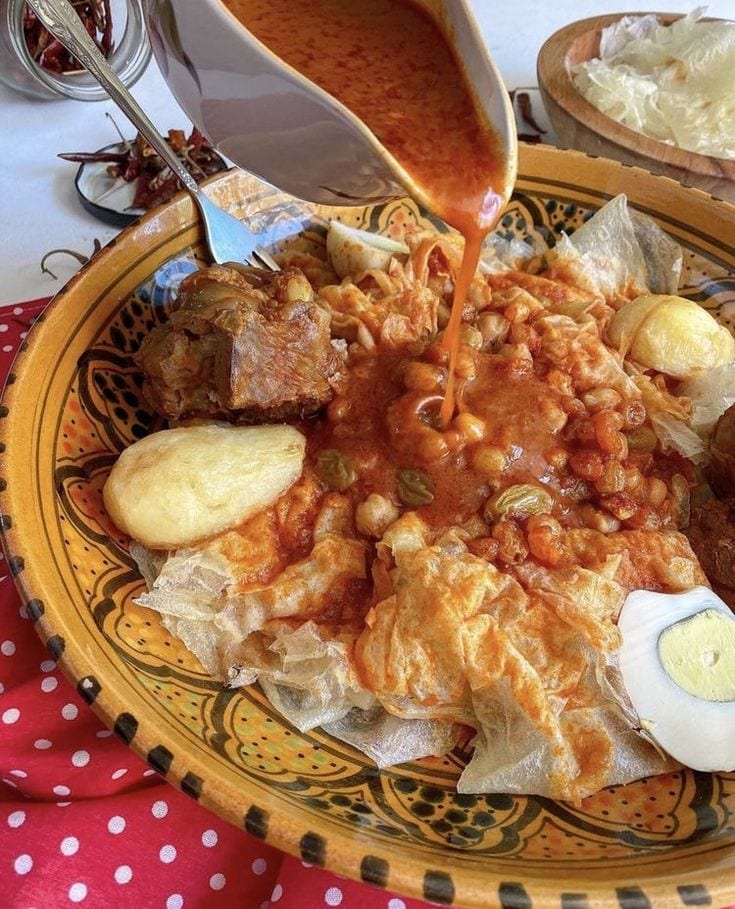
- Chakhchoukha — torn pieces of thin flatbread soaked in a rich, spiced tomato
and lamb sauce with chickpeas; an Aurès and Biskra dish, festive and filling.
- Rechta — fine hand-rolled noodles, steamed and served under a mild white
sauce of chicken, chickpeas and turnip scented with cinnamon; an Algiers celebration dish.
- Mhadjeb — a folded square of semolina flatbread filled with a paste of
tomato, onion and pepper and griddled; cheap, filling street food.
Look out too for hmiss, a roasted pepper and tomato salad close to the Tunisian mechouia; dolma and mahchi, stuffed vegetables; and a table of sweets built around semolina, almonds and honey — makroud, kalb el louz and, at Ramadan, zlabia and qalb el louz eaten still warm.
Rechta is worth watching for too: thin noodles steamed over a pot rather than boiled, the same principle as couscous applied to dough instead of grain, and one of the clearest signs of how central that steaming technique is to Algerian cooking generally.
Bread, dates and the table
Bread is present at every meal and used to scoop rather than a knife and fork, and a plate of dates is one of the most common things put in front of a guest, alongside tea or coffee. Meals are commonly shared from a central dish, eaten with the right hand or a spoon, and hospitality carries real weight: turning away a guest without feeding them is not really done. A visitor who arrives close to a mealtime should expect to be asked to stay and eat, and a polite refusal is usually overridden at least once before it is accepted.
The calendar shapes the kitchen. Every night of Ramadan opens with chorba frik, dates and bourek, often followed by zlabia, a syrup-soaked fried sweet made in huge batches for the month. Eid al-Adha brings tajine lahlou, a sweet lamb stew with prunes, raisins and orange-blossom water, cooked in the sweet-savoury style the Ottoman and Andalusi layers left behind. Weddings and births call for couscous or rechta made in quantity, and elaborate pastries handed round on trays.
Tea, coffee and other drinks
Mint tea — green tea, fresh mint and plenty of sugar — is common, especially in the south and west, poured the same way it is across the Maghreb, from height, to raise a little foam. Coffee, inherited from the French period, is at least as important: an espresso or a café cassé (an espresso "broken" with a splash of milk) is the standard order in the cafés that line every town's main street. Algeria is a Muslim country and alcohol plays little part in everyday eating, though the country's colonial-era wine industry, once one of the largest in the world, has left a small surviving trade of its own. Cold drinks lean on lben, a salted buttermilk, and fresh fruit juices, and in summer a glass of sharbat, a sweetened fruit or flower-water syrup diluted with cold water, is a common way to cool down.
Eating as a traveller
Vegetarians can manage on bourek, vegetable couscous, hmiss, dolma and bread, though soups and rice are often built on meat stock, so it is worth asking. Nearly everything is halal and pork is essentially absent. Tap water is chlorinated in the cities but most visitors choose bottled. Street food is cheap and good — mhadjeb, bourek and, in Oran, karantika are the ones to try — and a bag of dates from a market stall makes a better souvenir than most.
What to take from the table
Algerian food rewards patience: a good chorba takes hours, a proper couscous means steaming the grain in stages, and the best bourek is fried to order, not reheated. Sit down for it rather than rushing, and take the dates and tea that come with it as the invitation they are meant to be.