Daily Life · Yemen
Yemen: A Day Measured Out in Water and Qat
A country of some 35 million people where more than a decade of war has made water the deepest daily worry, the working day still bends around the afternoon qat chew, and getting by has become a household project shared by everyone old enough to help
By Worldlore Editorial · 30 September 2026
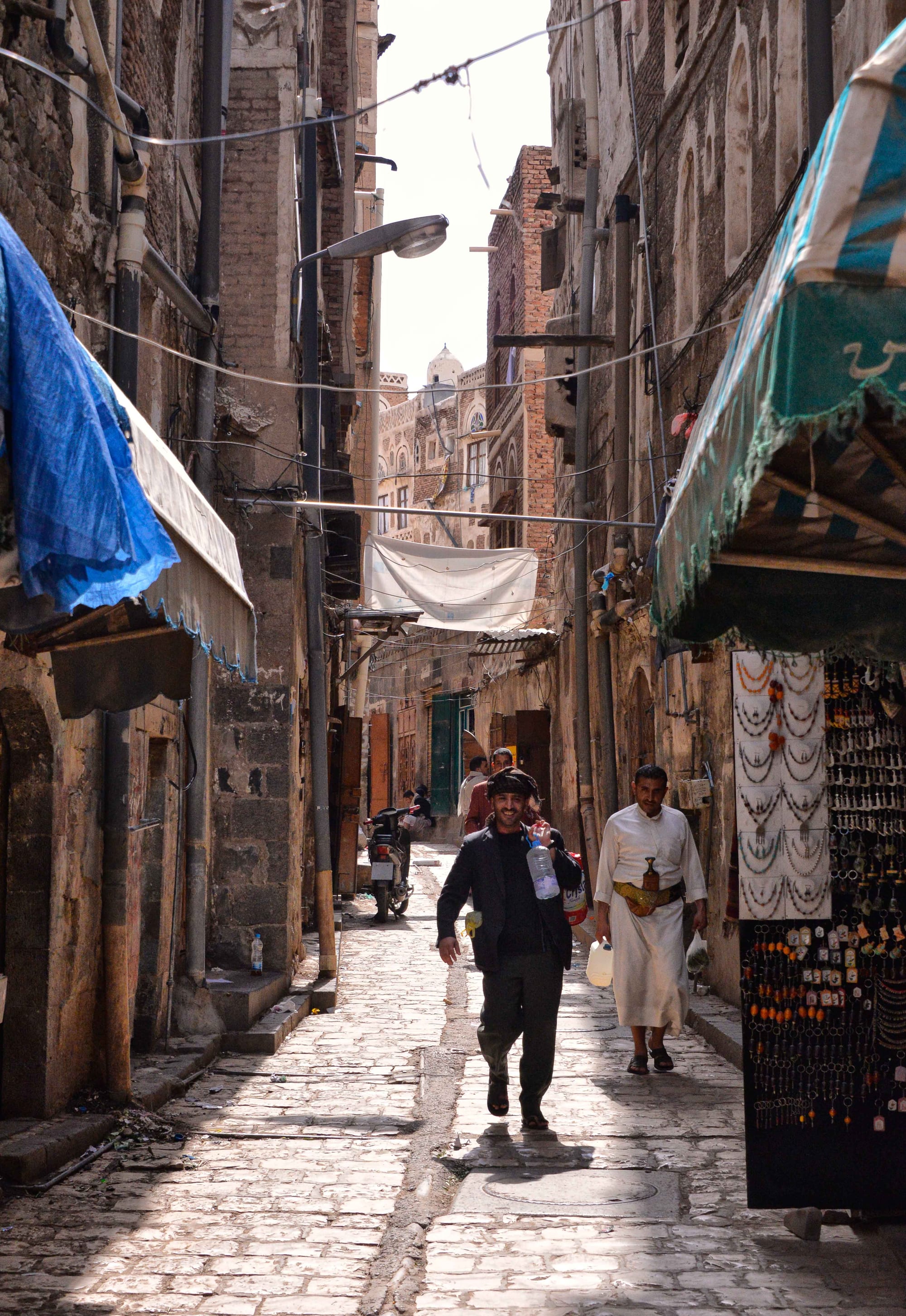
More than a decade of war has reshaped what an ordinary day means for most of Yemen's roughly 35 million people. Water, in a country that was already among the most water-stressed on Earth before the fighting began, is now the thing an entire household's day can turn on, fetched, stored and rationed with real care. Salaries for public workers, where they still arrive at all, often go unpaid for months, so getting by has become a shared household project rather than one adult's job. And through all of it, the afternoon still tends to empty out around qat, the mildly stimulant leaf chewed nationwide, a habit that shapes the working day as much as the war does.
Family and home life
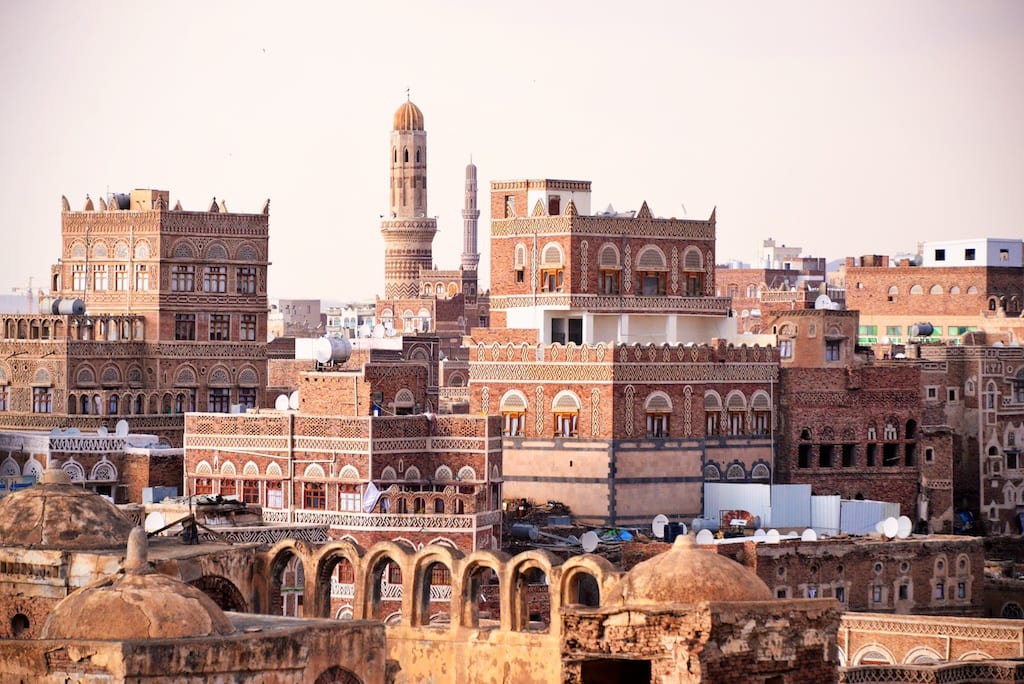
The extended family remains the basic unit of Yemeni life, and it is common for several generations, and sometimes several married sons and their own families, to share a household, pooling income and responsibilities in a way that has become still more important as the war has stripped away other forms of support. Displacement has touched a huge share of the population, and roughly a quarter of displaced households are now headed by women, as men have been killed, gone missing, or left to find work elsewhere. In Sana'a and other old cities, many families still live in the distinctive multi-storey tower-houses of rammed earth, brick and white gypsum tracery that have housed Yemeni households for centuries.
Work, school and the rhythm of the day
Where formal work still exists, a standard working day traditionally runs from the morning into the early afternoon, timed around the midday meal and the qat chew that follows it into the evening. Public-sector salaries, including teachers' pay, have gone unpaid for extended periods in Houthi-controlled areas in the north, and the wider economic collapse has pushed millions of school-aged children out of school altogether, many of them now working, selling goods, scavenging scrap, or doing casual labour to help their families get through the day rather than attending class. Away from the war's more direct effects, subsistence farming and herding continue much as before in the countryside, though under the same pressure from water scarcity, high fuel costs and a fractured currency that touches almost every part of daily life.
Community life and public spaces
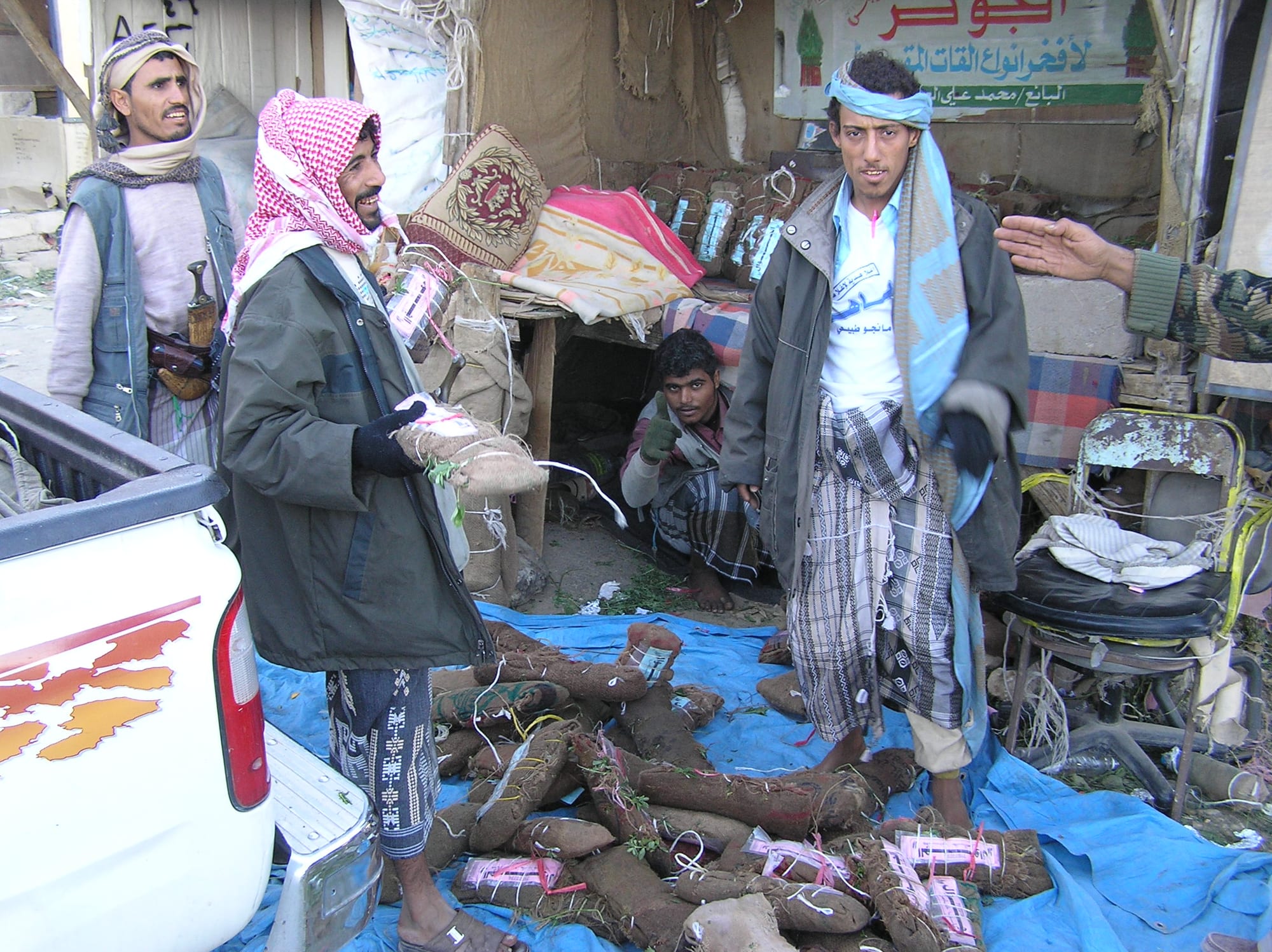
Markets remain the backbone of public life, from Old Sana'a's covered souks to smaller town markets that sell everything from produce and qat to household goods, khat markets in particular drawing large daily crowds since qat is prized fresh and usually bought on the day it is chewed. Water points, whether a functioning municipal supply, a communal well or a delivery truck, have become genuine daily gathering places in their own right, given how central the search for water now is to getting through an ordinary day. Mosques continue to anchor neighbourhood life, and in Sana'a, the spread of household solar panels in response to a decade of crippled electricity supply has itself reshaped the rhythm of the evening, giving many homes at least some light and power again after years of shortages.
Free time and weekends
Friday is the main day of rest nationwide, centred on communal prayer and a family meal. The qat chew itself doubles as the main social occasion of the day for many Yemeni men and, separately, some women, combining conversation, business and relaxation in a single long afternoon session that continues on weekends much as on any other day. Football is followed with genuine enthusiasm where broadcasts and power allow, and family visits remain the default way to spend free time, particularly among households that have been separated or displaced and now treasure the chance to gather.
A visitor's ordinary day
Currently no part of mainland Yemen is realistically open to travel, and most governments advise against all travel to the country; fighting resumed in July 2026 after a UN-brokered truce and grew sharply in September with the Bab al-Mandab crisis. The one part that receives visitors is the island of Socotra, reached by weekly flights from Abu Dhabi and Cairo normally booked through a tour operator, and largely insulated from the mainland war, though still part of a country in crisis with minimal medical care and no consular support. Yemen runs entirely on cash, the rial has fractured in value between different parts of the country, and banks and ATMs do not function for foreigners, so anyone travelling, including to Socotra, needs to bring all the US dollars they will need. Fuel, water and power shortages can disrupt any plan without warning, which is why any travel that does happen is arranged entirely through an established operator rather than independently.
What to take away
An ordinary day in Yemen today is organised above all around water and the household, a daily act of getting by that more than a decade of war has made harder without breaking the extended family structures that Yemenis continue to lean on to survive it.