Daily Life · United States Virgin Islands
US Virgin Islands: Driving on the Left in America
American paperwork and a Caribbean pace, a population still recovering from two 2017 hurricanes, and the strange daily fact of driving American cars, steering wheel on the left, down roads that keep to the left
By Worldlore Editorial · 30 September 2026
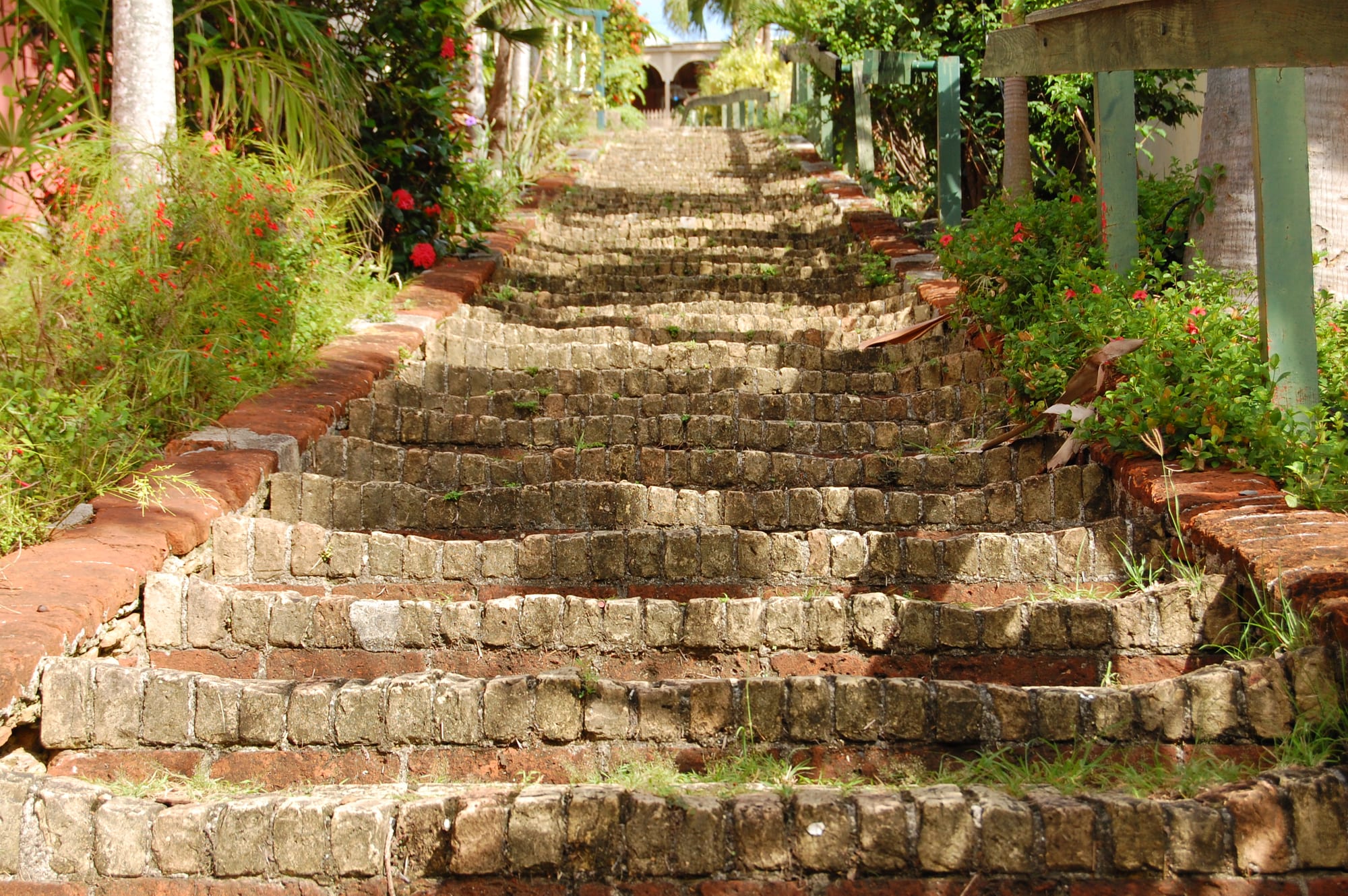
Daily life in the US Virgin Islands runs on American systems, the dollar, US mail, US citizenship, English-language schooling, laid over an unmistakably Caribbean rhythm set by heat, water and the weather. Roughly 87,000 people live across the three main islands, a population that has fallen by close to a fifth since 2010 as people left for the mainland after job losses and, above all, the devastation of Hurricanes Irma and Maria in September 2017, storms whose effects on housing, schools and the power grid are still part of ordinary life for many residents today. One small, constant reminder of the islands' layered history greets every driver: cars are American, steering wheel on the left, but the rule of the road, a holdover from the colonial era, as on neighbouring islands, is to drive on the left.
Family and home life
Extended family remains central to daily life, and church, still a strong presence across the islands, and family gatherings organise much of the social calendar outside work. St Croix and St Thomas differ enough in character that locals maintain a real, good-natured "Crucian" versus "Thomian" identity, and household life reflects each island's economy: St Thomas households are more tied to the cruise and tourism trade, St Croix's to a smaller and more mixed economy following the closure of the island's major oil refinery in 2012, and St John's, the smallest and least developed island, more directly to the national park that covers about 60 per cent of its land. Housing stock still bears the marks of the 2017 hurricanes in places, and rebuilding, along with a serious shortage of skilled labour driven by continued outmigration, remains a live daily concern for many families.
Work, school and the rhythm of the day
The territory's economy runs overwhelmingly on tourism, cruise-ship calls, stopover visitors and yachting, so much of the working week is shaped directly by the cruise and ferry schedule, especially on St Thomas, where Charlotte Amalie is one of the busiest cruise ports in the Caribbean. Government employment is a major source of jobs alongside tourism and the rum industry, and public-sector work carries real weight in the local economy. Schools follow the US academic calendar and system, taught in English, though the home language many children also grow up speaking is Virgin Islands Creole English, a distinct local English creole used throughout everyday life outside the classroom. As US citizens, residents pay no federal income tax on locally sourced income but also cannot vote for president and send only a non-voting delegate to Congress, a situation they share with the other US territories.
Community life and public spaces
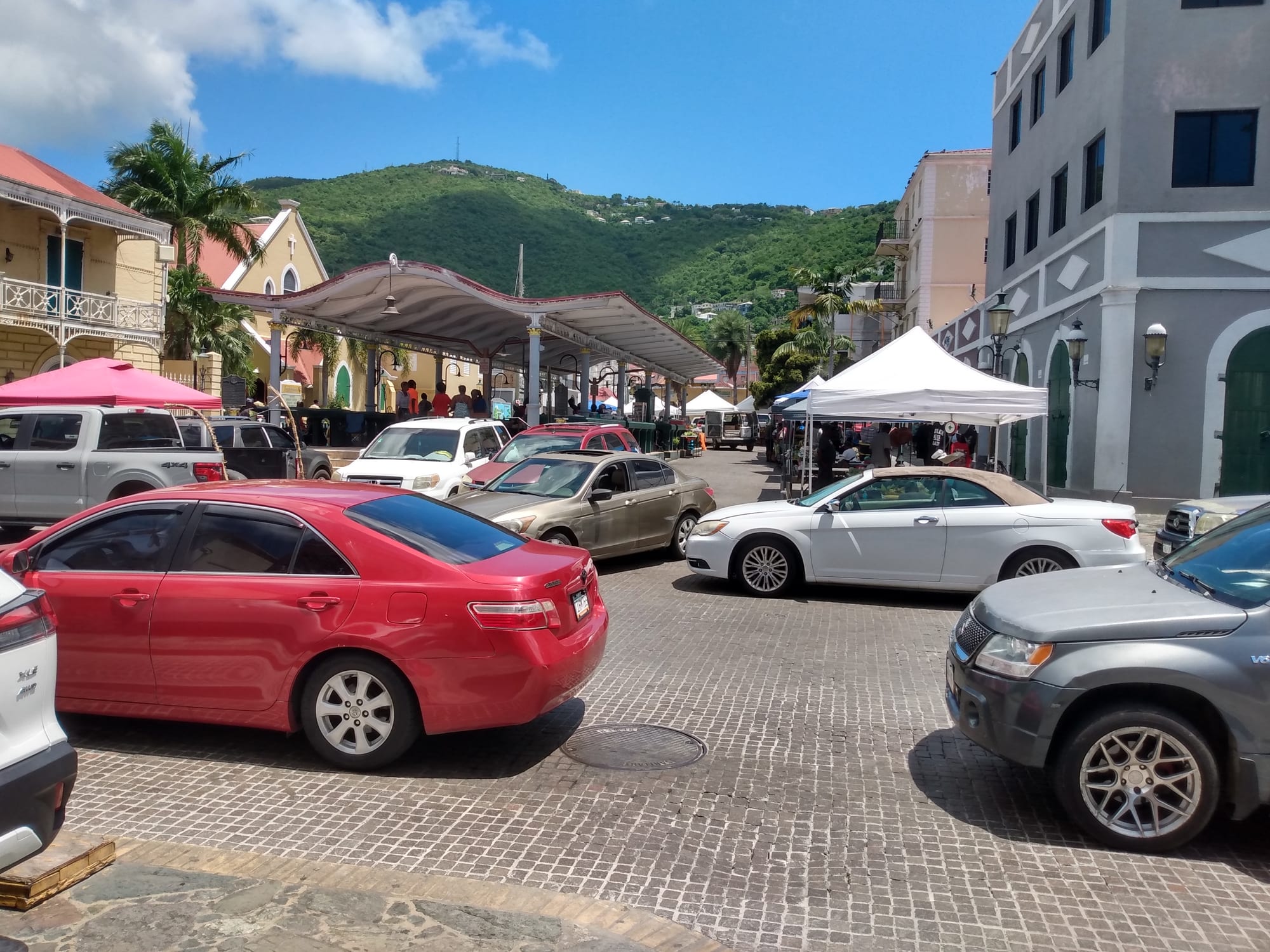
Market Square in Charlotte Amalie remains a genuine working market rather than only a tourist stop, busiest on Saturdays, when vendors set up under its historic canopy to sell produce and goods much as their predecessors have for generations. Frederiksted on St Croix keeps a similar market tradition, and both towns' fish markets and food trucks are where a good share of everyday local eating actually happens, alongside home cooking. Church congregations function as a genuine community network well beyond Sunday services, and "liming", simply hanging out and talking, whether at a shop, a yard or a beach, is a recognised and valued way that neighbours spend time together across the islands.
Free time and weekends
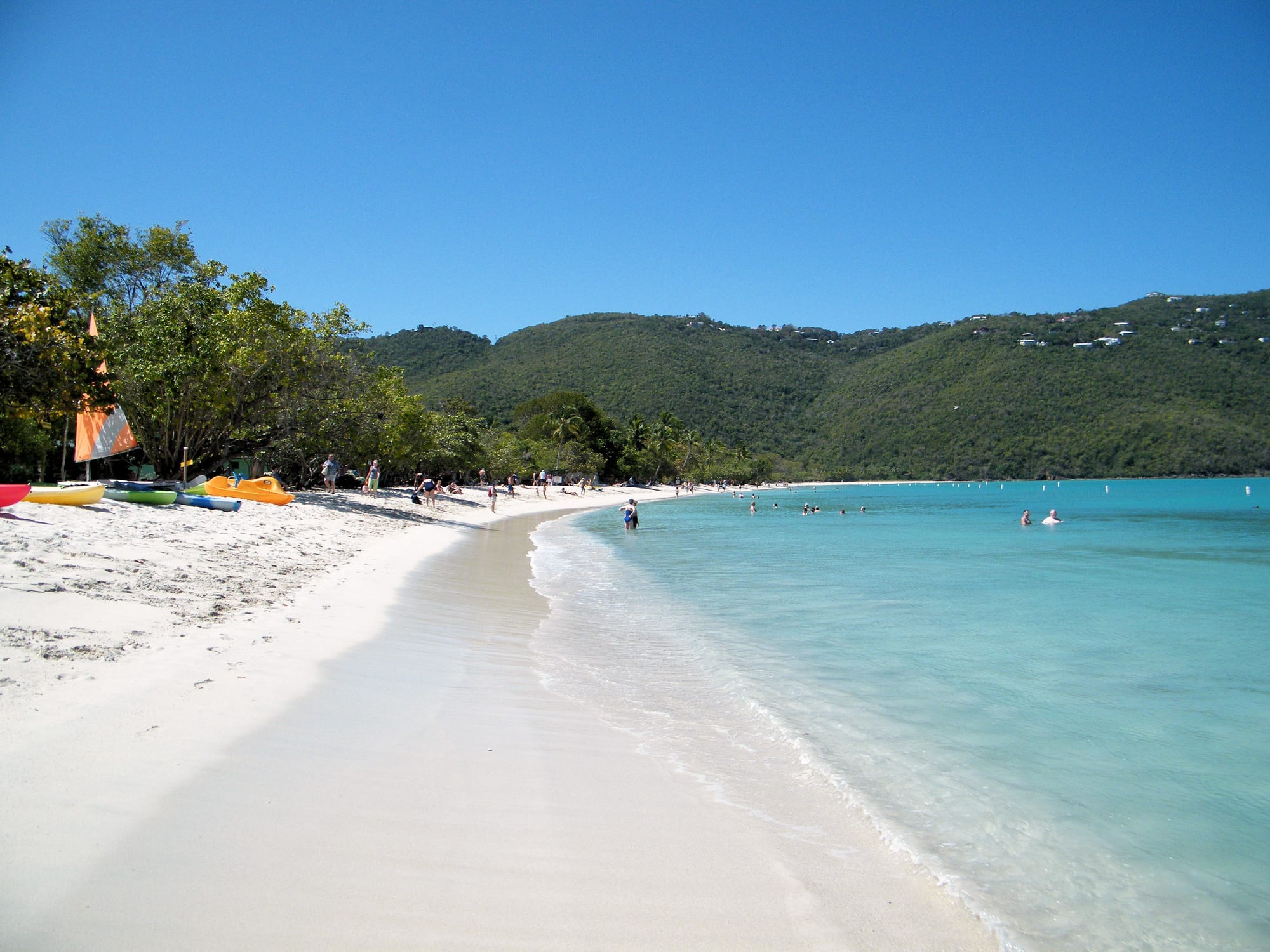
Beaches fill up on weekends with residents as much as visitors, families and groups of friends spending the day swimming, grilling and simply being outdoors at spots like Magens Bay on St Thomas, long protected as a public beach rather than developed for resorts. Carnival is the year's biggest event on each island, St Thomas's held around April or May and St Croix's Crucian Christmas Festival running from mid-December into the new year, with calypso competitions, costumed "mocko jumbie" stilt dancers and street parades that much of the territory turns out for. Sunday church attendance remains common and often extends into a family lunch afterwards, and, given the surrounding water, fishing and boating are genuine everyday pastimes for a great many residents, not solely tourist activities.
A visitor's ordinary day
The currency is the US dollar and US cards work everywhere, so money is one less adjustment for American visitors, though a passport is still needed for ferry day trips to the neighbouring British Virgin Islands. Shared open-air "safari" taxi trucks and enclosed vans cover the main routes and are the standard way to get around without a rental car, running informally rather than to a fixed timetable. Driving is the main practical catch: traffic keeps to the left, in a US-spec car with the wheel also on the left, a genuinely disorienting combination worth taking slowly for the first day. Ferries link St Thomas, St John and, less frequently, St Croix, and the cruise-ship calendar visibly reshapes Charlotte Amalie's streets and shops on the days several ships are in port.
What to take away
An ordinary day here is American paperwork wrapped around a Caribbean rhythm, a territory whose residents hold US passports and pay no federal income tax yet cannot vote for the president who sets the policies that shape their recovery, still ongoing, from a hurricane season nine years past.