History · Uruguay
Uruguay: The Buffer State That Became a Model
A small country created to keep Argentina and Brazil apart — a land of cattle and gauchos that built, a century ago, one of the world's first welfare states, endured a brutal dictatorship in the 1970s, and returned to being one of Latin America's steadiest democracies
By Worldlore Editorial · 10 September 2026
A small, stable country
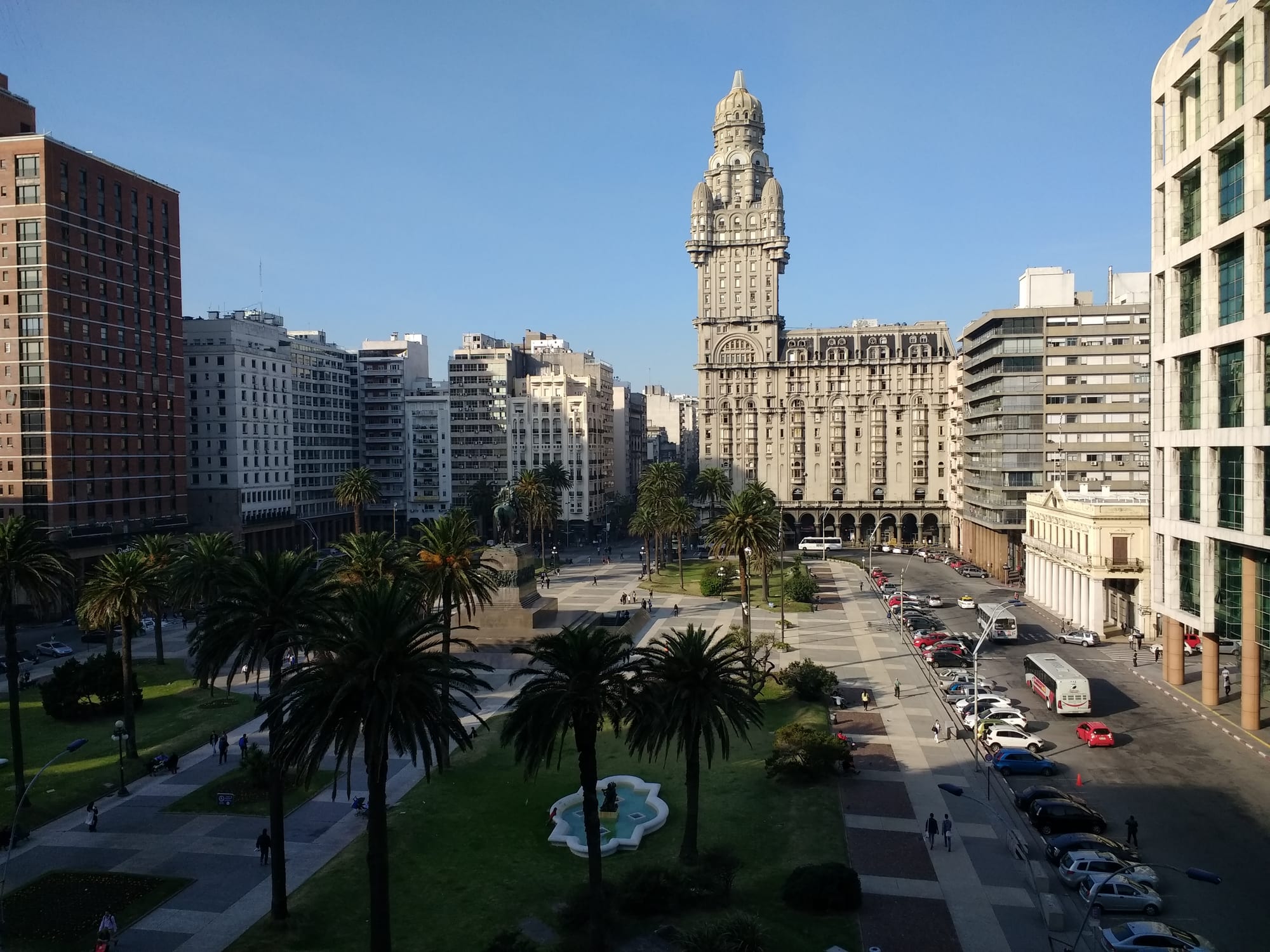
Uruguay is the second-smallest country in South America, a land of rolling grassland between Argentina and Brazil, with about 3.4 million people — nearly half of them in Montevideo. It has almost no ethnic or regional divisions of the kind that trouble its neighbours, a small and largely urban population, and a long record of stable, secular, redistributive government. It exists at all because the two big powers on its borders could not agree which of them should have it, and Britain brokered a compromise: an independent buffer state.
A short history
- pre-1500s
The Charrúa
Semi-nomadic peoples of the grasslands; no large states.
- 1516–1726
Contested ground
Spain and Portugal both claim the "Banda Oriental"; Montevideo founded 1724–26.
- 1811–1820
Artigas
José Artigas leads a federalist revolt; is defeated by a Brazilian invasion.
- 1825–1828
Independence
A rebellion and an Argentine–Brazilian war end with a British-brokered independent Uruguay.
- 1839–1904
Civil wars
Recurring conflict between the Colorado and Blanco parties.
- 1903–1929
Batllismo
José Batlle y Ordóñez builds an early welfare state.
- 1930
The first World Cup
Uruguay hosts and wins it.
- 1973–1985
The dictatorship
A civil–military regime jails and tortures thousands.
- 2005
The left in power
The Frente Amplio wins the presidency for the first time.
The Banda Oriental
The grasslands east of the Uruguay River — the "Banda Oriental" — had no gold, no dense population, and no large Indigenous states; the Charrúa and other peoples herded and hunted, and were largely killed off or absorbed over the following centuries (a notorious 1831 massacre at Salsipuedes broke the last organised Charrentú resistance). Spain and Portugal both claimed the territory as a frontier between their South American empires, and Montevideo was founded in the 1720s partly to check Portuguese Colónia do Sacramento across the estuary. When the Spanish empire collapsed, José Gervasio Artigas led the Banda Oriental in a federalist revolt against both Spain and Buenos Aires' centralism; a Portuguese -Brazilian invasion drove him into exile in 1820, and the region was annexed to Brazil.
Independence and the party wars
In 1825 a band of exiles, the "Thirty-Three Orientals", landed to reclaim the territory, triggering a war between Argentina and Brazil. Neither could win, and in 1828, under British mediation, both agreed to recognise an independent Oriental Republic of Uruguay as a buffer between them. The new state was promptly consumed by a long struggle between two factions that became the country's enduring parties: the Colorados (liberal, urban, Montevideo-based) and the Blancos or Nationalists (conservative, rural). Their conflict included the "Great War" siege of Montevideo (1843–51) and repeated rural uprisings into the early 20th century, often entangled with Argentine and Brazilian politics.
Batllismo
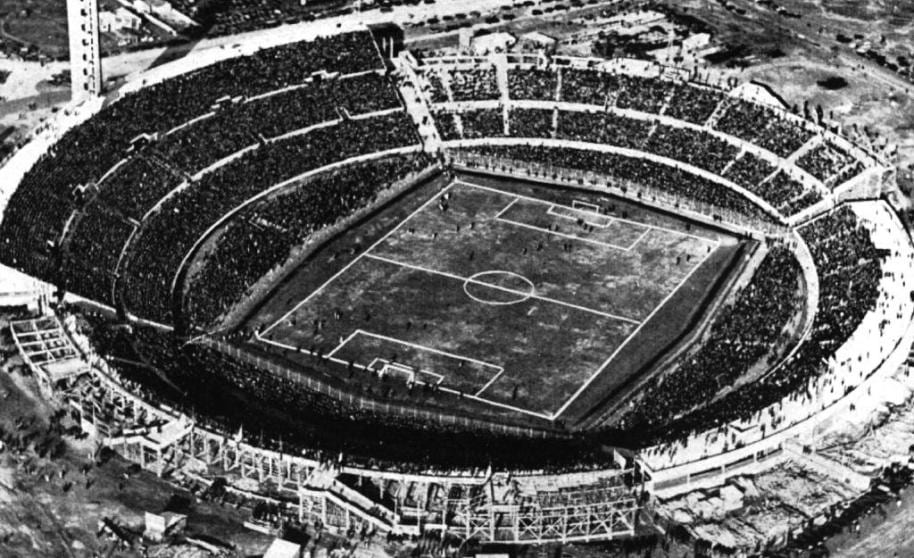
The transformative figure was José Batlle y Ordóñez, Colorado president in 1903–07 and 1911–15, whose programme — "Batllismo" — made Uruguay a pioneer of the welfare state decades before most of Europe: the eight-hour day, pensions, free secondary education, votes for women (1932), the abolition of the death penalty, state ownership of key utilities and banks, and the separation of church and state so thorough that Christmas was renamed "Family Day". Prosperity from beef and wool exports paid for it, and Montevideo became a comfortable, literate, middle-class city. Uruguay hosted and won the first football World Cup in 1930, cementing a national identity built around social peace and sport.
Crisis and dictatorship
The model depended on export earnings, and when world demand for Uruguayan commodities weakened after the 1950s, the economy stagnated, inflation rose, and the welfare state strained. Political frustration produced the Tupamaros, an urban guerrilla movement of the 1960s known for bank raids and kidnappings. The state's response militarised, and in June 1973 the president dissolved parliament and ruled with the armed forces. The civil–military dictatorship that followed (1973–85) imprisoned, tortured and exiled Uruguayans at one of the highest per-capita rates in the world, banned parties and unions, and censored the press. Economic decline continued, and after voters rejected a new authoritarian constitution in a 1980 plebiscite, the regime negotiated a return to democracy, completed in 1985.
The modern republic
Democratic Uruguay restored its institutions and, through a 1989 referendum, controversially upheld an amnesty for military-era crimes (partly reversed by courts and legislation decades later). The two traditional parties alternated in power until 2005, when the left-wing Frente Amplio coalition won the presidency for the first time, holding it until 2020 and returning in 2024. Under President José "Pepe" Mujica — a former Tupamaro who lived on his farm and gave away much of his salary — Uruguay legalised same-sex marriage and abortion and, in 2013, became the first country in the world to legalise and regulate the recreational cannabis market. It consistently ranks among Latin America's least corrupt and most democratic states, with a large middle class and near-universal literacy, though economic growth is modest and the population barely growing.
What Uruguay carries
Uruguay was invented as a compromise — a small independent state so that neither Argentina nor Brazil would have the other's frontier on the River Plate — and it has made a virtue of smallness ever since. Batlle's early welfare state gave it a distinctive identity as a tranquil, egalitarian outlier in the region; the dictatorship of the 1970s showed that identity was not immune to the wider Latin American pattern; and the decades since have been a mostly successful effort to return to it.