Daily Life · United Arab Emirates
United Arab Emirates: A Country of Guests
Extended Emirati households behind high courtyard walls, a workweek built around air conditioning and the five daily calls to prayer, and a resident population in which only about one in ten people hold the passport of the country they live in
By Worldlore Editorial · 30 September 2026
An ordinary day in the UAE is shaped less by any single custom than by a demographic fact: of the roughly eleven million people living here, only about one in ten is an Emirati citizen. The rest have come from South Asia, other Arab countries, East Asia, Africa, Europe and beyond, mostly on temporary, job-linked visas, and it is their working lives, as much as Emirati tradition, that fill an average day. Five calls to prayer still mark the hours from mosques nationwide, and Islam shapes the public calendar, but the texture of daily life on the ground is a car-and-mall-centred, air-conditioned routine built to survive a desert climate, in a country where almost everyone, strictly speaking, is a guest.
Family and home life
Emirati households have traditionally been large and multigenerational, and it remains common for adult sons to live near or with their parents after marriage, with extended family, including live-in domestic staff for many citizen households, often counted as part of the home. Citizens receive significant state support toward housing, and family and tribal networks still carry real weight beneath the modern surface. For the large majority who are not citizens, home life looks different and varies enormously by income: professionals typically rent apartments or villas, often shared with family who have joined them on a dependent visa, while lower-paid workers, overwhelmingly men from South Asia employed in construction and services, commonly live in shared labour-camp accommodation provided by their employer. Housing, in other words, tracks nationality and income more directly here than in most countries, a pattern connected to the employer-sponsored kafala visa system that ties a foreign worker's legal residence to a specific job.
Work, school and the rhythm of the day
Federal government employees have worked Monday to Friday, with a shorter Friday and Saturday-Sunday off, since a 2022 reform aligned the UAE's public sector with global markets; before that, the weekend fell on Friday and Saturday (Thursday and Friday until 2006), and Friday brunch, still the name used for the institution even though some venues now run it on Saturday, became the country's signature weekend ritual. Private companies set their own schedules, and hours can run Sunday to Thursday or Monday to Friday depending on the business and its overseas partners, and long working weeks are common. Schools also run Monday to Friday: many Emirati children attend free state schools taught largely in Arabic, while most expatriate children attend fee-paying private schools that follow British, American, Indian or International Baccalaureate curricula, so citizen and expatriate schooling often run separately in practice. Summer reshapes the working day nationwide: from 15 June to 15 September, a government-mandated midday break bans outdoor work in direct sun between 12:30pm and 3pm, recognition of just how dangerous the heat makes ordinary manual labour for part of the year.
Community life and public spaces
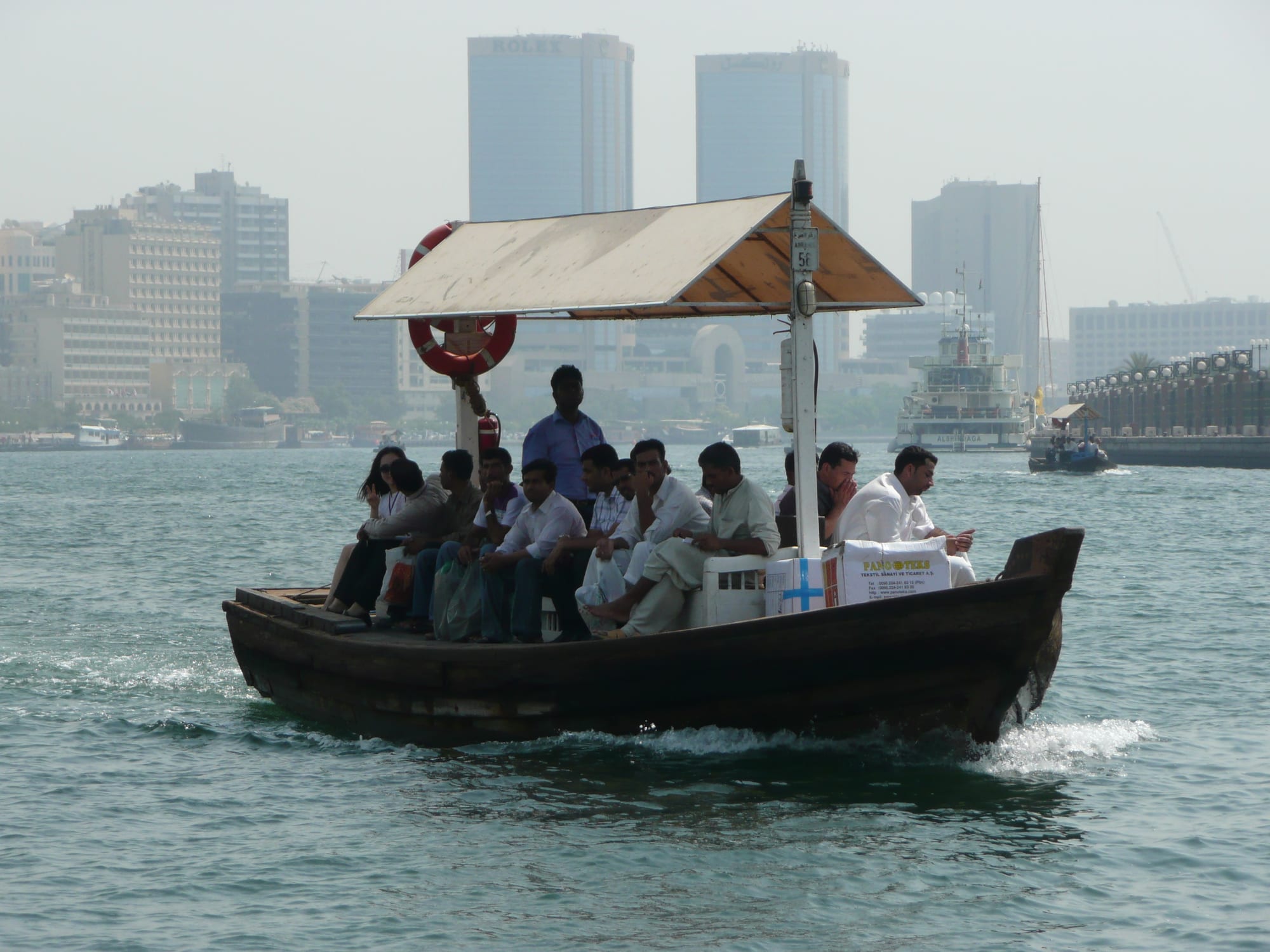
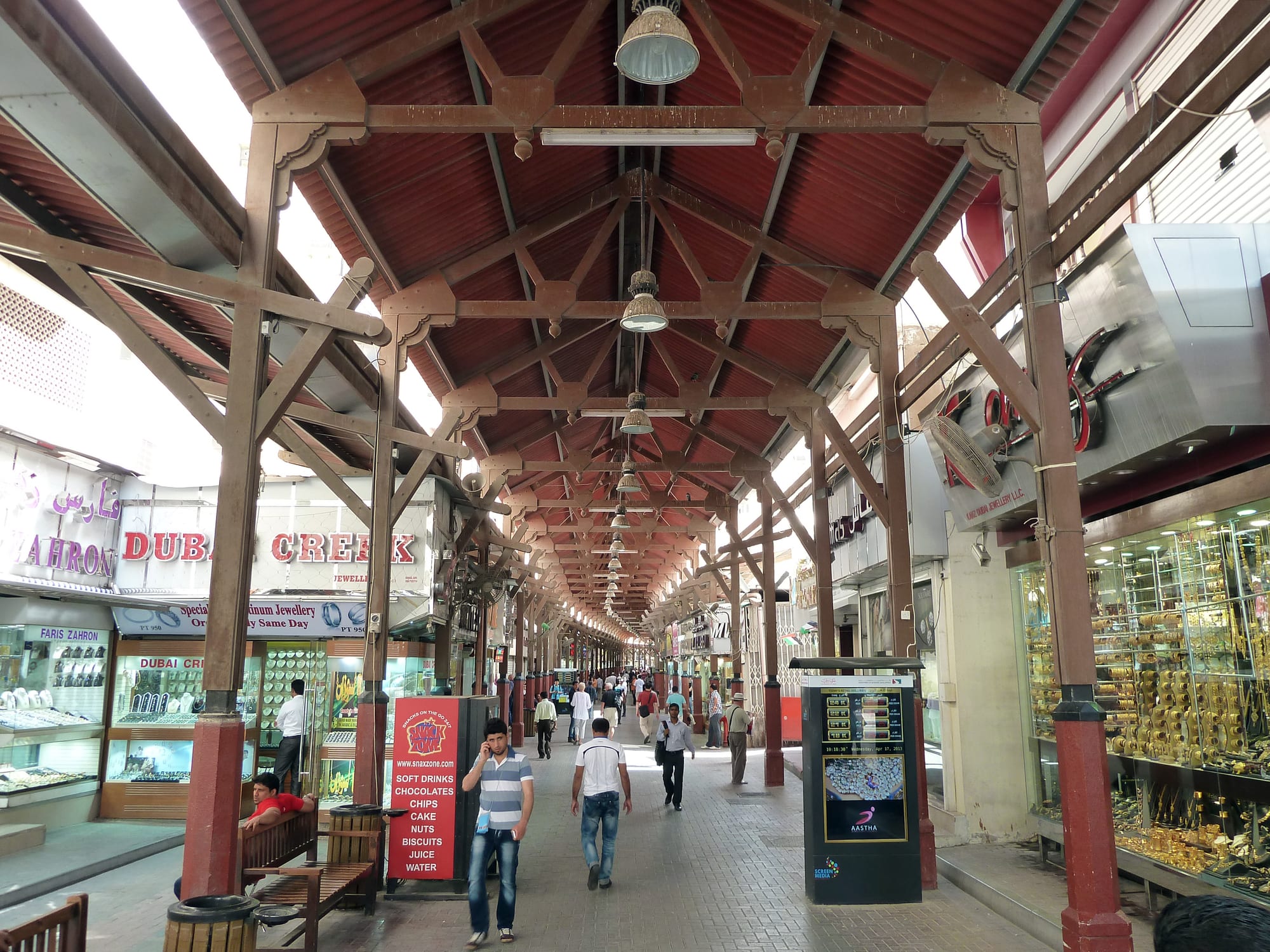
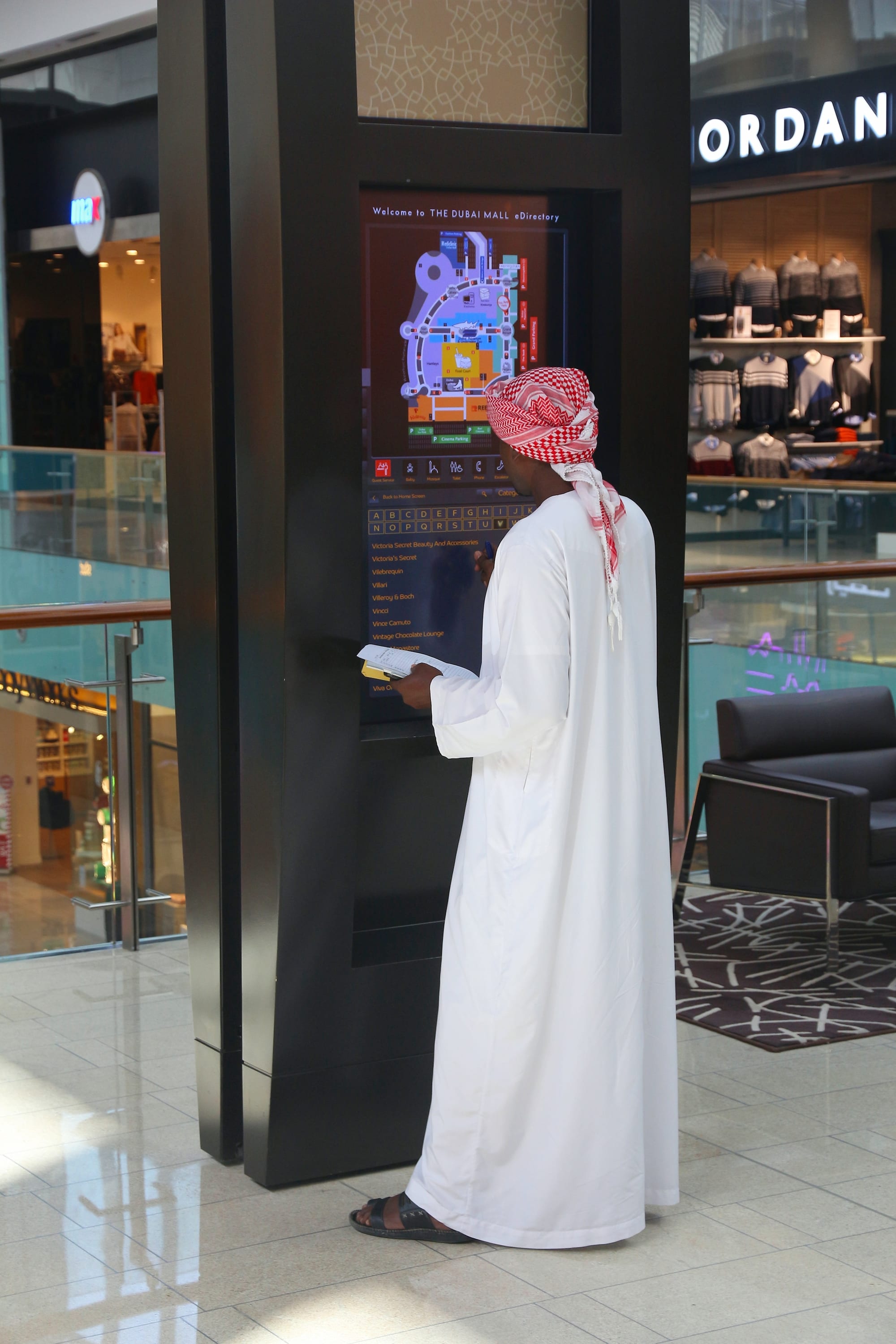
Souks remain a genuine working public space, not just a tourist stop: stalls selling spices, textiles and gold still supply real households, and older quarters along Dubai Creek stay busy with trade much as they have for generations. Mosques anchor neighbourhood life nationwide, drawing men for five daily prayers, and small, independent grocery and general stores, commonly run by South Asian shopkeepers, serve as everyday, informal gathering points in residential neighbourhoods. Wooden abra ferries still cross Dubai Creek for a small flat fare, one of the cheapest and most ordinary ways to get across the old city. In the newer parts of every emirate, air-conditioned shopping malls have become the de facto public square, especially in summer, functioning as much as a place to walk, meet people and cool off as to actually shop.
Free time and weekends
Malls double as the default weekend destination for many residents, combining shopping, cinemas and air-conditioned walking space that the outdoor summer heat rules out for months at a time. Friday, and increasingly Saturday, brunches, long buffet-and-drinks sittings that can run for hours, remain a widely used release valve after a demanding working week. Beaches and public parks fill up in the cooler months from November to March, and a desert safari, dune driving followed by a Bedouin-style camp dinner, is a popular family outing rather than only a tourist activity. Camel racing and falconry, both rooted in Bedouin tradition, persist as genuine heritage sports followed by Emiratis, with camel races now often run with remote-controlled robot jockeys in place of the child jockeys once used, and football is watched closely nationwide, at home and in cafés alike.
A visitor's ordinary day
Cards and mobile payment are accepted almost everywhere in Dubai and Abu Dhabi, though a little cash still helps for taxis, souks and small cafeterias in the northern emirates. Dubai's driverless metro, trams and plentiful taxis cover the city well, while getting between emirates generally means a car or an intercity bus. Shops and malls typically open by mid-morning and stay open into the evening most days; during Ramadan, hours shift and many places open later. Since the regional war that began in February 2026, flights and events have faced disruption, so schedules are worth confirming. Electricity and mobile coverage are reliable in the cities, and the practical adjustment most visitors have to make is around the heat itself: outdoor plans are best scheduled for morning or evening for much of the year, with the middle of the day given over to air-conditioned indoor space, the same accommodation the whole country makes for roughly five months of every year.
What to take away
An ordinary day in the UAE is really several different ordinary days running in parallel, shaped less by a single national culture than by which visa a person holds, and what unites nearly all of them, citizen and newcomer alike, is a working life organised around escaping the heat.