Daily Life · Ukraine
Ukraine: An Ordinary Day, Interrupted
Families split by conscription and displacement, a working day now built around air-raid alerts and rolling power cuts, and a determined, everyday normality that persists in the cafés and markets between them
By Worldlore Editorial · 30 September 2026
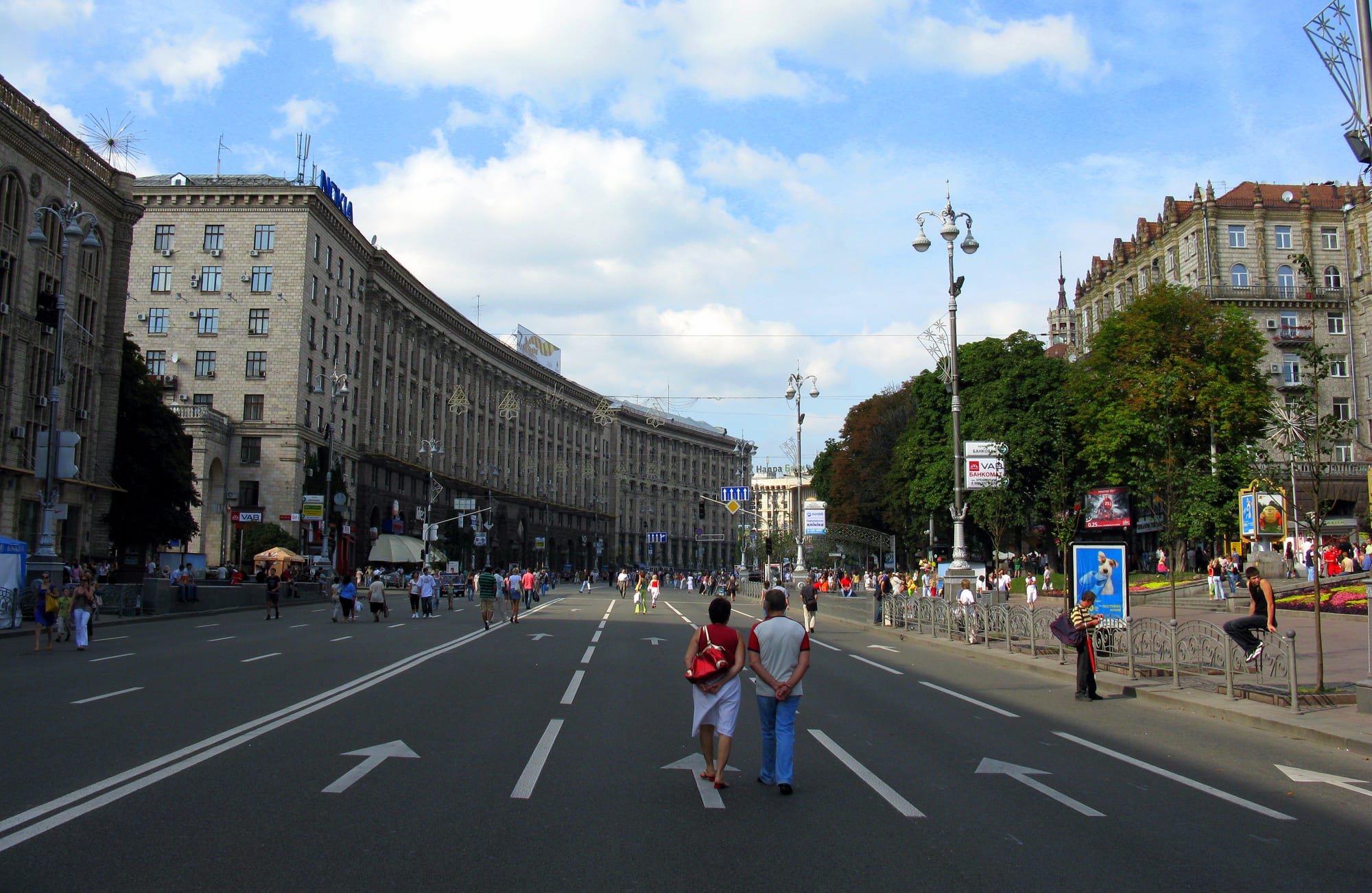
Since Russia's full-scale invasion began in February 2022, an ordinary day in Ukraine has come to mean something most countries' daily lives do not: checking an air-raid alert app before checking the weather, planning around a power cut rather than a weekend, and carrying on regardless. Away from the front line, in Kyiv, Lviv and other cities, people still go to work, take children to school and meet friends for coffee, but almost none of that happens now without the war's presence somewhere in the background, in a warning siren, a blacked-out stairwell, or an absent relative.
Family and home life
The war has physically reshaped Ukrainian households on a huge scale: by early 2026, around 3.7 million people remained internally displaced within the country, and around 5.7 million more were recorded as refugees abroad, the great majority women and children, since under martial law most men of military age cannot leave the country (a rule eased in August 2025 for men aged 18 to 22) and are subject to mobilisation. That rule has split a great many families for years at a stretch, with fathers, husbands and adult sons serving, mobilised, or unable to travel, while wives, children and elderly relatives live abroad or in a different, safer part of the country. Even households that have stayed together and stayed in place have adapted daily routines around the war: a packed emergency bag by the door, a mapped route to the nearest shelter, and, for many, a portable power station or battery bank to keep phones charged and lights on through a power cut.
Work, school and the rhythm of the day
A striking amount of ordinary economic life has continued through the war, agriculture, IT services and much day-to-day business have kept going, but the working day itself is now interrupted routinely by air-raid alerts, which can send office workers, shoppers and commuters into basements, metro stations or reinforced corridors several times in a day or night. Russian strikes on the power grid have made rolling blackouts a regular feature of daily life, especially in winter: at points during the winter of 2025–26, households in badly affected cities went without electricity for eight to sixteen hours a day, disrupting heating, hot water, mobile networks and, for many people, the ability to work from home at all. School has been hit particularly hard: by the 2025–26 academic year, roughly 4.6 million Ukrainian children still faced some form of educational disruption, with almost one million learning online because their local school had been damaged or lacked an adequate bomb shelter, and even in schools that stayed open, lessons are routinely paused and classes moved underground when the sirens sound.
Community life and public spaces
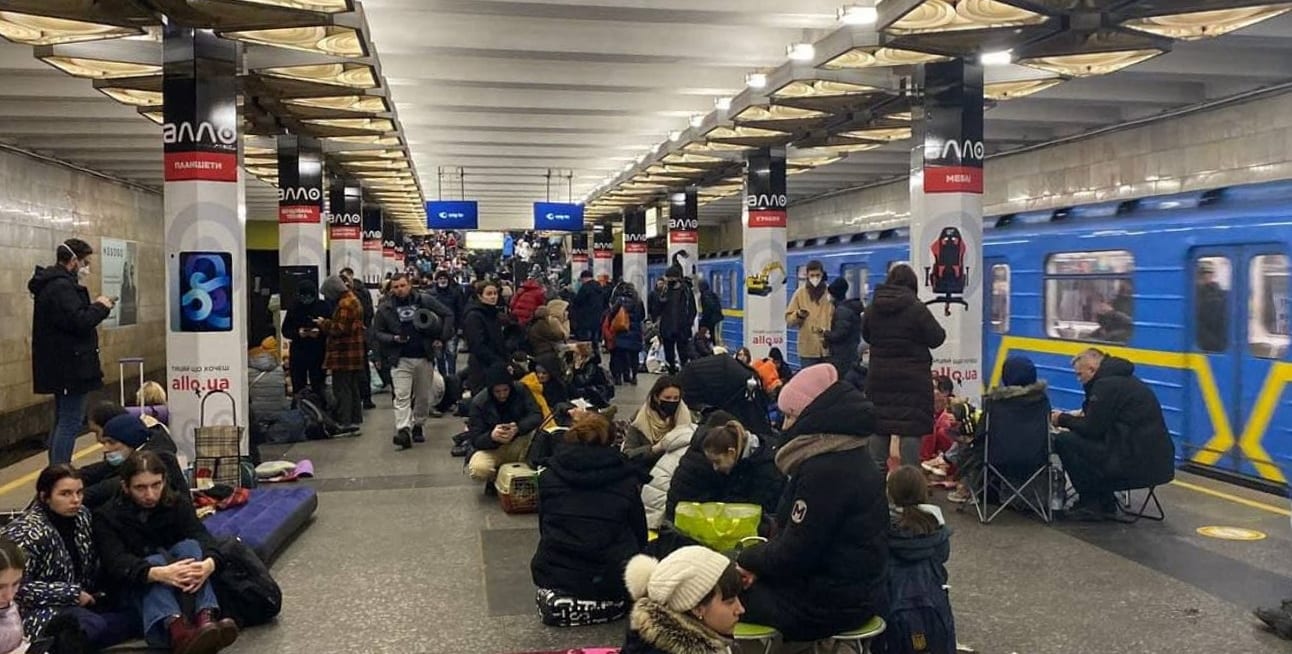
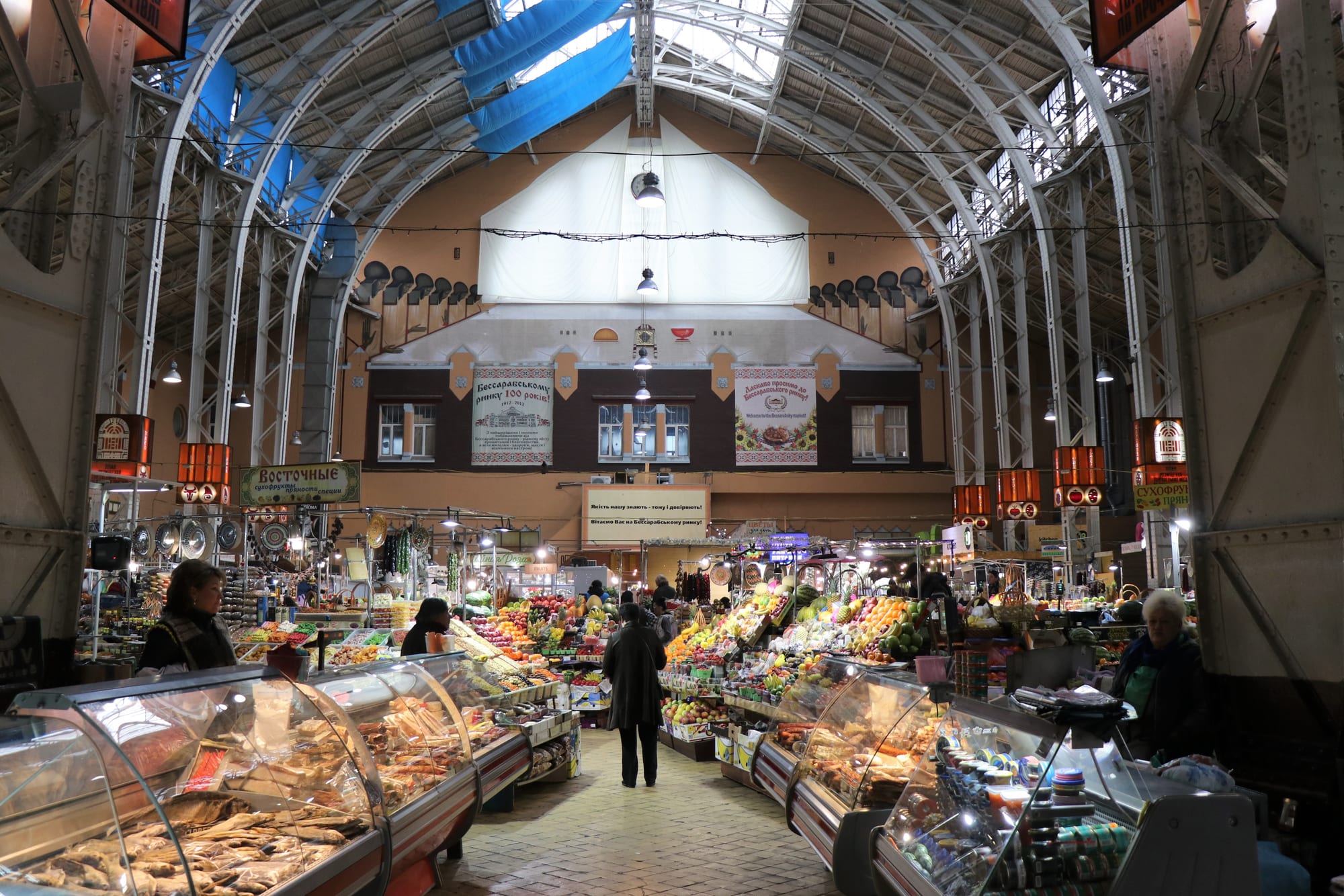
Markets remain genuinely central to everyday shopping in Ukrainian cities: covered markets such as Kyiv's Bessarabsky Market trade in fresh produce, meat and dairy much as they always have, alongside supermarkets and the small local shops known as kiosks. Churches, above all those of the Orthodox Church of Ukraine, which a 2022 survey found over half of Ukrainians follow and which was granted independence (autocephaly) in 2019, and the Greek Catholic Church in the west, remain significant gathering points, and since 2022 volunteering, fundraising for the military and territorial defence, and organising aid for displaced people have become an everyday thread of community life rather than an occasional activity. Metro stations, beyond their transport role, now function as a genuine piece of public infrastructure for shelter, and in Kyiv the deepest stations are a familiar, if unwelcome, part of the city's daily rhythm during alerts.
Free time and weekends
Ordinary leisure has not disappeared, and Ukrainians are often described, including by aid workers and journalists covering the war, as deliberately holding on to it as a form of resilience: cafés, restaurants and theatres in Kyiv and Lviv operate between alerts, and Khreshchatyk, Kyiv's main boulevard, has long been closed to traffic at weekends, drawing people out to walk. Where displaced families have settled together, weekends often centre on that same extended household, since so many people are now living with relatives or in shared accommodation rather than their original home. Football, concerts and cultural events continue where security allows, scheduled with an awareness that they may be interrupted, and for many people simply maintaining a weekend routine, a walk, a coffee, a film, has become a small, deliberate act of normality.
A visitor's ordinary day
Almost all governments currently advise against all travel to Ukraine, and this guide describes the country to understand it, not as an itinerary to follow while the war continues. Civilian air travel is suspended nationwide, and entry, for the small number of people who do travel there for work or humanitarian reasons, is overland from a neighbouring EU country by train, a network that has remained remarkably reliable despite the war. Anyone present should register with their embassy, install a local air-raid alert app, know the nearest shelter to wherever they are staying, observe the local night-time curfew, and carry a torch and a power bank for the frequent outages. Cards and contactless payment are widely used even now, but cash is worth carrying in case power cuts take payment terminals offline.
What to take away
An ordinary day in Ukraine today is defined less by any single custom than by a kind of doubled attention: getting on with work, school and family life as normally as possible, while never quite able to set aside the siren, the blackout, or the empty place at the table that the war has put there.