History · Tuvalu
Tuvalu: The Country the Sea Is Taking
Nine tiny coral atolls with a highest point of about four metres — a Polynesian society raided by slavers, ruled from a distant British colony, separated from the Micronesians it was governed with, and now the world's clearest test case of a nation losing its land to rising seas
By Worldlore Editorial · 19 September 2026
The fourth-smallest country
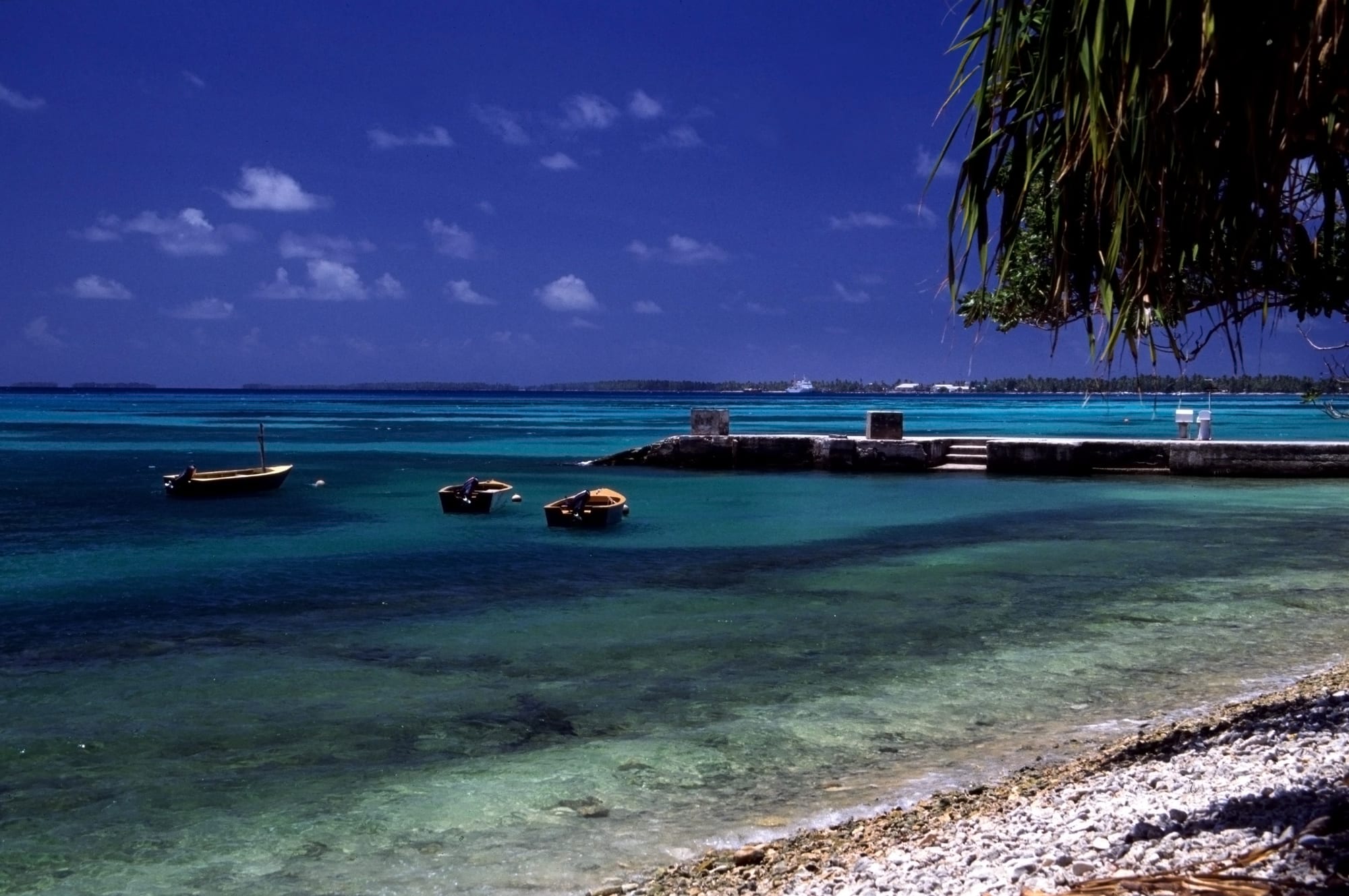
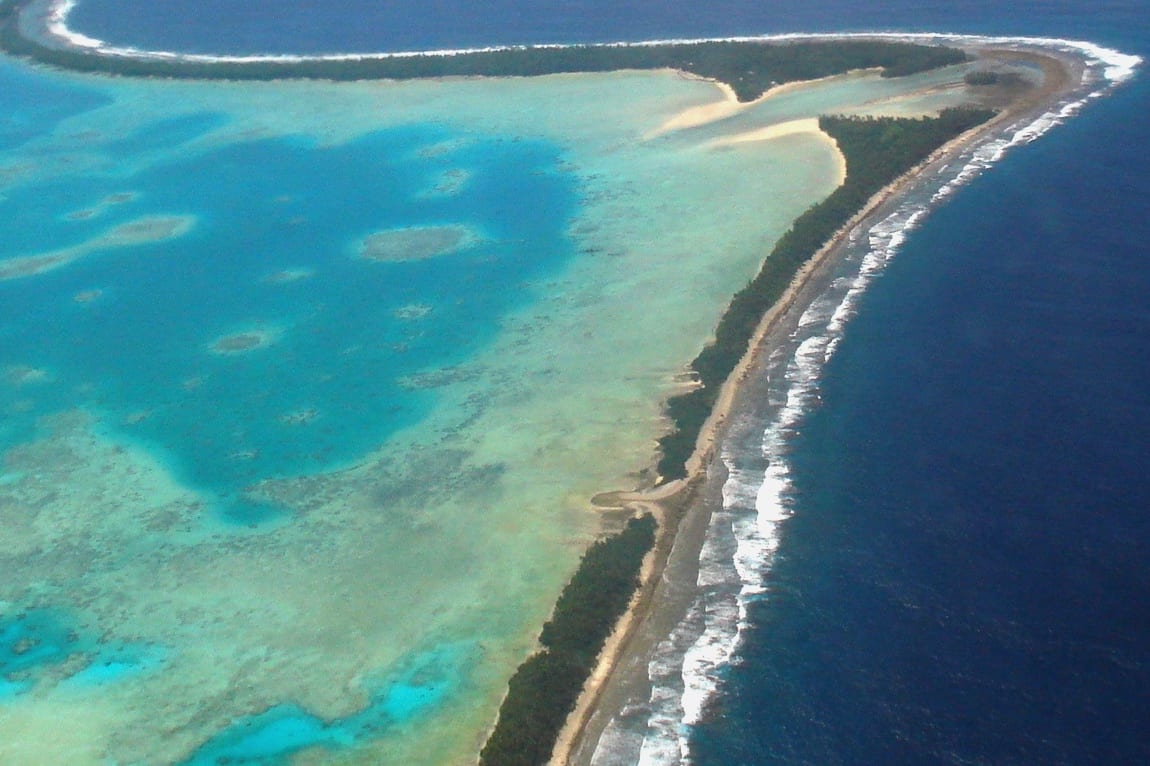
Tuvalu is a chain of nine low coral atolls and reef islands in the west-central Pacific, between Hawaii and Australia, with about 26 square kilometres of land — the fourth-smallest country in the world — and roughly 11,000 people. Its highest natural point is around four metres above sea level; most of the land is barely above the tide. Tuvalu has a Polynesian population and language, and its modern history has been shaped by being small and remote: raided by slavers, governed as an afterthought of a British colony, and now, more than any other state, defined by the threat of climate change to its physical existence.
A short history
- c. 1000–1500 CE
Settlement
Polynesian voyagers, mainly from Samoa and Tonga, settle the atolls.
- 1568 / 1595
European sighting
Spanish expeditions sight some of the islands.
- 1863
The slave raids
Peruvian "blackbirders" carry off much of the population of two atolls.
- 1865 onward
Missionaries
Samoan pastors of the London Missionary Society convert the islands.
- 1892
British protectorate
The "Ellice Islands" are joined with the Micronesian Gilberts.
- 1916
Crown colony
The Gilbert and Ellice Islands Colony is formally established.
- 1974
Referendum
Ellice Islanders vote overwhelmingly to separate from the Gilberts.
- 1978
Independence
The Ellice Islands become independent as Tuvalu.
- 2000s–
The climate frontline
Tuvalu becomes a leading voice on sea-level rise.
- 2023
Falepili Union
A treaty with Australia offering residency to Tuvaluans.
Settlement and the slavers
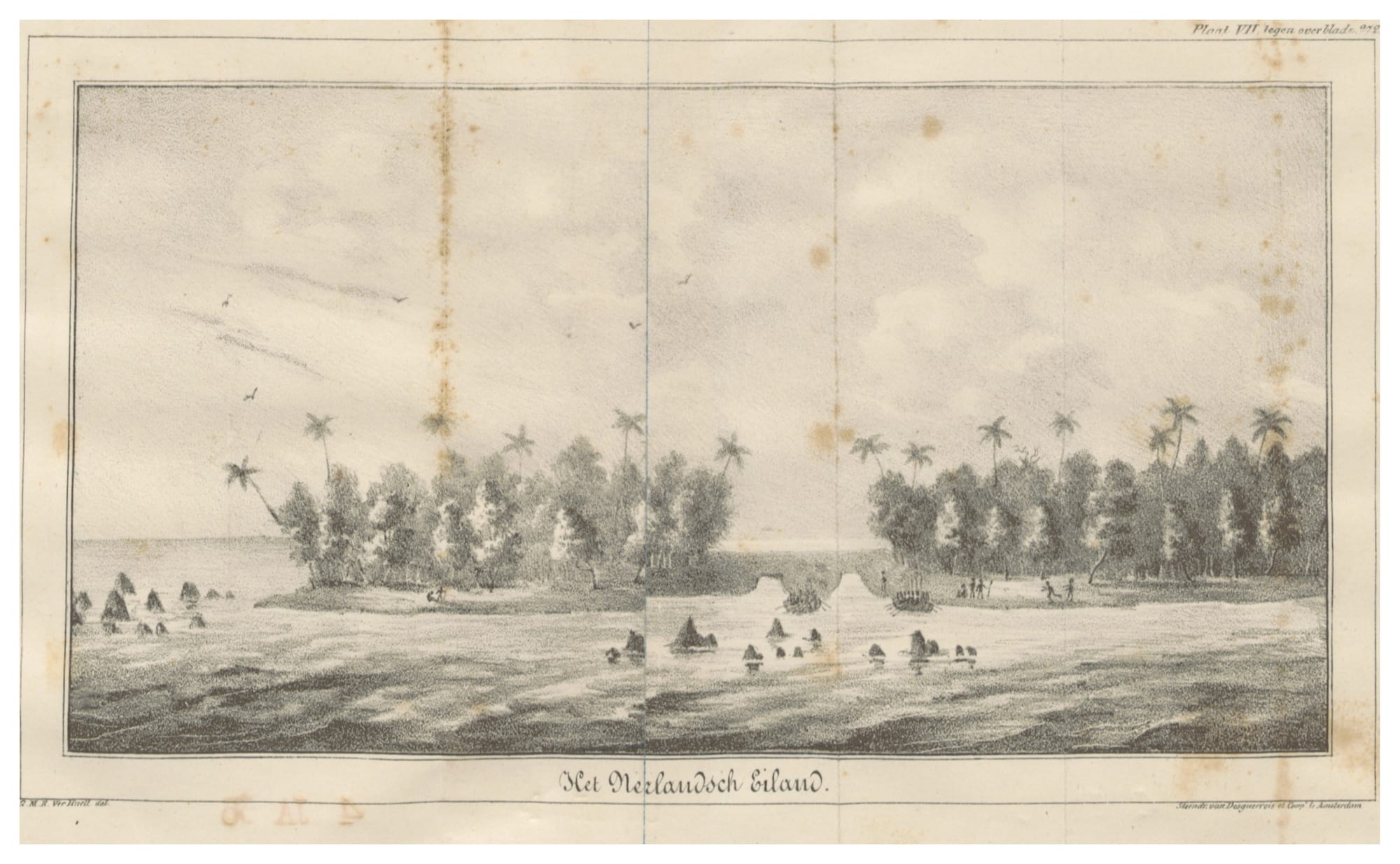
Polynesians settled Tuvalu's atolls around a thousand years ago, arriving chiefly from Samoa and Tonga (one island, Nui, was settled from the Micronesian Gilberts and still speaks a Kiribati dialect). Each atoll was its own community, ruled by chiefs and clan elders, living on fish, coconut, pulaka (a swamp taro grown in dug pits) and pandanus. The most traumatic contact came in 1863, when Peruvian ships recruiting forced labour for guano islands and haciendas took away most of the adult population of Funafuti and Nukulaelae — around 400 people — almost none of whom returned. Disease brought by traders compounded the loss. From 1865, Samoan missionaries of the London Missionary Society converted the islands, and the church became, and remains, central to village life.
The Ellice Islands, and separation
Britain declared a protectorate over the islands — then called the Ellice Islands — in 1892, and administered them together with the Micronesian Gilbert Islands to the north, forming the Gilbert and Ellice Islands Colony in 1916. It was a distant, lightly governed colony run from Tarawa in the Gilberts and, for phosphate revenue, focused on Banaba (Ocean Island). The Polynesian Ellice Islanders were a minority within it and increasingly resented Gilbertese dominance in the colonial civil service and the location of services. As decolonisation approached, a 1974 referendum asked whether the Ellice Islands should separate: 92 per cent voted yes. The islands split off in 1975, took the name Tuvalu ("eight standing together", for the eight traditionally inhabited atolls), and became fully independent on 1 October 1978. The Gilberts became Kiribati in 1979.
Independence and the climate emergency
Tuvalu is a parliamentary democracy with no political parties, its politics organised around individuals, islands and family networks. Its economy is one of the smallest in the world: subsistence fishing and farming, remittances from Tuvaluan seafarers on foreign merchant ships and workers in New Zealand, the sale of fishing licences for its large ocean zone, aid, income from a trust fund set up by donors in 1987, and — famously — the lease of its ".tv" internet domain, which for years provided a large share of government revenue.
Since the 1990s Tuvalu has become one of the most prominent voices in international climate negotiations. With its land only metres above the sea, it faces salinisation of its groundwater and pulaka pits, coastal erosion, more damaging storm surges, and the prospect that the atolls could become uninhabitable — through freshwater loss and flooding — well before they are literally submerged. Tuvalu has reclaimed and raised land on Funafuti, begun digitally recording its territory and culture in a "Future Now" project so the state can persist even if the land does not, and in 2023 signed the Falepili Union treaty with Australia, which offers a set number of Tuvaluans permanent residency each year and pledges Australian help in disasters — a migration pathway framed as dignified relocation rather than refuge.
What Tuvalu carries
Tuvalu's history is a series of consequences of being tiny: nearly emptied by slavers in a single year, governed as the minor, Polynesian half of a Micronesian-dominated colony, and separated by a lopsided referendum vote. Its present is a slow-motion emergency that it did almost nothing to cause — a nation of 11,000 people, on four metres of coral, arguing in world forums that statehood, and identity, should not end just because the land goes under.