Daily Life · Tuvalu
Tuvalu: A Day Set by the Tide and the Plane
A population of just over 10,000 spread across nine coral islands, a public sector that employs most paid workers, and an evening volleyball game played, quite literally, on the runway between the lagoon and the sea
By Worldlore Editorial · 30 September 2026
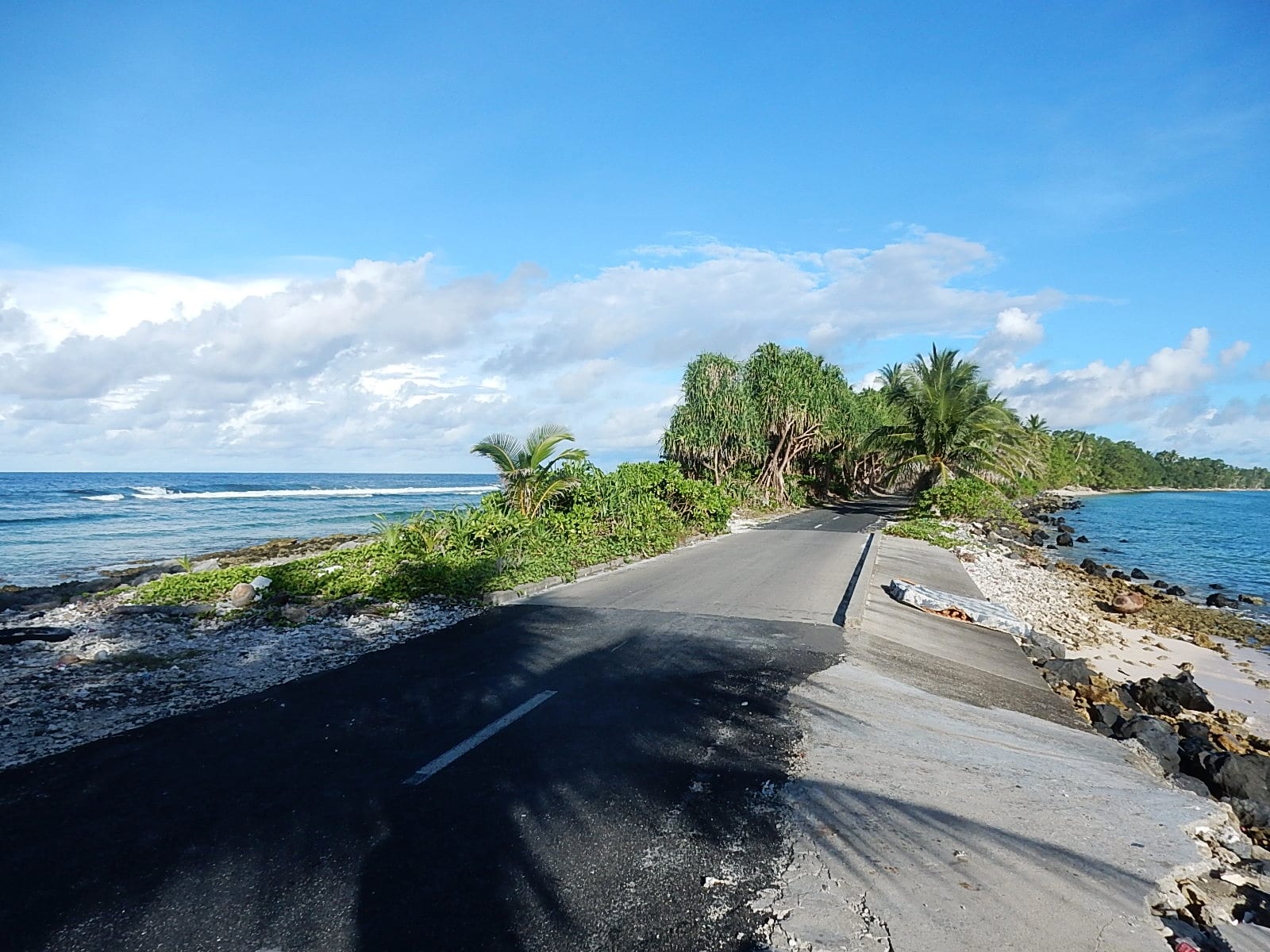
Tuvalu is small even by the standards of small countries: about 10,600 people at the 2022 census, spread across nine coral islands totalling only about 26 square kilometres, with around 60 per cent of the population now living on Funafuti, the capital atoll, where the inhabited strip of land is in places only a couple of hundred metres wide. There is no traffic in any real sense, no city noise, and the day is set less by the clock than by the tide, the weather and the arrival of the flight from Fiji, which lands three times a week,, still enough of an event that people gather to watch it land.
Family and home life
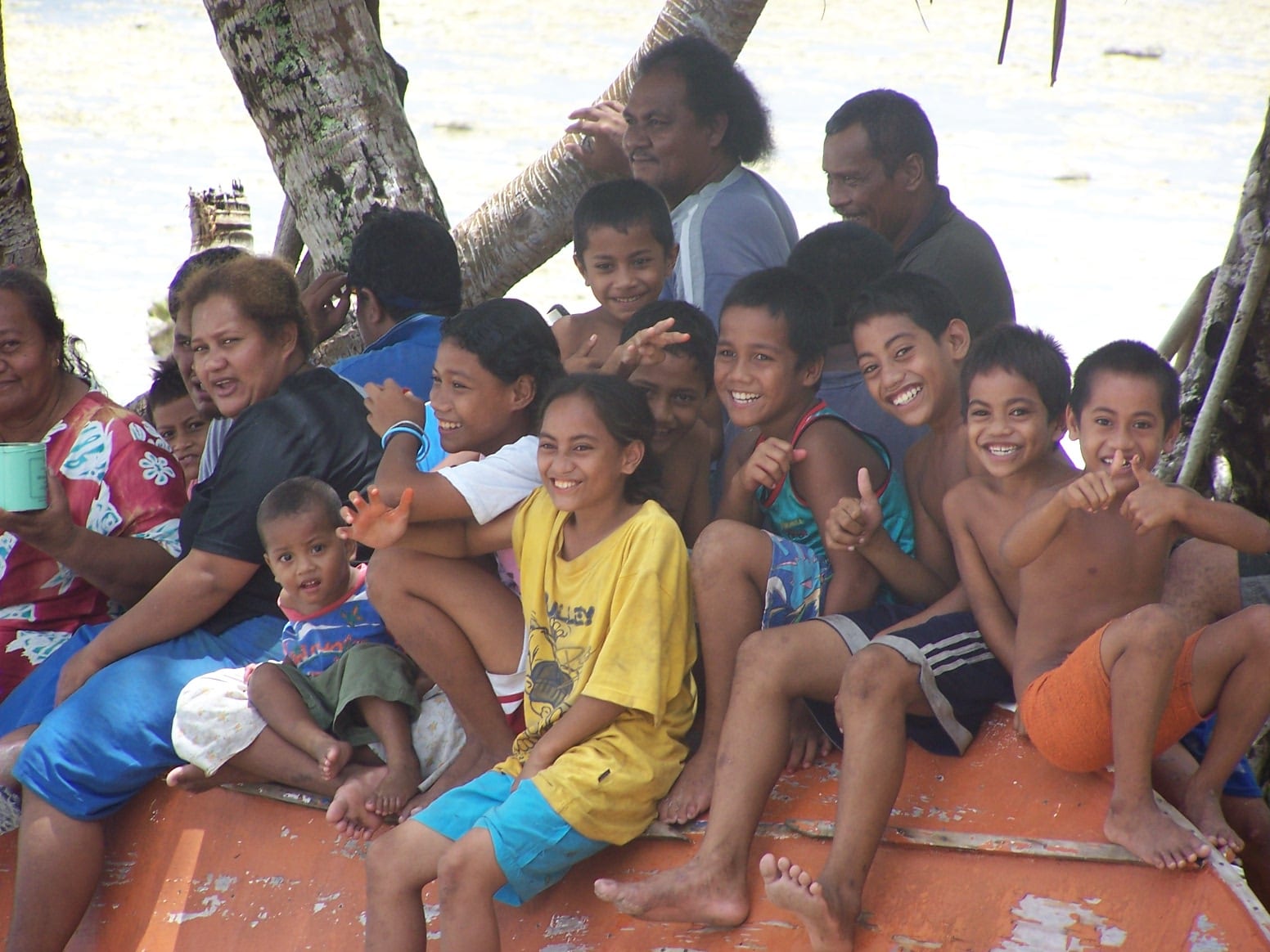
Households in Tuvalu are built around the extended family and, more broadly, the island community, an arrangement that has held even as people move from the outer islands to Funafuti for work, schooling and healthcare. It remains common for grandparents, parents and children to live within the same household or compound, sharing food, childcare and the daily work of fishing and gardening rather than dividing it strictly along nuclear-family lines. Homes on Funafuti sit close together along the atoll's single main road, simple houses of timber and corrugated iron set among coconut palms and banana plants, with rainwater catchment tanks a near-universal fixture since there are no rivers or reliable groundwater.
Work, school and the rhythm of the day
The public sector is the country's largest employer by far, taking on close to two-thirds of paid workers, while much of the wider population lives partly from subsistence fishing and gardening rather than salaried jobs. A standard government working day runs conventional office hours, but for most households the real daily rhythm follows the tide and the light: fishing in the early morning or evening, tending plots of pulaka, the swamp taro grown in dug pits, and gathering coconuts, breadfruit and bananas. Beyond Funafuti, a meaningful share of family income comes from remittances sent home by Tuvaluan men working as merchant seafarers and by relatives in Australia and New Zealand, where the Falepili Union treaty with Australia, in force since 2024, has opened a new migration route, forms of labour migration that keep many households connected to relatives abroad even while daily life at home stays local and small-scale.
Community life and public spaces
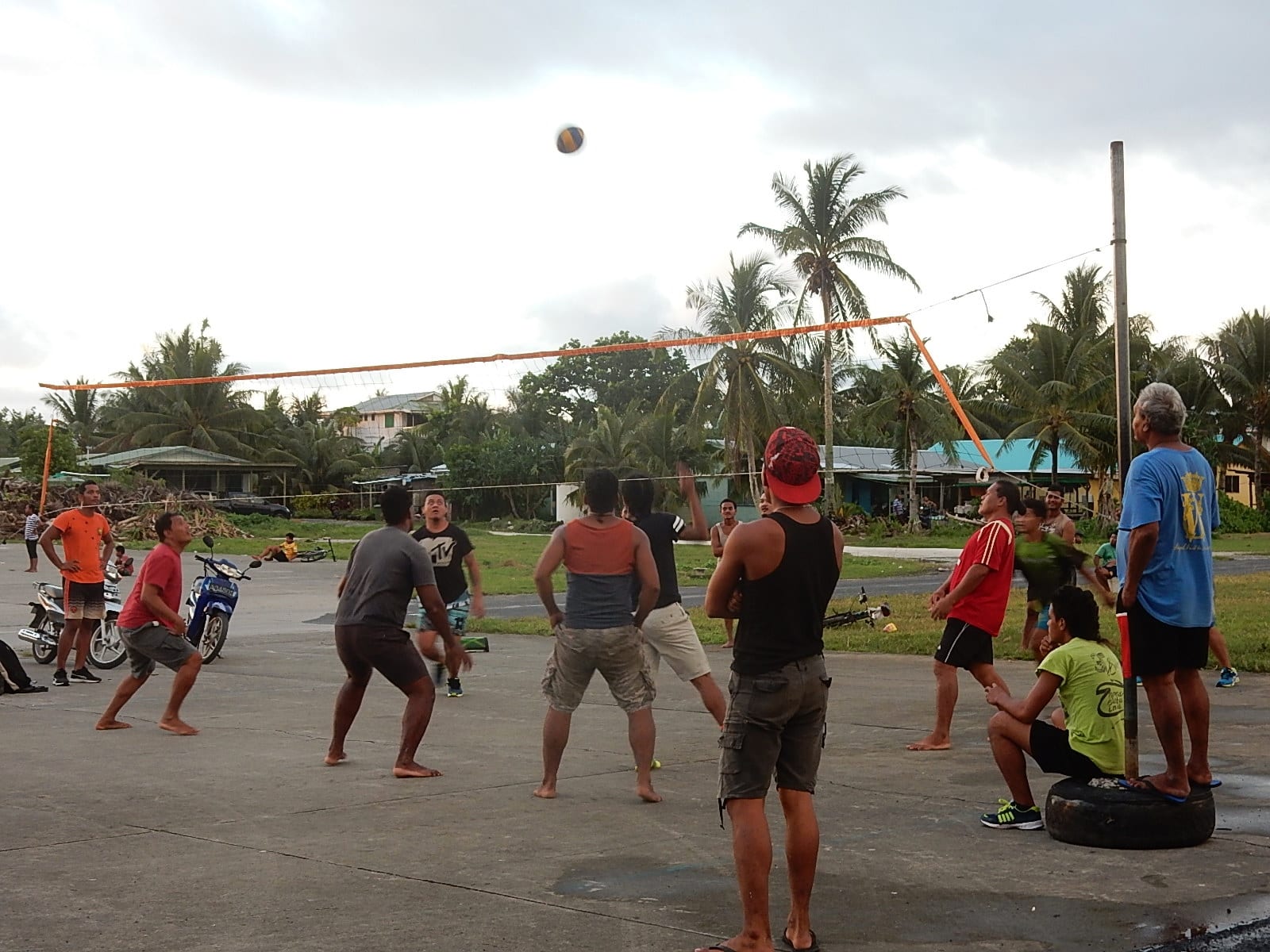
Funafuti's single runway is, unusually, the country's real public square: when no flight is due, it is used for walking, cycling, ball games and evening gatherings, a genuinely distinctive piece of everyday infrastructure doing double duty. Small family-run shops and kiosks along the main road handle everyday shopping, since there is no market in the conventional sense and little in the way of restaurants. The arrival of a government passenger and cargo ship, which links Funafuti to the outer islands roughly every three or four weeks, is a significant event each time it happens, since it is often the only way people and goods move between islands for weeks at a stretch.
Free time and weekends
Evenings on Funafuti often mean volleyball, cycling or te ano, a traditional volleyball-like game played with two hard pandanus-leaf balls, played out on the runway as the day cools, a routine that turns the airstrip into the closest thing the capital has to a park. Fishing doubles as both work and leisure, and swimming in the calm lagoon is an everyday pleasure rather than an occasion. Church and its associated choir practices, fundraising events and feasts occupy a significant share of free time nationwide, structuring the week as much as any secular institution does.
A visitor's ordinary day
Flights are so infrequent, a few times a week between Suva and Funafuti, that an onward booking effectively fixes the length of any visit, and it is worth confirming the flight well ahead rather than assuming flexibility once there. Tuvalu runs on the Australian dollar in cash; card acceptance and ATMs are unreliable, so bringing enough cash for the whole stay matters. There are no resorts and very few places to eat outside a guesthouse or the small hotel, so most visitors' meals come from where they are staying or from island shops. Getting around Funafuti means walking, cycling or, for the outer islands, committing to the government ship's slow and uncertain schedule, since there is no other regular way to reach them.
What to take away
An ordinary day in Tuvalu is set less by any clock than by a shared, practical rhythm, tide, weather, the thrice-weekly plane, that binds a population small enough for nearly everyone to know the day's real news before it is announced.