History · Turkmenistan
Turkmenistan: The Desert Under One Man
A nation of former nomads on top of the world's fourth-largest gas reserves — a Silk Road land of Merv and the Turkmen tribes, absorbed late by Russia, and since independence one of the most closed and personality-cult-driven states on Earth
By Worldlore Editorial · 19 September 2026
The most closed of the Central Asian states
Turkmenistan is a large, mostly desert country on the eastern shore of the Caspian Sea, with about 7 million people, four-fifths of the land covered by the Karakum ("black sand") desert. It sits on enormous natural-gas reserves, among the largest in the world. It is also one of the most isolated and tightly controlled countries anywhere — comparable, in the restrictions on movement, information and political life, to North Korea — and it has been governed since independence by a succession of leaders who built extravagant personality cults around themselves.
A short history
- antiquity
Silk Road cities
Nisa (Parthian capital) and Merv become great oasis metropolises.
- 11th century
The Seljuks
Oghuz Turkic tribes, ancestors of the Turkmen, move west from here.
- 1221
Mongol destruction
Merv is sacked; the region's irrigation and cities collapse.
- 15th–19th c.
Turkmen tribes
Nomadic and semi-nomadic confederations; no unified state.
- 1881
Geok Tepe
Russia storms the Tekke fortress, killing thousands, and annexes the region.
- 1924
The Soviet republic
Turkmenistan is created as a union republic of the USSR.
- 1991
Independence
Turkmenistan becomes sovereign; Saparmurat Niyazov is president.
- 1999
President for life
Niyazov ("Türkmenbaşy") is made permanent head of state.
- 2006
Succession
Niyazov dies; Gurbanguly Berdimuhamedow takes over.
- 2022
Dynastic handover
Berdimuhamedow's son Serdar becomes president.
Merv and the Turkmen
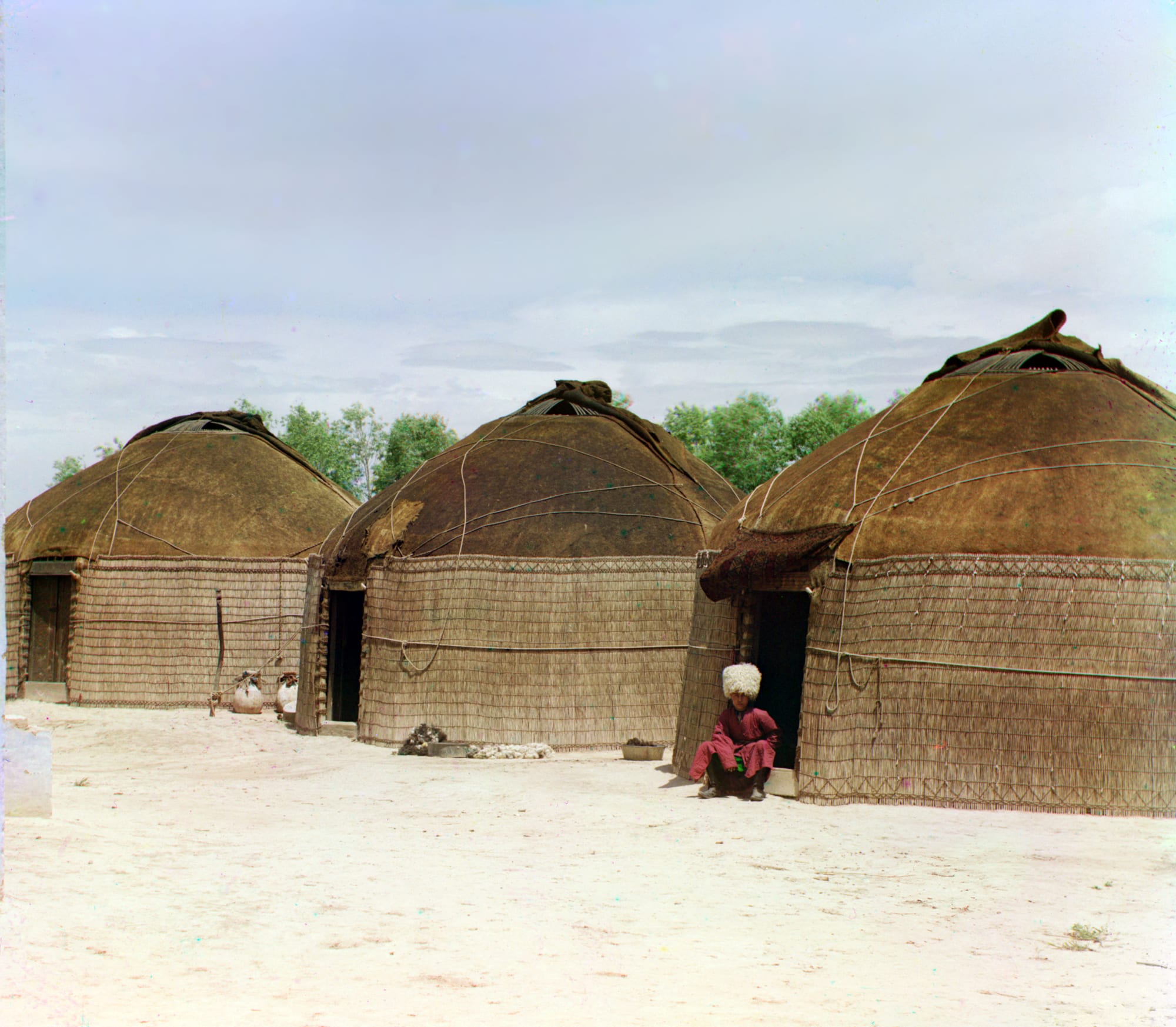
The oases along the Murghab and Amu Darya rivers held some of the great cities of the ancient and medieval world: Nisa, capital of the Parthian Empire, and above all Merv, which by the 12th century was one of the largest cities on Earth and a centre of Islamic scholarship — until the Mongols destroyed it in 1221 and massacred its population, a blow from which the region's urban civilisation never recovered. The Turkmen themselves descend from Oghuz Turkic nomads who moved into the area from around the 11th century; they organised into tribes (Tekke, Yomut, Ersari and others), herding, raiding caravans and Persian villages for captives to sell in the slave markets of Khiva and Bukhara, and never formed a single state.
Russian conquest and Soviet rule
Russia absorbed most of Central Asia in the mid-19th century but the Turkmen tribes, with no cities to capture and a reputation as formidable fighters, held out longest. In January 1881 a Russian army under General Skobelev besieged and stormed the Tekke earthwork fortress of Geok Tepe, killing an estimated 15,000 or more Turkmen, many cut down as they fled; the date is now a national day of mourning. The region was made part of Russian Turkestan. After the revolution and the suppression of the Basmachi resistance, the Soviets in 1924 drew the borders of a Turkmen Soviet Socialist Republic, forcibly settled the nomads, imposed a cotton monoculture irrigated by the vast Karakum Canal, and promoted literacy and a standardised Turkmen language — while purging the national intelligentsia in the 1930s. Turkmenistan remained the poorest and least industrialised Soviet republic.
Niyazov's state
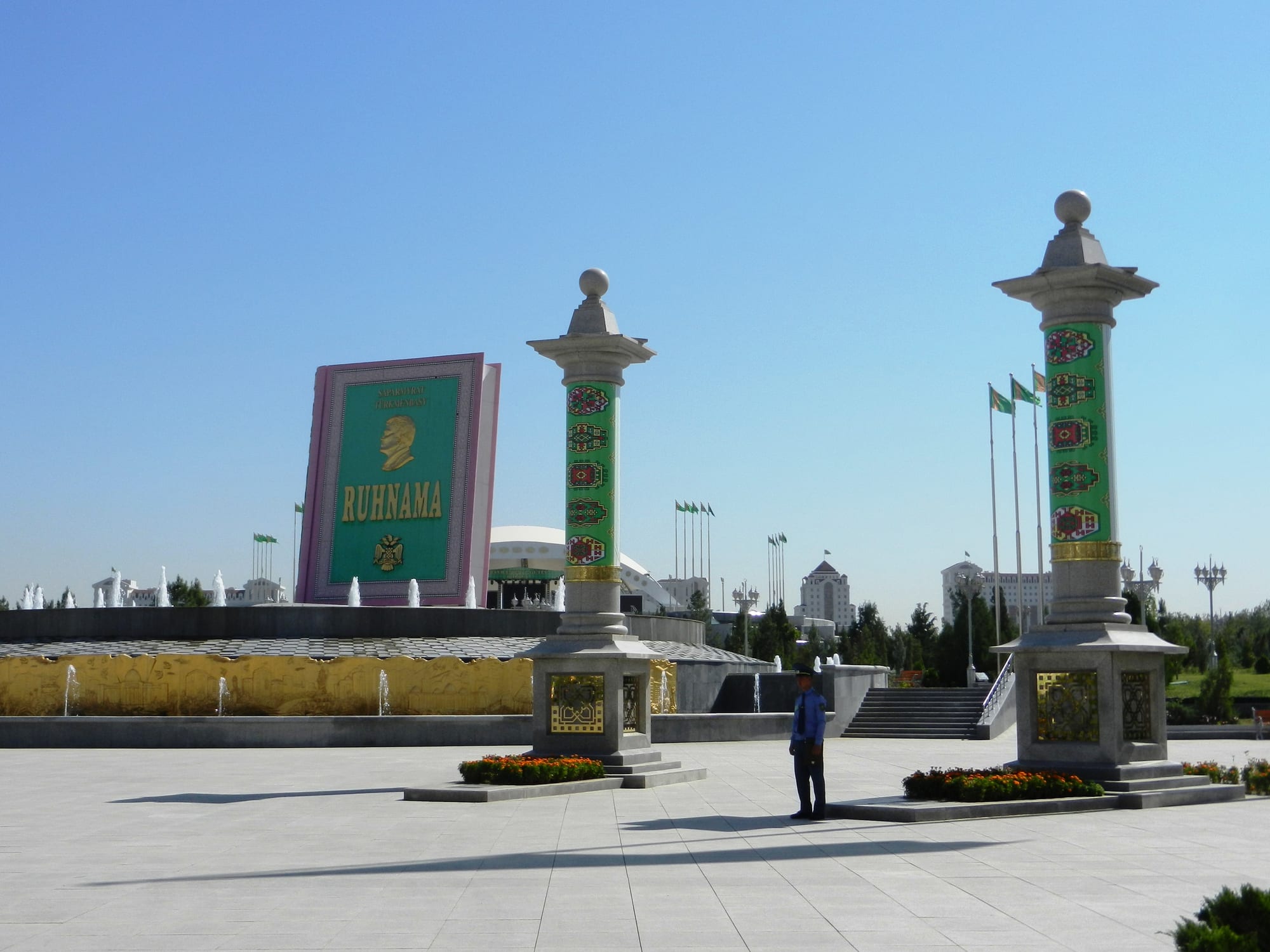
Turkmenistan became independent in December 1991 with its Soviet-era leader, Saparmurat Niyazov, in charge, and he ruled unchallenged until his death in 2006. He built one of the most extreme personality cults of modern times: he took the title Türkmenbaşy ("leader of the Turkmen"), renamed months and days of the week after himself and his family, erected a giant gold statue of himself in Ashgabat that rotated to face the sun, made his book of moral and historical musings, the Ruhnama, compulsory in schools and driving tests, and closed hospitals and libraries outside the capital. Dissent was crushed; the country was sealed to foreign journalists and largely to its own citizens. Gas exports, mainly to Russia and later China, funded the marble-clad rebuilding of Ashgabat and a thin welfare system of subsidised utilities.
After Niyazov
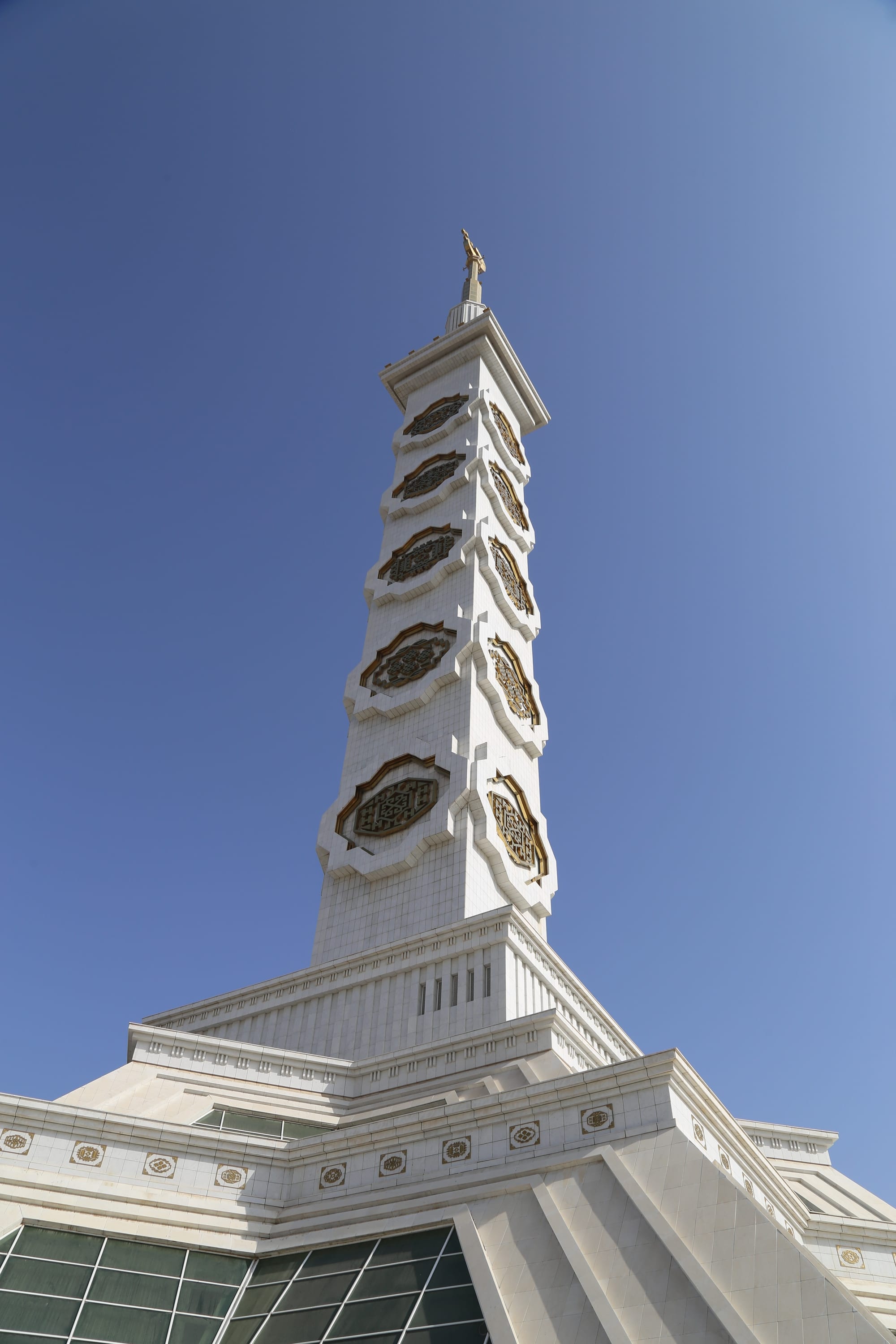
Niyazov's health minister, Gurbanguly Berdimuhamedow, took power in 2006 in a managed succession, winning elections with implausible majorities. He softened some of Niyazov's odder decrees but kept the system intact and built his own cult — celebrated in state media as "Arkadag" ("the Protector"), shown winning horse races and writing books, and honoured with his own gilded equestrian statue. In 2022 he arranged for his son, Serdar Berdimuhamedow, to be elected president, while retaining a powerful role himself as head of a new upper house — a father-to-son transfer of power. Turkmenistan proclaims a policy of "permanent neutrality", recognised by the UN in 1995, and stays out of regional blocs. It faces a slow economic crisis: heavy dependence on gas sales to a single main customer, China; a shrinking of the subsidies that underpinned the social contract; and a persistent food shortage the government denies exists.
What Turkmenistan carries
Turkmenistan's deep history is the Silk Road — Merv, Nisa, the caravan routes — and its people's history is tribal and nomadic, never unified into a state until the Soviets drew one. Independence handed that state, and its gas wealth, to a single leader, and the country has been run ever since as a personal and now family possession, wrapped in monuments and marble, and closed off from the world to a degree matched by almost nowhere else.