Daily Life · Turkmenistan
Turkmenistan: A Life Lived Quietly
Extended families still sharing one household in the countryside, a bread-and-market economy that has had to relearn paying for gas and water, and an ordinary day shaped, more than in most places, by what the state permits it to look like
By Worldlore Editorial · 30 September 2026
Ordinary life in Turkmenistan is lived at a deliberately even pace, in a country where officially just over 7 million people live mostly in the oases and river valleys around the Karakum Desert, and where the state's presence, in portraits, permits and controlled information, reaches further into daily routine than in most countries. Bread, tea and the household still anchor the day, much as they always have, even as the economics underneath them have shifted hard in the last decade.
Family and home life
The extended family remains the basic unit of Turkmen life, especially outside Ashgabat: it is still common for a married son to bring his wife into his parents' household rather than move out, and rural families are often organised loosely along old tribal and clan lines that predate Soviet rule. City households, particularly in Ashgabat's rebuilt white-marble apartment blocks, have grown smaller and more nuclear, but multigenerational living remains far more the rural norm than the exception. The gap between town and country is real and visible in basic services: services such as a reliable piped water supply are harder to come by in the countryside than in the capital, a divide that shapes daily routine as much as any custom does.
Work, school and the rhythm of the day
State employment still dominates the formal economy, built on cotton and natural gas, and jobs outside it are limited enough that a significant number of Turkmen have left to work abroad, many of them in Turkey and Russia, to support family at home. Office and state jobs keep regular daytime hours, while private trade, the country's many small market stalls, keeps longer and more informal hours. Schooling lasts 12 years and is structured firmly around the state curriculum. Since 2019, when the government ended a subsidy system dating to 1993 that had provided free gas, electricity, water and salt, households have had to budget for utility bills for the first time in a generation, a change that has reshaped monthly routine more than almost anything else in recent years.
Community life and public spaces
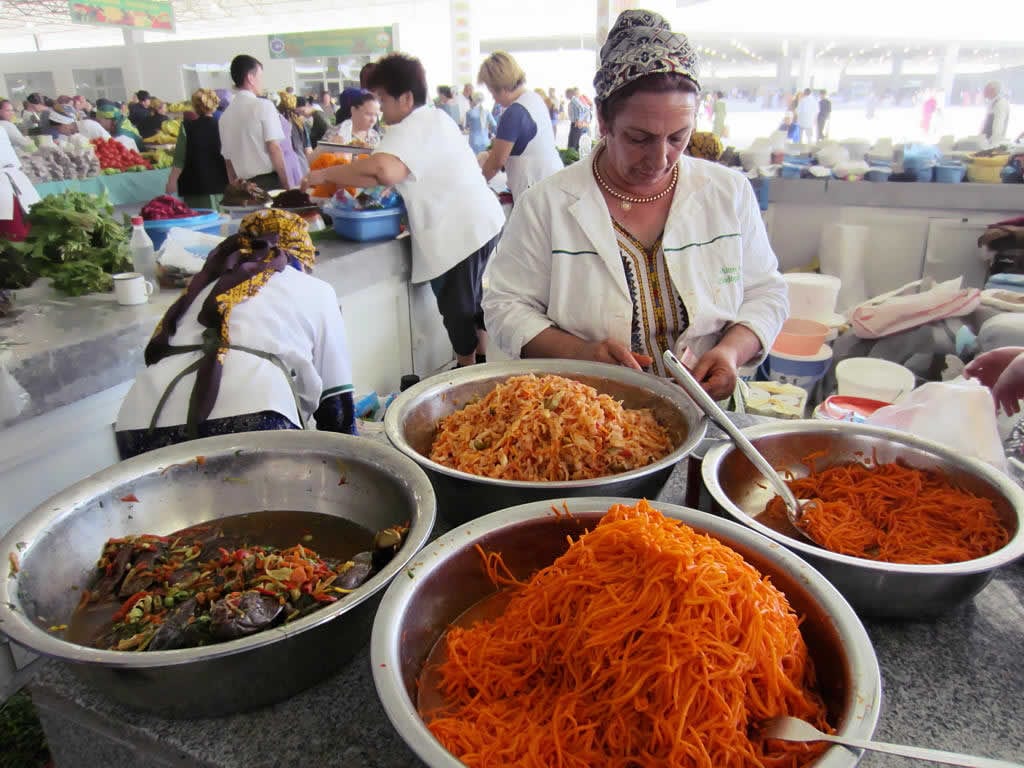
Markets are the country's real everyday public space: covered bazaars in Ashgabat and open-air markets in smaller towns are where many households do their actual food shopping, day to day, rather than in supermarkets. Long queues for bread and flour have been reported by independent media at times of shortage since 2018, a visible, ordinary-life consequence of a strained economy despite the country's gas wealth. Ashgabat itself, rebuilt in white marble with vast, often near-empty boulevards and monuments, functions as much as civic stage-set as it does as ordinary city, and public space generally, movement, gatherings, even photography, operates under a degree of state oversight uncommon elsewhere.
Free time and weekends
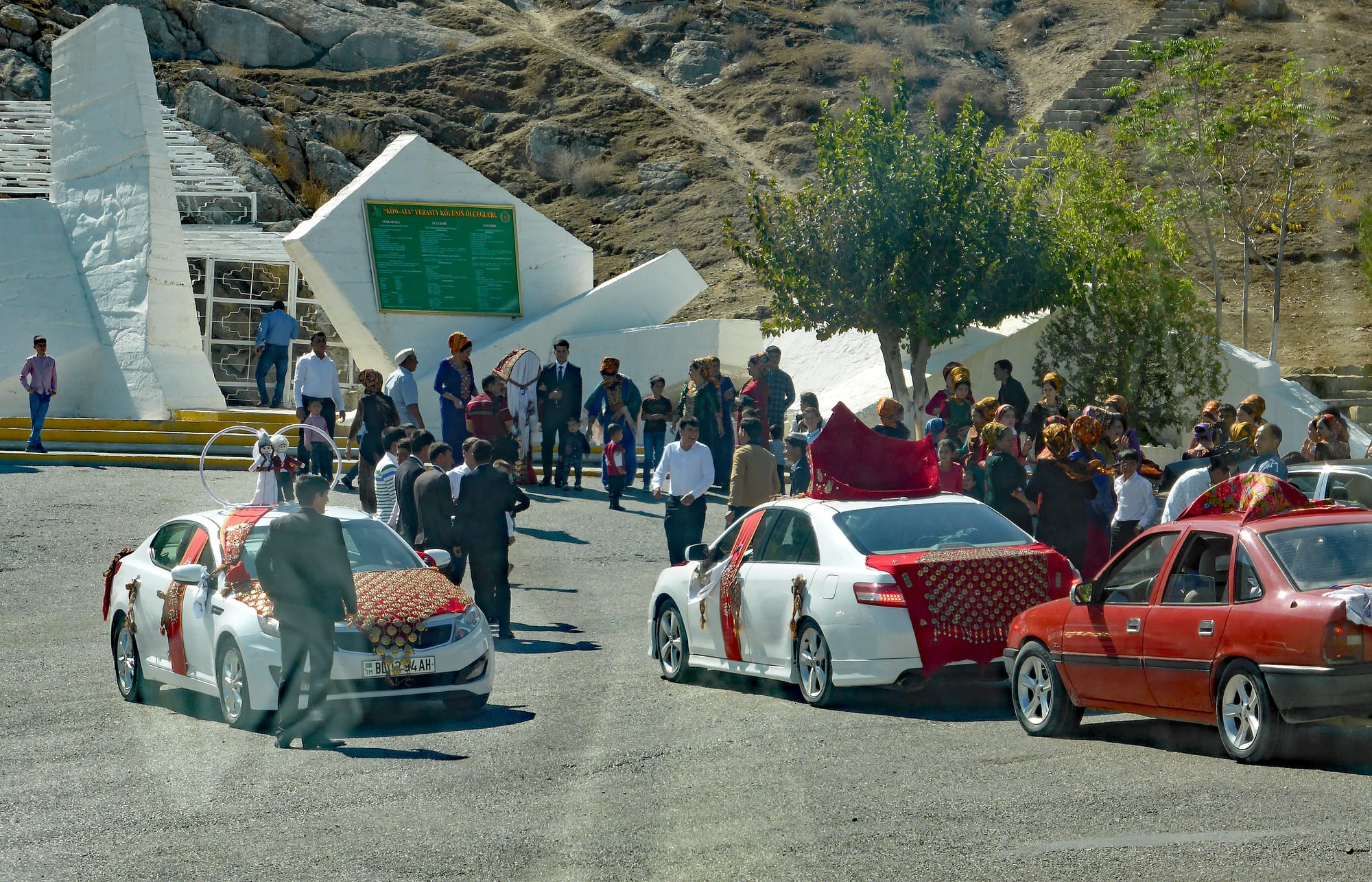
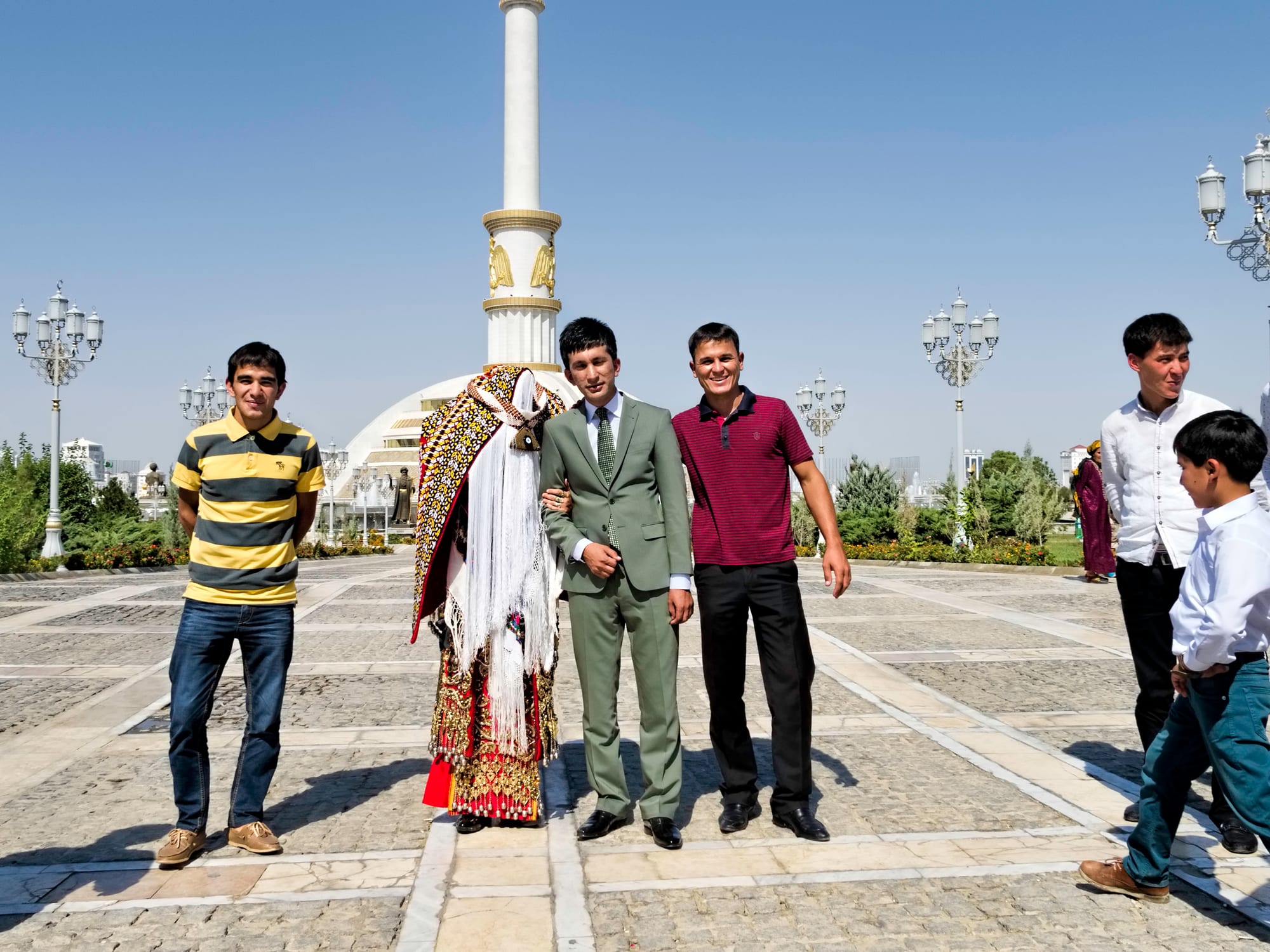
Weekends tend to be spent with family, and where a household keeps ties to a home village, a return visit for a holiday or celebration remains common even for those now settled in Ashgabat. National holidays and state-organised celebrations, choreographed events with music, flags and mass participation, are a genuine part of the calendar's rhythm, alongside quieter private gatherings. Horses hold a special place in national life: the Akhal-Teke breed is a source of pride nationwide, and horse-related events draw real public interest beyond the state occasions built around them.
A visitor's ordinary day
Nearly all visitors travel on a fixed, guided itinerary with a driver, since a tourist visa normally requires a licensed agency, a guide and an approved route, so an ordinary day for a visitor is largely set by that schedule rather than personal choice. Turkmenistan runs on cash in US dollars or manat; foreign cards do not work reliably and ATMs are scarce, so budgeting for the whole trip in advance matters. Photography of government buildings, checkpoints and some public infrastructure is often restricted, and a guide's instructions on what can and cannot be photographed are worth following closely. Shops and markets generally keep to a conventional daytime schedule, and internet access is heavily filtered, so ordinary digital habits, maps, messaging apps, social media, may simply not work as expected.
What to take away
An ordinary day in Turkmenistan still runs on family, bread and the market the way it always has, but almost everything around that core, from the cost of gas to what a camera can point at, is shaped by a state whose presence in daily life is harder to set aside than in most countries.