History · Turkey
Turkey: Between Two Continents
The land bridge between Europe and Asia — heart of the Byzantine and Ottoman empires, refounded in 1923 as a secular republic on the ruins of the last of them, and still arguing over the balance between the state, religion, the army and the ballot box
By Worldlore Editorial · 19 September 2026
A country astride the divide
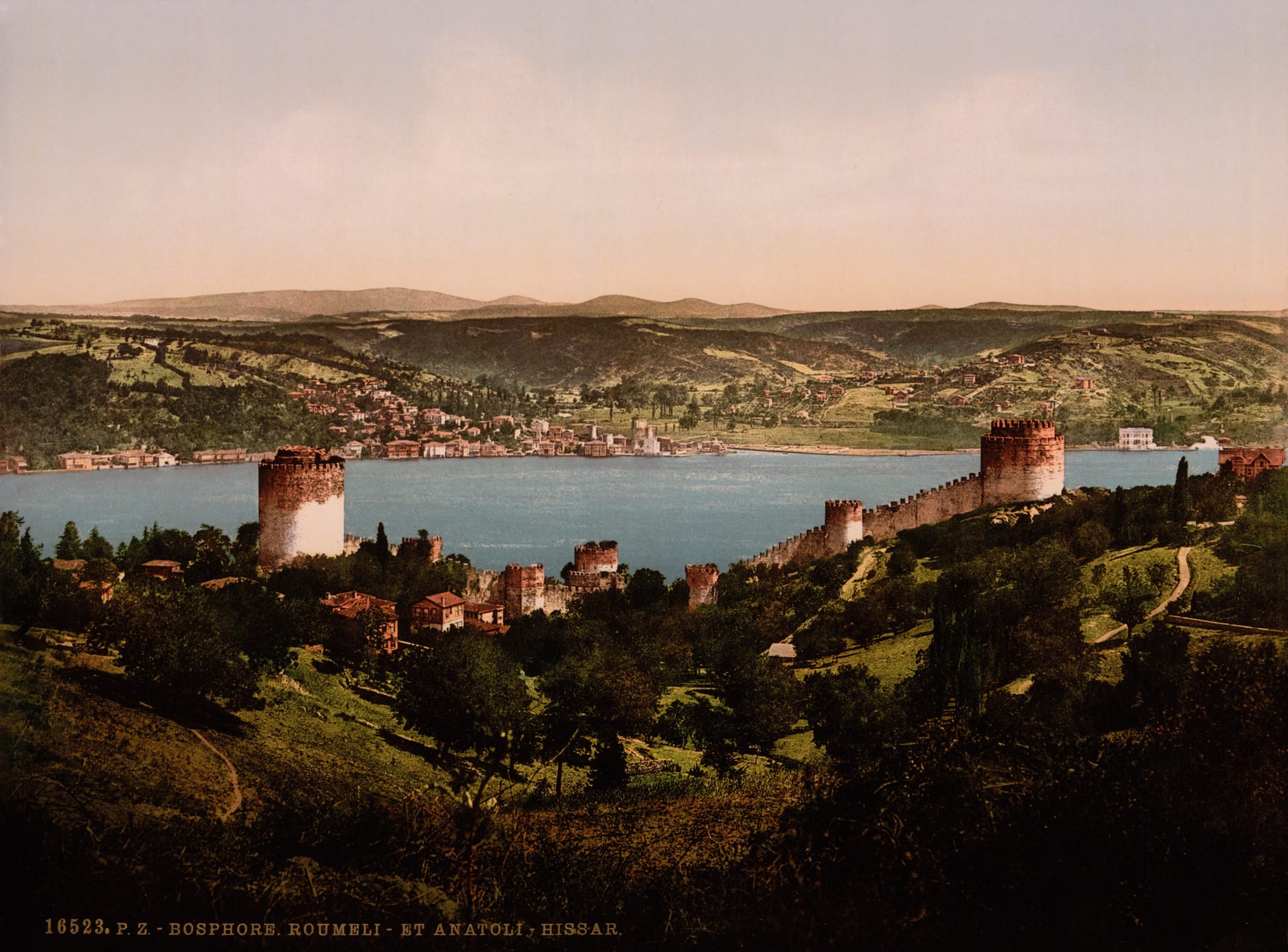
Turkey occupies the peninsula of Anatolia (Asia Minor) plus a toehold in south-eastern Europe, with about 85 million people and a location that has made it a crossroads for the whole of recorded history. It was the core of the Byzantine Empire for a thousand years and of the Ottoman Empire for six centuries, and the modern republic was built in 1923 out of the Ottoman wreckage by Mustafa Kemal Atatürk on an explicitly secular, nationalist and Western-facing model. The tension between that founding project and the country's Muslim, conservative and Kurdish realities has defined Turkish politics ever since.
A short history
- antiquity
Anatolian civilisations
Hittites, Lydians, Greeks; Troy, Ephesus, the early churches.
- 330 CE
Constantinople
Constantine makes the city the capital of the Roman east.
- 1071
Manzikert
Seljuk Turks defeat Byzantium and open Anatolia to Turkish settlement.
- 1299–1922
The Ottoman Empire
From a frontier principality to a power spanning three continents.
- 1453
The fall of Constantinople
Mehmed II takes the city; the Byzantine Empire ends.
- 1915–1916
The Armenian genocide
Ottoman authorities deport and kill around a million Armenians.
- 1919–1923
The War of Independence
Nationalists resist partition; the republic is proclaimed.
- 1923–1938
The Atatürk reforms
Secularism, the Latin alphabet, Western law, women's suffrage.
- 1950
Multiparty democracy
The first free election ends single-party rule.
- 1960, 1971, 1980, 1997, 2016
Military interventions
The army repeatedly reshapes politics.
Byzantium and the Ottomans
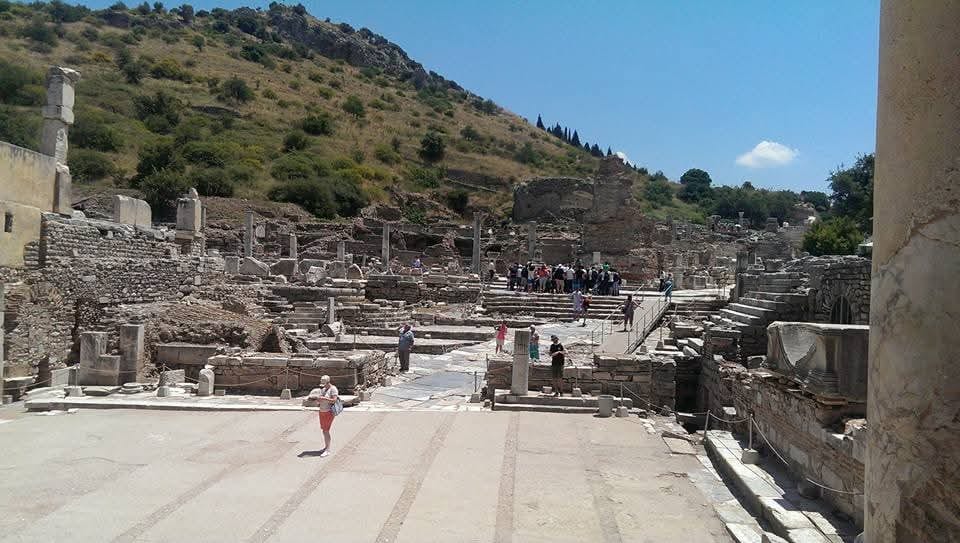
Anatolia was home to Hittites, Phrygians, Lydians and Greek city-states, and its western coast — Ephesus, Pergamon, Miletus — was a heartland of Greek and then Roman civilisation and of early Christianity. In 330 Constantine refounded the Greek city of Byzantium as Constantinople, and it remained the capital of the Roman/Byzantine Empire for over a millennium. Turkic peoples migrated into Anatolia after the Seljuk victory at Manzikert in 1071. From around 1299 one small Turkish principality in the north-west, the Ottomans, expanded relentlessly: across the Balkans, and finally, in 1453, taking Constantinople itself. At its height under Süleyman the Magnificent in the 16th century, the Ottoman Empire ruled from Hungary to Yemen and from Algiers to the Persian Gulf, a multi-ethnic, multi-religious realm organised around Islamic law and the sultan-caliph.
Decline, collapse, and genocide
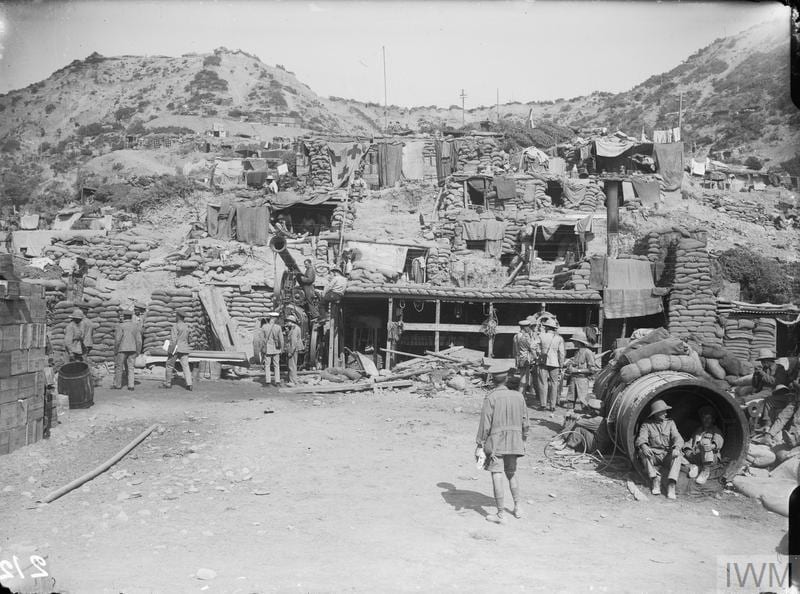
From the late 17th century the empire lost ground — territory, autonomy over its finances, and control of its Balkan provinces, which became independent nation-states through the 19th century. Reform efforts (the Tanzimat, then the 1908 Young Turk revolution) modernised the army and administration but could not stop the contraction. The Ottomans entered the First World War on the German side. During it, in 1915–16, the government carried out the mass deportation and killing of its Armenian population — around a million people — an event widely recognised by historians and many governments as genocide, which the Turkish state disputes as a characterisation while acknowledging large-scale wartime Armenian deaths. Defeat in 1918 brought Allied occupation and a plan to partition Anatolia itself.
Atatürk's republic
A nationalist resistance movement based in Ankara, led by the war hero Mustafa Kemal, fought off Greek, French and other forces in the War of Independence (1919–22), abolished the sultanate, and proclaimed the Republic of Turkey on 29 October 1923. Over the next 15 years Kemal — given the surname Atatürk, "father of the Turks" — imposed a top-down transformation: the caliphate abolished, religious courts and orders banned, the legal codes replaced with Swiss and Italian models, the Arabic script swapped for a Latin alphabet, the fez outlawed, surnames introduced, and women given the vote (1934) earlier than in France. "Kemalism" — secularism, nationalism, statism, Westernisation — became the official ideology, guarded above all by the armed forces.
Democracy and the army
Turkey stayed neutral for almost all of the Second World War and then joined NATO in 1952. Single-party rule ended with the 1950 election, but the resulting democracy was fragile: the military overthrew governments in 1960 (executing a prime minister), 1971 and 1980, and forced an Islamist-led government out in 1997. The 1980 coup followed years of political street violence and was especially harsh, with mass arrests and torture. A Kurdish insurgency by the PKK, seeking autonomy or independence in the south-east, began in 1984 and has cost tens of thousands of lives. Economic liberalisation from the 1980s brought growth and deeper ties to Europe, and Turkey became an official EU candidate in 1999, though accession talks later stalled.
The Erdoğan era
The Islamist-rooted AKP, led by Recep Tayyip Erdoğan, won power in 2002 and has held it since. Its first decade brought strong growth, EU-oriented reforms, and a reduction of the military's political role. Since around 2013 — mass protests centred on Istanbul's Gezi Park, a corruption scandal, and a bitter split with the former ally Fethullah Gülen — the government has become markedly more authoritarian: a failed military coup in July 2016, blamed on Gülen's network, was followed by a purge of tens of thousands from the judiciary, universities, media and civil service, and mass arrests. A 2017 referendum replaced the parliamentary system with a strong executive presidency. Erdoğan won re-election in 2018 and 2023. High inflation, a lira crisis and the 2023 earthquakes that killed more than 50,000 people have dominated recent years.
What Turkey carries
Turkey sits on the ground where Rome's eastern capital stood and where the Ottoman sultan-caliphs ruled much of the Muslim world, and its modern state was founded by rejecting almost all of that in favour of a secular, Western republic. A century on, the country is still working out the relationship between the Kemalist state and a society that is more religious, more conservative and more Kurdish than that state was designed for — with the army, once the arbiter, now sidelined, and the presidency more powerful than at any time since Atatürk.