History · Switzerland
Switzerland: The Confederation of Convenience
An alliance of mountain valleys that began in 1291 and grew into a country with four languages and no single nationality — a supplier of mercenaries turned neutral haven, and one of the world's oldest and most decentralised democracies
By Worldlore Editorial · 19 September 2026
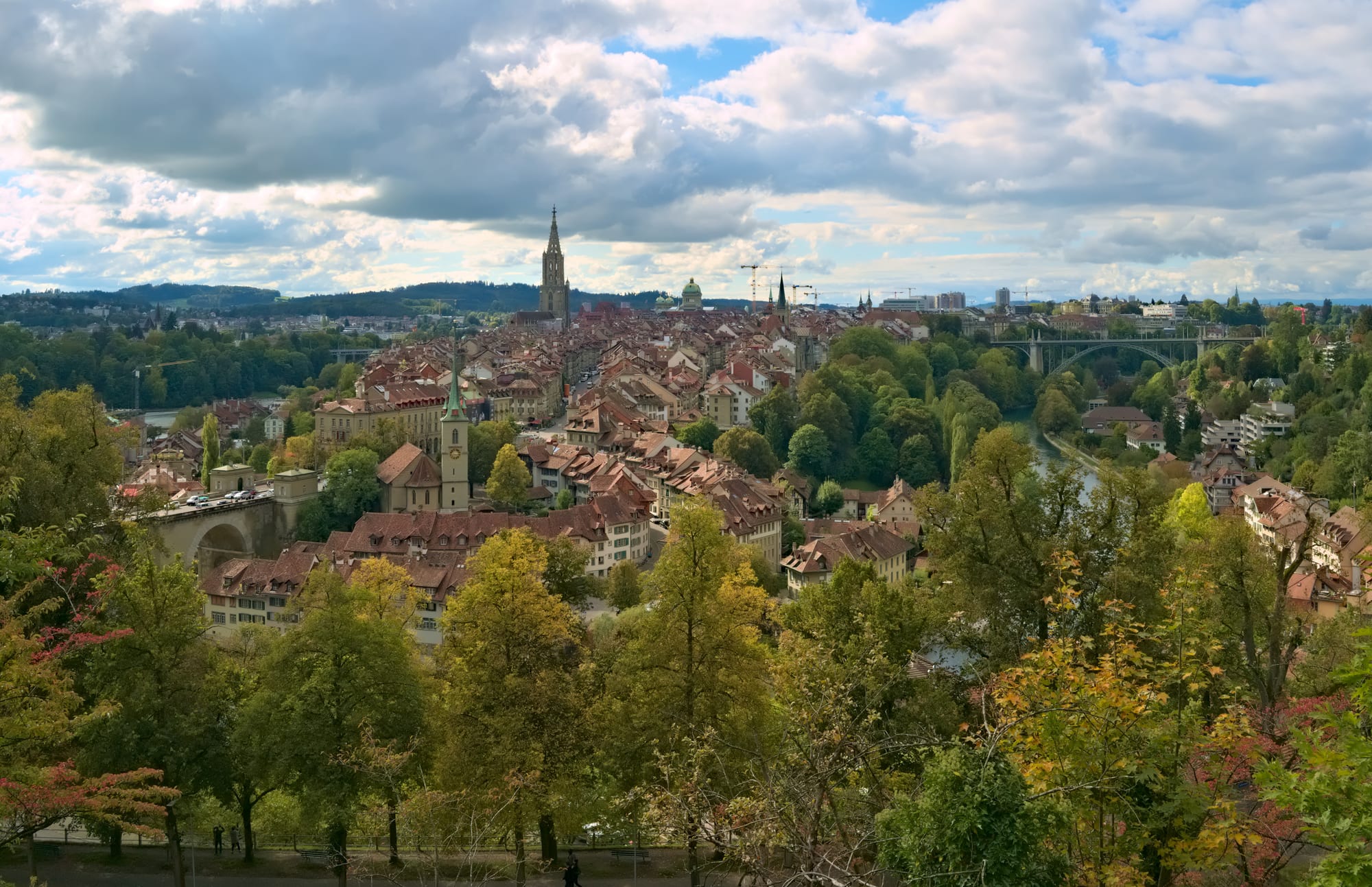
A country held together by agreement
Switzerland is a small, landlocked, mountainous country of about 9 million people with four national languages — German, French, Italian and Romansh — and no common ethnicity, religion or language to define it. What holds it together is a political arrangement: a federation of 26 cantons, each with wide powers, bound by a shared commitment to neutrality, direct democracy, and local self-rule. It is one of the oldest continuously functioning republics in the world, tracing its origin to an alliance sworn in 1291, and it has stayed out of every European war since 1815.
A short history
- 1291
The founding pact
Uri, Schwyz and Unterwalden swear a mutual-defence alliance.
- 1315–1499
Wars of independence
Victories over the Habsburgs and, later, the Empire.
- 15th–18th c.
The mercenary era
Swiss soldiers serve — and die — in Europe's armies.
- 1519–1531
The Reformation
Zwingli in Zurich, Calvin in Geneva; the cantons split by faith.
- 1798–1803
The Helvetic Republic
Napoleon imposes a centralised state; it fails.
- 1815
Neutrality guaranteed
The Congress of Vienna recognises permanent Swiss neutrality.
- 1847
The Sonderbund War
A brief civil war between Catholic and liberal cantons.
- 1848
The federal state
A modern constitution creates today's Switzerland.
- 1874 / 1891
Direct democracy
The referendum and the popular initiative are introduced.
- 2002
The United Nations
Switzerland joins, by referendum, having stayed out for decades.
The Old Confederacy
In 1291 the rural communities of Uri, Schwyz and Unterwalden — controlling the route over the St Gotthard pass — swore a pact of mutual defence, traditionally against Habsburg overlordship (the legend of William Tell belongs to this period). Over the next two centuries the alliance grew, adding Lucerne, Zurich, Bern and others, and repeatedly defeated Habsburg and Burgundian armies, winning effective independence from the Holy Roman Empire, formally recognised in 1648. The Confederacy was loose — a web of alliances among sovereign cantons and their subject territories, with no capital, no common army in peacetime, and no shared citizenship.
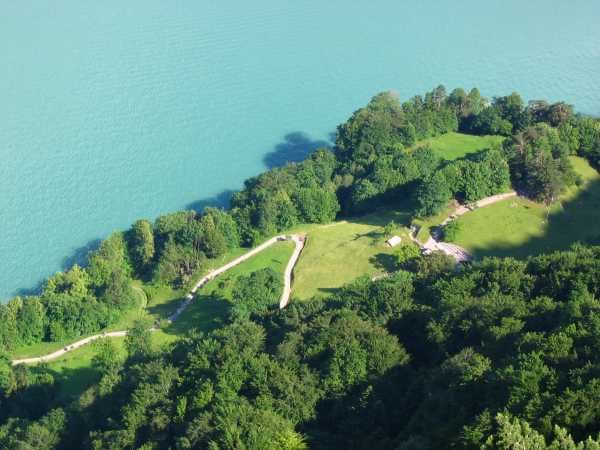
Mercenaries, Reformation, and Napoleon
For centuries Switzerland's main export was soldiers: Swiss pikemen and guardsmen served in the armies of France, the Papacy, Spain and others, and military service abroad was a pillar of the cantonal economies (the Vatican's Swiss Guard is the last survivor). A catastrophic defeat at Marignano in 1515, fighting the French, turned the Confederacy decisively toward neutrality. The Reformation then split it: Zurich under Zwingli and Geneva under Calvin became Protestant strongholds, while the forest cantons stayed Catholic, and the two blocs fought several internal wars. In 1798 French revolutionary armies invaded and imposed the centralised "Helvetic Republic", which Swiss of all stripes resisted; Napoleon restored a federal structure in 1803, and in 1815 the Congress of Vienna guaranteed Switzerland's borders and permanent neutrality.
The 1848 settlement
The old order finally broke in 1847, when seven Catholic-conservative cantons formed a separatist league, the Sonderbund, and the federal Diet sent an army to dissolve it. The war lasted under a month and killed about a hundred people. The victors used the moment to write a new constitution in 1848, creating the modern federal state: a bicameral parliament, a collegial seven-member executive (the Federal Council), a single currency and market, and Bern as the seat of government — while leaving the cantons control of most domestic matters. Referendums were added in 1874 and the citizen-initiated popular initiative in 1891, making Switzerland the most thoroughly direct democracy in the world.

Neutrality and the wars
Switzerland stayed out of both world wars, mobilising its militia army to deter invasion while trading with both sides — a record later criticised, especially for turning back Jewish refugees at the border and for Swiss banks' handling of Nazi gold and dormant accounts, issues addressed by an official inquiry and a settlement in the 1990s. During the Cold War, armed neutrality became near-sacred: Switzerland built fallout shelters for its entire population, kept its distance from international organisations, and only joined the United Nations in 2002, after a referendum. Women did not get the vote in federal elections until 1971, and in one canton not until 1990.
Switzerland now
Switzerland is not in the European Union and has repeatedly declined to join, managing its relationship with the bloc — its largest trading partner — through a thicket of bilateral treaties that are periodically renegotiated. Its long tradition of banking secrecy was largely dismantled under US and EU pressure after 2008. Politically it is unusually stable: the same four parties have shared the Federal Council for decades under an informal "magic formula", and major decisions routinely go to referendum, from immigration quotas to corporate tax to whether to buy new fighter jets.
What Switzerland carries
Switzerland was never founded on a shared nation; it was assembled from German-, French- and Italian-speaking valleys that found it advantageous to stand together, and it has kept working by pushing decisions down to the canton and the commune and out to the voters. Neutrality, once a survival strategy for a small state among great powers, became an identity — and, like direct democracy and decentralisation, one the Swiss have been notably unwilling to trade away.