Food · Switzerland
Switzerland: Food and the National Dish
Melted cheese eaten straight from the pot, a mountain dish shared by every one of the country's linguistic regions
By Worldlore Editorial · 16 September 2026
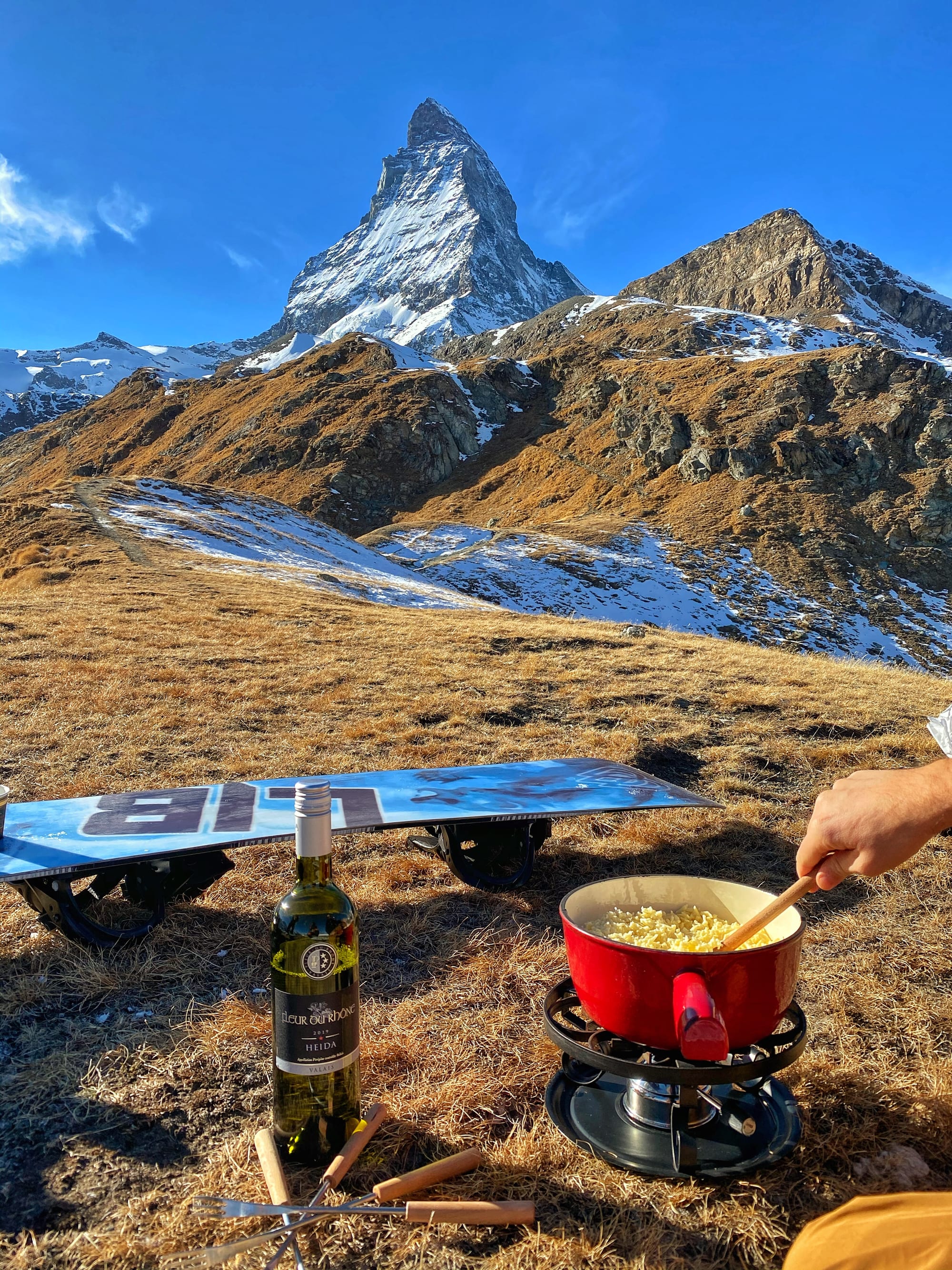
A cuisine that unites four linguistic regions around cheese
Switzerland's four official language regions, German, French, Italian and Romansh, each carry genuinely distinct culinary influences, but melted cheese, eaten communally from a shared pot, is one of the few food traditions found nationwide regardless of which part of the country you're in.
The national dish: cheese fondue
Cheese fondue, a blend of melted Gruyère and Emmental (or other regional cheeses) mixed with white wine and kirsch, eaten by dipping bread into the pot with long forks, is Switzerland's national dish. Genuinely rooted in Alpine farming communities, where hardened winter cheese and stale bread were softened together into a shared meal, fondue is eaten communally by tradition, with a lighthearted local rule that anyone who drops their bread into the pot owes a round of drinks.
Cheese, potatoes and a genuinely mountain-shaped pantry
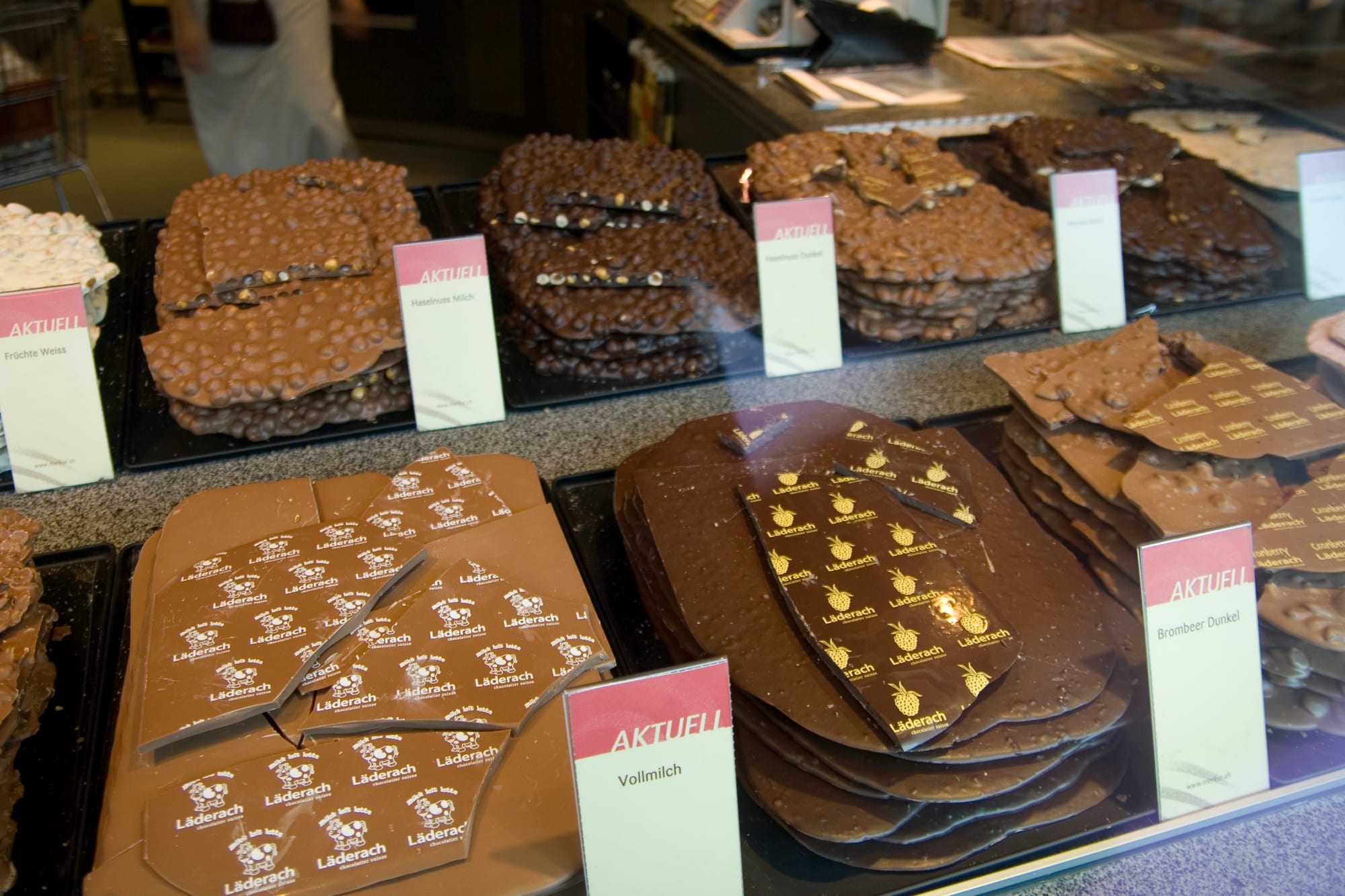
Cheese, in fondue, raclette and countless other forms, and potatoes anchor much of Swiss cooking, alongside dried and cured meats suited to preservation through Alpine winters. Chocolate, produced to a globally recognised standard, and dairy more broadly round out a pantry shaped directly by the country's mountain farming tradition.
History behind the pot
Fondue developed among Alpine farming communities as a practical way to use up hardened winter cheese and day-old bread, melting the cheese with wine to soften both into a single shared meal during the colder months when fresh food was scarce. Switzerland's chocolate industry, meanwhile, developed through 19th-century innovations including the invention of milk chocolate and conching, a manufacturing process still associated with the country's reputation for chocolate quality today.
Dishes to know
Five more to recognise across Switzerland:
- Raclette — cheese melted and scraped onto potatoes, pickles and
cured meat, a close cousin to fondue.
- Rösti — a fried, shredded potato cake, especially associated with
German-speaking Switzerland.
- Swiss chocolate — internationally recognised for its quality, a
genuine point of national pride.
- Zürcher Geschnetzeltes — sliced veal in a creamy mushroom sauce,
a specialty from Zürich.
- Birchermüesli — a raw oat, fruit and nut breakfast dish, invented
by a Swiss physician in the early 20th century.
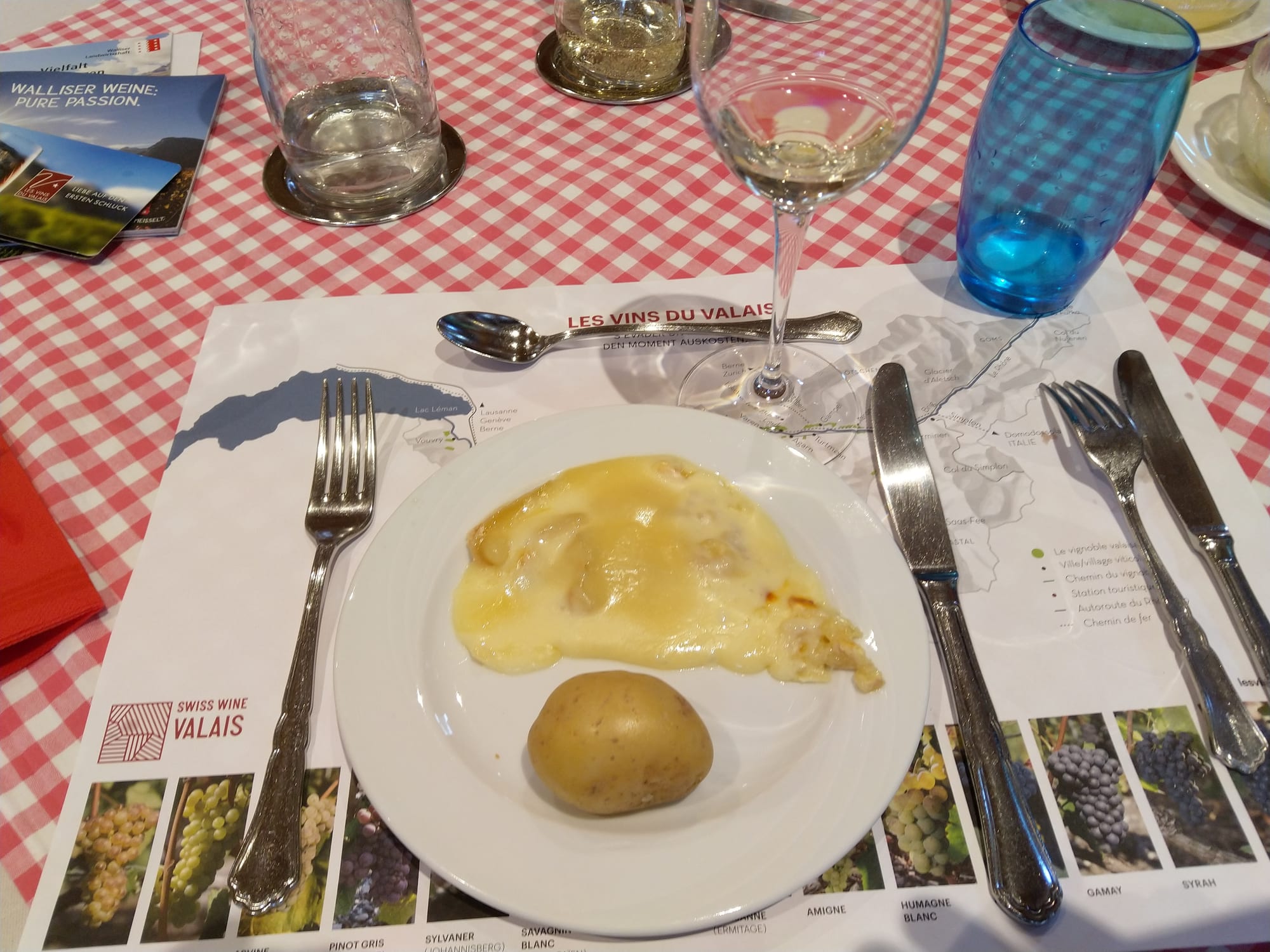
Drinks
Swiss wine, produced in regions including Valais, is a genuine local product rarely exported and mostly consumed domestically. Coffee and locally distilled spirits like kirsch, used in fondue itself, are also commonly enjoyed.
Eating as a traveller
Vegetarians will find cheese and potato-based dishes like fondue and raclette genuinely accessible, though cured meats appear alongside many traditional dishes. Tap water is safe to drink directly across Switzerland. Sharing a fondue pot with others, following the local custom around dropped bread, is a genuine and enjoyable way to experience Swiss dining culture.
What to take from the table
Cheese fondue, eaten communally from one shared pot, is the dish that most unites Switzerland's four distinct linguistic regions around a single, genuinely shared table.