History · Sudan
Sudan: The Land of Kush
Home of the kingdoms of Kush and a hundred pyramids — an Anglo-Egyptian condominium, the largest country in Africa until the south seceded, ruled for 30 years by an Islamist general, freed by a revolution in 2019, and then torn apart by a war between two armies
By Worldlore Editorial · 10 September 2026
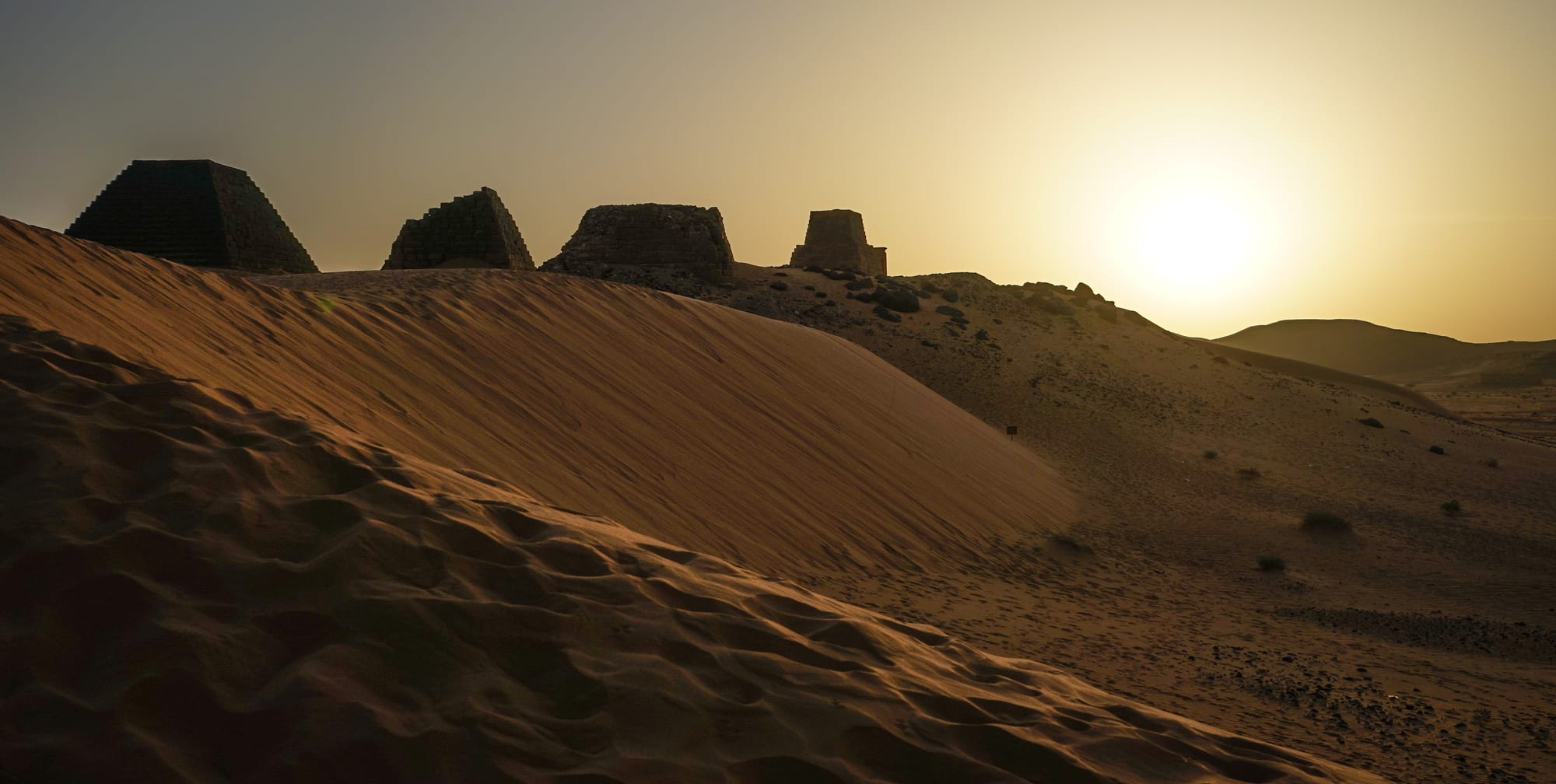
The bridge between Africa and the Arab world
Sudan straddles the Nile in north-east Africa, at the meeting point of the Arab and sub-Saharan African worlds, of Islam and Christianity, of desert and savanna. Until South Sudan seceded in 2011 it was the largest country in Africa. Its roughly 48 million people are divided between an Arabic-speaking, Muslim majority concentrated along the Nile and a great many other peoples — in Darfur, the Nuba Mountains, the east and the far south of what remains — and the central thread of its modern history is the failure of successive governments in Khartoum to accommodate that diversity.
A short history
- c. 2500 BCE–350 CE
Kush
The kingdoms of Kerma, Napata and Meroë; Kushite pharaohs rule Egypt c. 750 BCE.
- 6th–15th c.
Christian Nubia
Christian kingdoms along the Nile.
- 1504–1821
The Funj sultanate
A Muslim state centred on Sennar.
- 1821
Turco-Egyptian conquest
Egypt annexes Sudan; Khartoum is founded.
- 1885–1898
The Mahdist state
A religious revolt expels the Egyptians; Britain reconquers.
- 1899–1956
Anglo-Egyptian condominium
Sudan is jointly ruled by Britain and Egypt.
- 1956
Independence
Sudan becomes a republic; civil war in the south begins.
- 1989
Bashir's coup
An Islamist-backed military regime takes power.
- 2003
Darfur
A rebellion and a scorched-earth counter-insurgency; genocide charges.
- 2019
Revolution
Mass protests and the army remove al-Bashir.
- 2023
The war
The army and the paramilitary RSF turn on each other.
Kush, Nubia, and the Funj
The middle Nile was home to one of Africa's earliest states: the Kingdom of Kush, based successively at Kerma, Napata and Meroë, which around 750 BCE conquered Egypt and ruled it as the 25th Dynasty, and which later developed its own script and an iron industry. After Meroë's decline, Christian Nubian kingdoms held the river valley for nearly a thousand years before gradually giving way, from the 14th century, to Arab migration and Islam. The Funj sultanate of Sennar then dominated the region until 1821, when the army of Muhammad Ali of Egypt conquered it, founded Khartoum, and ran Sudan as a source of slaves, ivory and gold.
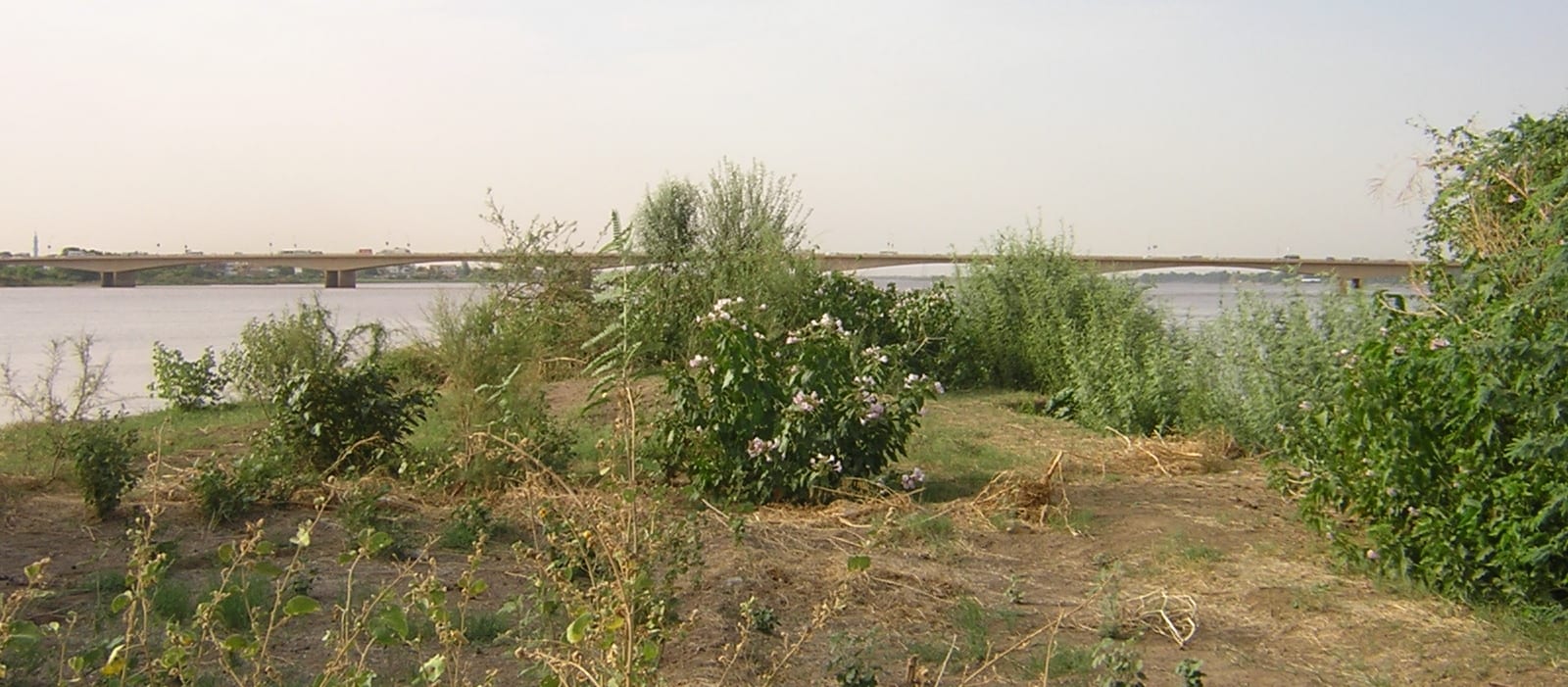
The Mahdi, and the condominium
In 1881 a religious leader, Muhammad Ahmad, declared himself the Mahdi (the divinely guided redeemer) and led a revolt that swept away Egyptian rule; his forces took Khartoum in 1885, killing the British governor Charles Gordon. The Mahdist state ran Sudan for 13 years until an Anglo-Egyptian army under Kitchener crushed it at Omdurman in 1898. Sudan was then governed as a formal "condominium" of Britain and Egypt, but effectively by Britain, which — as in southern Sudan — administered the north and the south separately, developed cotton irrigation schemes along the Nile, and left the peripheries neglected.
Independence and its wars
Sudan became independent on 1 January 1956. Almost immediately, southern soldiers mutinied against domination by the Arab, Muslim north, beginning the first civil war (1955–72). Military and civilian governments alternated in Khartoum; the first war ended with a grant of southern autonomy, which President Nimeiry then eroded, imposing sharia law in 1983 and reigniting the conflict as the far longer second civil war. Meanwhile the state's failure to develop or protect its other margins bred rebellions elsewhere.
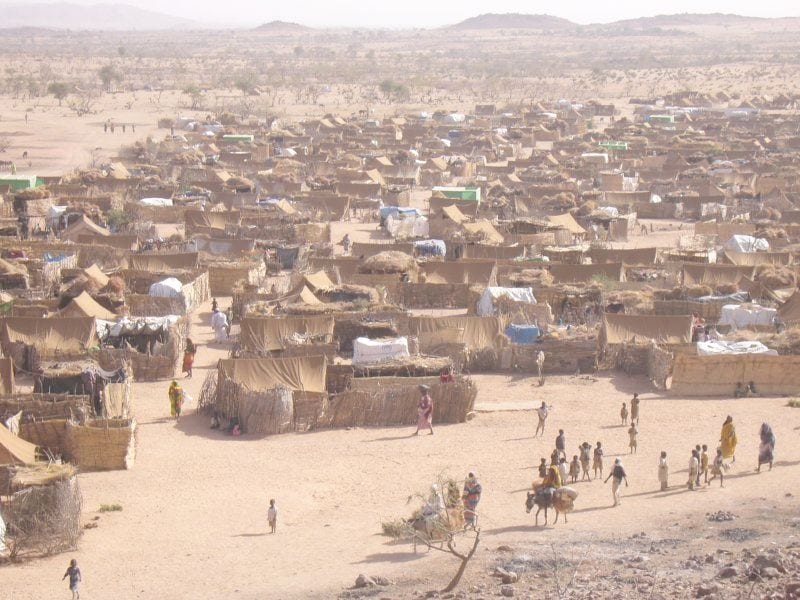
Bashir, Darfur, and the split
In 1989 Brigadier Omar al-Bashir seized power in a coup backed by Hassan al-Turabi's National Islamic Front, imposing an Islamist agenda, hosting Osama bin Laden in the 1990s, and drawing US sanctions and, later, an International Criminal Court arrest warrant. In Darfur from 2003, the government and Janjaweed militias waged a campaign against rebel groups and civilians that killed an estimated 200,000–300,000 people and displaced millions. In 2005 a peace deal ended the north–south war and set up the referendum that led, in 2011, to South Sudan's independence — taking with it about three-quarters of the country's oil.
Revolution, then war
Losing the oil deepened an economic crisis, and in December 2018 protests over bread prices grew into a nationwide movement. In April 2019 the army removed al -Bashir; protesters kept up a sit-in outside military headquarters until security forces massacred over 100 people in June. A power-sharing deal between the military and civilians followed, but the generals seized full power again in an October 2021 coup. Then the two men who had led that coup fell out: in April 2023 the regular army (SAF) under Abdel Fattah al-Burhan and the paramilitary Rapid Support Forces (RSF, descended from the Janjaweed) under Mohamed Hamdan "Hemedti" Dagalo went to war. The fighting has devastated Khartoum, brought renewed ethnic massacres in Darfur, driven the world's largest displacement crisis, and pushed parts of the country into famine.
What Sudan carries
Sudan sits on a fault line — Arab and African, Muslim and Christian, river and periphery — and its governments in Khartoum have repeatedly tried to hold the country together by imposing one identity, from the Turco-Egyptians to al-Bashir. Each attempt produced a war on the margins: the south, which left in 2011; Darfur; the Nuba Mountains. The 2019 revolution briefly offered another path. The 2023 war between the state's own two armies is the collapse of even that.