Daily Life · Sudan
Sudan: Family, Coffee, and a Country at War
A society organised around wide extended-family networks and the daily ritual of jabana coffee, and, since April 2023, the site of what UN agencies have called the world's largest displacement crisis, with millions of households living in camps, with relatives, or across a border rather than at home
By Worldlore Editorial · 30 September 2026
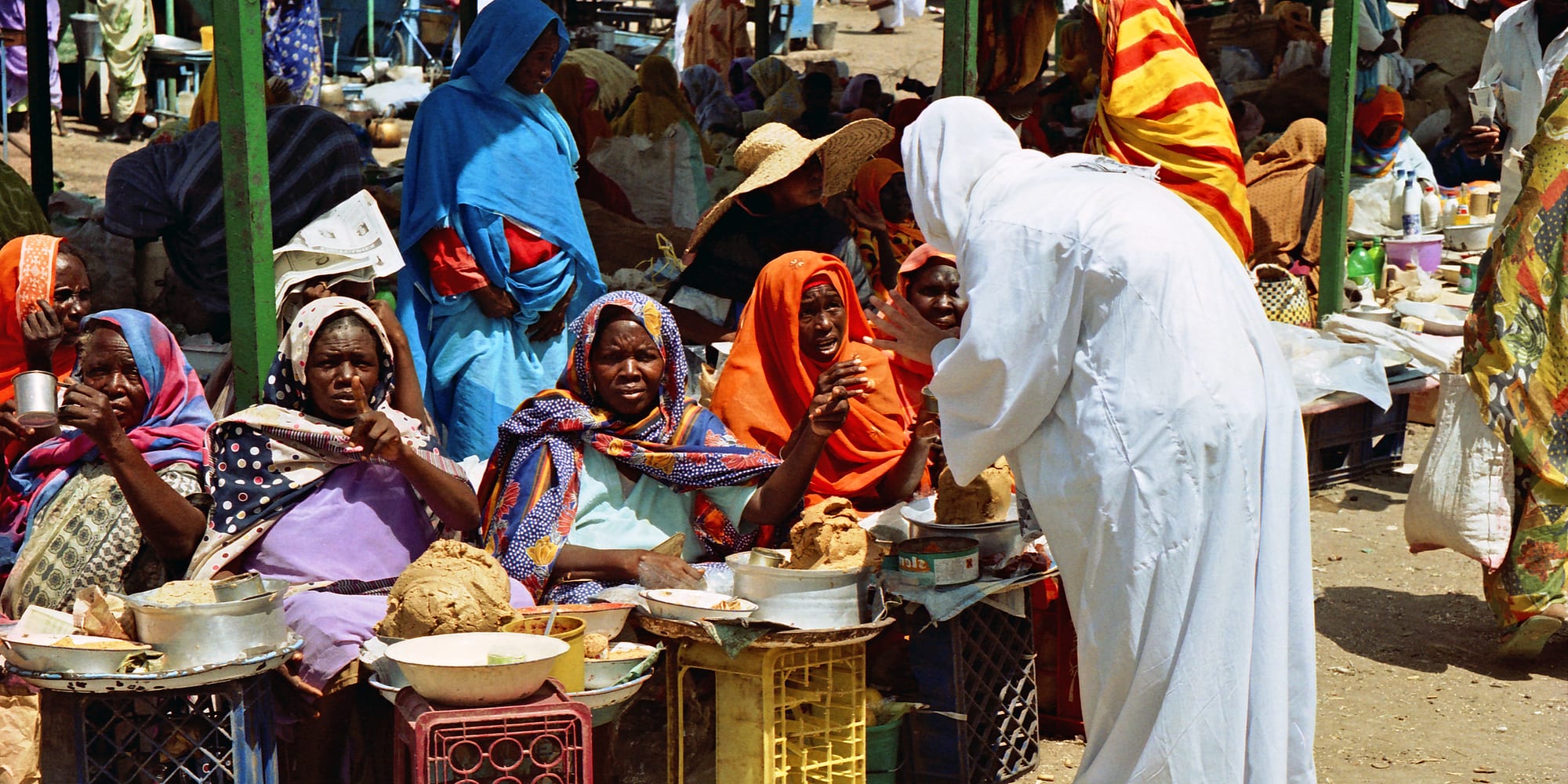
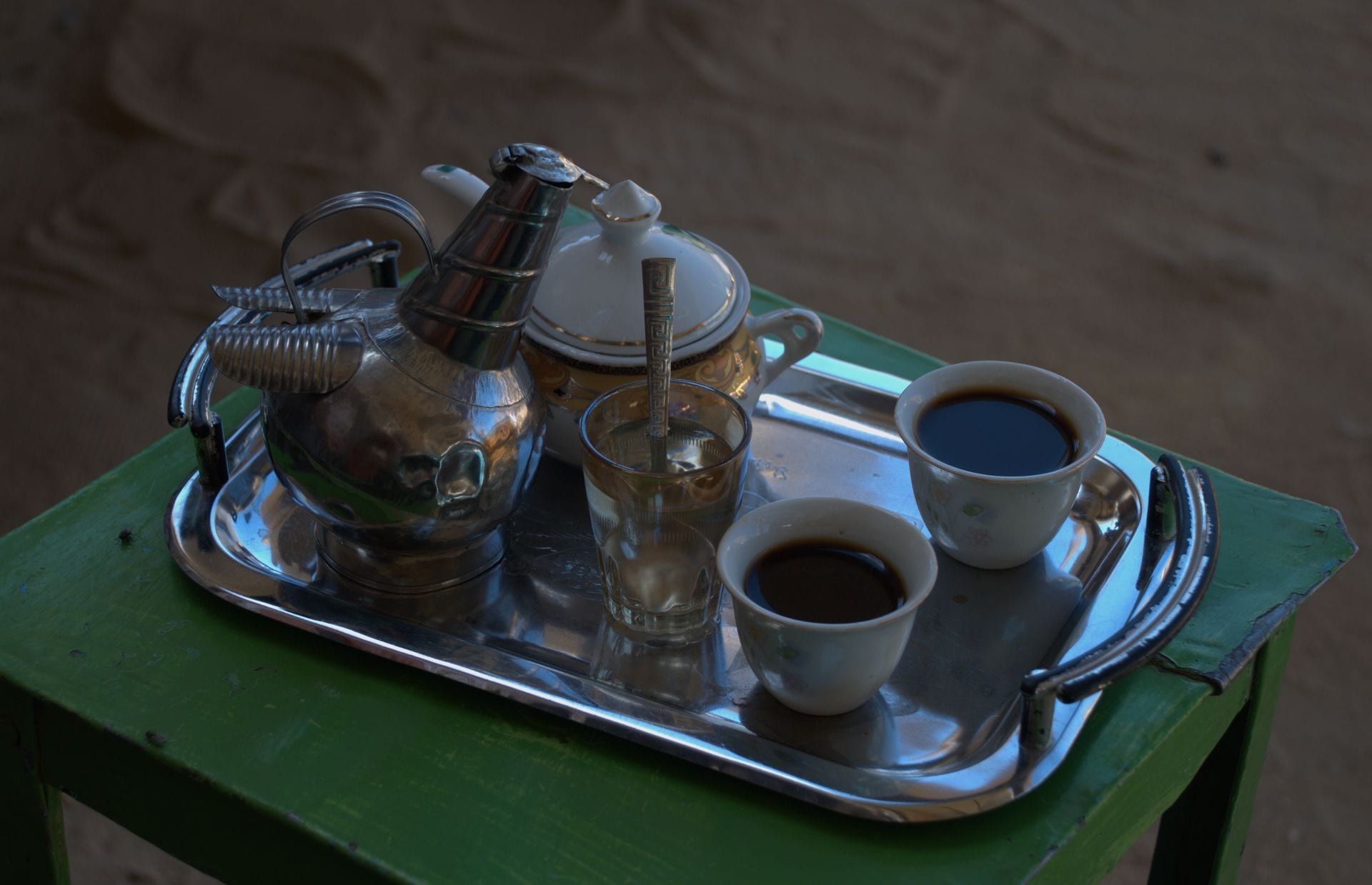
Family and kinship organise daily life in Sudan more thoroughly than almost anything else: identity, work, and marriage all run through a wide network of relatives that extends well past parents and siblings to uncles, cousins, and in-laws several generations deep. Coffee, brewed strong and spiced in a long-necked clay or metal pot called a jabana and poured into small cups, is a common daily gesture of hospitality, offered to family and visitors alike. Since April 2023, though, war between the Sudanese army and the paramilitary Rapid Support Forces has upended what an ordinary day means for a very large share of the population, driving what the United Nations describes as the world's largest displacement crisis. What follows describes both how life in Sudan has long been organised and how thoroughly the war has since disrupted it — the two are no longer separable.
Family and home life
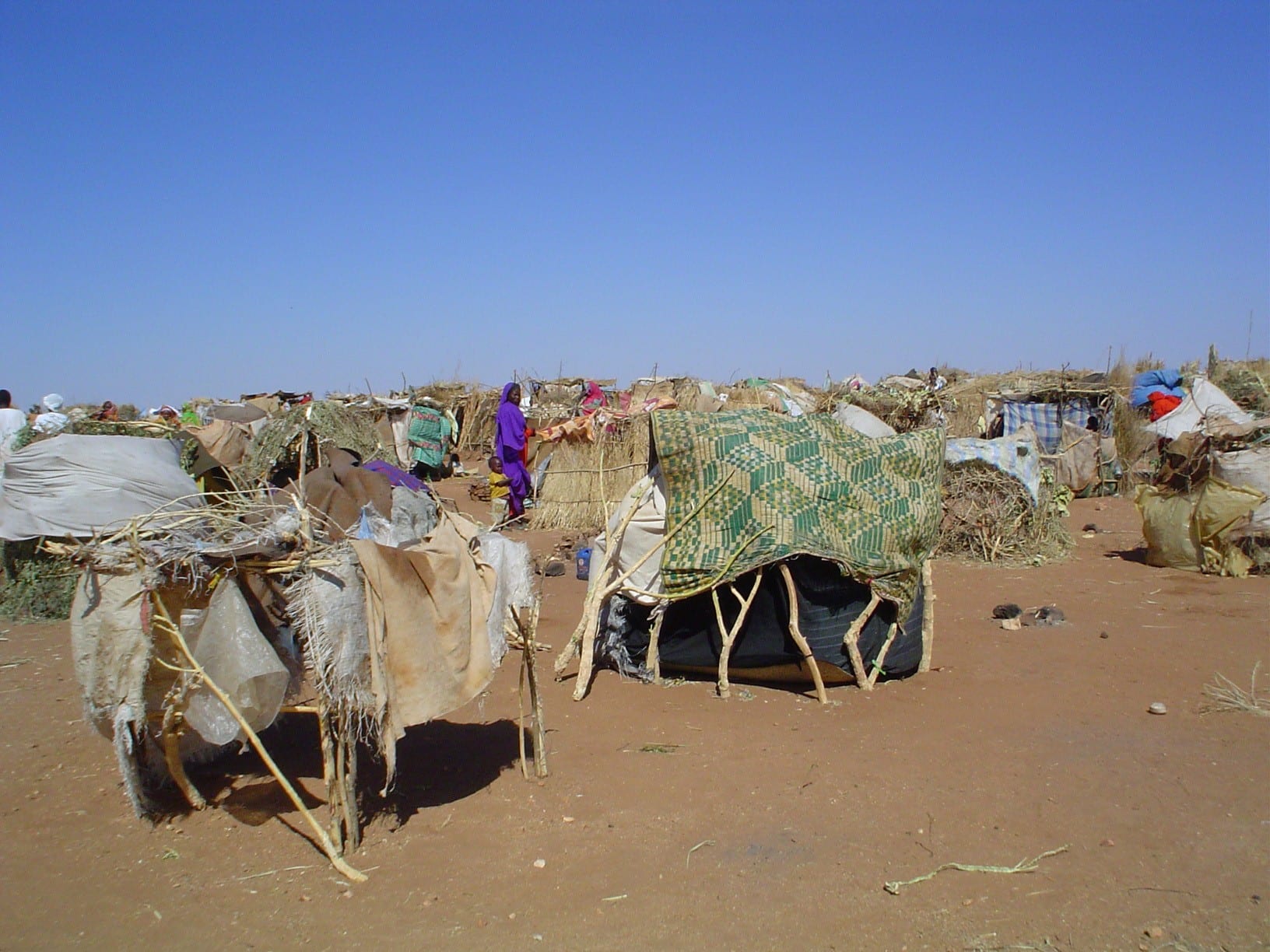
A person's standing and opportunities in Sudan are tied closely to family reputation and history, and the kin network, not the individual household, is the country's basic social unit. It has traditionally been common for a newly married couple to live with the wife's family for at least a year, or until their first child is born, before establishing a home of their own. The daily coffee ritual, prepared and served with care, functions as a social institution in itself, a routine that has persisted even through displacement. That is a meaningful fact, because displacement is now a defining feature of Sudanese family life: according to the International Organization for Migration, around 8.6 million people remained displaced inside Sudan in September 2026, down from a peak of about 11.6 million in January 2025 as more than five million people returned home, many of them to Khartoum, and millions more remain refugees in neighbouring countries. Extended family networks have absorbed much of this strain directly, hosting displaced relatives in already stretched homes rather than leaving the response entirely to camps.
Work, school and the rhythm of the day
Before the war, Sudan's official working week ran Sunday to Thursday, with Friday and Saturday as the weekend. The economy rested on farming, sorghum, sesame, gum arabic and livestock chief among them, alongside gold mining and remittances from Sudanese working abroad. The war has devastated all of it: fighting, looting and displacement have interrupted planting and harvests in some of the country's most productive regions, and famine has been formally confirmed in parts of Darfur, with nearly 19.5 million people, roughly two in five Sudanese, facing acute food insecurity in 2026 according to UN agencies (WFP, FAO and UNICEF, May 2026). Schooling has been hit especially hard: many schools have closed and, according to UNICEF, more than 1,800 were still in use as shelters for displaced families or occupied as of January 2026. By then almost half of school-aged children had gone close to 500 days without attending school, what Save the Children called one of the world's longest school closures.
Community life and public spaces
Markets have long been the backbone of daily public life in Sudanese towns and cities, souks selling everything from cloth to spices to household goods, and functioning as much as a social space as a commercial one. Mosques anchor neighbourhood religious life, and Sudan is a centre of Sufi Islam: the Friday dhikr at the tomb of Hamad al-Nil in Omdurman, with drumming, chanting and whirling dervishes dressed in green, drew large crowds in calmer times. Fighting has emptied or damaged much of this public life in the hardest-hit areas, particularly in Khartoum, though conditions vary sharply by region and have shifted since the army recaptured the capital: recent reporting describes steady traffic and reopened shopfronts in parts of Khartoum, even as food remains scarce and expensive and many residents are still displaced elsewhere. Fighting has continued in Darfur and Kordofan.
Free time and weekends
Football has long been the country's most widely followed sport, and weekends built around Friday and Saturday traditionally centred on extended family visits and large, multi-day wedding celebrations, still one of the biggest events in Sudanese social life where they can go ahead. Where security and circumstances allow, these gatherings continue, though for millions of displaced families, free time now happens in camps, with host relatives, or across a border rather than at home, and the ordinary rhythm of a weekend has been replaced by the far less predictable rhythm of the conflict itself.
A visitor's ordinary day
Most governments currently advise against all travel to Sudan, and this guidance should be treated as current rather than aspirational: the health system has largely collapsed in conflict-affected areas, consular support on the ground is minimal, and safe travel within the country cannot currently be arranged for visitors. Sudan has long been a cash-only economy for outsiders, since foreign cards have generally not worked there, and wartime shortages of cash have made this harder still. Khartoum's international airport, closed and damaged earlier in the war, reopened to domestic flights in October 2025 and to international flights in April 2026, though it was hit again by a drone attack in May 2026, and the government returned to the capital in January 2026, while Port Sudan on the Red Sea has served as the main functioning gateway for aid and officials. None of this amounts to a basis for leisure travel while the war continues.
What to take away
What an ordinary day in Sudan has always rested on, a wide family network and the daily ritual of a shared cup of coffee, has proved durable enough to persist through displacement and war, even as the war itself has left millions of Sudanese living that ordinary day away from home, in circumstances no custom was built to withstand.