History · Sri Lanka
Sri Lanka: The Island of Serendib
A Buddhist island civilisation more than two thousand years old — colonised in turn by the Portuguese, Dutch and British, independent since 1948, and scarred by a 26-year civil war between the Sinhalese state and Tamil separatists
By Worldlore Editorial · 10 September 2026
An old civilisation on a small island
Sri Lanka is a tear-shaped island off the south-eastern tip of India, about 22 million people, with a long recorded history and one of the world's oldest continuous Buddhist traditions. Its population is roughly three-quarters Sinhalese (mostly Buddhist), with Tamil (mostly Hindu) and Muslim minorities; the relationship between the Sinhalese majority and the Tamil minority, and the way colonial and post-colonial politics shaped it, produced a civil war that lasted a generation. This account outlines that history and attributes disputed points, particularly on the war's final phase.
A short history
- c. 500 BCE
Settlement traditions
Indo-Aryan and Dravidian arrivals; the Sinhalese identity forms.
- 3rd century BCE
Buddhism
Introduced under the emperor Ashoka; Anuradhapura becomes a great city.
- c. 300 BCE–1200 CE
The classic kingdoms
Anuradhapura, then Polonnaruwa; vast irrigation works.
- 1505–1658
The Portuguese
Control the coast; the Kingdom of Kandy holds the interior.
- 1658–1796
The Dutch
Replace the Portuguese on the coast.
- 1796–1948
The British
Take the coast, then conquer Kandy in 1815; unify the island; plantations.
- 1948
Independence
Ceylon becomes a dominion, then a republic (1972, renamed Sri Lanka).
- 1983–2009
The civil war
The government against the Tamil Tigers (LTTE).
- 2004
The tsunami
Around 35,000 killed in Sri Lanka.
- 2022
Economic collapse
Default, shortages, and mass protests topple the president.
The kingdoms and the tank civilisation
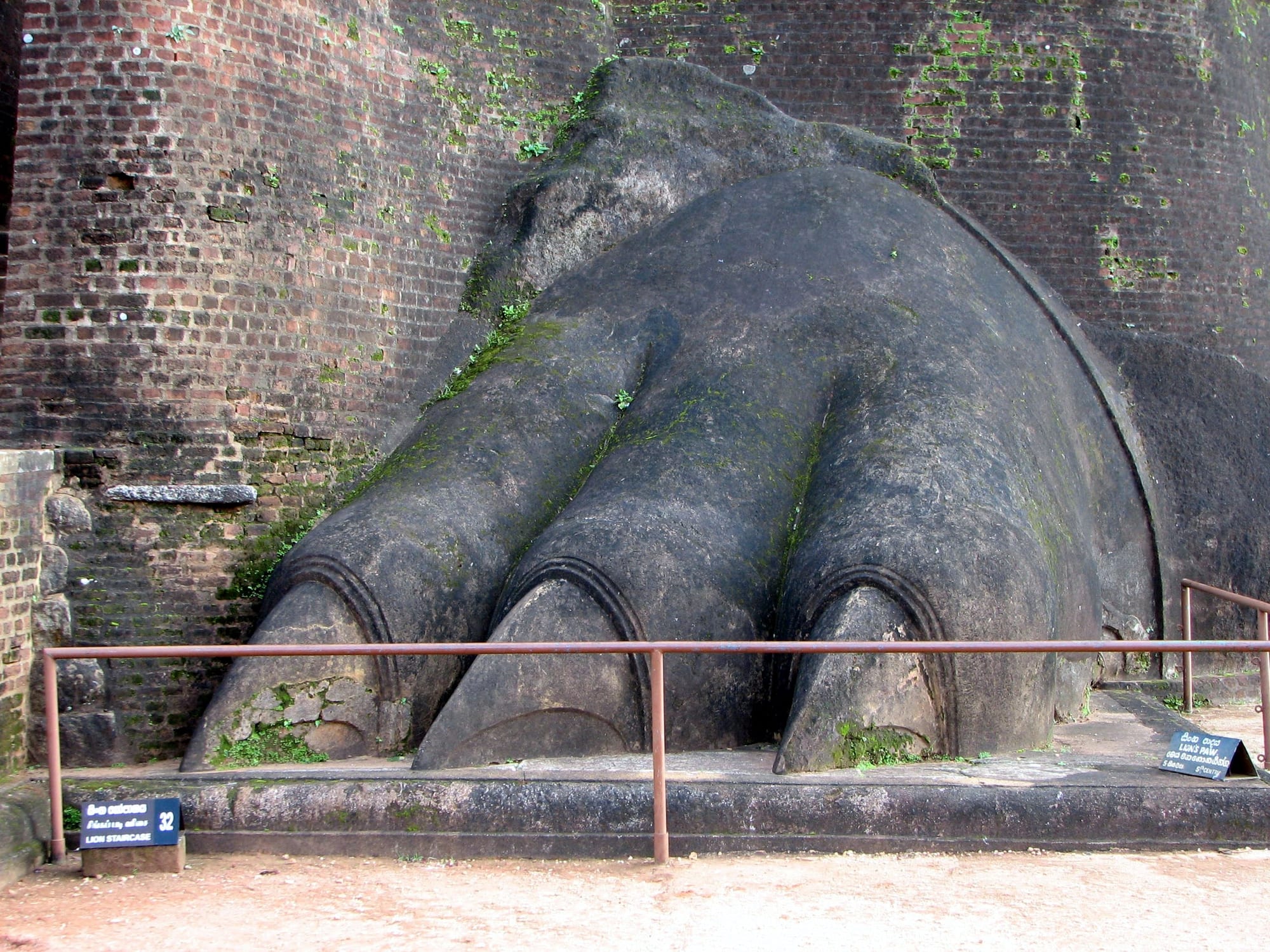
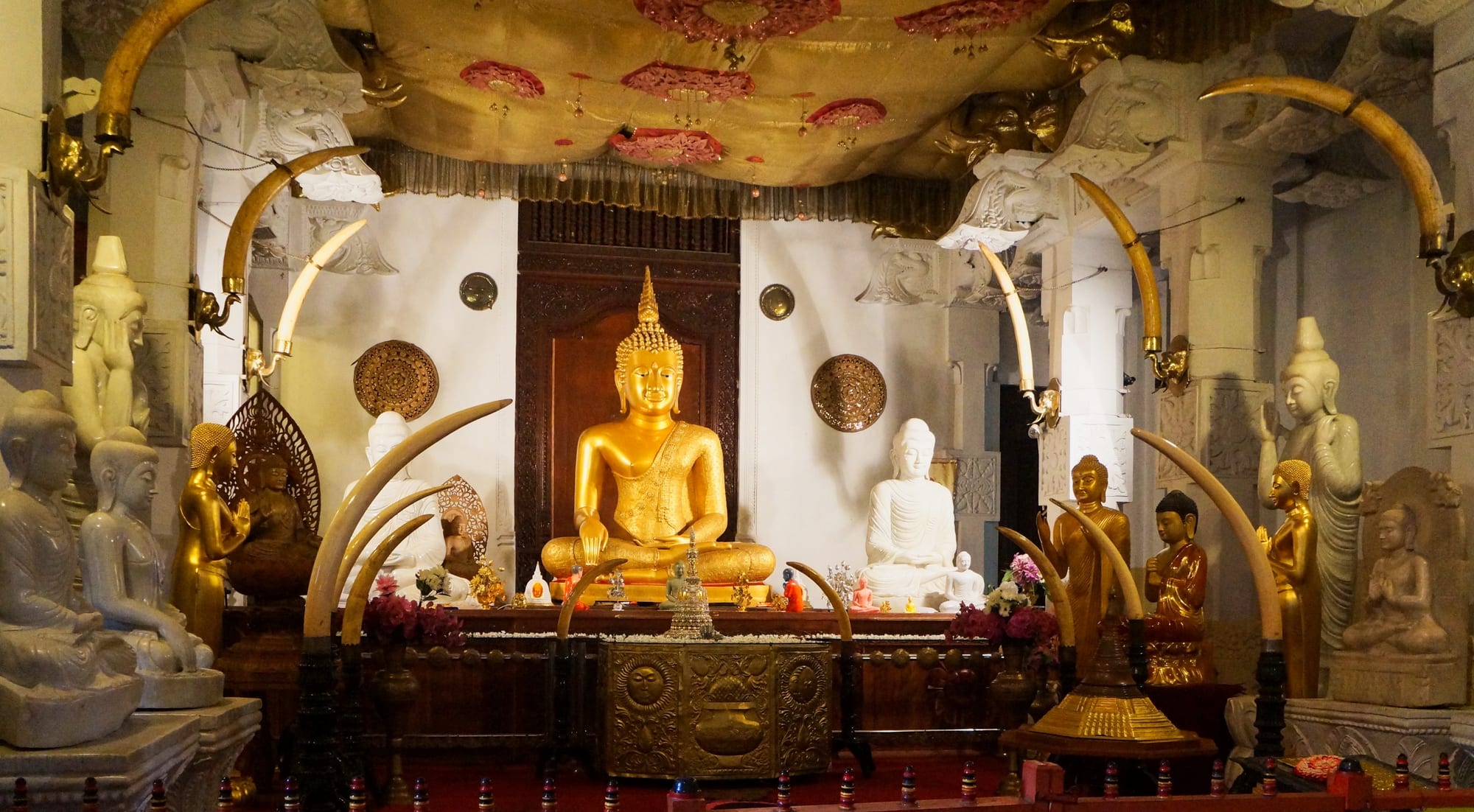
Sinhalese chronicles trace the arrival of the founder-figure Vijaya from northern India around the 5th century BCE, and Buddhism was established in the 3rd century BCE. The kingdom of Anuradhapura, and later Polonnaruwa, built a remarkable hydraulic civilisation — huge reservoirs ("tanks") and canals that turned the dry zone into rice country and sustained monumental Buddhist architecture for over a millennium. South Indian influence and periodic Chola invasions were constant; a Tamil kingdom based at Jaffna emerged in the north by the 13th century. Repeated invasions and the breakdown of the irrigation system pushed the Sinhalese population south-west toward the wet zone, where the Kingdom of Kandy later held out in the hills.
Three colonisers
The Portuguese arrived in 1505 and took the coastal lowlands and the cinnamon trade, converting many to Catholicism; the Dutch East India Company displaced them in the mid-17th century and tightened the plantation economy. The independent Kingdom of Kandy in the central highlands survived both. Britain took the Dutch possessions in 1796, and in 1815 — with the help of disaffected Kandyan nobles — finally conquered Kandy, unifying the whole island under one rule for the first time in centuries. The British developed coffee and then, after a leaf blight, tea plantations in the hill country, bringing in large numbers of Tamil labourers from southern India (a community distinct from the long-established Sri Lankan Tamils of the north and east).
Independence and the drift to war
Ceylon gained independence peacefully in 1948. Post-independence politics saw Sinhalese-nationalist parties promote the Sinhala language and Buddhism in ways Tamils experienced as discrimination: the 1956 "Sinhala Only" language act, university admission changes, and state-sponsored settlement of Sinhalese in Tamil-majority areas. Anti-Tamil riots recurred, culminating in the "Black July" pogrom of 1983, in which mobs killed hundreds or thousands of Tamils in Colombo and elsewhere while the state stood back. Black July is generally taken as the start of the full civil war, and it drove many Tamils to support armed separatism.
The civil war
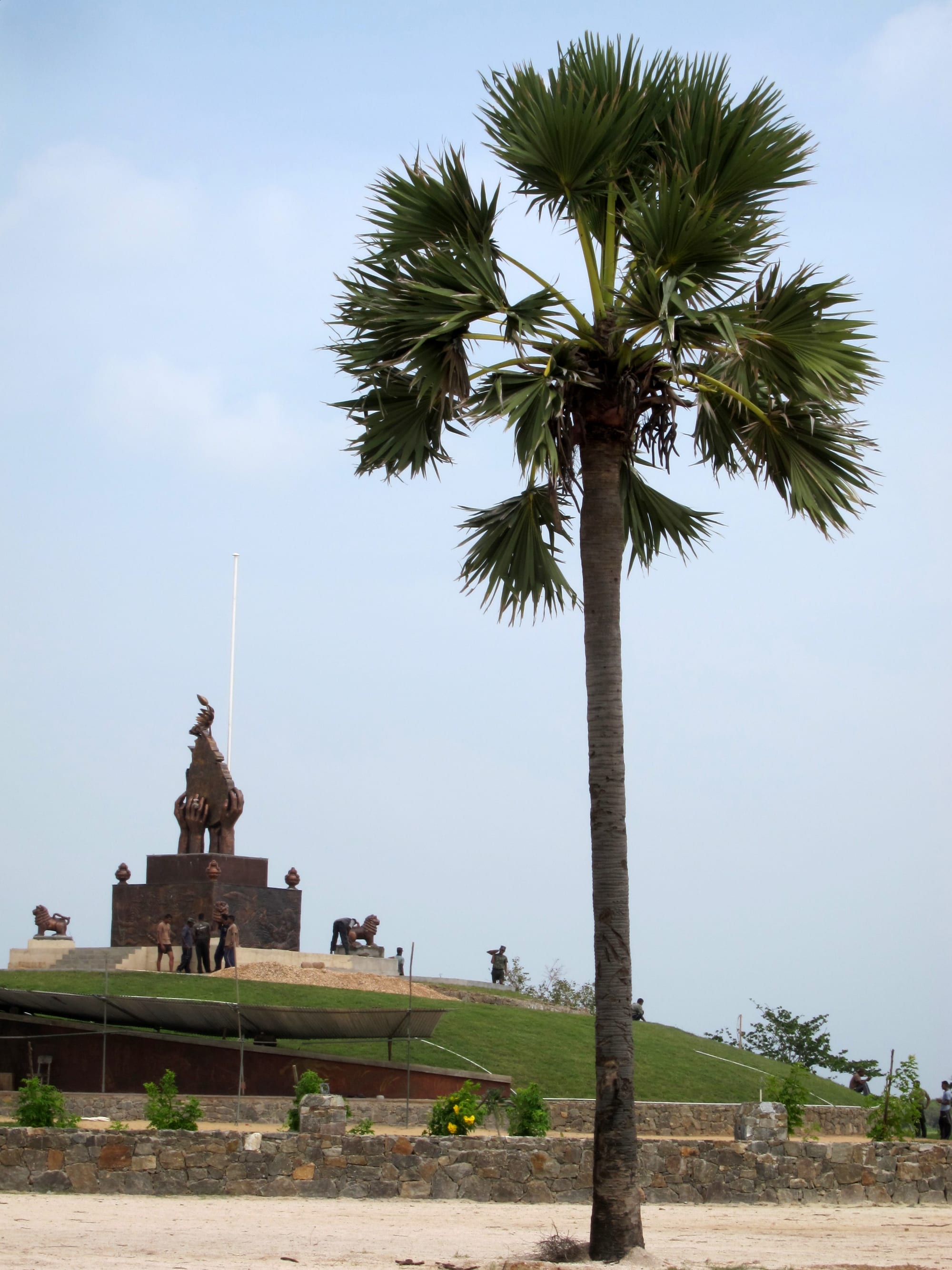
The Liberation Tigers of Tamil Eelam (LTTE, the "Tamil Tigers") became the dominant separatist group, fighting for an independent Tamil state in the north and east. The war ran, with intervals, from 1983 to 2009: it included an Indian peacekeeping intervention that turned into a war against the LTTE (1987–90), the Tigers' pioneering use of suicide bombing, the assassination of an Indian prime minister and a Sri Lankan president, and de facto LTTE rule over large areas. A 2002 Norwegian-brokered ceasefire broke down, and from 2006 the government launched a final offensive. The LTTE was militarily destroyed in May 2009. The last months were extremely bloody: UN and other estimates put civilian deaths in the final phase in the tens of thousands, and both the government forces and the LTTE were accused of war crimes — shelling of civilian "no-fire zones" and hospitals, and the LTTE's use of civilians as human shields and shooting of those who fled. Sri Lanka's governments have rejected international investigations as biased.
After the war
The government of Mahinda Rajapaksa, credited by many Sinhalese with winning the war, consolidated power and leaned toward China for infrastructure loans, including the Hambantota port later leased to a Chinese firm when debts could not be repaid. The 2004 Indian Ocean tsunami had already killed around 35,000 people on the island. In 2019 Easter Sunday bombings by a local Islamist group killed over 260. In 2022 years of economic mismanagement, tax cuts, the loss of tourism during the pandemic, and a foreign-exchange crisis produced Sri Lanka's first-ever sovereign default, with severe shortages of fuel, food and medicine; a mass protest movement, the Aragalaya, occupied central Colombo and forced President Gotabaya Rajapaksa to flee and resign. A 2024 election then brought a leftist outsider, Anura Kumara Dissanayake, to the presidency.
What Sri Lanka carries
Sri Lanka has one of Asia's oldest state traditions and a strong record on health and literacy, but its post-independence politics entrenched a majority-minority divide that the colonial period had sharpened, and the result was a 26-year war whose ending is still disputed. Reconciliation between communities, accountability for the war, and an economy rebuilt after the 2022 collapse are the tasks the island now faces.