History · South Korea
South Korea: From Ruin to Powerhouse
Half of a peninsula partitioned by outsiders in 1945 — a war that flattened it, decades of military dictatorship, an economic transformation with few parallels in history, and a democracy won on the streets in 1987
By Worldlore Editorial · 19 September 2026
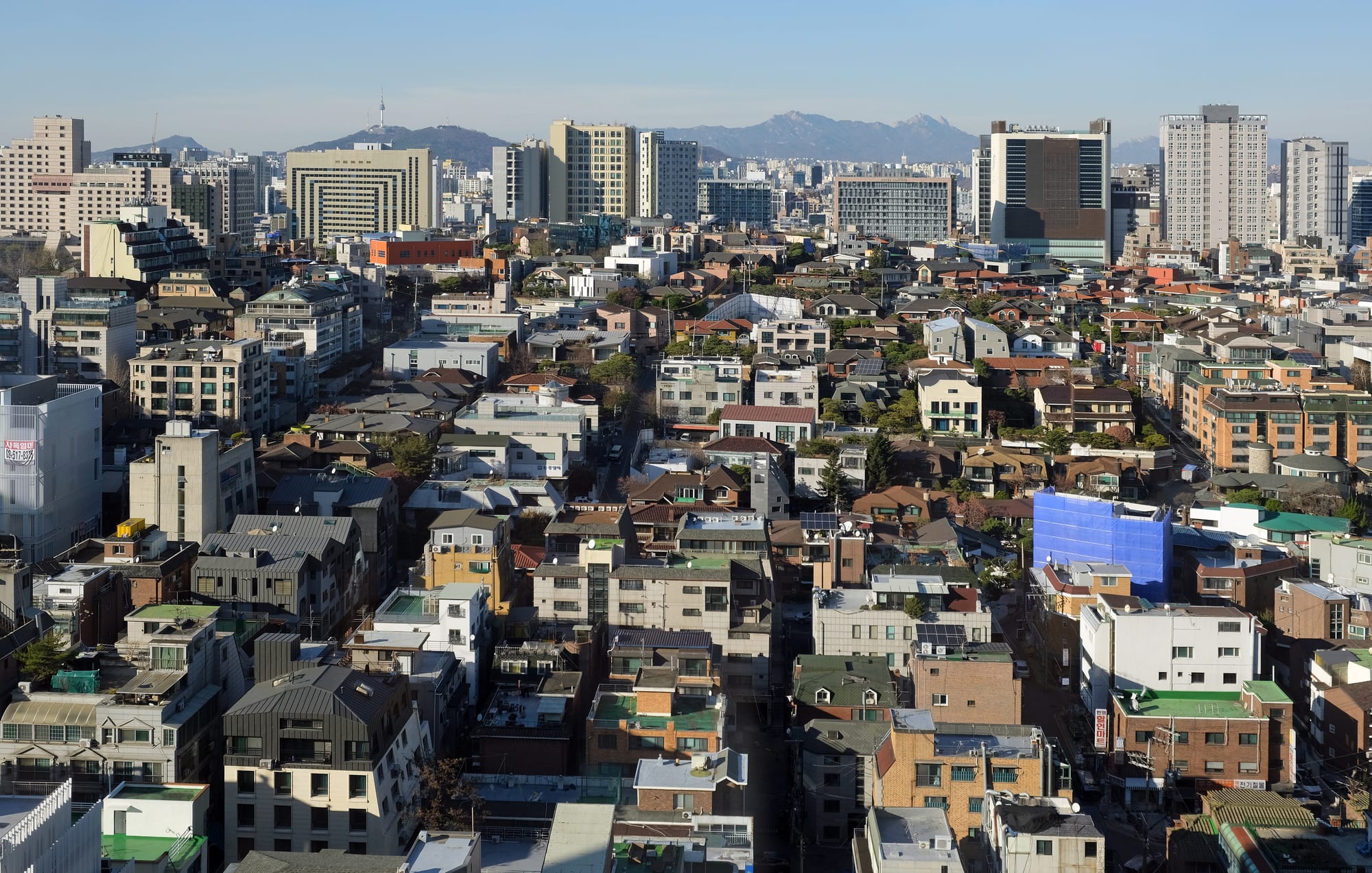
The southern half
The Republic of Korea occupies the southern part of the Korean peninsula, with about 52 million people, more than half of them in the Seoul metropolitan area. It shares a 5,000-year history and a single language with North Korea, from which it was divided only in 1945, by an agreement between the United States and the Soviet Union in which no Korean took part. In three generations the South has gone from colonial subject to war-devastated aid recipient to a democratic economic and cultural power — a trajectory often called the "Miracle on the Han River".
A short history
- 1392–1910
The Joseon dynasty
A long-lived Confucian kingdom.
- 1910–1945
Japanese rule
Korea is annexed and its culture suppressed.
- 1945
Division
The US and USSR split the peninsula at the 38th parallel.
- 1948
The Republic of Korea
Founded in the south under Syngman Rhee.
- 1950–1953
The Korean War
Millions die; the country is devastated; an armistice, no treaty.
- 1961
Park's coup
General Park Chung-hee seizes power; state-led industrialisation.
- 1979–1980
Turmoil
Park is assassinated; the Gwangju uprising is crushed.
- 1987
Democratisation
Mass protests force free direct presidential elections.
- 1997
The IMF crisis
A severe financial shock and bailout.
- 2016–2017
Candlelight protests
A president is impeached and removed.
Kingdom and colony
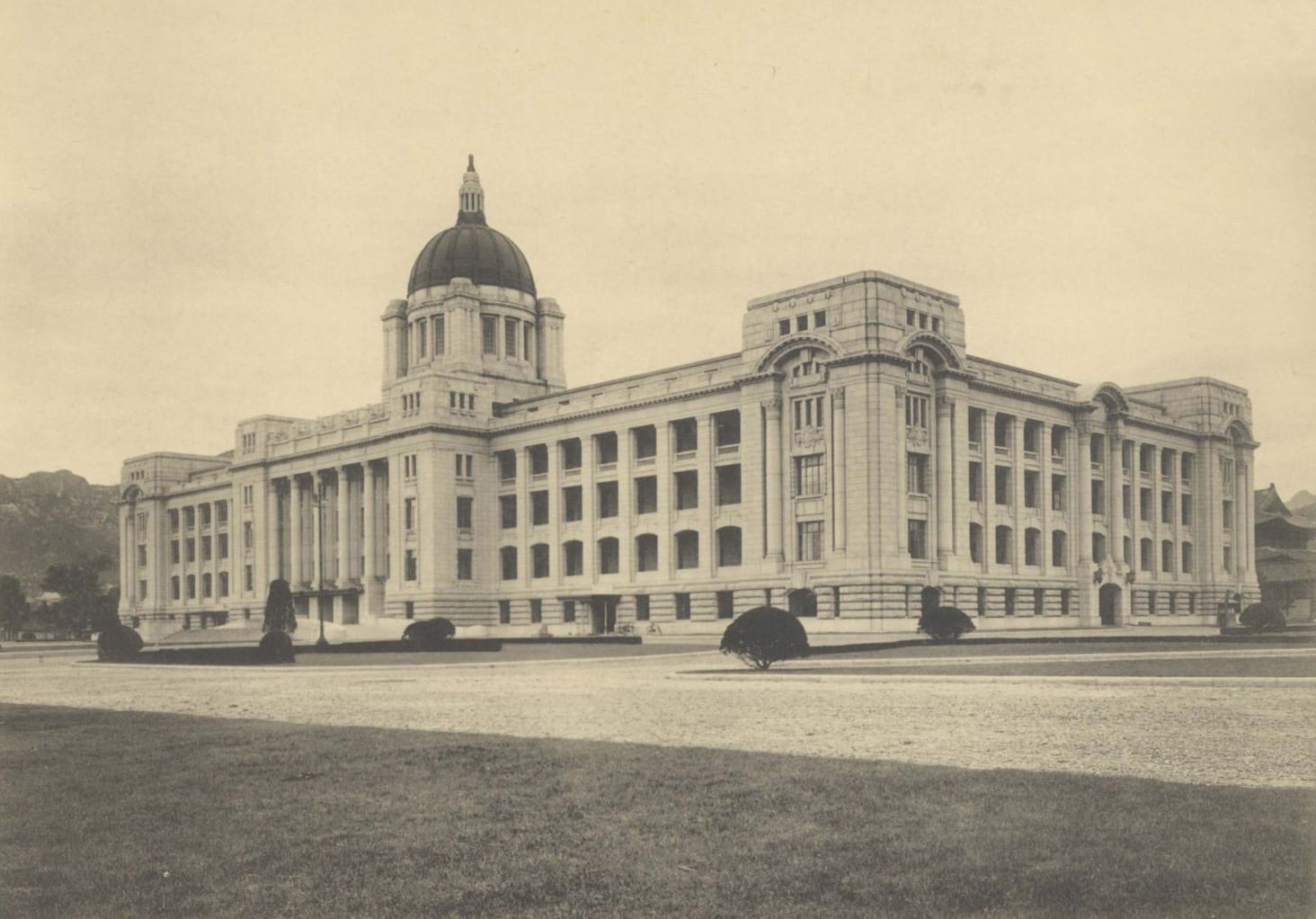
The Joseon dynasty ruled a unified Korea for over five centuries as a Neo-Confucian state, with a scholar-official class selected by examination, a distinctive alphabet (Hangul) created in the 15th century, and a policy of isolation that earned it the name "Hermit Kingdom". Weakened and fought over by China, Russia and Japan in the late 19th century, Korea was made a Japanese protectorate in 1905 and annexed outright in 1910. Colonial rule built railways and industry — concentrated in the north — but was harsh: land was expropriated, the Korean language and names were suppressed, and during the Second World War Koreans were conscripted for labour and military service and tens of thousands of women were forced into sexual slavery ("comfort women"), an issue still contested between the two countries.
Division and war
At the end of the Second World War the United States proposed dividing the peninsula at the 38th parallel to accept the Japanese surrender; the Soviet Union agreed. The line hardened into a border between a US-backed south and a Soviet-backed north, and in 1948 two rival states were established. On 25 June 1950 North Korean forces invaded the south. The war drew in a US-led UN coalition and then hundreds of thousands of Chinese troops; the front moved the length of the peninsula twice before stabilising near the original line. The fighting killed several million people, most of them civilians, and left both Koreas in ruins. An armistice was signed on 27 July 1953; no peace treaty has ever followed, and the Demilitarized Zone still divides the peninsula.
The developmental dictatorship
South Korea's first president, Syngman Rhee, was forced out by a student revolution in 1960, and a year later General Park Chung-hee seized power. Park ruled for 18 years, increasingly dictatorially, and drove an export-oriented industrial strategy: the state directed cheap credit to favoured conglomerates — the chaebol, such as Samsung and Hyundai — targeted heavy industry, and suppressed labour and dissent. Growth averaged around 10 per cent a year. Park normalised relations with Japan in 1965 (bringing in capital and reparations) and sent troops to Vietnam alongside the US. He was assassinated by his own intelligence chief in 1979.
Democracy on the streets
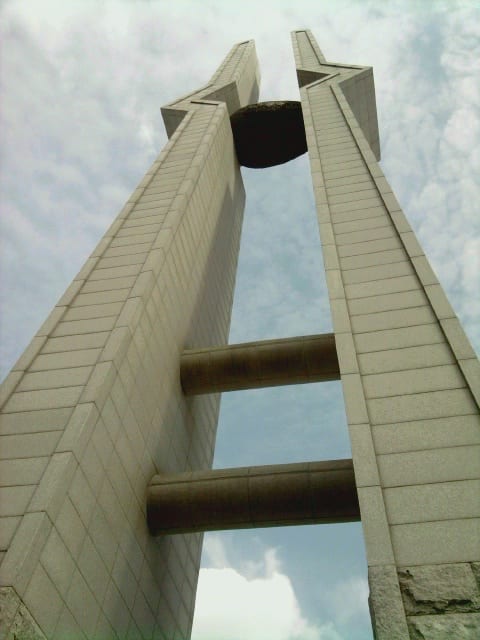
Park's death was followed by another military coup, by General Chun Doo-hwan. When citizens of Gwangju rose against him in May 1980, the army retook the city with lethal force. Chun's rule was internationally legitimised by the award of the 1988 Olympics to Seoul, but pressure built, and in June 1987 huge nationwide protests — triggered by the torture-death of a student and the cover-up that followed — forced the government to concede direct presidential elections. The transition held: subsequent presidents were tried and jailed for the Gwangju killings and for corruption, the "Sunshine Policy" of engagement with the North produced summits in 2000 and 2007, and power has alternated peacefully between left and right.
South Korea now
The 1997 Asian financial crisis hit South Korea hard, forcing an IMF bailout and painful restructuring, but the economy rebounded and moved up the value chain into semiconductors, shipbuilding, cars, and — increasingly — cultural exports, as Korean pop music, film and television found global audiences. Democracy has proven robust: in 2016–17 millions joined peaceful "candlelight" protests that led to the impeachment and removal of President Park Geun-hye (Park Chung-hee's daughter), and in December 2024 the National Assembly swiftly reversed a president's short-lived declaration of martial law and impeached him. The country now faces the world's lowest birth rate, an ageing population, high household debt, and the permanent strategic problem of a nuclear-armed North.
What South Korea carries
South Korea was created by a line drawn between two superpowers and then nearly destroyed by the war that line produced. What it built afterwards — an industrial economy of the first rank and a democracy that has repeatedly held its leaders to account — was achieved under, and then against, a series of dictatorships. The division of the peninsula, and the unfinished war across the DMZ, remain the central facts of its existence.