Daily Life · South Korea
South Korea: A Country That Never Quite Closes
High-rise apartment living, a working week among the longest in the developed world, and a convenience store on nearly every corner that doubles as a bank, a food hall and a bit of a social club
By Worldlore Editorial · 30 September 2026
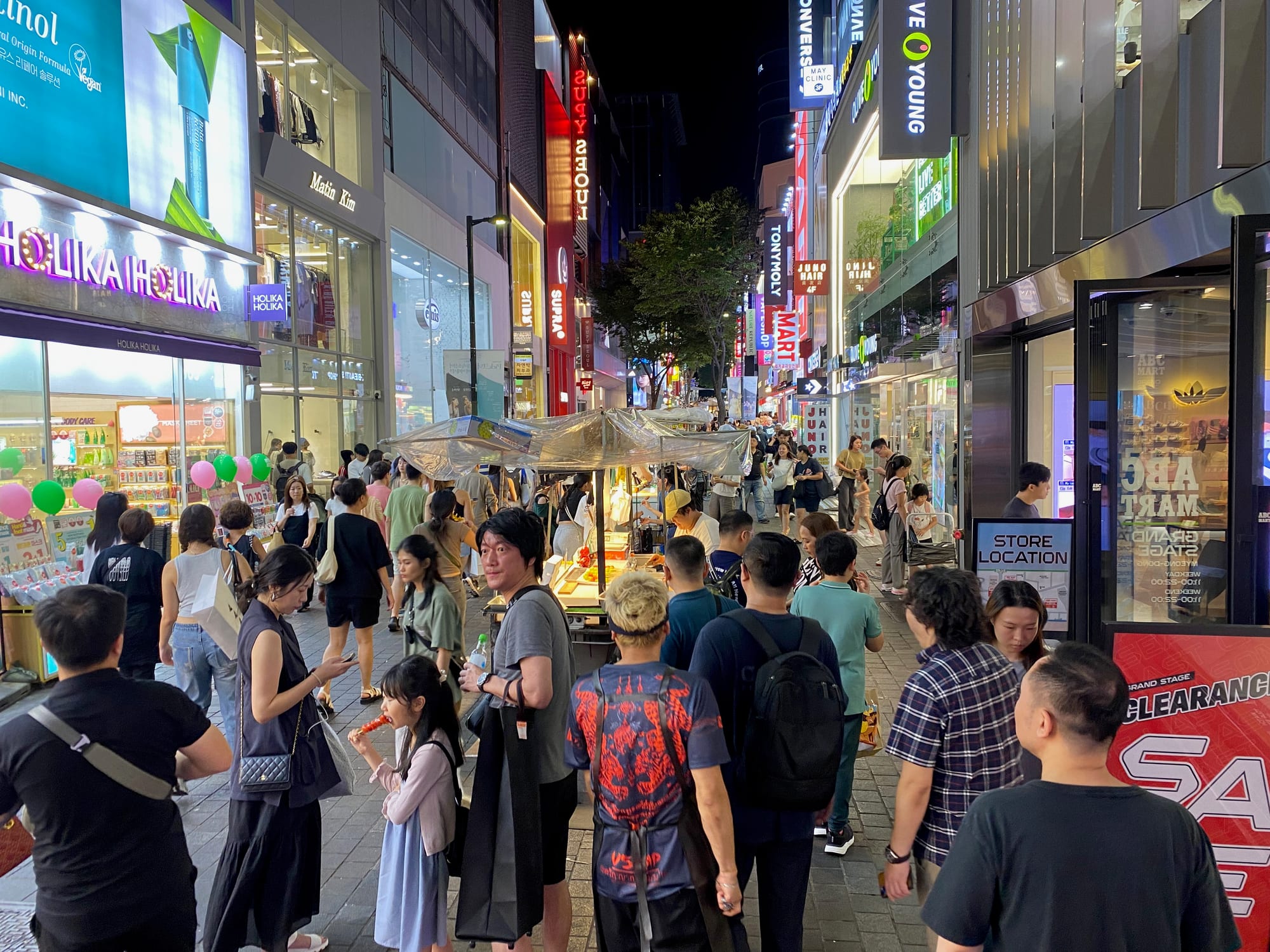
South Korea runs at two speeds that somehow coexist: intensely fast-paced during the working day, and, at almost any hour of the night, still lit up and open. Most people live stacked in high-rise apartment blocks rather than houses, commute on clean, punctual trains and buses, and work some of the longest hours in the developed world, even as that has been falling for years. What softens the pace is how much infrastructure exists simply to make ordinary life convenient: fast broadband everywhere, same-day delivery, and a convenience store on almost every city street, many of them open around the clock.
Family and home life
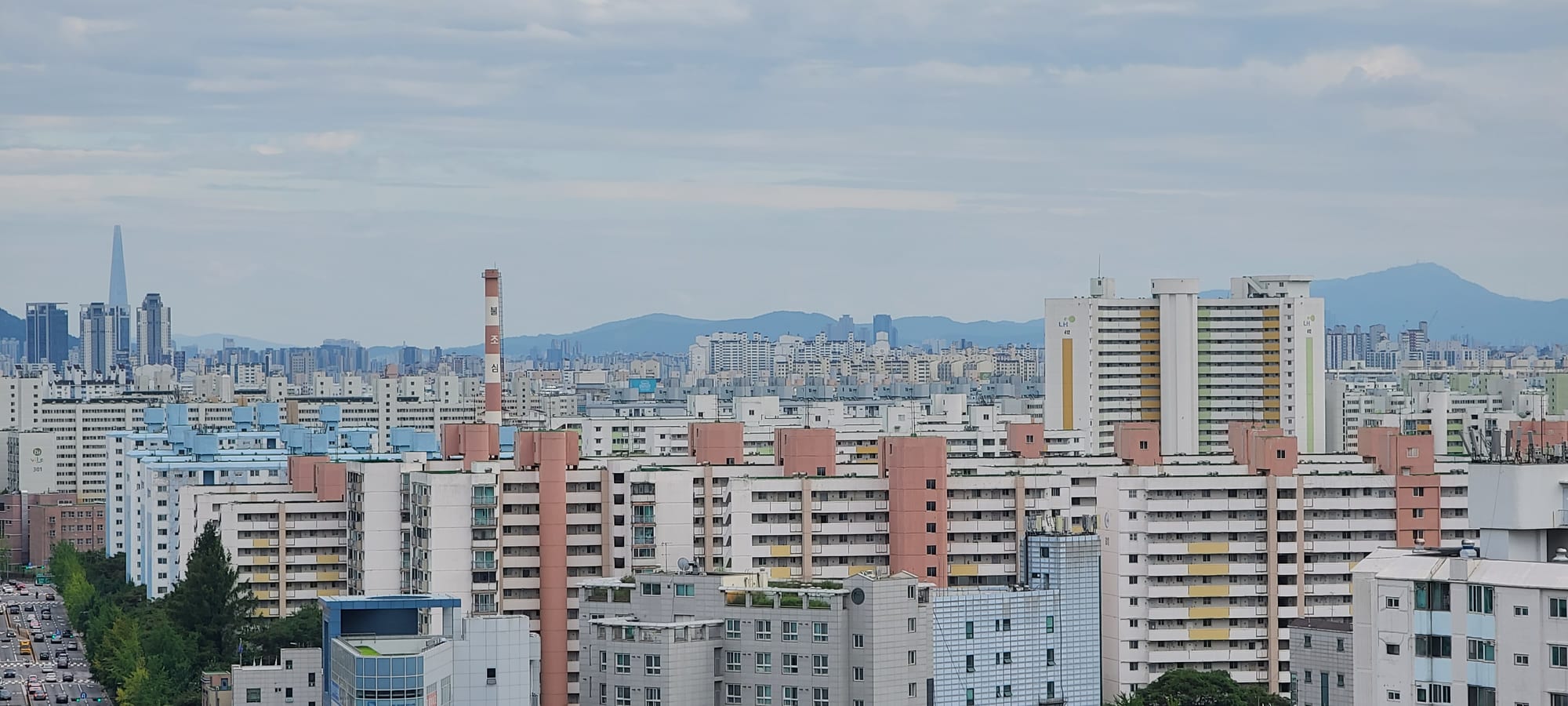
More than half of South Korean homes are in apartment complexes, usually large, uniform tower blocks built in phases across a district, often secured through jeonse, a system where tenants pay a very large refundable deposit instead of monthly rent. Households have shrunk sharply: one-person households are now the most common type and made up just over a third (36 per cent) of all households in 2024, a shift tied to the country's ageing population and the world's lowest fertility rate. Where extended families do live close together, grandparents often help with childcare while parents work long hours, though many young adults now live alone, some in small studio flats called officetels.
Work, school and the rhythm of the day
A legal cap limits the working week to 52 hours, introduced specifically because working hours had long run among the highest in the OECD, and many office workers still stay well past their official finishing time, especially before a group dinner with colleagues. The school day itself often does not end when classes do: it is common for children and teenagers to go straight from school to a private after-school academy called a hagwon, sometimes more than one, studying English, maths or exam preparation into the evening, a pattern driven by fierce competition for university places and, eventually, good jobs. Most men serve around eighteen months of compulsory military service, usually in their early twenties, a fact that shapes the rhythm of young adulthood nationwide.
Community life and public spaces
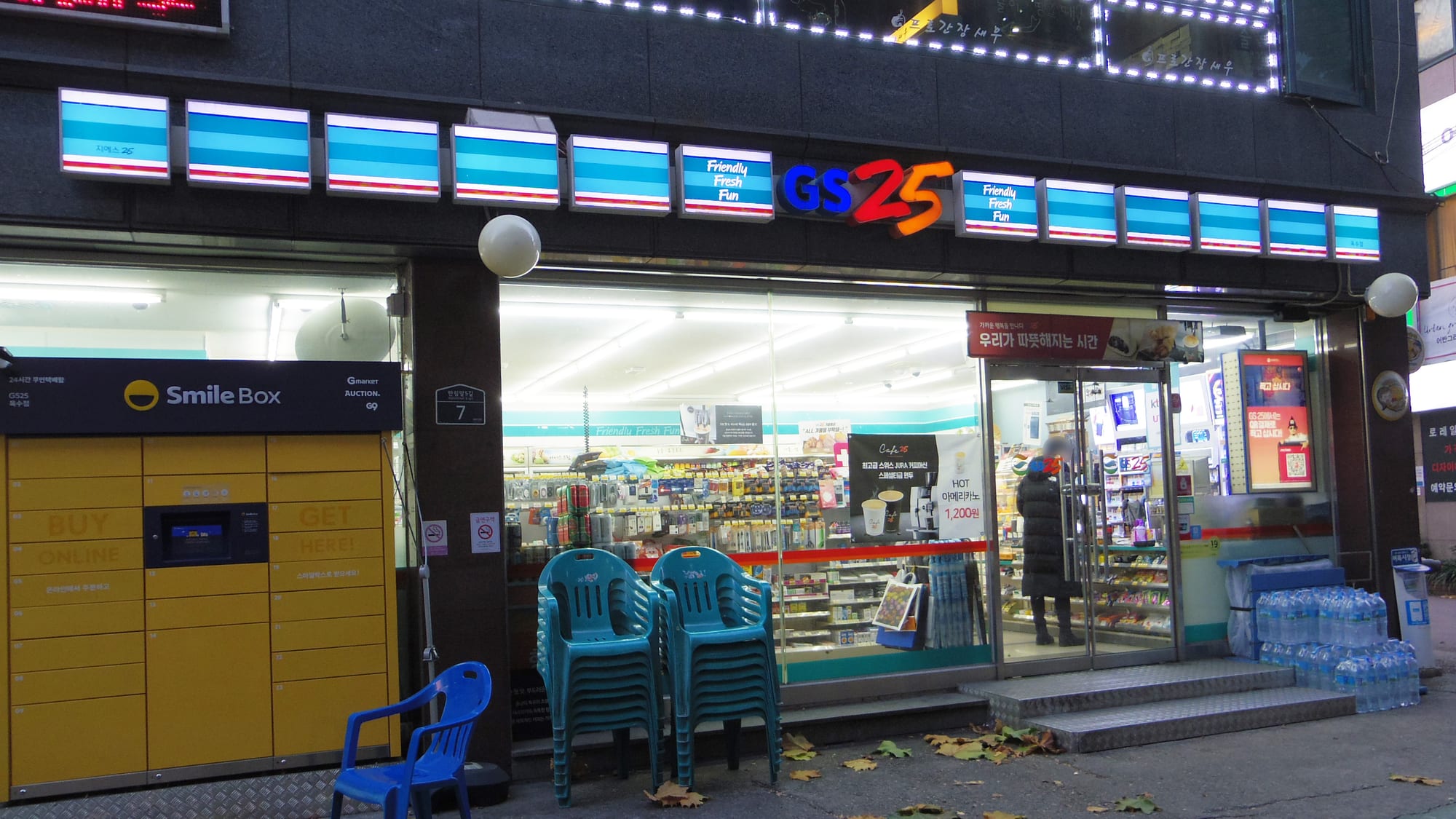
The convenience store is the real everyday public space: by some counts South Korea has more convenience stores per person than any other country, and a single store can double as a place to eat a quick meal at a window counter, collect a parcel, pay a bill, or simply sit outside on plastic chairs with a canned coffee. Traditional markets, like Seoul's Gwangjang and Namdaemun, still do brisk daily trade in food, textiles and household goods alongside the modern retail chains, and the subway and bus network, cheap, frequent and used by people of every income level, is the backbone of how most people actually move through their day. Bathhouses and saunas known as jjimjilbang are a genuine part of public life too, used for socialising and relaxing, not only washing.
Free time and weekends
Weekends are genuinely a break from the working week's intensity: hiking is hugely popular, with mountains close to most major cities drawing crowds of walkers in proper gear even for a modest afternoon trail. Cafés, many individually designed and themed, are a favourite place to meet friends, and gaming, both at home and at PC gaming rooms called PC bang, most open around the clock, remains a major leisure activity for young people. Family time often centres on eating out together, and on the twice-yearly holidays of Chuseok and Seollal, when much of the country travels to ancestral hometowns at once, jamming the highways.
A visitor's ordinary day
South Korea is highly card- and phone-friendly: foreign cards work almost everywhere, and a T-money transit card, sold at convenience stores and metro stations, covers buses and subways and is accepted in many convenience stores. The KTX high-speed train and city metros, both signed in English, are the easy way to get around; driving is unnecessary outside Jeju Island. Shops and restaurants keep long hours, some well past midnight, and street signage on major routes is bilingual even though everyday conversational English is limited outside tourist areas, so a translation app is genuinely useful rather than a backup.
What to take away
What defines an ordinary day in South Korea is the contrast between how hard the working and school day runs and how much quiet infrastructure exists to absorb that pace, from the convenience store on the corner to the mountain trail at the edge of every city.