History · Seychelles
Seychelles: The Islands With No First People
A scatter of granite and coral islands in the western Indian Ocean, uninhabited until the 18th century — a French plantation colony, a British possession, a one-party socialist state after a 1977 coup, and now Africa's richest country per head
By Worldlore Editorial · 19 September 2026
A country younger than the United States
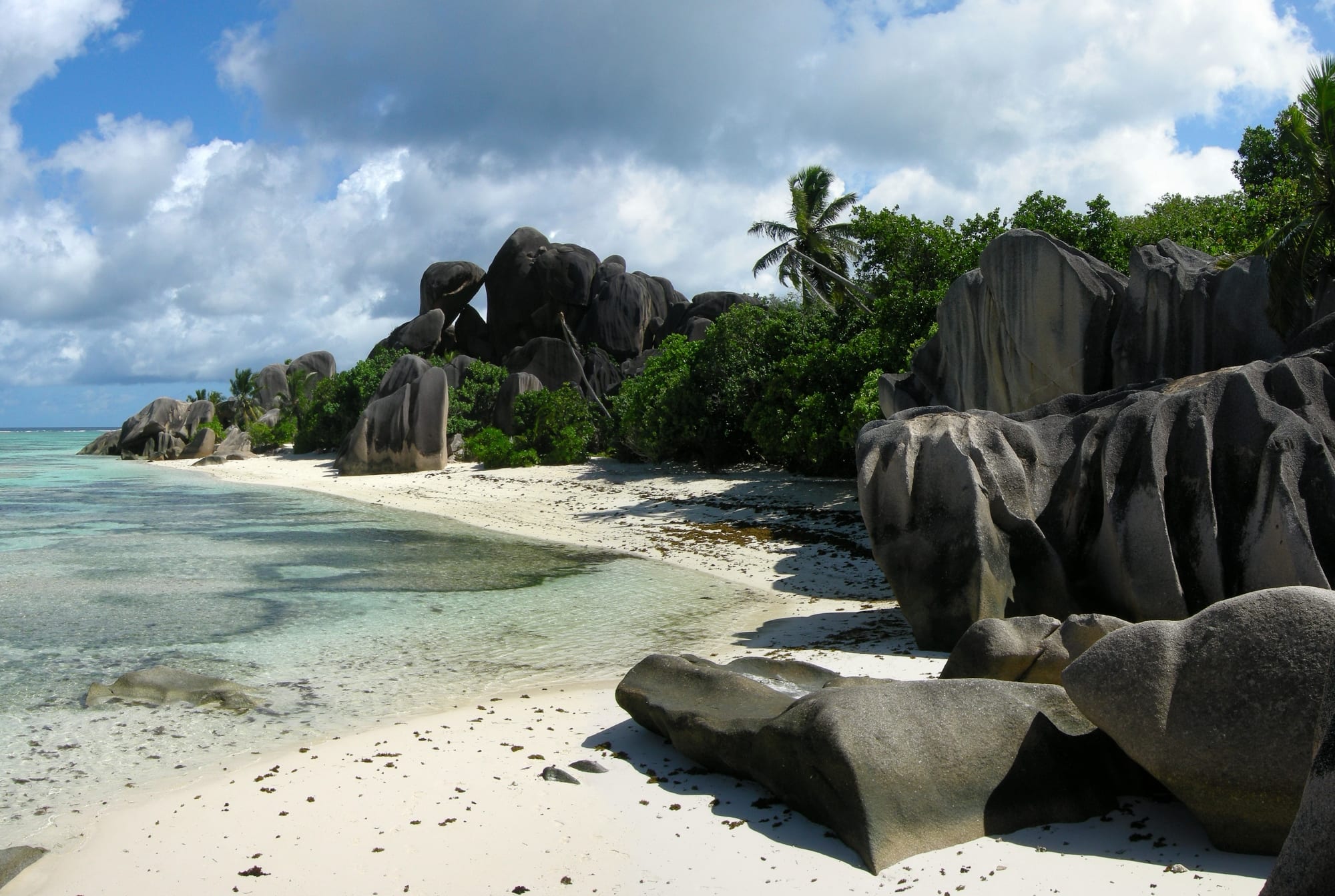
Seychelles is an archipelago of 115 islands spread over a huge area of the western Indian Ocean north-east of Madagascar, with only about 100,000 people, almost all on the three main granite islands. It is one of the few countries in the world with no indigenous population: nobody lived there until French settlers and the people they enslaved arrived in the 1770s. Its whole society — a Creole culture, a French-based Kreol language, a mix of African, European, Indian and Chinese descent — was assembled in the past 250 years. Today it has the highest income per head of any African state.
A short history
- to 1770
Uninhabited
Known to Arab, Portuguese and other sailors; no settlement.
- 1756
French claim
France formally annexes the islands from Mauritius.
- 1770
First settlers
A small party lands on Sainte Anne; plantations and slavery follow.
- 1814
British rule
Seychelles is ceded to Britain, governed from Mauritius.
- 1835
Emancipation
Slavery abolished; liberated Africans later landed from slave ships.
- 1903
Separate colony
Seychelles becomes a Crown colony in its own right.
- 1976
Independence
Seychelles becomes a republic within the Commonwealth.
- 1977
The coup
France-Albert René seizes power while the president is abroad.
- 1979–1991
One-party state
A socialist republic under René's SPPF.
- 1993
Multiparty politics
A new constitution restores competitive elections.
Settlement and slavery
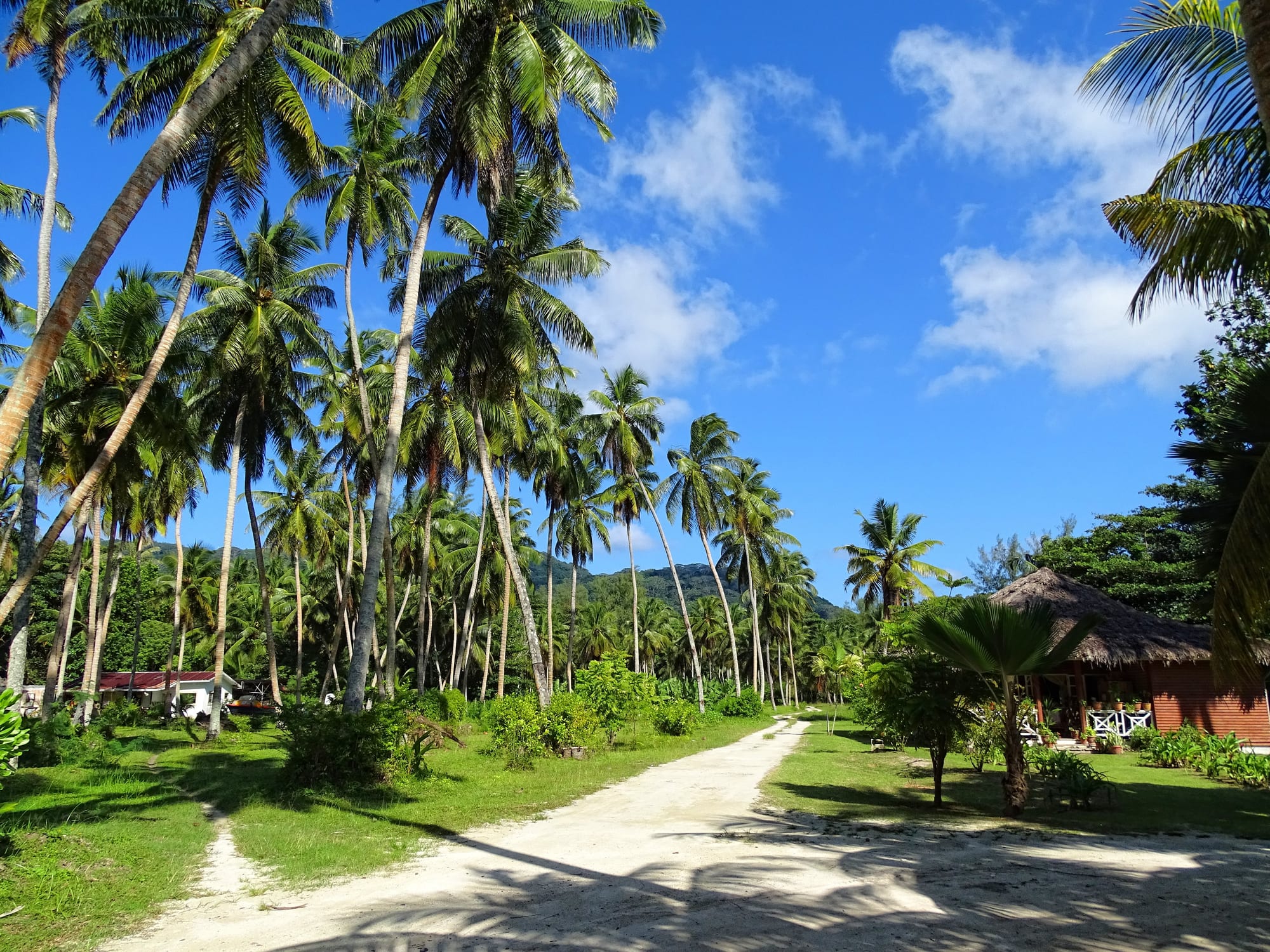
Arab traders knew the islands, and Portuguese, Dutch and English ships called for water and giant tortoises, but no one stayed. France claimed the group in 1756, naming it for a finance minister, Jean Moreau de Séchelles, and the first settlers arrived from Mauritius in 1770. The economy that developed was a small-scale plantation one — cotton, then coconuts, spices and later vanilla — worked by enslaved Africans who quickly outnumbered the French settlers. Britain captured the islands during the Napoleonic Wars and formally acquired them in 1814, governing them as a dependency of Mauritius. Slavery was abolished in 1835; in following decades the Royal Navy landed thousands of Africans freed from intercepted slave ships, adding to the population.
A place of exile
Its very isolation made Seychelles useful to the British Empire as a prison for inconvenient people. Over the decades the islands hosted deported leaders and exiles from across the empire, including the Ashanti king Prempeh I, the Buganda regent and later the Cypriot Archbishop Makarios and figures from the Zanzibar revolution. The local economy remained tiny, dependent on a handful of plantation crops and vulnerable to price swings, and political life was dominated by a small planter and merchant elite until the mid-20th century.
Independence and the 1977 coup
Two parties emerged in the 1960s: James Mancham's pro-Western, tourism-focused Democratic Party, and France-Albert René's socialist SPUP. Seychelles became independent on 29 June 1976 with Mancham as president and René as prime minister in a coalition. In June 1977, while Mancham was at a Commonwealth meeting in London, René's supporters staged an armed coup and installed him as president. He turned Seychelles into a one-party socialist state, aligned with the Eastern bloc and Tanzania, expanded education and health services, and survived several counter-coup attempts — most spectacularly a 1981 raid by mercenaries led by "Mad Mike" Hoare, who posed as a rugby team and, when discovered at the airport, shot their way out and hijacked an Air India jet back to South Africa.
The turn to democracy and prosperity
With the Cold War over and aid drying up, René reintroduced multiparty politics in a 1993 constitution, and won the elections that followed. Power passed within his party to James Michel in 2004 and to Danny Faure in 2016; in 2020 the opposition's Wavel Ramkalawan won the presidency, the first change of ruling party since 1977, achieved peacefully. The economy, meanwhile, was transformed: high-end tourism and one of the world's largest tuna-canning operations, plus fishing licences and offshore finance, lifted Seychelles to high-income status. It has been a leader in marine conservation, protecting a third of its vast ocean territory in a 2018 "debt -for-nature" swap.
What Seychelles carries
Seychelles is one of the newest societies on Earth, built entirely since the 1770s from settlers, enslaved Africans and later arrivals, on islands that had no one to displace. Its modern history turns on the 1977 coup and the socialist decades that followed, and on the quieter achievement since: a small, remote, once-poor country that used tuna and tourism to become prosperous, and then handed over power at the ballot box.