Culture & Customs · Seychelles
Seychelles: A Drum Warmed by the Fire
A Catholic calendar, a Creole language spoken by almost everyone, and a drum once banned after dark that now stands on UNESCO's list — the customs of a society assembled from many shores
By Worldlore Editorial · 30 September 2026
Night falls, a fire is lit, and a group of drummers hold their instruments close to the flames. The drums are wide and narrow-rimmed, faced with goatskin, and they are warmed over the fire before the playing starts. When the beat begins it is unhurried. A man calls out a line of social comment, often sharp or satirical, and the women answer in high, clear voices, dancing towards their partners with swaying hips and shuffling feet, never quite touching. This is moutya, a dance brought to the islands by enslaved Africans and kept alive through centuries of disapproval. In a society with no older people before it, built entirely from arrivals, it is as close to a founding voice as Seychelles has.
Faith, identity and values
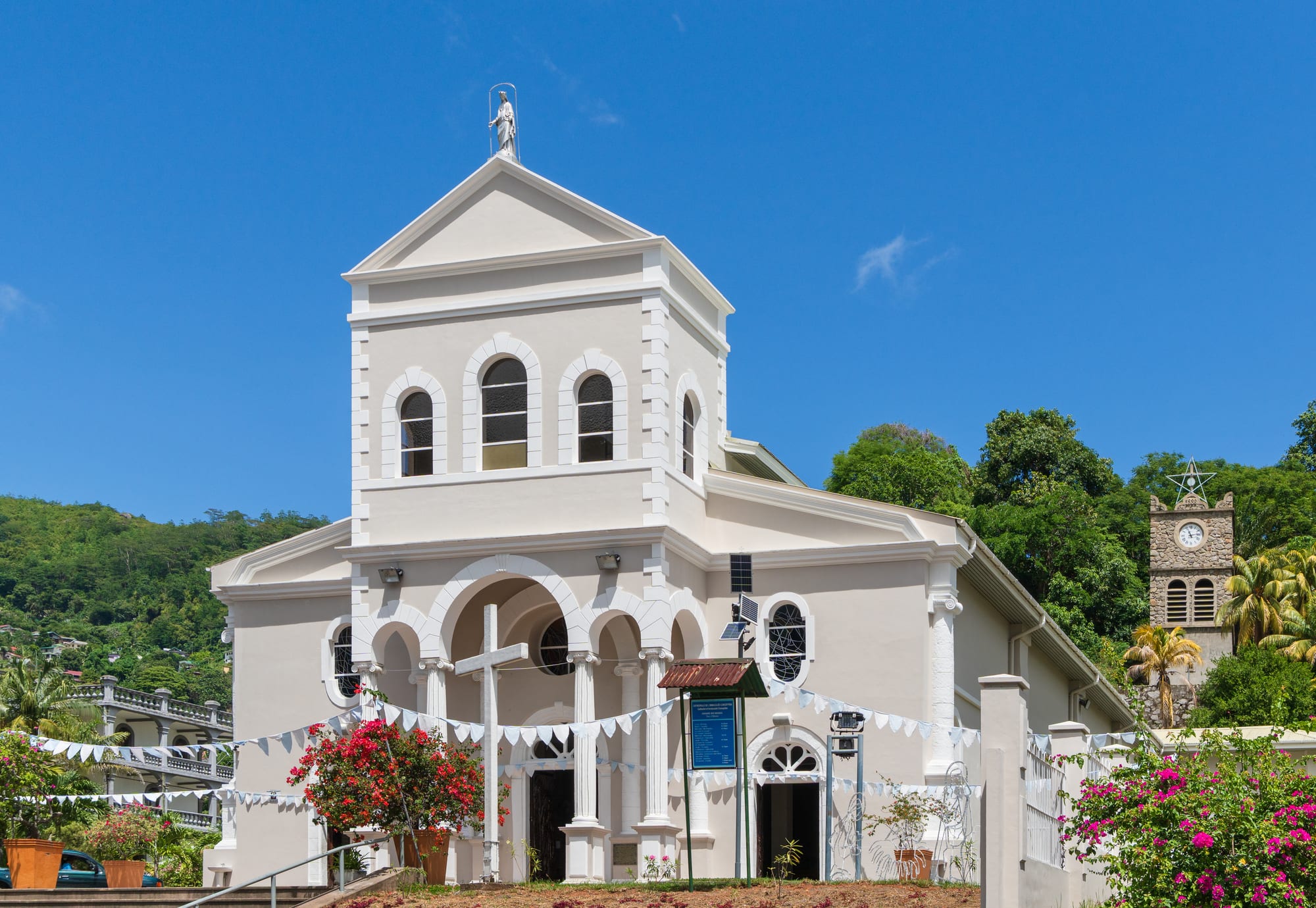
Seychelles is a Christian country above all, and a strongly Catholic one. In the 2022 census around 61 per cent of the population described themselves as Roman Catholic, with Anglicans and Hindus each making up about 5 per cent and Muslims about 2 per cent, alongside smaller Christian churches, Baha'is and Buddhists. French Catholicism has historically been the most influential religious tradition, and Sunday Mass remains a fixture of family life. The main feasts of the church year are public holidays, so the calendar of the faith and the calendar of the nation largely run together.
The small Hindu and Muslim communities worship openly, and the Seychelles Tourism Board describes a "live-and-let-live" outlook in which the different faiths share the same small capital and organise joint public events. Older folk beliefs have also lingered beneath the surface of church life. Accounts of Seychellois culture describe a traditional belief in gris-gris, charms and spells, and in the bonhomme de bois or bonne femme de bois, the local healer and fortune-teller, who some people have consulted alongside their Christian practice. These beliefs are rarely discussed with outsiders and are best left alone by visitors.
Identity in Seychelles is Creole: a blend of African, Malagasy, French, British, Indian and Chinese ancestry, assembled over roughly two and a half centuries. Its clearest expression is language. Kreol Seselwa, a French-based creole with African and Malagasy vocabulary, is the first language of almost everyone and one of three official languages alongside English and French. It is written as well as spoken, with its own plays, poetry and prose, and a Creole institute, Lenstiti Kreol, has worked to study and promote it since the 1980s. For many Seychellois, choosing to speak Kreol rather than English or French is itself a quiet statement of who they are.
Greetings and meeting people
Everyday greetings are made in Kreol. Bonzour serves as "good morning" or "good day", bonswar as "good evening", and mersi as "thank you". English is widely and fluently spoken, and nobody expects a visitor to manage more than a word or two of Kreol, but an opening bonzour sets a friendly tone in a shop, on a bus or at a market stall. The pace of life is unhurried, and visitors who match it, rather than rushing an exchange, tend to find conversations opening up.
The three languages each have their own place. English dominates in Parliament, the courts and business, French is prominent in the Church and in parts of the media, and Kreol is the language of home, friendship and music. Visitors who come across a Mass or a radio programme in Kreol or French are seeing that division at work rather than any preference for excluding outsiders.
Hospitality and being a guest
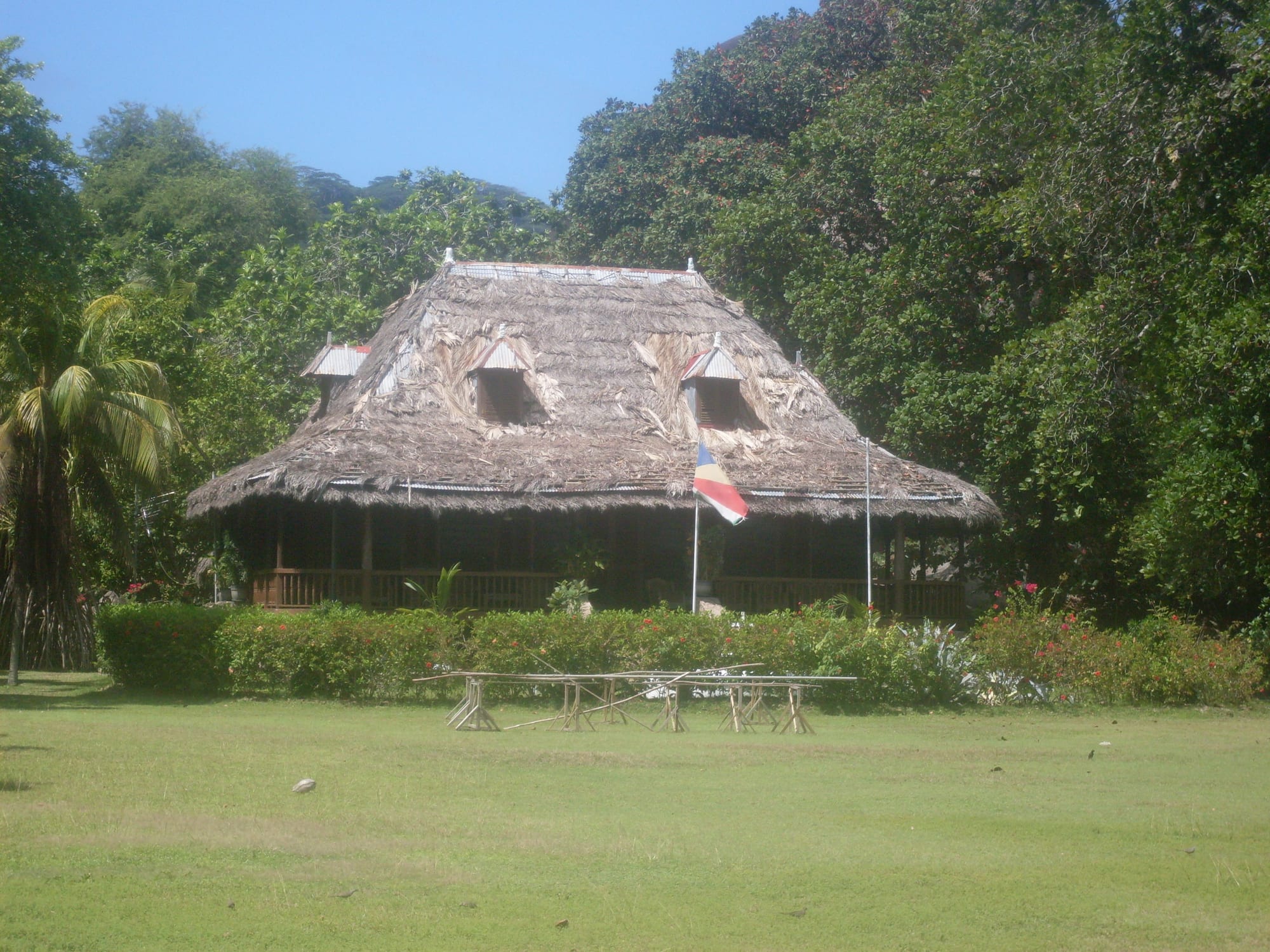
Hospitality in Seychelles tends to be relaxed rather than formal. The traditional Creole house was built for air and shade, with steep roofs, large windows and many doors, and much of social life has taken place on the veranda: evenings of conversation, draughts and cards, or singing among friends. Public holidays are often spent on the beach, with families picnicking and swimming together, and guests are drawn into that easy, outdoor style of entertaining.
On ceremonial occasions, locally made drinks have traditionally had their place: kalou, a palm wine, and bacca, a spirit made from sugarcane, both associated with celebrations and gatherings. A visitor offered a drink or a plate at a family occasion is being included, and it is gracious to accept at least a little.
Courtship and marriage show hospitality in its most ceremonial form. In the traditional pattern recorded by the Seychelles National Museums, a man wishing to marry wrote to the young woman's parents describing his character, his work and what he had made of his life. If they approved, he wove a basket from coconut leaves, known as a kapatya, filled it with fruit and vegetables and delivered it to the family's house — a demonstration of both his skill and his willingness to work. Courting couples might play "roul pomme d'amour", in which a man rolled a red tomato towards the woman he admired, and she rolled it back if the feeling was returned.
Festivals and life's big moments
The Catholic year sets the rhythm. Good Friday and Easter, Corpus Christi, the Assumption on 15 August, All Saints' Day, the Immaculate Conception and Christmas are all marked as public holidays. The Feast of the Assumption is the best known of the parish feasts: on La Digue a procession carrying a statue of the Virgin leads to Mass celebrated by the bishop, and hundreds of people cross from the other islands to join in, staying on for music, food stalls and games such as hoopla and lucky dips once the religious part of the day is done.
At the start of November, remembrance takes over. On All Souls' Day, 2 November, cemeteries across the country fill with families who clean and repaint the graves of their relatives and lay fresh flowers on them, turning a day of mourning into a gathering of the living as well.
The great secular celebration is Festival Kreol, held every October since the mid-1980s on the main islands. It gathers everything the country counts as Creole — music, dance, food, fashion, crafts, storytelling and the Kreol language itself — and its main events usually fall in the last week of the month. Independence, won on 29 June 1976, is also marked each year with a national parade.
Weddings are occasions for generosity on a large scale, and a family may spend a great deal of its income on a child's wedding, sometimes with both families sharing the cost. Traditional celebrations described by the national museums include cars decorated with frangipani, arches of palm leaves and fresh flowers, and music from guitars, violins, banjo, drums and triangles, with older women singing sentimental songs of earlier times. Funerals follow Catholic rites, with singing, organ music and a sermon, and church bells have traditionally marked the occasion — rung in several rounds for an elaborate funeral and more sparingly for a modest one.
Arts, crafts and music
Music and dance are the heart of Seychellois culture, and they come in distinct layers. Moutya is the oldest. According to UNESCO, it was brought by enslaved Africans who arrived with the French settlers in the eighteenth century, and it served both as comfort against hardship and as a way of resisting servitude and injustice. The drums, made with narrow rims and goatskin, are played mainly by men and heated over the fire before playing; the men call out social commentary and the women respond. Colonial authorities and the Church long regarded it with suspicion and limited where and when it could be performed. Today it is taught to young people, recorded by contemporary musicians and performed at social gatherings and cultural events, often without the fire.
Kanmtole is the second layer. When French settlers arrived, many of them by way of Réunion and Mauritius, they brought European court and salon dances with them, and local musicians gradually reshaped them into something uniquely Seychellois. The Seychelles Cultural Foundation divides kanmtole into three parts: the kontredans, led by a caller, the komandan, who sings out the figures and keeps time on a triangle; ladans senp, couple dances descended from the waltz, polka and mazurka; and sega, which spread from the enslaved populations of Mauritius and Réunion. Kanmtole evenings were formal occasions held in homes and village halls, where people wore their best clothes and the men carried handkerchiefs as they danced, to the sound of banjo, violin, accordion and triangle.
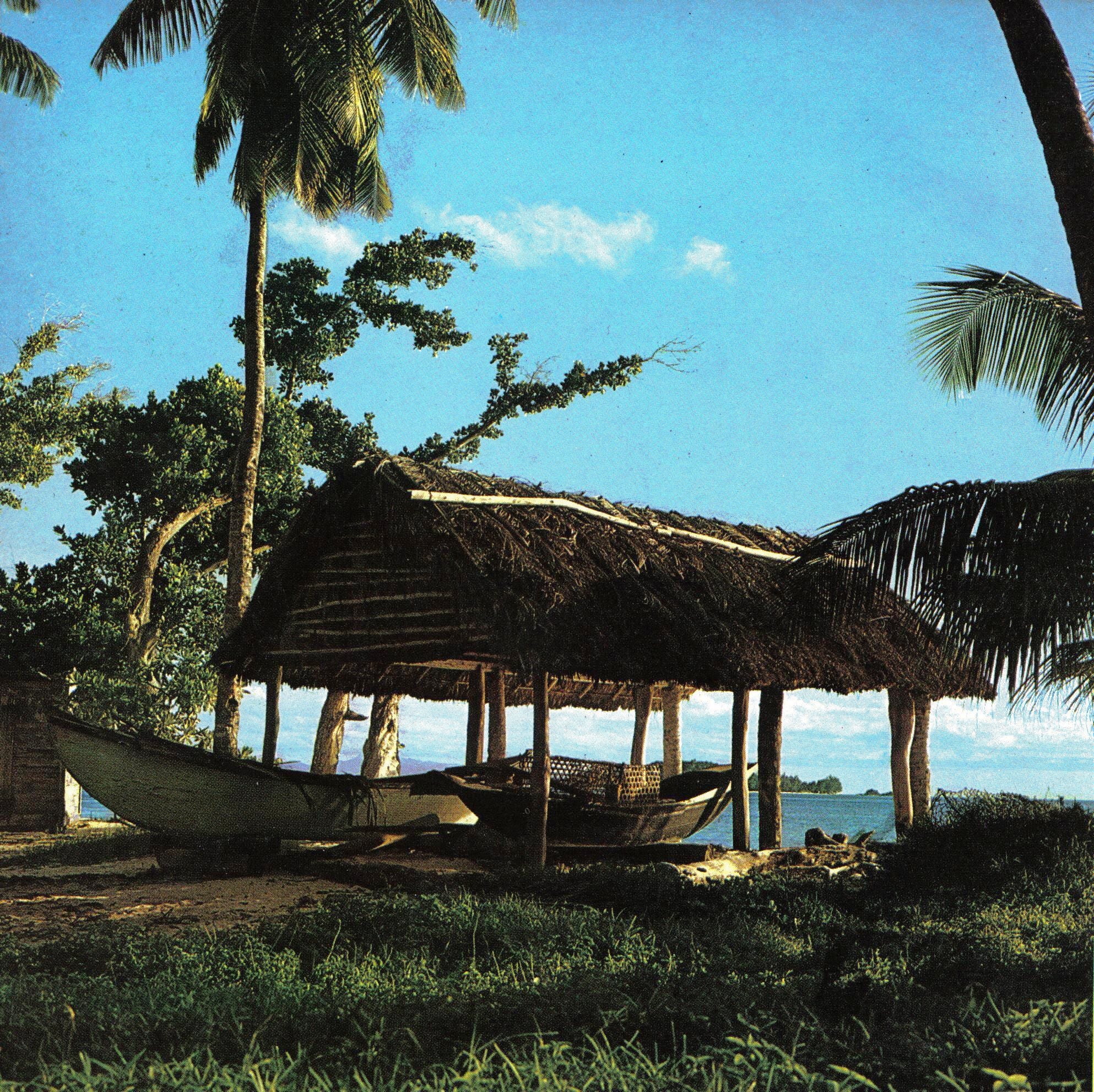
Crafts grew from what the islands provided. Coconut and vacoa palm leaves are woven into baskets, mats and hats, a skill still taught by older artisans to younger ones. Wood is carved into boxes, goblets and board games, and the pirogue, the small wooden boat long used for fishing on the reefs, has been reproduced in miniature as a craft in its own right; a model pirogue presented by the government of Seychelles to the British Crown is held today by Royal Museums Greenwich. Creole architecture, with its steep roofs, verandas and shutters, is treated as a heritage worth protecting, and new buildings often borrow its lines. Alongside all this, Kreol writing — plays, poetry and prose — has given the national language a literature of its own.
Dos and don'ts for visitors
- Do greet people with bonzour by day and bonswar in the evening; a word of Kreol is a friendly gesture.
- Do dress respectfully for church and at family occasions, and keep beachwear for the beach.
- Don't sunbathe nude; topless sunbathing is uncommon and nudism is not accepted and is likely to cause offence.
- Don't carry or use illegal drugs of any kind; penalties are severe and can include life imprisonment.
- Do ask before photographing people, particularly at Mass, processions or family gatherings.
- Do accept a little of what is offered when invited to a celebration; it is a sign of being included.
- Do join public events such as Festival Kreol in October or a parish feast, where visitors are welcome.
- Do be aware that same-sex relationships are legal but social attitudes vary, and same-sex marriage is not recognised.
What to take away
Seychelles has no ancient past to draw on, only the traditions its people carried with them and reshaped together — and a visitor who hears a moutya drum warmed by the fire is hearing that shared history in its truest voice.