Daily Life · Senegal
Senegal: The Compound and the Communal Bowl
Extended families sharing a walled ker compound, a time-sense summed up in the phrase ndank ndank, "slowly, slowly", and a meal still commonly eaten by several hands from one shared platter rather than separate plates
By Worldlore Editorial · 30 September 2026
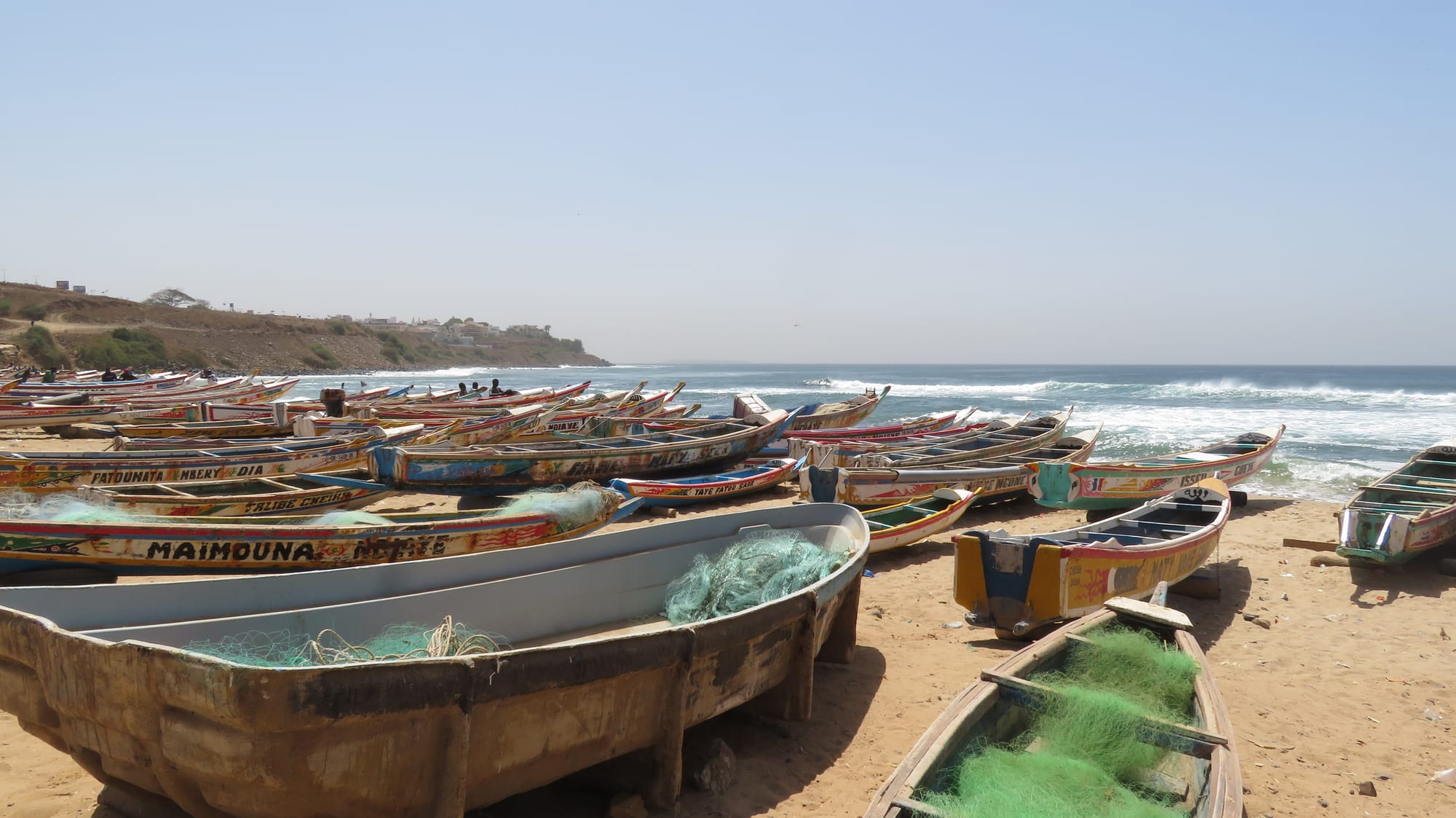
An ordinary day in Senegal moves to what people themselves call ndank ndank, slowly, slowly, a Wolof phrase that sums up the patience with which much of the day is approached. Mornings start early with the first call to prayer in this majority-Muslim country, market stalls open not long after, and pirogues head out from beaches and fishing villages along the Atlantic coast before the heat builds. Family life is organised around the ker, a walled compound that can house several linked households around one courtyard, and one of its most visible daily rituals is the meal itself: rice, fish or meat served on a single large platter set on the ground or a low table, eaten by several people at once with their own spoon or hand rather than from separate plates.
Family and home life
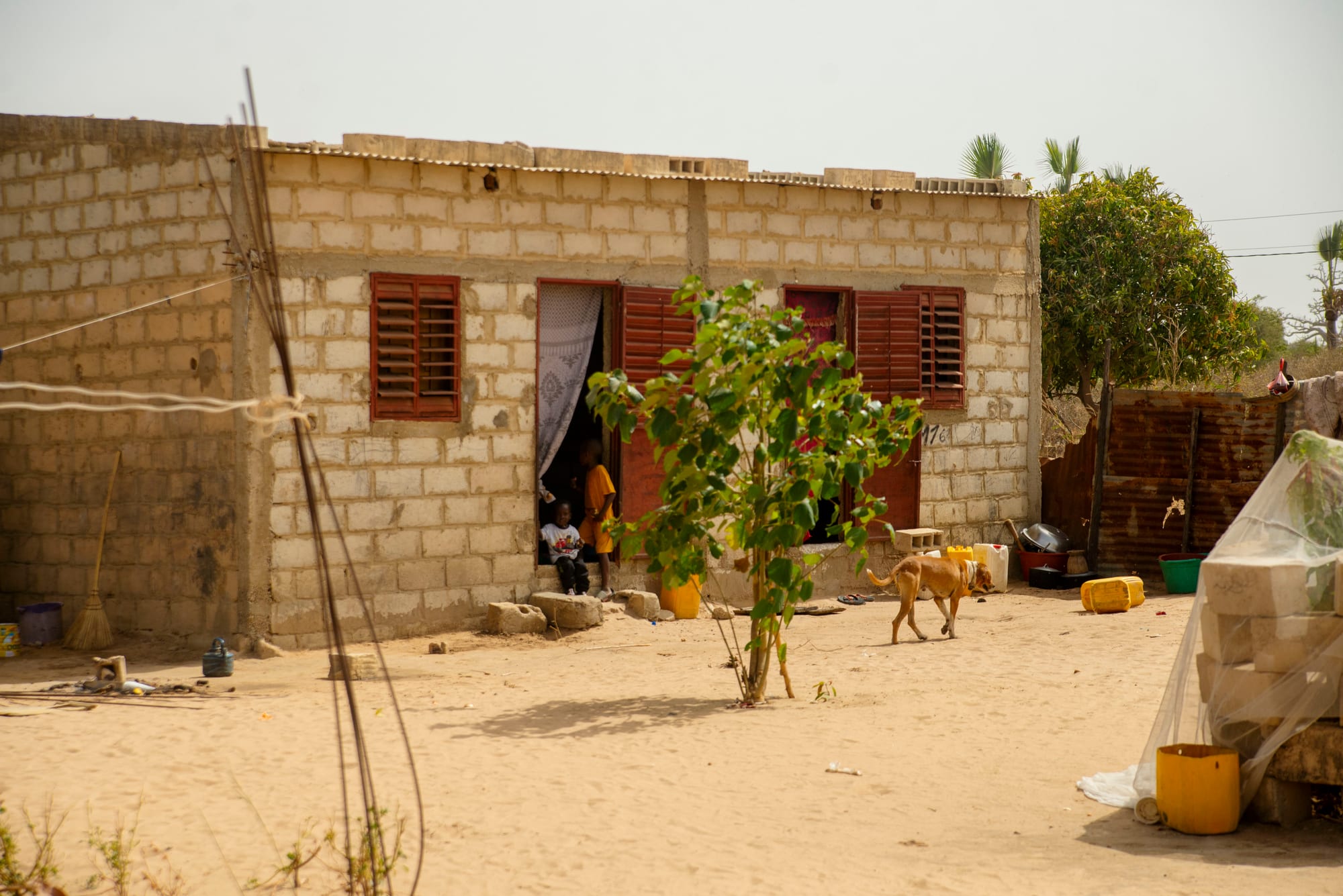
The traditional Senegalese ker is an enclosed compound, often with separate rooms or houses for different members of the family, and in polygamous households each wife may have her own quarters: polygamy remains legally recognised and, by the national statistics agency's own figures, close to a third of married Senegalese were in a polygamous union in 2013. Grandparents and other relatives often share the same plot. Elders hold clear authority within the household, and major decisions, from a child's schooling to a family wedding, are usually made collectively rather than by one person alone.
Work, school and the rhythm of the day
The legal working week is set at 40 hours outside agriculture, where the limit is counted by the year instead, though the informal economy, where a large share of Senegalese actually earn their living, follows far less fixed hours. In farming and fishing communities the working day still starts at first light, since heat and tide dictate when work is possible more than any clock does; fishing crews often launch their pirogues early so the catch reaches shore markets while it is still fresh. In Dakar, whose metropolitan area holds more than a fifth of the national population, the working day is shaped as much by traffic as by the clock, with journeys across the crowded, congested peninsula city often taking far longer than the distance would suggest. Prayer times are built into the working day nationwide, with schedules commonly pausing or adjusting around them, particularly on Fridays.
Community life and public spaces
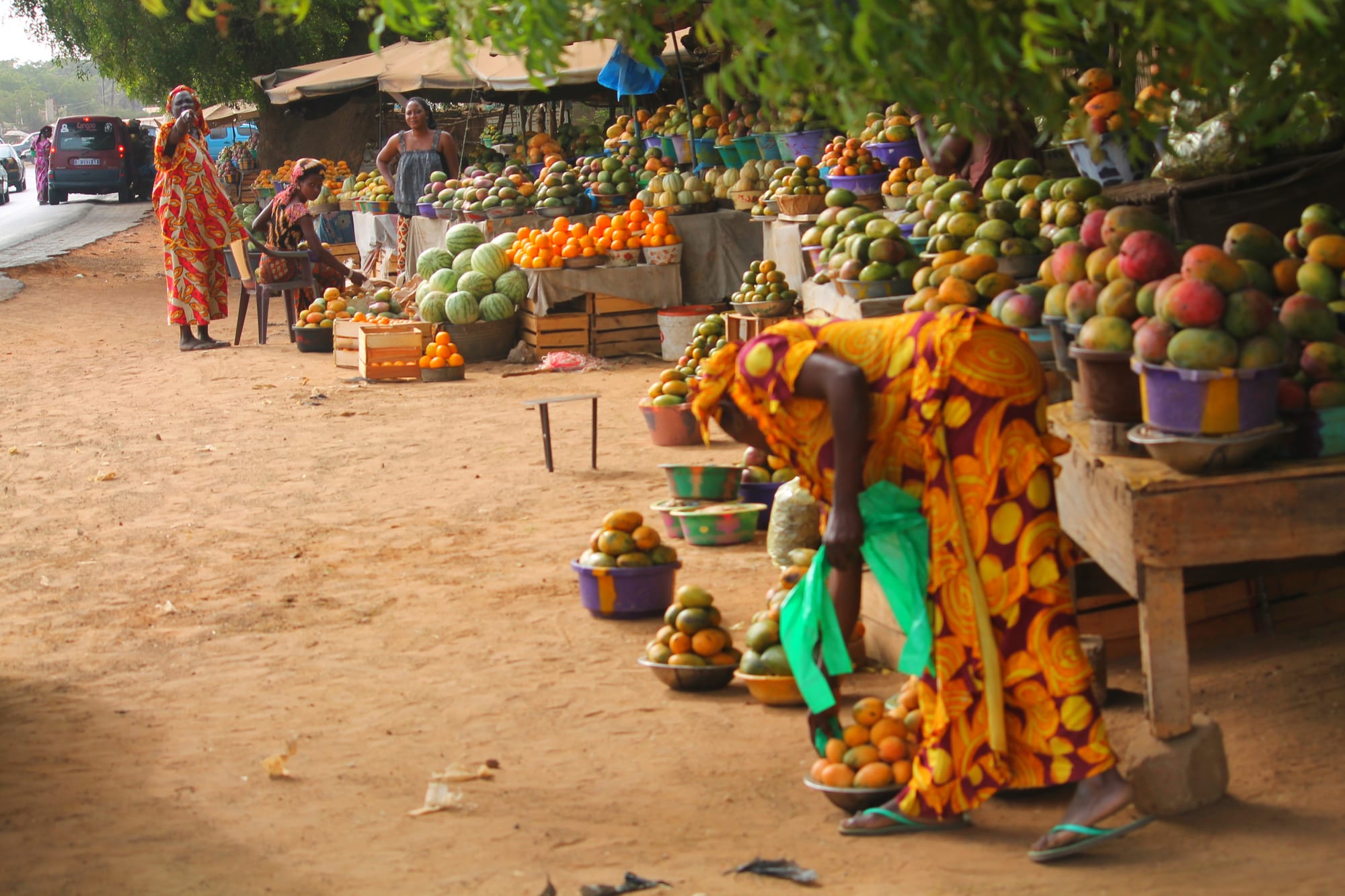
The market is the country's everyday public square, whether a large covered market in one of the cities or the roadside stalls of fruit, vegetables and dried fish found in towns across the country. Along the coast, the return of the pirogues is itself a daily public event: crews haul boats up the sand and sell straight off the beach as buyers gather to bargain over the catch. The country's major Sufi brotherhoods, the Mouride and the Tijaniyya above all, shape community life well beyond religious practice, running trade and mutual support networks that hold neighbourhoods together, especially around their holy cities of Touba and Tivaouane.
Free time and weekends
Laamb, traditional Senegalese wrestling, is closely followed nationwide and its biggest bouts fill the 20,000-seat National Wrestling Arena at Pikine, near Dakar, complete with drumming, praise-singers and pre-match ritual that turn a match into a full evening's event. Football draws similarly large followings at every level, played on any open patch of sand or ground as much as watched in stadiums or cafés. Weekends bring longer family visits and, for those near the coast, time on the beach, while the country's Sufi pilgrimages, above all the Grand Magal to Touba, drew more than 6 million people in 2025, taking whole families away from their usual routine for days.
A visitor's ordinary day
Senegal runs mostly on cash outside Dakar's hotels and supermarkets, so carrying West African CFA francs for markets, shared taxis and small purchases matters even where cards are accepted. Intercity and local travel relies heavily on shared "sept-place" taxis and minibuses that leave once full rather than on a timetable, and fares are agreed before setting off rather than metered. Traffic in and around Dakar is heavy and largely unpredictable at most hours, so it is worth building in extra time for any journey across the city. Shops and markets generally run into the evening, with trading slowing briefly around Friday midday prayers.
What to take away
An ordinary day in Senegal is built less around the clock than around the compound and the shared bowl at its centre: an economy of pirogues, markets and informal work that still moves, by design, at ndank ndank pace.