History · Saint Vincent and the Grenadines
Saint Vincent and the Grenadines: The Last Carib Stronghold
A volcanic island trailed by a chain of some thirty smaller ones — the last redoubt of Kalinago and Garifuna resistance, a mass deportation in 1797, an economy carried by sugar, arrowroot and bananas, and a nation that lives beneath an active volcano
By Worldlore Editorial · 19 September 2026
The island the Caribs held longest
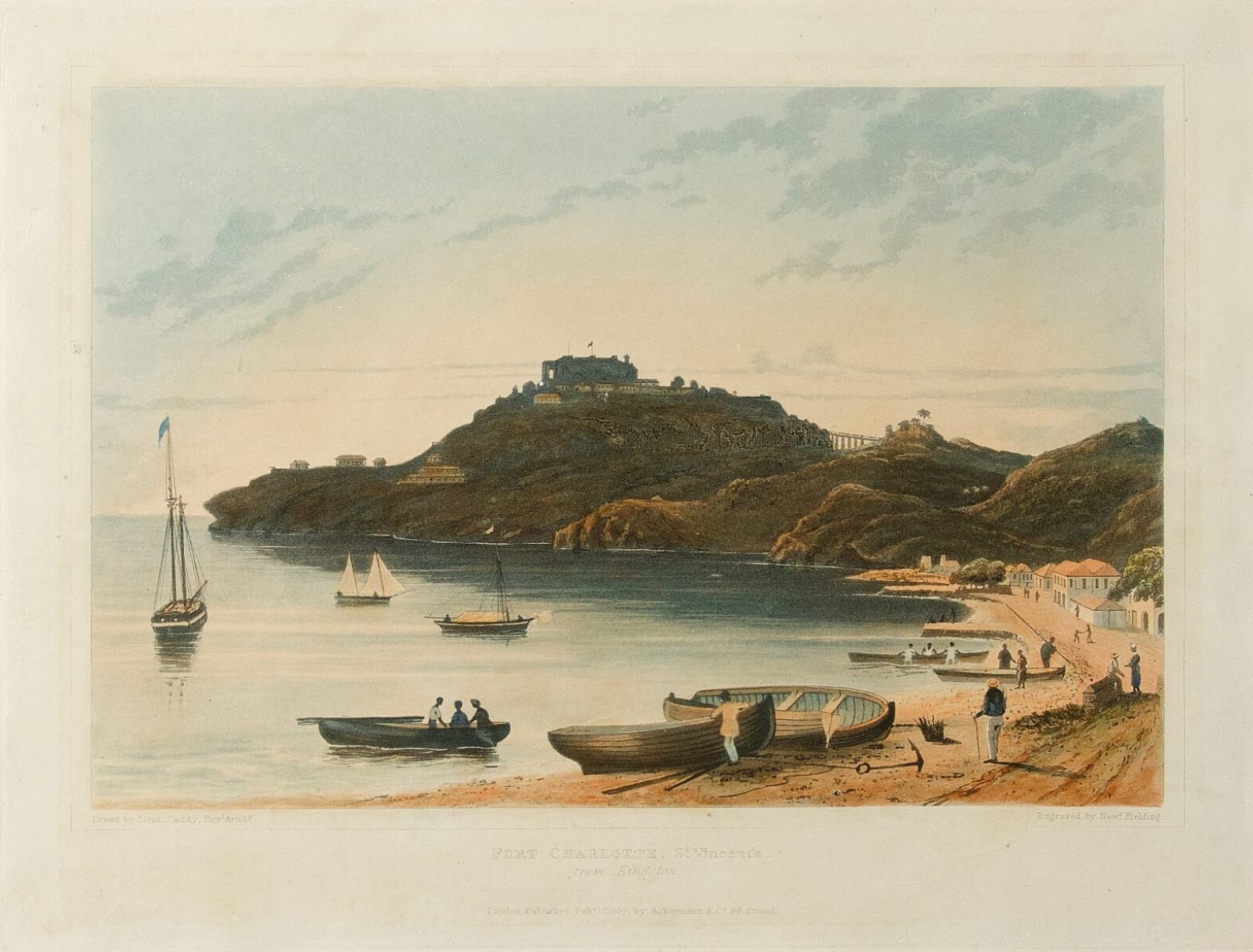
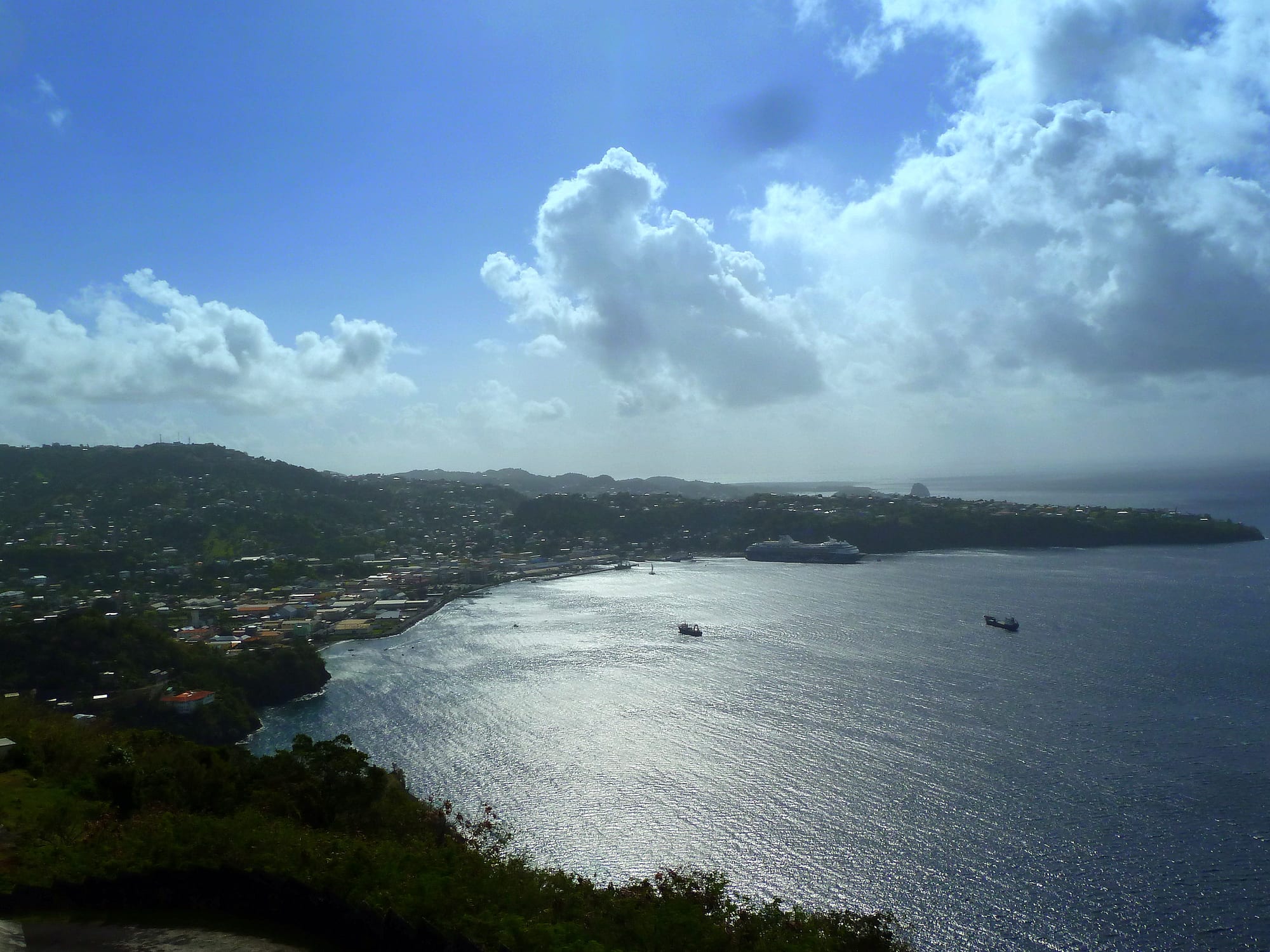
Saint Vincent and the Grenadines is a single volcanic main island — Saint Vincent, about 345 square kilometres, its northern half taken up by the active cone of La Soufrière — trailed by a chain of some thirty smaller islands and cays running south toward Grenada: Bequia, Mustique, Canouan, Mayreau, Union Island and a scatter of reefs and rocks. Around 110,000 people live in the country, the large majority on the main island, with the capital, Kingstown, on its sheltered south-west coast. The Kalinago called the island Hairouna.
This was the part of the Caribbean where the indigenous world held out longest. The Kalinago, and the Garifuna — the "Black Caribs" — who took shape here in the 17th century, kept European settlement off Saint Vincent for a century and a half after neighbouring islands had been carved into sugar estates. It took two wars and a deportation in the 1790s to break that hold. France and Britain both left their marks afterward, but the deep imprint on the population is African, and the one force that has shaped every chapter of the island's history — and never been colonised, negotiated with, or voted out — is the volcano.
A short history
- to 1700s
Kalinago Hairouna
The island is the strongest surviving centre of Carib resistance in the Lesser Antilles.
- 1600s
The Black Caribs form
Shipwrecked and escaped Africans intermarry with the Kalinago; a new people, the Garifuna, emerges.
- 1748
A "neutral island"
A European treaty leaves Saint Vincent to the Caribs; French planters settle anyway.
- 1763
British Saint Vincent
France cedes the island at the Treaty of Paris.
- 1769–1773
First Carib War
Garifuna resistance forces a boundary treaty with Britain.
- 1795–1796
Second Carib War
Chatoyer leads a rising alongside the French; it is crushed.
- 1797
The deportation
Around 5,000 Garifuna are shipped to the Bay Islands, off Honduras.
- 1834–1838
Emancipation
Slavery ends on the sugar and arrowroot estates.
- 1902
La Soufrière erupts
About 1,600 die in the north, a day before Mont Pelée on Martinique.
- 1979
Independence
Saint Vincent and the Grenadines becomes sovereign, months after another eruption.
- 2021
La Soufrière again
Explosive eruptions empty the northern third of the island.
Caribs, Black Caribs, and the neutral island
The Kalinago, or Island Caribs, had reached the Lesser Antilles from South America centuries before Columbus, absorbing or displacing an earlier Arawak-speaking population. Saint Vincent's steep windward coast and dense forest made it defensible, and it became a refuge for Kalinago pushed off flatter islands as Europeans took them. During the 17th century, Africans — survivors of Spanish slave ships wrecked near the island, traditionally dated to 1635, together with runaways from Barbados and other colonies — settled among the Kalinago, intermarried, and took up the Carib language and much of the culture. Their descendants, more numerous and more resistant to European disease than the "Yellow Caribs", became known to outsiders as "Black Caribs" and to themselves as Garinagu, or Garifuna. By the early 18th century they were the dominant power on Saint Vincent.
The 1748 Treaty of Aix-la-Chapelle declared Saint Vincent — along with Dominica, Saint Lucia and Tobago — a "neutral island", to be left to the Caribs. In practice French settlers crossed from Martinique, planted coffee, cocoa, cotton and tobacco on the leeward side, brought enslaved Africans with them, and coexisted uneasily with the Garifuna, who held the fertile windward north.
The two Carib Wars
The Treaty of Paris handed Saint Vincent to Britain in 1763, and British surveyors soon arrived to map and sell land — including Garifuna territory — and to drive a road through the north. The First Carib War (1769–1773) followed. Fighting in forest they knew intimately, the Garifuna held off British troops until a negotiated peace in February 1773 fixed a boundary line across the island: the north was left to the Caribs, who in return acknowledged British sovereignty on paper.
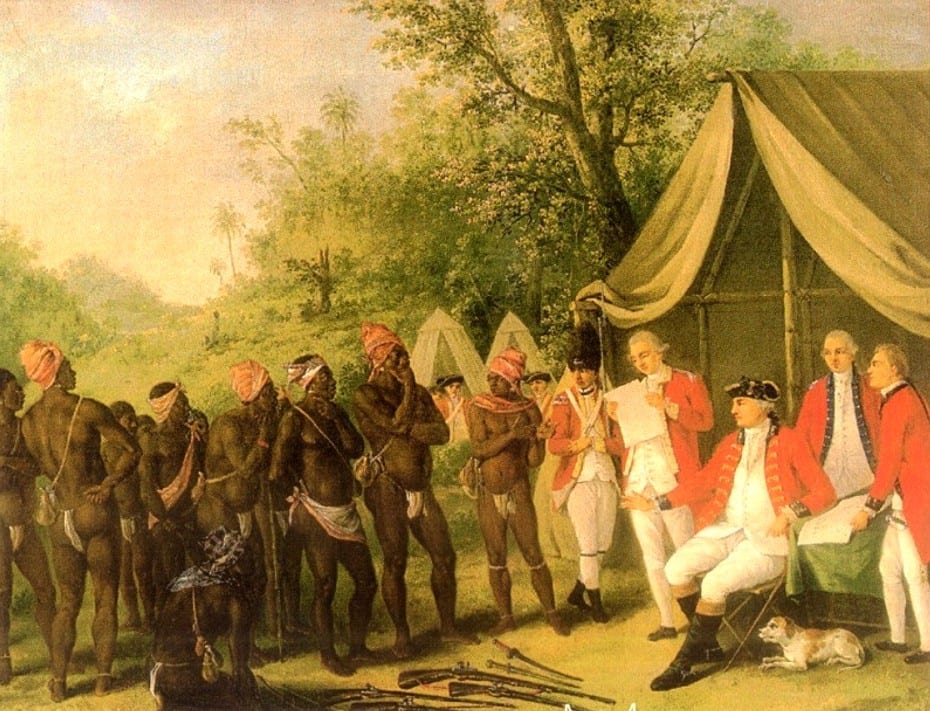
Peace held for two decades. When revolutionary France abolished slavery in its colonies and sent agents through the Windward Islands, the Garifuna paramount chief Joseph Chatoyer — Satuye — allied with the French and, in March 1795, led a general rising against the British: the Second Carib War. Chatoyer was killed within weeks, on Dorsetshire Hill above Kingstown. The war ground on for more than a year, with French troops from Guadeloupe fighting alongside the Garifuna, until British reinforcements under Sir Ralph Abercromby broke the resistance in mid-1796. Chatoyer is today the country's only National Hero, honoured every 14 March.
The deportation of 1797
Having won, Britain resolved to remove the Garifuna from Saint Vincent altogether. Around 5,000 were rounded up and held on the barren islet of Balliceaux, where roughly half died of typhus and other disease over the winter of 1796–97. In the spring of 1797 the survivors — some 2,000 to 2,500 people — were shipped to the island of Roatán, in the Bay Islands off Honduras. From there they spread along the Central American coast, and the Garifuna today are a people of Honduras, Belize, Guatemala and Nicaragua, their language, dance and music inscribed by UNESCO as intangible heritage — a nation formed on Saint Vincent and then exiled from it. A remnant, mostly "Yellow Caribs" together with Garifuna who had evaded the round-up, was allowed to remain in the north; their descendants live around Sandy Bay, Owia and Fancy to this day.
Sugar, arrowroot, and the mountain of fire
With the Garifuna gone, the whole island was opened to plantations. Sugar worked by enslaved Africans filled the estates, and Saint Vincent also became the world's leading producer of arrowroot — a fine starch ground from a rhizome, used in biscuits and infant food, and much later as a coating for carbonless and computer paper. The Botanic Gardens at Kingstown, founded in 1765 and the oldest in the Western Hemisphere, was where Captain Bligh landed breadfruit seedlings from the Pacific in 1793 — the cargo his crew had mutinied over on HMS Bounty four years earlier — intended as a cheap food for the enslaved.
Emancipation came in 1834, with full freedom in 1838. The estates wanted labour the freed population would not always give on the planters' terms, so from the 1840s they brought in Portuguese Madeirans, and in the 1860s indentured workers from India, adding small communities to a population that was already overwhelmingly African. Overhead, the volcano kept its own schedule: a large eruption in 1812, and then, on 7 May 1902, a catastrophic one that killed around 1,600 people in the north of the island — in the same 24 hours that Mont Pelée destroyed Saint-Pierre on Martinique.
Labour, the vote, and independence
Falling sugar prices, hurricanes and the 1902 eruption kept Saint Vincent poor well into the 20th century. In October 1935 a Kingstown crowd protesting new customs duties clashed with the authorities and was fired on — part of the wave of labour unrest that swept the British West Indies that decade, and the beginning of modern Vincentian politics; the druggist George McIntosh emerged as a popular leader, was charged with treason, and was acquitted. Adult suffrage arrived in 1951. Ebenezer Joshua's labour-backed People's Political Party, and then Milton Cato's Saint Vincent Labour Party, carried the island toward self-rule. Saint Vincent joined the short-lived West Indies Federation (1958–1962), became a British "associated state" with internal self-government in 1969, and reached full independence on 27 October 1979 — a parliamentary democracy within the Commonwealth, with Cato as prime minister. La Soufrière had erupted again that April, forcing some 20,000 people from the north with no loss of life; the independence celebrations went ahead months later. That December, a small armed revolt on Union Island, in the Grenadines, was put down with help from Barbados.
The Grenadines
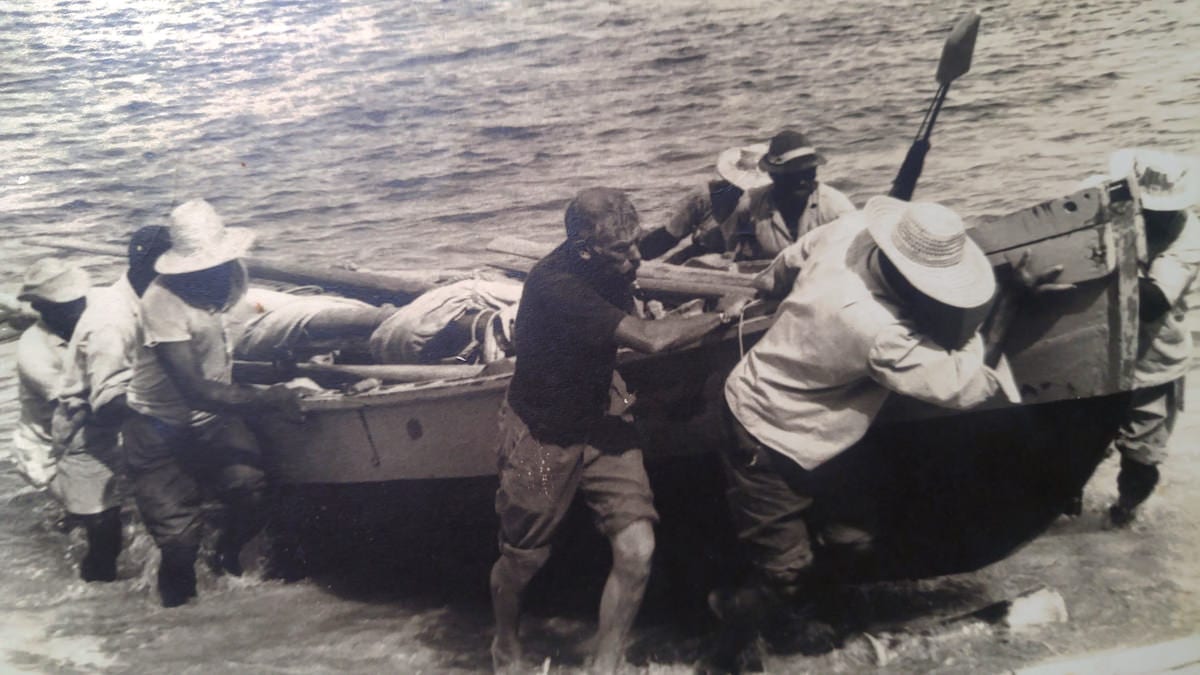
The islands trailing south from Saint Vincent have their own stories. Bequia, the largest, was settled by French and later Scottish planters and became a whaling station in the 19th century, when New England whalers recruited local crews; a handful of humpback whales are still taken there each year by hand-thrown harpoon from open sailing boats, under an international "aboriginal subsistence" quota.
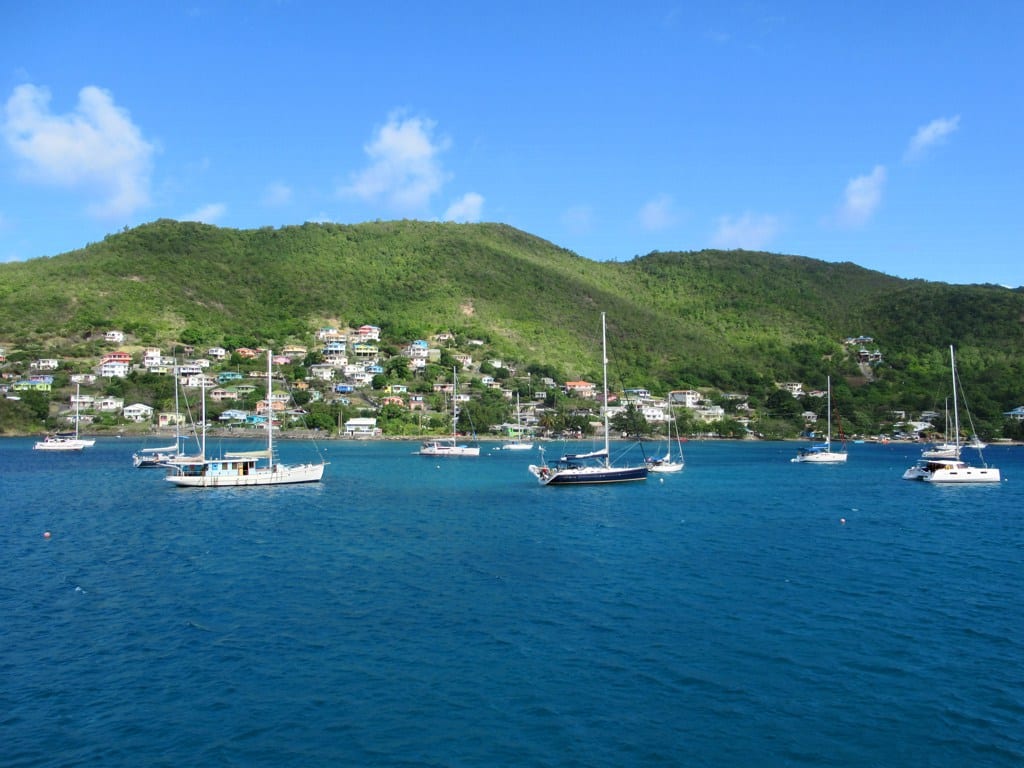
Mustique — a private island bought in 1958 and developed as an exclusive resort, where Princess Margaret was given a plot and built a house — lies a few miles from Canouan, half of which has since become a gated enclave of villas and a golf course. Union Island, Mayreau and the uninhabited Tobago Cays, now a protected marine park, are among the best-known anchorages in the Caribbean, and yacht charter has become one of the pillars of the national economy.
Saint Vincent and the Grenadines now
Politics has settled into a two-party pattern: James "Son" Mitchell's New Democratic Party governed from 1984 to 2000, and Ralph Gonsalves's Unity Labour Party has held power since 2001, making Gonsalves one of the longest-serving elected leaders in the Americas. A 2009 referendum on replacing the British monarch with a ceremonial president fell short of the majority it needed, so the country remains a Commonwealth realm, now under King Charles III. Its foreign policy has been unusually assertive for a micro-state: it maintains diplomatic relations with Taiwan, joined the Venezuela-led ALBA bloc, and in 2020–21 held a rotating seat on the UN Security Council — the smallest country ever to do so. Argyle International Airport, opened in 2017 after years of construction, finally gave the main island a runway able to take large jets.
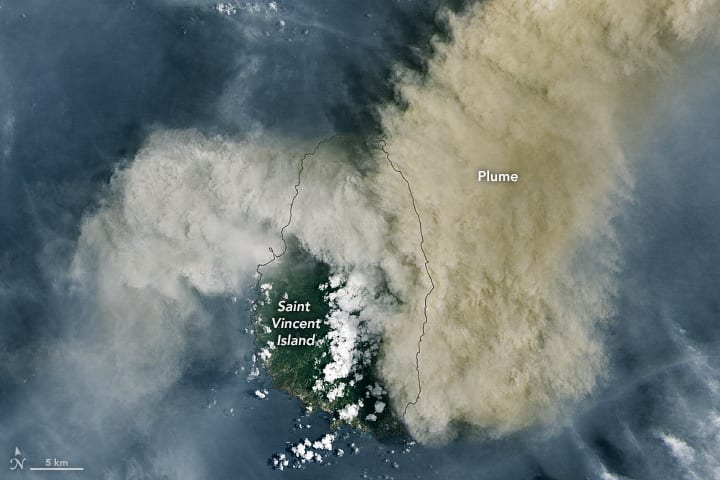
The banana trade that once underwrote rural life collapsed after Europe's guaranteed markets for Caribbean fruit were ruled unlawful in the 1990s, and the economy now leans on tourism and yachting in the Grenadines, remittances, some offshore finance, and farming. In April 2021 La Soufrière erupted explosively again after four decades of quiet, burying the northern third of the island in ash, forcing about 20,000 people from their homes, and cutting water and power for weeks. No one was killed — but it was a reminder that the mountain still sets the terms.
What Saint Vincent and the Grenadines carries
The country's history turns on a single fact: this is where the indigenous Caribbean held out longest, and where a new people, the Garifuna, was born — and then almost wholly deported. What came after was a compressed version of the wider West Indian story: sugar and slavery, arrowroot and bananas, emancipation and indenture, labour revolt and independence. The Garifuna diaspora in Central America still traces its origin to this island; the small Carib community in the north never left; and La Soufrière, which has interrupted every era of that history, is still active — the one power on Saint Vincent that has never answered to anyone.