Culture & Customs · Saint Vincent and the Grenadines
Saint Vincent and the Grenadines: Nine Mornings Before Christmas
A church-going nation with a Garifuna hero, a once-banned faith now honoured with a holiday, and a festive calendar that runs from pre-dawn sea baths in December to a summer carnival of steel pan and calypso
By Worldlore Editorial · 30 September 2026
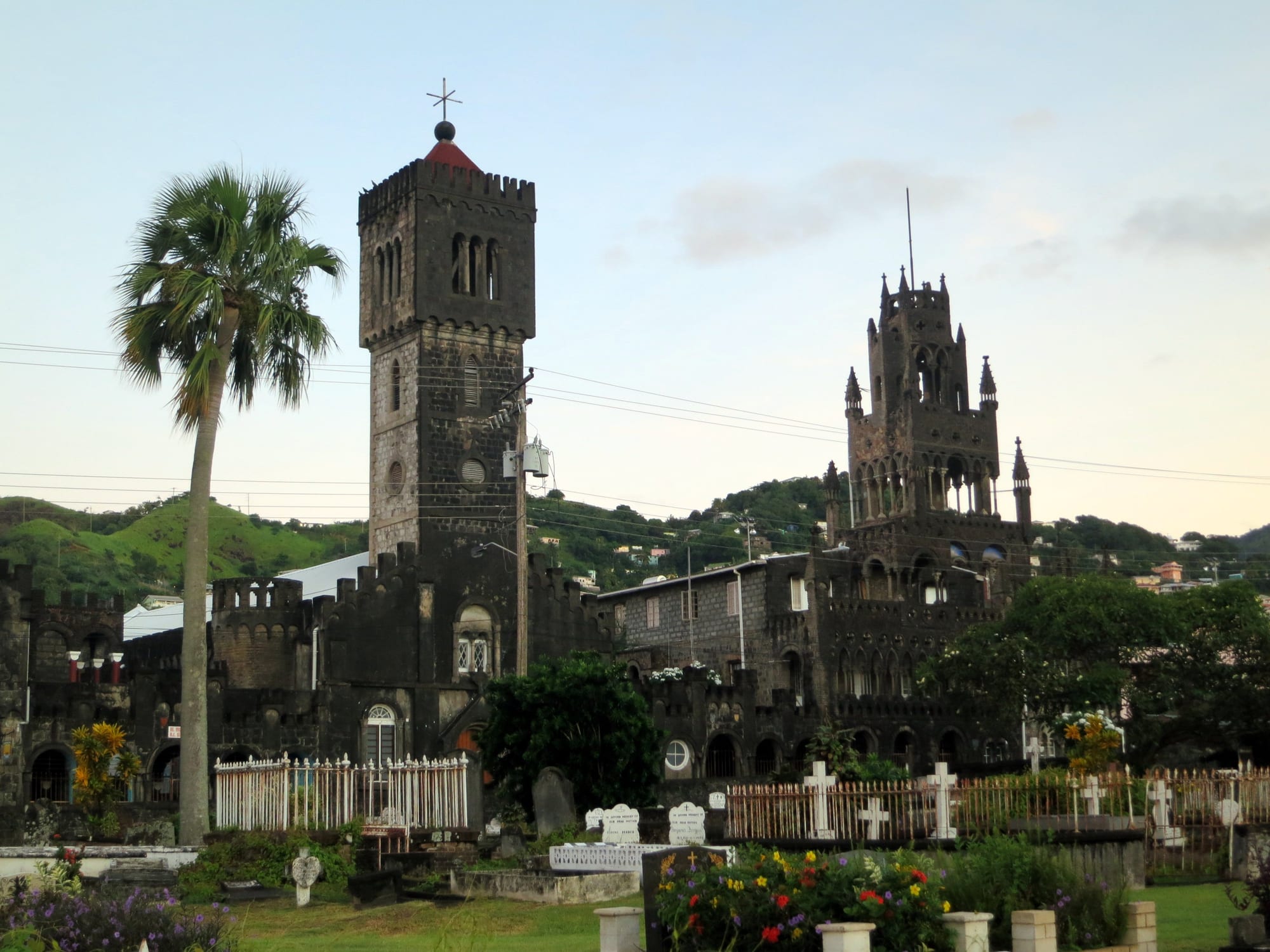
It is four o'clock on a December morning, still dark, and the streets are already filling. Across Saint Vincent and the Grenadines, people have set their alarms for the small hours so as not to miss Nine Mornings, the country's own countdown to Christmas. Some walk down to the sea for a dawn bath; others ride bicycles through the lanes, dance at early fetes or gather around a street concert beneath the Christmas lights. The custom is thought to have grown out of the Catholic novena, the nine days of prayer before Christmas, when worshippers leaving early services took to walking the streets and bathing in the sea. It is repeated for nine mornings in a row, and it captures a good deal of what the country values: faith and fun in the same breath, a community that turns out together, and a tradition that Vincentians regard as theirs alone.
Faith, identity and values
Saint Vincent and the Grenadines is a strongly Christian country, and Sunday still feels like a day set apart, with many people spending the morning in church and shops and restaurants opening only for limited hours. The constitution itself declares that the nation "is founded on the belief in the supremacy of God". According to the 2023 census, about 78 per cent of people identify as Christian. Pentecostals form the largest group, at around 26 per cent, and Anglicans, Seventh-day Adventists, Baptists, Methodists and Catholics all have sizeable congregations, along with a range of smaller evangelical churches. Rastafarians make up just under 1 per cent of the population, and there are small Muslim, Hindu and Baha'i communities.
One faith holds a particular place in the national story. The Spiritual Baptists, once called Shakers and sometimes known locally as the Converted, combine Christian worship with rituals of African origin. Their spiritual leaders, known as pointers, are consulted in times of personal or spiritual trouble. The faith was outlawed for more than half a century under colonial rule, and today it is recognised with a national public holiday of its own.
Beneath the churches lies an older layer of belief that survives mainly in folklore. Stories are still told of jumbies, or restless spirits; of the diablesse, a demon who appears as an alluring woman; and of the hag, a blood-drinking creature of the night. Obeah, a form of sorcery with African roots, is spoken of warily, and some older households have kept small protective habits, such as a bottle of hot pepper sauce by the bed.
National identity looks back to the country's Indigenous and Garifuna heritage. Its only national hero is Paramount Chief Joseph Chatoyer, the Garifuna leader killed by British troops in 1795 while resisting colonial rule, and March is set aside as National Heroes and Heritage Month, with school folk festivals of Garifuna dance, drumming and choral speaking. The values most often named by Vincentians themselves are generosity and hospitality. One ethnographic survey observes that people give of their time and resources to an extraordinary degree, and that children are raised by the whole household and wider family rather than by parents alone, which gives them a strong sense of security and of belonging to something larger.
Greetings and meeting people
English is the official language, but most Vincentians speak Vincentian Creole, known simply as "dialect". It can be hard for a newcomer to follow at first, though the ear adjusts quickly. Everyday encounters start with a greeting before any question or request, and the respectful form, above all with older people, is the time of day: "good morning", "good afternoon" or "good evening". Between friends things are looser, and "What di' man say?" is a typical casual opener. Launching straight into business without that first exchange of greetings can come across as abrupt.
Clothing is modern and Western, and Vincentians tend to favour light, bright colours. Casual dress is normal in town, although some restaurants and venues expect something smarter, and schoolchildren wear uniforms. One point of dress is a matter of law rather than taste: it is illegal for anyone, including children, to wear camouflage clothing.
Attitudes to personal life are generally conservative. The UK government notes that LGBT+ travellers may receive unwanted and negative attention when showing affection in public, and that some same-sex sexual activity is illegal. Cameras call for some tact too. Older ethnographic accounts warned that foreigners photographing people without asking could provoke real anger, and asking first remains the simple courtesy, whether the subject is a market vendor, a fisherman at work or a carnival reveller.
Hospitality and being a guest
Generosity shows most clearly around food. A host who invites someone to eat is expected to keep feeding the guest until they are satisfied, so it is wise to pace oneself, accept a second helping gracefully and leave the table visibly content. On special occasions strong local rum is poured for guests, traditionally offered more readily to men than to women, though nobody is obliged to drink it.
Much social life happens outdoors after dark. Evening gatherings in the open air, with singing, dancing and a good deal of talk, are a favourite form of recreation, and men gather over games of dominoes. Cricket is the dominant sport, and conversation turns readily to politics, a subject Vincentians are known to debate with enthusiasm.
Festivals and life's big moments
The festive year is full. March brings Heroes and Heritage Month, with National Heroes Day on 14 March, the anniversary of Chatoyer's death. Easter is marked by a gospel music festival and by the Easter Regatta on Bequia, where the island's traditional wooden double-ended sailing boats race alongside visiting yachts. The Maroon Festival in the southern Grenadines keeps alive songs, dances and drum rhythms drawn from West African traditions, including the Big Drum dance. August is Emancipation Month, a season of remembrance rather than revelry, and Independence Day on 27 October recalls independence from Britain in 1979, with parades across the country. December belongs to Nine Mornings, Christmas lights, concerts and competitive carol singing.
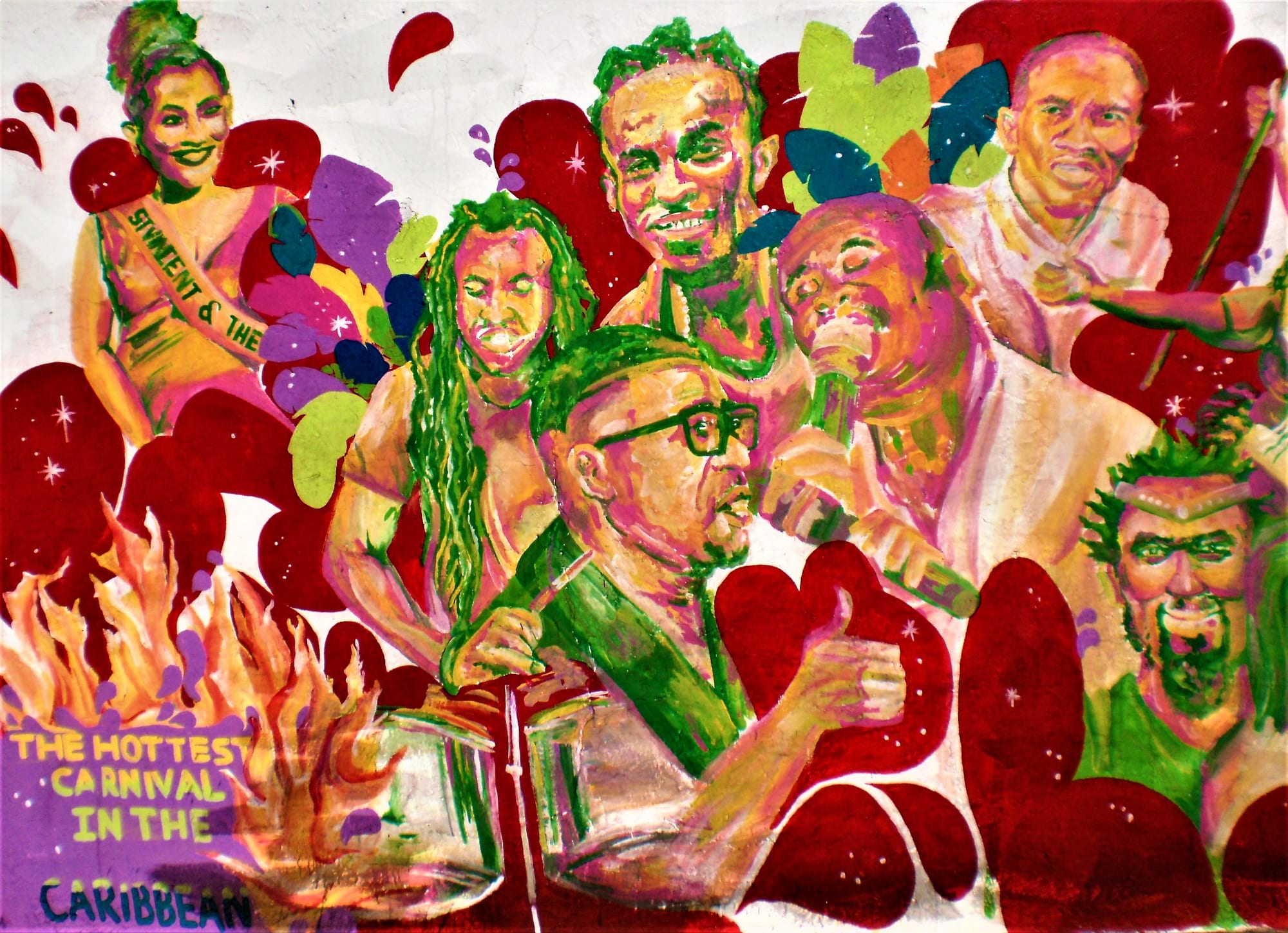
The high point of the year is Vincy Mas, the national carnival. For most of its history carnival was held on the Tuesday before Ash Wednesday, but in 1977 it moved to the summer, and it now fills more than a week in late June and early July. Steel pan orchestras compete at Panorama, calypsonians and soca artists contend for their crowns, and the final days bring J'ouvert, a street party that starts before dawn, followed by the parade of costumed masquerade bands through the capital.
Life's milestones are marked by the religious ceremonies of each family's faith, but older customs run alongside them. By tradition, a newborn's umbilical cord is planted beneath a fruit-bearing tree, in the hope that the child will have a healthy and productive life, and a baby is named a few weeks after birth. Death is followed by a series of gatherings rather than a single farewell. Among the Spiritual Baptists, memorial services are held on the third, ninth and fortieth nights after a death and on later anniversaries, with the nine nights and forty days the most important, and mourners are served hot cross buns and cocoa tea. On All Saints' and All Souls' Eves, candles are lit on graves, following a belief that the dead wander on those nights and need light to guide them home.
Arts, crafts and music
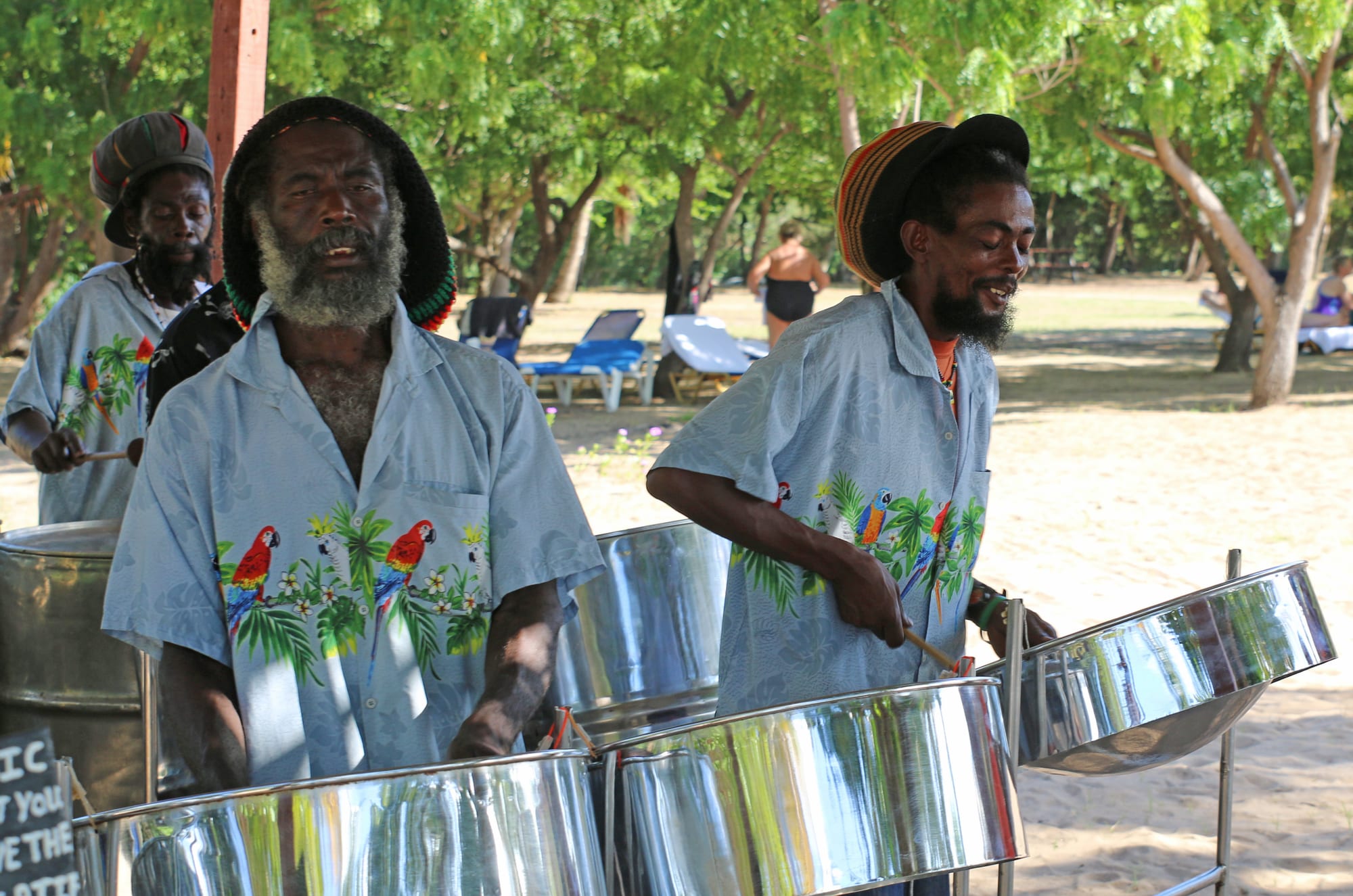
Music is the country's great shared art. Calypso, with its satirical and political lyrics, has long been the voice of carnival, and the steel band, which reached the island quickly from Trinidad, transformed it; soca, reggae and gospel now share the airwaves with calypso. String band music and quadrille dancing are still enjoyed, and Big Drum music, with its satirical songs led by a female singer, is performed at festivals in the Grenadines, including on Union Island.
The spoken word is valued too. Vincentians prize the ability to tell a good story, joke or riddle and to tell it well, and on moonlit nights in rural villages impromptu speaking and joke contests have long been a form of entertainment.
The most distinctive craft is boatbuilding. In the 1870s New England whaleboats were brought to Bequia to start a whaling station, and they became the model for the Bequia double-ender, a sturdy wooden sailing boat whose bow and stern are almost identical. Double-enders are still built by hand in backyards and on beaches, and they are raced every Easter. Model boat building is an intergenerational craft in its own right, and finely made miniature boats are among the islands' best-known handicrafts. Bequia also retains a small traditional whale hunt, carried out from open boats with harpoons and lances under a limited quota of up to four humpback whales a year, permitted by the International Whaling Commission as an aboriginal subsistence hunt.
Dos and don'ts for visitors
- Do open every exchange with "good morning", "good afternoon" or "good evening", especially with older people.
- Do expect a quieter Sunday, when many people are at church and shops and restaurants keep short hours.
- Do accept food offered in a home graciously; hosts like to see their guests eat their fill.
- Do ask before photographing people, including vendors, fishermen and carnival revellers.
- Don't wear or pack camouflage clothing, which is illegal for everyone, including children.
- Don't carry anything through customs for someone else; penalties for all drug offences are severe.
- Do be aware that attitudes to LGBT+ people are largely conservative and that some same-sex sexual activity is illegal.
- Do rise early at least once during Nine Mornings if visiting in mid to late December.
What to take away
Vincentian culture is warm, devout and sociable in equal measure, and visitors who greet people properly, dress with a little care and accept hospitality with good grace will find themselves welcomed into a nation that likes nothing better than a crowd, a song and an early start.