Daily Life · Saint Lucia
Saint Lucia: Two Languages, One Coast
A steep, volcanic island where nearly everyone speaks a French-based Creole at home and English at school, and where the mountainous interior pushes almost all of daily life onto a narrow ring of coastal towns
By Worldlore Editorial · 30 September 2026
Saint Lucia is a small, mountainous island where nearly everyone grows up speaking two languages: Kwéyòl, a French-based Creole used at home and in the street, and English, the language of school, government, and business. The volcanic interior is too steep and forested for much settlement, so the roughly 180,000 people who live here are concentrated in a ring of towns and villages along the coast, from the capital Castries in the north to Soufrière and Vieux Fort in the south. Catholic church bells, market-day crowds, and a shared pride in the island's outsized list of achievements for its size run through daily life nationwide.
Family and home life
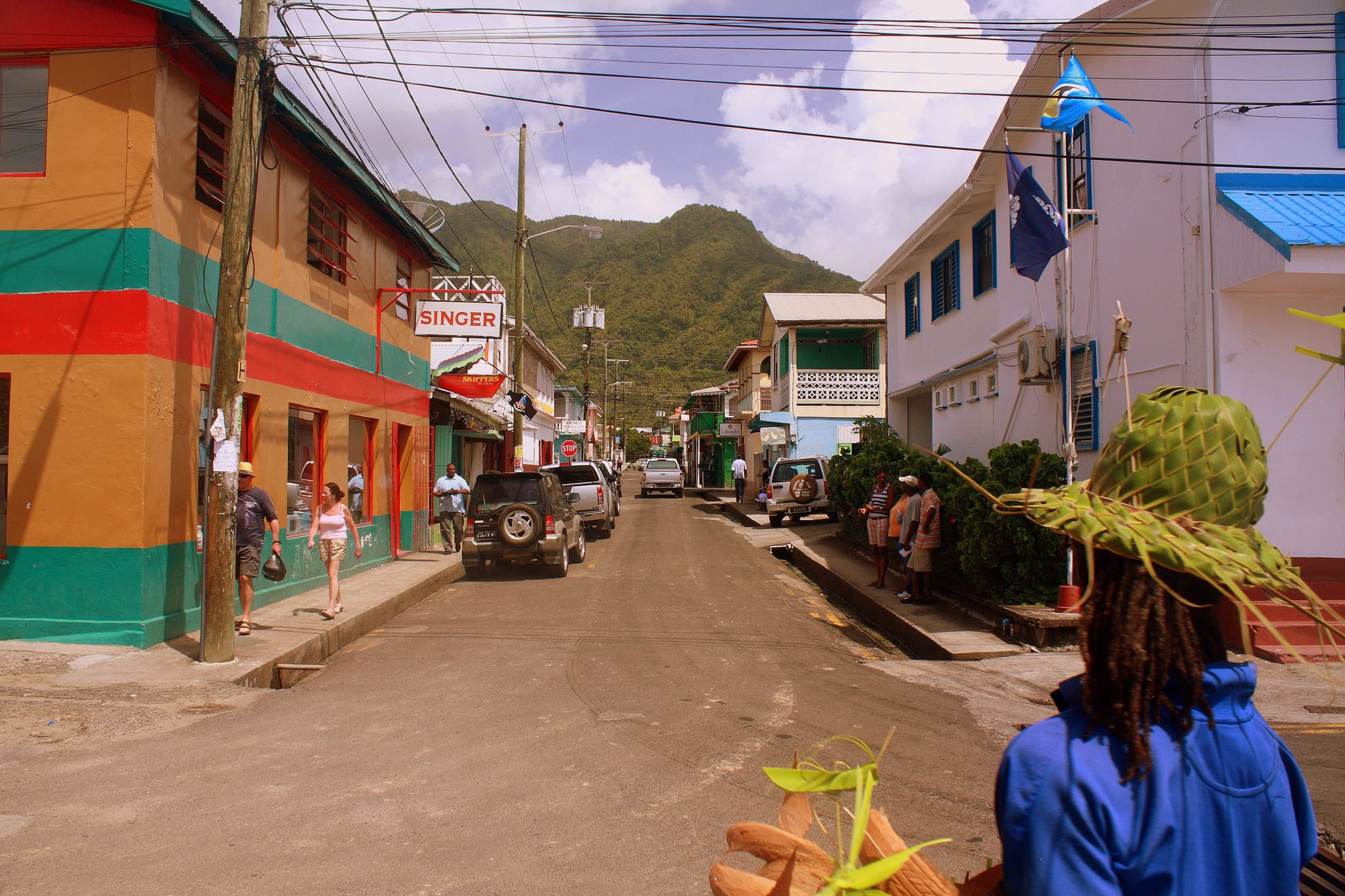
Extended family remains a strong presence in everyday life, even as the population has grown modestly in recent decades — the 2022 census recorded just under 173,000 people, up from around 166,000 in 2010. It is common for grandparents to live near or with their adult children and to take an active role in raising grandchildren, particularly where both parents work. Housing ranges from modest concrete-block homes on the hillsides above Castries to the wooden, shuttered, brightly painted buildings that line the streets of smaller towns like Soufrière, many combining a family home with a small shop or business on the ground floor.
Work, school and the rhythm of the day
The school day generally runs from around nine in the morning to three in the afternoon for primary pupils, with secondary schools starting earlier, around eight, and finishing by mid-afternoon. Most adults work a Monday to Friday week in tourism, agriculture, government, or small trade, with Saturday mornings given over to market shopping and errands. Kwéyòl is widely spoken at home and in informal settings, while English carries the school day, official paperwork, and most workplace communication, so most Saint Lucians move between the two without much thought.
Community life and public spaces
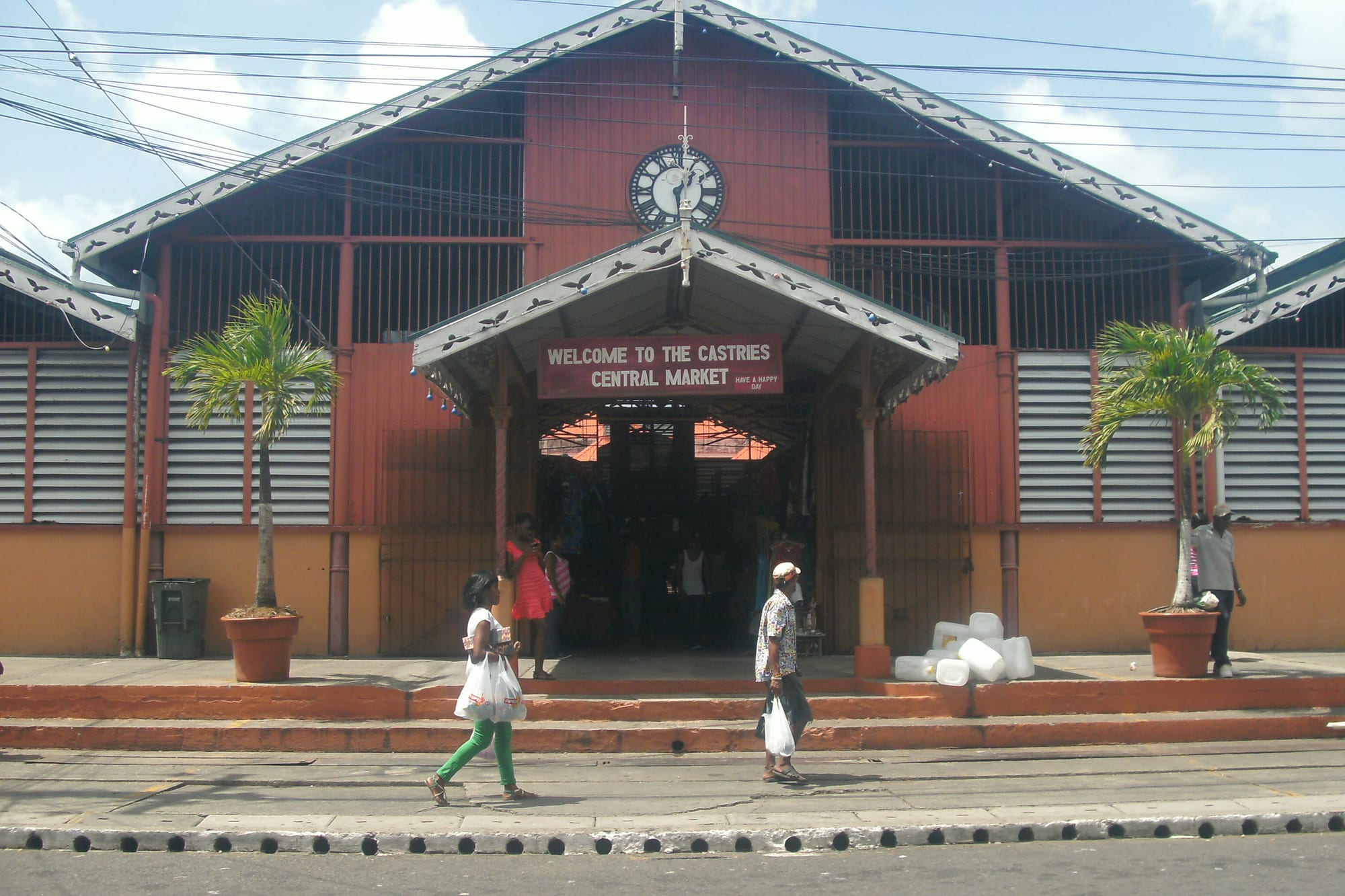
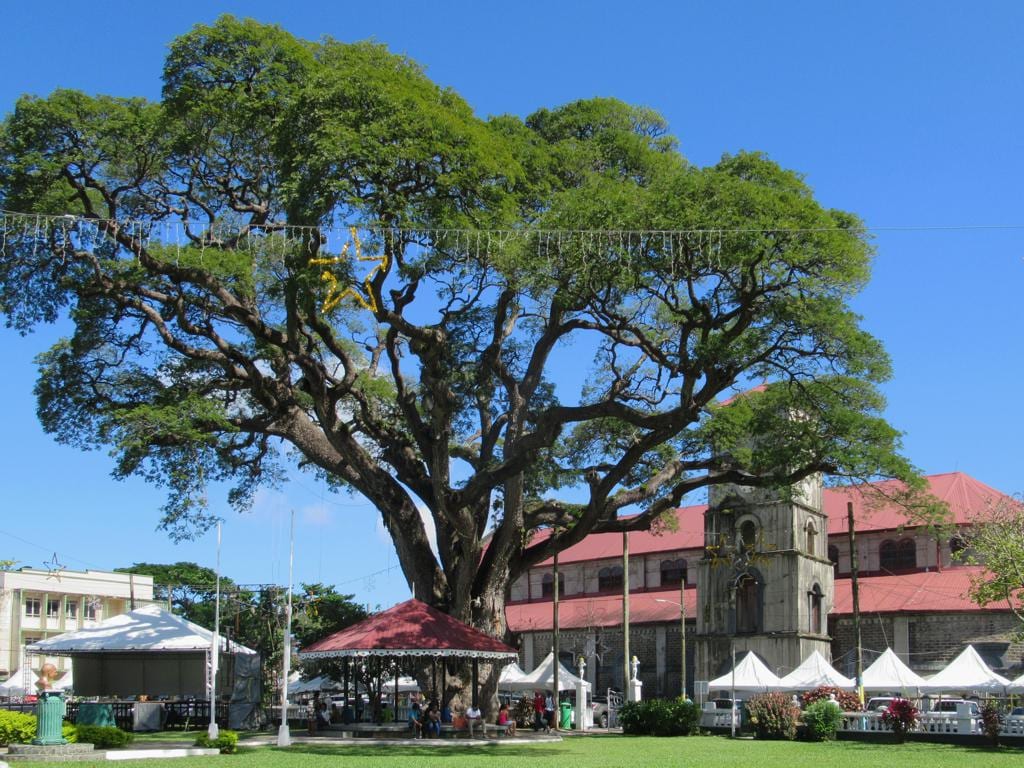
The Castries Central Market, with its distinctive red roof and clock tower, is the capital's daily gathering point, selling produce, spices, and crafts to a steady flow of shoppers from early morning. Smaller versions of the same rhythm play out in Soufrière, Vieux Fort, and other towns, each with its own market day. Derek Walcott Square in Castries, a shaded park named for the island's Nobel laureate poet, is a common meeting and resting point in the city centre. Minibuses, privately owned and identified by route numbers rather than a fixed timetable, are the main way most people without a car get around, since the coastal road is often the only practical route between towns.
Free time and weekends
Sundays for many families centre on church (around half of Saint Lucians are Catholic, with growing Adventist and Pentecostal congregations), followed by family lunches that often run long into the afternoon. Cricket and football are followed closely and played informally on open ground in towns and villages across the island. Where distance and transport allow, weekend trips to the beach are common, usually to the calmer Caribbean-facing west coast rather than the rougher Atlantic side. Jounen Kwéyòl, a nationwide celebration of Creole culture held on the last Sunday of October, brings food, music, and national dress to the host towns and villages chosen each year.
A visitor's ordinary day
Prices are in Eastern Caribbean dollars, though US dollars are widely accepted; cards work in hotels and larger restaurants, but minibuses, markets, and small shops run on cash. It is worth confirming a taxi fare, and whether it is in EC or US dollars, before setting off. The coastal road between Castries and Soufrière is narrow, steep, and slow, so the journey takes longer than the distance suggests. Many shops in Castries and other towns close by early evening, and Sundays are noticeably quieter.
What to take away
What shapes an ordinary day in Saint Lucia is less any single custom than the island's own geography: a steep, forested interior that leaves most people living, working, and speaking their two languages within sight of the same narrow coastal strip.