Culture & Customs · Saint Lucia
Saint Lucia: Roses, Marguerites and Madras
A Catholic, Kwéyòl-speaking island of rival flower societies with their own kings and queens, a Creole Day that crowns a whole month of heritage, and lanterns that light the way to its patron saint's feast
By Worldlore Editorial · 30 September 2026
On the morning of 30 August, a procession forms outside a church. At its head walk a king and a queen, followed by a whole mock court: dukes and duchesses, princes and princesses, soldiers, policemen, magistrates, doctors and nurses, all magnificently dressed. They have come from Mass on the feast of Saint Rose of Lima, and after parading through the streets they will sit down to a banquet before the dancing begins, with the quadrille, the mappa and the belair carrying on into the night. Seven weeks later their rivals, the society of La Marguerite, will do the same. The two flower societies sum up much of Saint Lucia: devoutly Catholic, fond of pageantry and ceremony, rooted in Creole song and dance, and with a streak of sly humour running through it all.
Faith, identity and values
Saint Lucian culture is a blend of African, French and British inheritances, and religion shows the French layer most clearly. In the 2022 census, about half the population was Roman Catholic, followed by Seventh-day Adventists at about 11 per cent and Pentecostals at around 9 per cent, with Rastafarians, Baptists, Anglicans and other churches among the smaller groups; some 14 per cent said they had no religion. Catholic holidays and sacraments are observed across the island and churches are everywhere. The feasts of the church calendar shape much of public life, from the patron-saint days of the flower societies to the island's own National Day on the feast of Saint Lucy, and attitudes to dress and behaviour are, on the whole, quite conservative.
Alongside the churches, older beliefs persist. Anthropological accounts describe obeah, a form of sorcery rooted in the idea that the world is a dangerous place where harm can come from spirits and human agents; long outlawed, it was decriminalised in 2004 and is still said to be practised quietly by people who also attend Mass. Bush medicine, in the form of teas brewed from local plants, remains a common remedy alongside formal healthcare. In a few communities the kélé ceremony pays homage to the ancestors, a reminder of the African traditions that enslaved people carried with them, and a singing ceremony known as a-bwe is held in some places towards the end of the year.
Language is part of identity. English is the official language, but Kwéyòl, the French-based Creole, is the language most Saint Lucians grow up hearing at home. Its standing has changed dramatically within living memory. One broadcaster has recalled that children were once beaten for speaking it at school; today it is taught in classrooms, has a standardised spelling and dictionaries of its own, and is a matter of open national pride.
Greetings and meeting people
Manners are taken seriously, and the greeting comes first. A "good morning", "good afternoon" or "good night", the last used in the evening in much the same way as "good evening", is heard on entering a shop, a restaurant or a public bus, and it is expected before anything else is said. Launching straight into a question without one can draw curious looks and earn the dreaded label of being unmannerly. Once the greeting is done, a little light banter is welcome, particularly with vendors and anyone providing a service. Elders are treated with respect.
Visitors will hear Kwéyòl all around them, and the tourism authority presents it as a vivid part of the island's heritage rather than something to be ignored. Life also moves at a relaxed pace, which the authority itself suggests visitors build into their plans. Conversations are not rushed, and impatience rarely produces a better result.
Public behaviour is conservative. The UK government's travel advice notes that open displays of affection are uncommon for any couple and can attract negative attention, and attitudes towards LGBT people remain largely conservative, although the courts struck down the laws against same-sex relations in 2025. It is also illegal for anyone, children included, to wear camouflage clothing. Swimwear belongs on the beach: a cover-up is expected before walking into a restaurant or any other place of business, and going topless or nude on the beach is firmly frowned upon.
Hospitality and being a guest
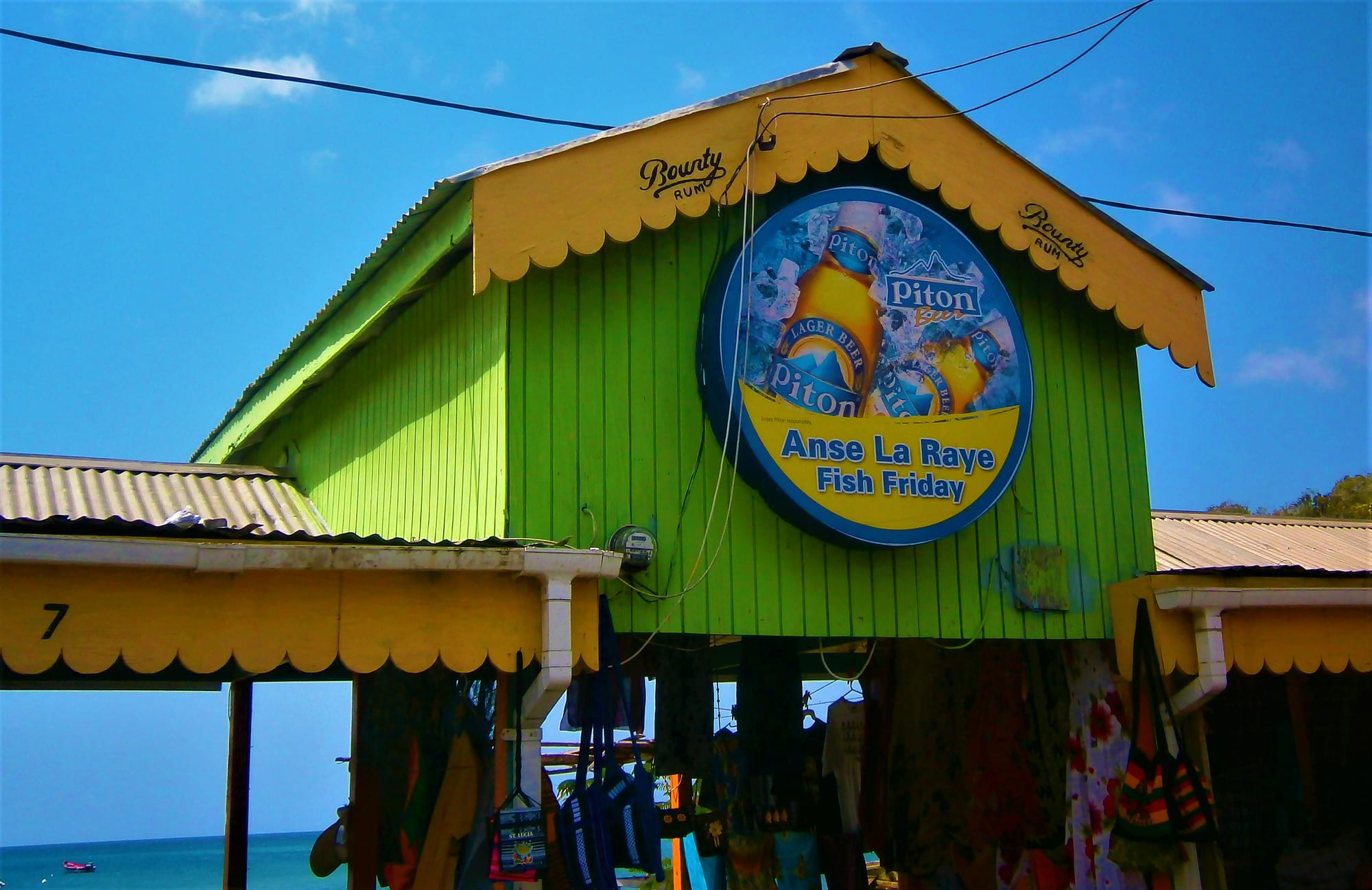
Much social life happens in the open air. Friday-night street parties, known as jump-ups, where grills line the road, music plays and people move between food stalls eating, dancing and talking late into the night, are a fixture in towns and fishing villages. The tourism authority notes that the best known has taken place every week for more than fifty years, rain or shine, and that locals and visitors gather side by side. Joining in is the easiest way to meet people on their own terms.
The flower societies show a more formal side of hospitality. In the months before each feast, members gather for séances, all-night sessions of singing, dancing, drinks and games led by the chantwelle, or lead singer, who sets the tone of the evening. Strict protocol applies: every visitor and member bows to the king and queen on entering, and anyone who breaks the rules is brought before the society's magistrate for a mock trial and fined.
In restaurants and hotels, tipping is appreciated, though a service charge is often already included in the bill, so it is worth checking before adding more. Many restaurants, resorts and special events favour smart-casual dress in the evenings. Visitors who join a congregation for Sunday worship will find no formal dress code, but conservative clothing is the rule: moderate-length dresses and skirts, blouses and trousers rather than anything revealing.
Festivals and life's big moments
The two flower festivals are the island's most distinctive celebrations. La Rose honours Saint Rose of Lima on 30 August, and La Marguerite honours Saint Margaret Mary Alacoque on 17 October. Each is the climax of a long season of séances, and each feast day follows the same pattern: church services, a procession of the society's court in costume, a banquet and dancing. The Cultural Development Foundation describes the tradition as the invention of the peasant class, staging a parody of their social superiors with elaborate European-style pageantry. UNESCO's account traces the festivals back more than 250 years and links them to community resilience in the face of slavery, and in 2025 it funded consultations with the societies towards nominating them for its list of intangible cultural heritage.
October belongs to Kwéyòl. Jounen Kwéyòl, or Creole Day, began in 1983 as a regional radio link-up and became a community celebration the following year; it is now held on a Sunday in late October, close to International Creole Day on 28 October, at the end of a heritage month organised largely by the Folk Research Centre, which calls it the biggest national cultural activity on the island. Host communities stage Creole Masses, food fairs, performances and demonstrations of old skills, from long sawing of timber to bamboo bursting, and people of all ages wear madras. The formal national dress is the wob dwiyet, a patterned dress worn with a shawl over a white petticoat; the less formal jip pairs a madras skirt with a white embroidered blouse and a triangle of satin over the shoulder.
December brings light. National Day on 13 December is the feast of Saint Lucy, whose name the island bears, and is observed as a Festival of Light. Lanterns were traditionally hung in the doorways of homes to light the way, and that custom has grown into a lantern competition in early December, in which young and old make lanterns from natural and recycled materials and coloured paper. The celebrations lead to a Parade of Lanterns, the switching on of Christmas lights and fireworks, and since 2013 paper lanterns carrying wishes and prayers have been set afloat on the harbour after a procession led by masqueraders. Early December also brings the Festival of Carols, which gathers up to twenty choirs and soloists with the Royal Saint Lucia Police Band and marks the traditional opening of the Christmas season.
The rest of the year has its own markers. Independence Day on 22 February and Emancipation Day on 1 August are public holidays, and Carnival, a month of calypso, soca and steelpan competitions and costume building, ends with two days of costumed bands parading through the streets in July. The Cultural Development Foundation calls it the island's largest cultural festival.
Death is marked with both church ritual and community. Accounts describe how, when someone dies, relatives and friends gather for a wake at the family home, bringing coffee, sugar, rum and juices, before a Catholic Mass and burial. In rural areas a storyteller may lead the night in riddles, singing, games, food and drink, and a wake can continue for nine consecutive nights.
Arts, crafts and music
Traditional music is played on what the Cultural Development Foundation calls rustic instruments: the violin, banjo, cuatro, guitar, the shak-shak rattle, the baha bass pipe, a scraped grater and drums. They accompany the flower societies and the old dances of the séance and the feast, among them the quadrille, danced in the Creole manner known as kwadril. Masquerade is another living tradition, and UNESCO supported a regional project in the early 2000s to revive masquerade performance and costume making in Saint Lucia, Dominica and Saint Kitts and Nevis, with an eye to passing the skills on and making them a source of income.
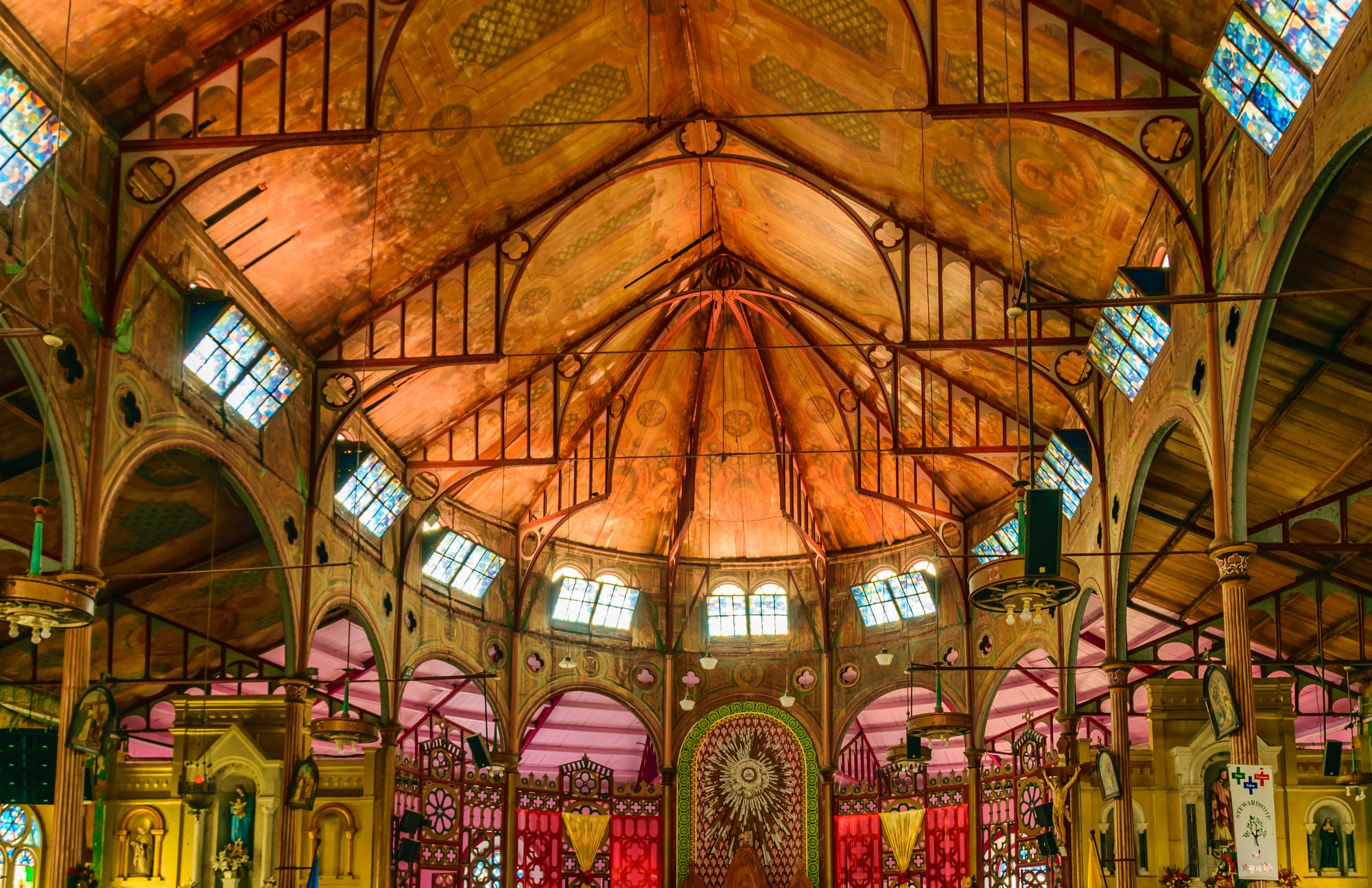
Saint Lucia's best-known visual artist, Dunstan St Omer, made the island's churches his canvas and dedicated his work to the Virgin Mary. His argument was simple: a Christ who could not be Black was of no use to the people he painted for. Besides the cathedral, he painted altarpieces for village churches in which the Holy Family appears as Black, surrounded by Saint Lucian figures such as singers, dancers, musicians, a banana worker and an Amerindian mother and child, so that the church seemed to belong to the community around it. His sons, among them Luigi St Omer, also became painters.
Crafts remain part of everyday culture. Clay coal pots, baskets and wicker furniture made by methods handed down from the island's Amerindian past are among the skills shown off each year on Jounen Kwéyòl, when the Creole heritage month puts traditional dress, food, language and technology on public display.
Dos and don'ts for visitors
- Do say "good morning", "good afternoon" or "good night" on entering a shop, bus or restaurant, before asking for anything.
- Do put on a cover-up before leaving the beach, and dress conservatively for church.
- Don't wear camouflage clothing of any kind; it is illegal for adults and children alike.
- Do keep public displays of affection discreet, as they are uncommon and can draw unwanted attention.
- Do allow extra time for everything; life runs at a relaxed pace.
- Do check whether a service charge has been added before tipping.
- Don't go topless or nude on the beach.
- Do time a visit for Jounen Kwéyòl in October, the flower festivals on 30 August and 17 October, or the Festival of Light in December.
What to take away
Saint Lucia's customs mix Catholic ceremony, Creole wit and a love of spectacle, and visitors who greet people properly and join in at a festival or a Friday-night street party will find the island's courtesy returned many times over.