History · Saint Kitts and Nevis
Saint Kitts and Nevis: The Mother Colony
The first English and French settlement in the Caribbean — a sugar island of extraordinary wealth and brutality, the birthplace of Alexander Hamilton, and the smallest sovereign state in the Americas, still arguing over whether it should be one country or two
By Worldlore Editorial · 10 September 2026
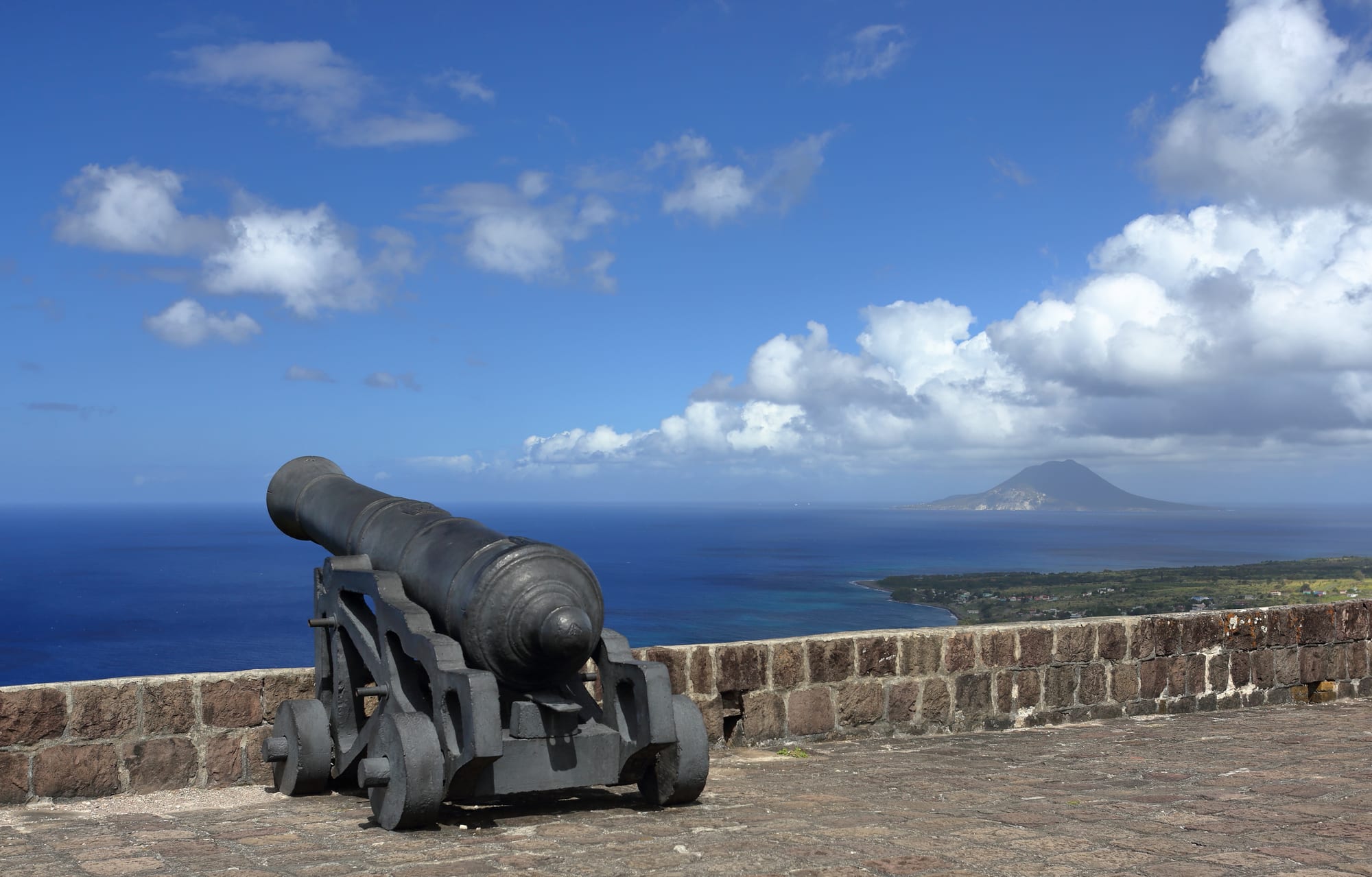
The smallest country in the Americas
Saint Kitts and Nevis is a two-island federation in the northern Leeward Islands, with about 48,000 people — the smallest sovereign state in the Americas by both area and population. Saint Kitts (formally Saint Christopher) and its smaller partner Nevis, separated by a two-mile strait, were the launching point for English and French colonisation of the whole Caribbean, and for two centuries they were among the most profitable places on Earth, producing sugar with enslaved African labour on a horrific scale.
A short history
- pre-1600s
The Kalinago
The islands are part of the Carib world.
- 1624–1625
First settlements
English, then French, colonists land on Saint Kitts.
- 1626
Kalinago Bay massacre
Settlers kill much of the island's Indigenous population.
- 1620s–1713
Shared island
England and France divide Saint Kitts; repeated wars.
- 1713
British Saint Kitts
France cedes its share at the Treaty of Utrecht.
- 1783
Brimstone Hill falls and is retaken
The fortress changes hands in the American war.
- 1834–1838
Emancipation
Slavery abolished; former slaves kept working via "apprenticeship".
- 1967
Associated state
Saint Kitts, Nevis and Anguilla gain internal self-rule; Anguilla revolts and leaves.
- 1983
Independence
Saint Kitts and Nevis becomes sovereign.
- 1998
Nevis referendum
A vote to secede falls just short of the two-thirds threshold.
The first colonies
The islands were inhabited by the Kalinago when Thomas Warner established an English settlement on Saint Kitts in 1624, followed within a year by a French party. In 1626 the two groups of settlers combined to attack the Kalinago, killing a large number at a site still called Bloody Point and expelling or enslaving the rest. Saint Kitts then served as the base from which the English colonised Nevis (1628), Antigua and Montserrat, and the French colonised Guadeloupe and Martinique — hence its nickname, "the Mother Colony of the West Indies". The two European powers partitioned Saint Kitts itself, the English in the middle and the French at both ends, and fought over it repeatedly until France ceded its portion in 1713.
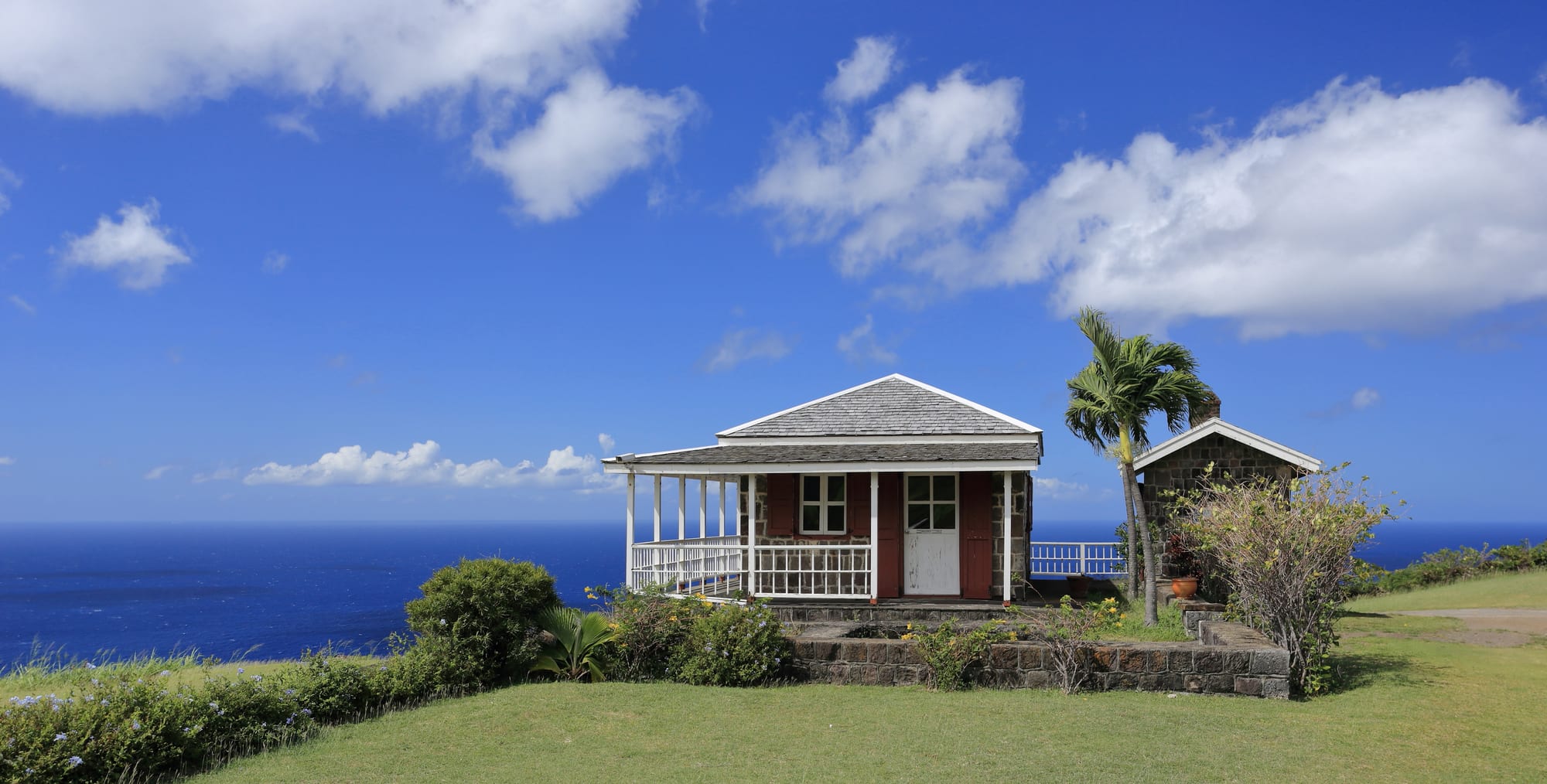
Sugar, slavery, and Hamilton
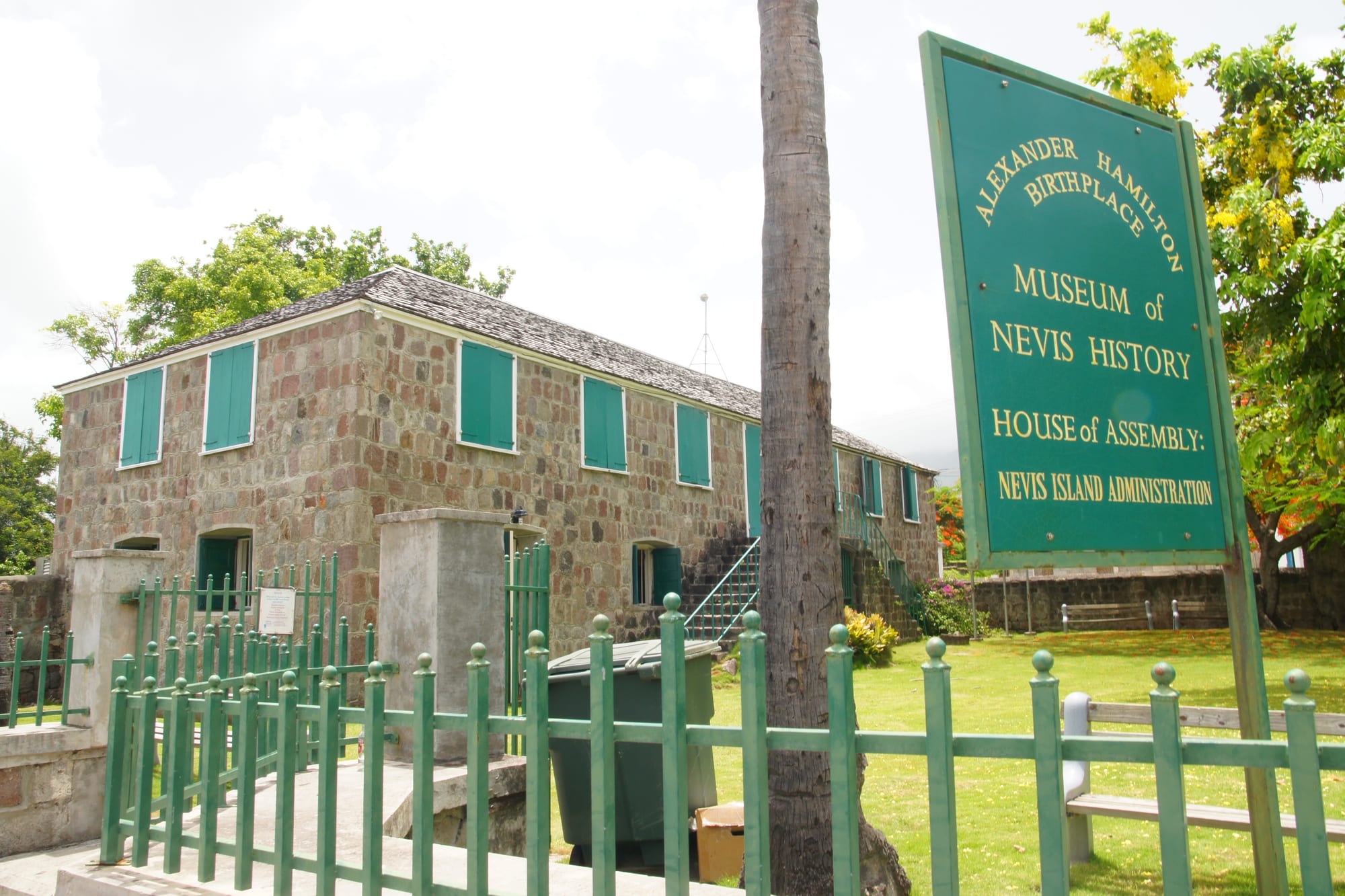
By the late 17th century both islands had been given over almost entirely to sugar, worked by enslaved Africans who came to outnumber the white population many times over. Nevis in particular was, per acre, one of the richest colonies in the British Empire and a major slave-trading entrepôt. It was on Nevis, in 1755 or 1757, that Alexander Hamilton — later a founding father of the United States — was born, the son of a Scottish trader; he grew up on the island and on nearby St Croix. Slave resistance was constant, and a serious revolt on Saint Kitts in 1834, at the very moment of legal emancipation, was suppressed with executions. Full freedom came in 1838 after a coerced "apprenticeship" period.
Federation, and the Nevis question
After emancipation the islands stayed poor and sugar-bound well into the 20th century, with labour unrest — a 1935 strike and shooting at Buckley's estate helped launch the trade-union politics that produced the country's leaders. Britain grouped Saint Kitts, Nevis and Anguilla as a single associated state with internal self-government in 1967; Anguilla, resentful of rule from Saint Kitts, promptly rebelled and reverted to being a British dependency. Saint Kitts and Nevis went on to full independence on 19 September 1983 as a federation, with Nevis granted its own island assembly and a constitutional right to secede. In 1998 a Nevis referendum on independence won 62 per cent — short of the two-thirds needed — and the issue remains part of the country's politics.
Now
The last sugar harvest was in 2005, ending three and a half centuries of the crop; the economy shifted to tourism, offshore finance, and one of the world's oldest "citizenship by investment" programmes, launched in 1984, which sells passports to raise revenue and has drawn both money and international scrutiny. The federation is a parliamentary democracy within the Commonwealth, and the balance between the larger island and Nevis's autonomy is a recurring theme of its government.
What Saint Kitts and Nevis carries
These two small islands were where the English and French Caribbean began, and they show the whole arc of that history in miniature: the destruction of the Kalinago, a century of colonial war over a single island, immense sugar wealth built on mass enslavement, and a long, poor aftermath. Independence in 1983 left one unresolved question — whether Saint Kitts and Nevis is one nation or a marriage Nevis can still leave.