Culture & Customs · Saint Kitts and Nevis
Saint Kitts and Nevis: Peacock Feathers and the Christmas Sports
A church-going federation whose biggest celebration falls at Christmas, when masqueraders, clowns, stilt-walking moko jumbies and the Bull take to the streets to fife and drum
By Worldlore Editorial · 30 September 2026
The fife is heard before anyone is seen. Then a troupe rounds the corner: dancers in bright long-sleeved shirts hung with ribbons, mirrors and bangles, faces hidden behind masks, peacock feathers nodding from tall headdresses. A kettle drum and bass drum keep the beat as the dancers move from a stately quadrille into something wilder, and a crowd falls in behind them. In Saint Kitts and Nevis the biggest celebration of the year comes not before Lent, as on many Caribbean islands, but at Christmas, and its masquerade is a tradition the country's own High Commission calls uniquely Kittitian and Nevisian — an art form shaped over some three hundred years.
Faith, identity and values
The people of the federation are Kittitians or Nevisians, depending on which of the two islands they come from, and both identities are held with pride. Their culture draws on African, British and French roots. In a statement for African History Month, the Minister of Culture described how enslaved men, women and children brought their traditions, languages, music, religion and cuisine with them, and how their descendants created new forms of culture out of that inheritance.
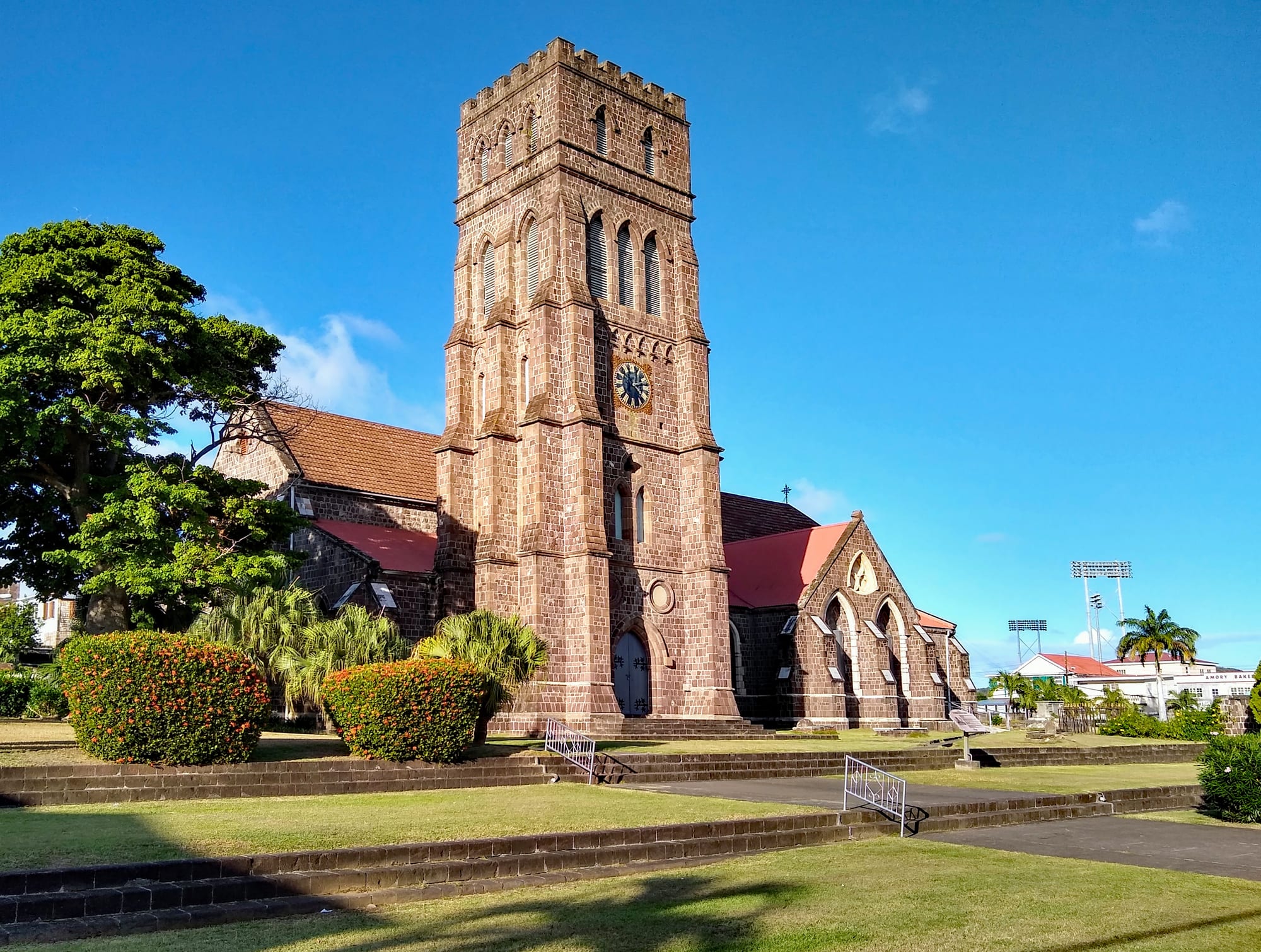
Christianity is woven through public life. In the 2011 census, the largest groups were Anglicans and Methodists, at around 17 and 16 per cent of the population, followed by Pentecostals, the Church of God and Roman Catholics, with many smaller churches besides; US government estimates put Protestants as a whole at around three-quarters of the population, with a small Rastafarian community. Government reflects this closeness: the cabinet includes a minister for ecclesiastical and faith-based affairs, and since 2023 the country has held an annual National Day of Prayer, with hourly services in churches and prayer stations set up in towns and taken out to rural areas. Christmas and Easter are the fixed points of the year for most families.
Beneath the faith sits a strong sense of community and of shared history. The islands have public holidays for Emancipation Day at the start of August, marking the end of slavery, and for National Heroes Day on 16 September, three days before Independence Day, so that the story of how the federation came to be is retold every year in public.
Greetings and meeting people
English is the official language, and in everyday speech most people use Kittitian Creole, an English-based creole that visitors readily follow. Kittitians and Nevisians are widely described as friendly and hospitable, and the government's own guidance for newcomers notes that locals are usually eager to share advice and point visitors towards places worth seeing. Conversation tends to be relaxed, and the slower pace of island life is part of its appeal.
Public manners are fairly conservative. The UK government's travel advice notes that open displays of affection, such as holding hands or kissing, are uncommon for any couple and may draw unwanted attention. One rule surprises many visitors: it is illegal for anyone, children included, to wear camouflage clothing, and offenders can be fined or even jailed.
Greeting has even found its way into song. Among the folk songs recorded on the islands in 1962 by the American folklorist Alan Lomax is a Christmas-morning greeting, sung to guitars and a bamboo bass pipe, that runs "Morning, morning, how you do this morning?" and goes on to ask for a drink of guavaberry because "you know it's Christmas morning".
Hospitality and being a guest
The old Christmas traditions show hospitality working in both directions. Folklorist Roger Abrahams, who worked on Nevis in the early 1960s, recorded that during the twelve days of Christmas, groups of performers would go "from yard to yard", from one household or rum shop to the next, entertaining the people inside and receiving something in return, with the hat passed at the end to a closing song begging a penny "to buy our Christmas bread". The music could be heard long before a group arrived, warning the next village that entertainment was on its way, and neighbours who were not performing followed along singing.
Older forms of gathering were built around talk and wit. Abrahams described moonlight-night gatherings, where games were played, jokes traded, cards dealt and Anansi stories told, and the tea meeting, which older islanders said had grown up in the nineteenth century as a way for churches to raise money. At a tea meeting a chairman and vice-chairman in booming voices welcomed the audience and introduced a succession of speakers, singers and comic turns, and much of the fun lay in the contest between the orators, trying to outdo one another with quotations from the Bible and literature, and a crowd determined to heckle them. Tea meetings were already rare by the 1960s, but the love of performance, eloquence and ready repartee they reveal still runs through the islands' festivals.
Festivals and life's big moments
The national carnival, Sugar Mas, runs from mid-December into the first days of January, with the National Carnival Parade on New Year's Day and the Last Lap parade on 2 January, Carnival Day, both public holidays. Its modern form dates from 1957, when a community organiser, Basil Henderson, called a meeting to found a carnival committee at a time when the traditional Christmas sports were thought to be losing their flavour. Calypso and soca are at its heart, with lyrics that often carry social and political commentary.
Folklore groups give the celebrations their distinctive look. Alongside the masquerade troupes come the moko jumbies, dancers in long colourful gowns on stilts of six to eight feet; the clowns, in groups of up to fifty players wearing floppy costumes sewn with tiny bells and pink wire-mesh masks; the Bull, a comic play acting out an exaggerated version of an incident with a fierce bull on a Saint Kitts estate early in the twentieth century; and the Actors, acrobats who somersault over an upturned garden fork and have a stone broken with a sledgehammer on one performer's chest. Some older sports, including David and Goliath and Cowboys and Indians, have died out, but the masquerade is now performed throughout the year, and the government has begun preparing a nomination of the masquerade traditions to UNESCO's list of intangible cultural heritage.
Nevis has its own summer festival. Culturama was conceived in 1974 by the Nevis Dramatic and Cultural Society, partly because islanders feared that their folk arts and customs were being lost, and it is held over the Emancipation Day weekend at the start of August, with folk dances, masquerade and moko jumbies, calypso and pageants. The St Kitts Music Festival each June adds a large contemporary music event to the calendar.
Arts, crafts and music
Music is where the islands' mixed heritage is heard most clearly. Masquerade dancers move to fife, kettle drum and bass drum, in dances that UNESCO describes as influenced by both African and European ancestors. Nevis is known for its string bands, led by a bamboo fife with guitars, a banjo or mandolin, a cuatro, maracas, a triangle, a scraped gourd and the baha, a bamboo pipe blown to give the bass line. Many of the instruments are made on the island from local wood and goatskin. Until the 1960s almost every village on Nevis had its own string band, usually named after a bird, and a schools programme now teaches the tradition to a new generation.
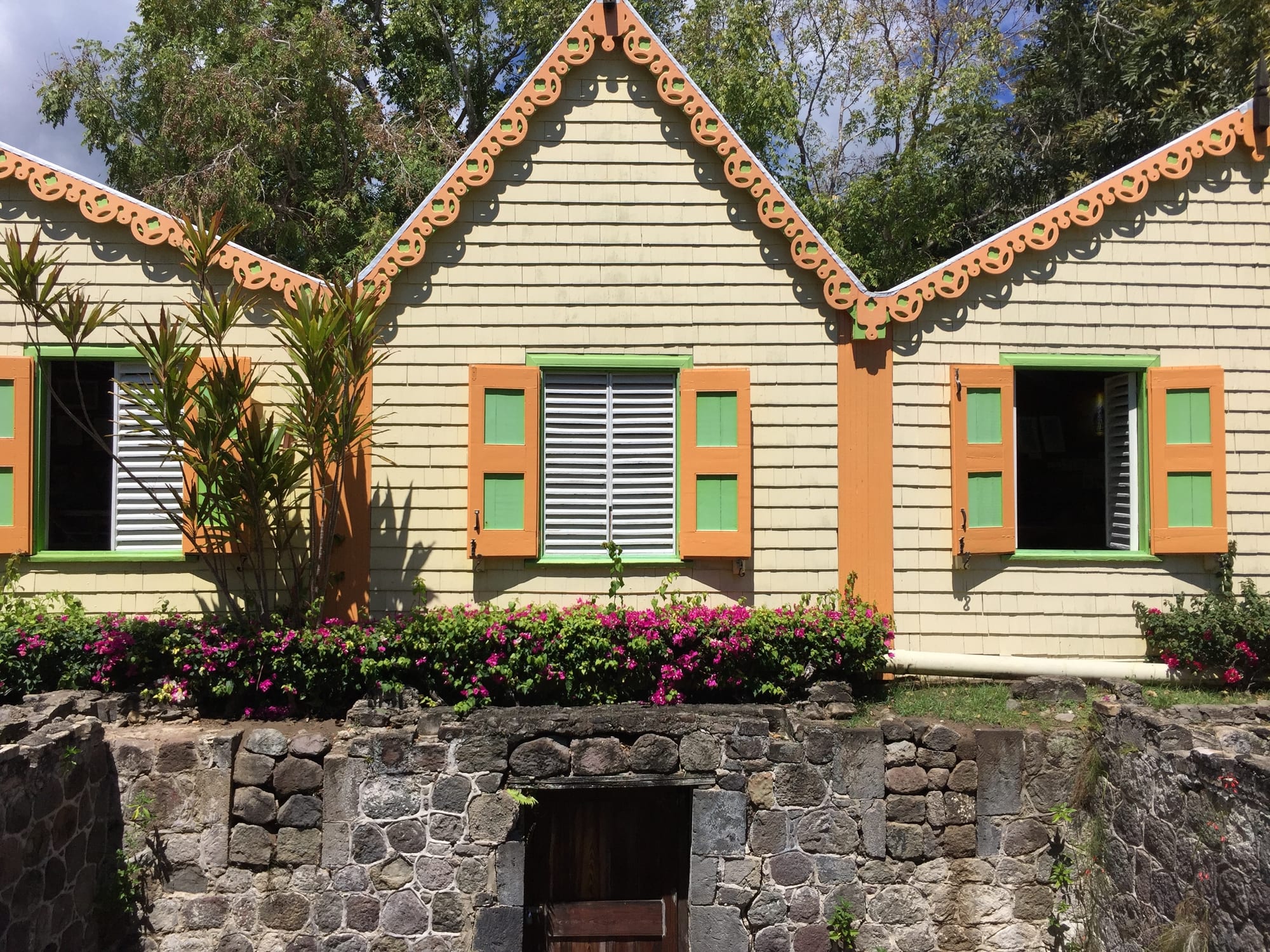
Crafts are supported by the state. The National Handicraft and Cottage Industry Development Board, known as the Crafthouse, was set up by law in 1982 to train craftspeople and raise standards. The Department of Culture's living heritage programme records practices such as red clay pottery on Nevis, broom making, calabash work, storytelling and bush medicine, as well as the traditional wooden houses of Nevis, all of which are treated as part of the national inheritance rather than as museum pieces.
Dos and don'ts for visitors
- Do greet people warmly and accept local advice; Kittitians and Nevisians are known for their friendliness.
- Don't wear camouflage clothing of any kind; it is illegal for adults and children alike.
- Do keep public displays of affection low-key, as holding hands or kissing in public is uncommon.
- Don't assume cannabis is legal; it is decriminalised only for licensed personal use, and drug penalties are severe.
- Do plan around Sugar Mas in December and early January, or Culturama in early August, to see the folklore groups at their best.
- Do seek out a string band or a masquerade performance, which are performed at cultural events throughout the year.
- Do buy local crafts, such as red clay pottery, from island makers and the Crafthouse.
What to take away
Saint Kitts and Nevis keeps its heritage on the move — in fife and drum, peacock feathers and a Christmas that still belongs to the street — and visitors who come in the festival season see a small federation telling its own story out loud.