Culture & Customs · Republic of the Congo
Republic of the Congo: The Maternal Uncle and the Long Wake
A Christian country that still speaks of Nzambi and the ancestors, where a greeting asks after the whole family, a mother's brother can shape a child's future, and the dead are honoured with days of music under the tents
By Worldlore Editorial · 30 September 2026
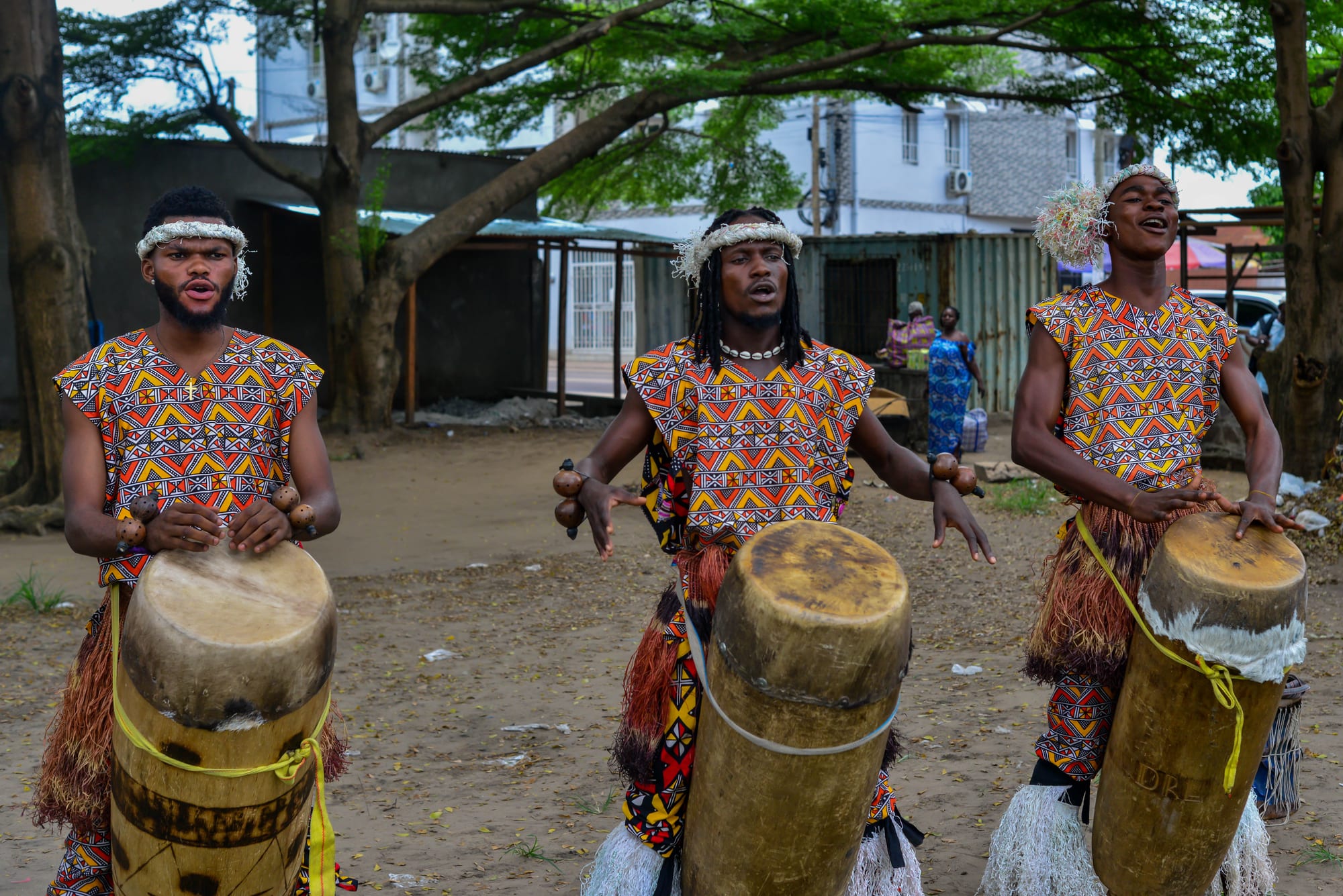
A death has been announced, and palm branches appear at the entrance to the family's yard. Within a day, marquees go up over the courtyard and hundreds of hired chairs are set out beneath them, with lights strung overhead. For days people keep coming: neighbours, colleagues, distant cousins, sometimes a minister or a member of parliament paying respects. Women are given matching lengths of printed cloth to wear, drinks sellers and peanut vendors set up around the edges, and by the last nights rival bands may play at full volume until dawn. Only then does the procession leave for the burial. To an outsider the wake can look more like a festival than a funeral, but it expresses something central to life in the Republic of the Congo: that family and community are obligations as much as comforts, and that the dead are owed a proper farewell.
Faith, identity and values
The Republic of the Congo is predominantly Christian. Figures from the 2012 census, cited by the US State Department, put Catholics at about 55 per cent of the population and Protestants at about 32 per cent, with Muslims at around 2 per cent. Smaller groups include the Kimbanguist Church, the Celestial Church of Christ and the Salvation Army. Christianity reached the lower Congo through Portuguese contact at the end of the fifteenth century, and the Catholic Church later became a major force in schooling under French rule. When Pope John Paul II visited in 1980, huge crowds attended his Mass in the capital.
Church membership sits alongside older beliefs rather than replacing them. Traditional cosmology centres on Nzambi, a supreme being, together with lesser spirits and nature spirits. The dead are believed to join the world of the ancestors and to go on protecting the living, and those who lived important lives are thought to have the closest access to Nzambi. Healers known as nganga, diviners and other specialists use medicines and amulets to win the spirits' favour. Many families also keep totemic food taboos, avoiding the animal associated with their lineage.
The country has produced its own religious movements too. In 1926 André Grenard Matsoua founded a mutual aid association that campaigned for equal status with French citizens; after his death in 1942 it developed into a movement, known as Matsouanism, in which some followers came to regard him as a messianic figure.
Family is the core of social life, and kinship is often traced through the mother. The eldest maternal uncle is considered the most important man in a child's life and can have more influence than the father, sometimes taking responsibility for a young person's education, work and choice of marriage partner. The extended family as a whole is expected to support its weaker members, and deference runs through it: agreement with an elder, a boss or anyone of higher status is valued above blunt frankness.
Greetings and meeting people
Social encounters are more formal than a visitor might expect, in towns and villages alike. A greeting is incomplete without asking after the other person's health and family, and skipping those questions can come across as a lack of respect. A handshake is the usual greeting; between friends and acquaintances it is often a warm two-handed shake, and close relatives who have not seen each other for a long time may greet with a hearty embrace. Older people are shown respect through gestures as well as words, and it is wise to let them speak first and to avoid contradicting them openly.
Appearance is part of courtesy. Congolese take great pride in how they dress, and whatever a family's means, clean and carefully pressed clothes are the norm. That pride reaches its height in la Sape, the movement of elegantly dressed sapeurs shared with the neighbouring capital across the river, whose members describe elegance and non-violence as their creed.
Public behaviour is reserved. Canadian government advice notes that same-sex relationships are not criminalised but are not socially accepted, and that public displays of affection are best avoided generally. French is the language of government and schooling, while Lingala and Kituba serve as national languages, and a few words in either are warmly received.
Hospitality and being a guest
Visits follow the same formal courtesies as greetings. A guest is welcomed with enquiries after family and health, and the elders present are acknowledged first. Special occasions call for generosity: at major holidays and family celebrations meat, usually chicken, is served, with beer and palm wine, and on Independence Day the preferred festive meal is chicken and rice. Because some families avoid particular animals for totemic reasons, it is sensible to accept what is offered without questioning why a certain food is absent from the table.
Dress matters for guests as much as for hosts. Neat, clean clothes are a mark of respect, and older accounts note that more conservative families expect women to avoid shorts and short skirts in public, so modest clothing is the safer choice outside hotels. Police may ask for identification at any time, and both the British and Canadian governments advise carrying photo ID, or a colour copy of the passport and visa, at all times.
Photography needs particular care. Taking pictures of government buildings, military installations, border crossings and transport infrastructure is prohibited, and Canadian advice recommends asking permission before photographing official buildings or individuals.
Festivals and life's big moments
The national calendar mixes the Christian and the civic. Christmas, Easter, Ascension, Pentecost and All Saints' Day are all observed, and the secular holidays include Independence Day on 15 August, when beer and palm wine flow and families gather for a celebratory meal.
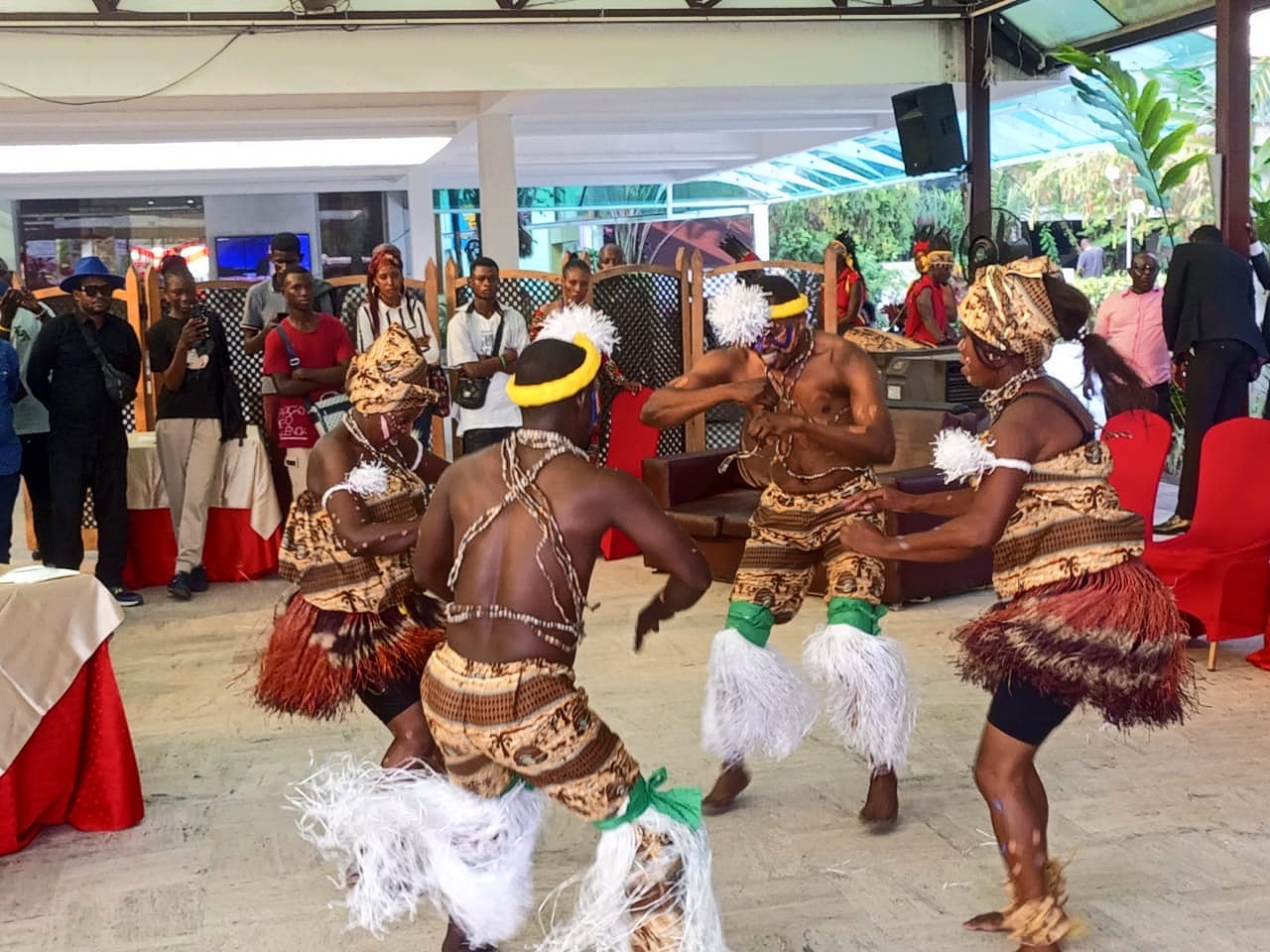
Marriage is an alliance between families, sealed by the dot, the bride price paid by the groom's side. Customary marriage is part of family law, and negotiations involve relatives on both the father's and the mother's side of the bride, so that the union is fully recognised. The dot typically combines cash with cloth, headscarves, shoes, suits, cooking pots and household goods. The amount demanded can be high, and many couples save for a long time to meet it. Before the wedding, bride and groom have traditionally received instruction in married life from elders of their own sex.
Death brings the largest gatherings of all. The wake, usually held at the family home, can last several days, with tents, chairs, lighting, music and catering for hundreds of mourners, and the family's honour is bound up with how well it is organised. On the final day men typically wear dark suits, and mourners file past the body before the procession sets out, often for burial in the family's home village. Kongo families in particular have long been known for elaborate funerals and prominent tombstones.
Mourning does not end with the burial. Among the Teke, mourning for a husband or wife has traditionally been long, with a time of seclusion and changes of dress. The period closes with the retrait de deuil, the lifting of mourning, a feast at which food and drink are first offered to the spirit of the dead and the ancestors, and after which the surviving spouse is free to remarry. The customs have softened in the cities, but restraint during mourning is still expected.
Arts, crafts and music
Music is the shared language of the country. One old saying holds that every Congolese learns to sing, and songs have long accompanied daily work, with drums, guitars and the sanzi, a small wooden instrument plucked with the thumbs, among the traditional instruments. Storytelling remains part of the culture. In the twentieth century the bars and dance halls of the two Congos produced Congolese rumba, which UNESCO added to its list of intangible cultural heritage in 2021 on a joint nomination by both countries. It is played for celebration and mourning alike, in private, public and religious settings, and passed on through neighbourhood clubs, schools and apprenticeships; women have played a leading part in its religious and romantic styles. The capital also hosts FESPAM, the Pan-African Music Festival.
Painting has a distinctive modern tradition. In 1951 a young Frenchman, Pierre Lods, set up an informal studio in the capital after seeing the vivid pictures of birds painted by Félix Ossali, and invited Ossali, his friends and relatives to paint without any European instruction. The Poto-Poto School that grew from it developed its own styles, among them the small, slender figures of the Miké style, and exhibited at the Museum of Modern Art in New York in 1956. It still works in the capital today, and celebrated its seventieth anniversary in 2021.
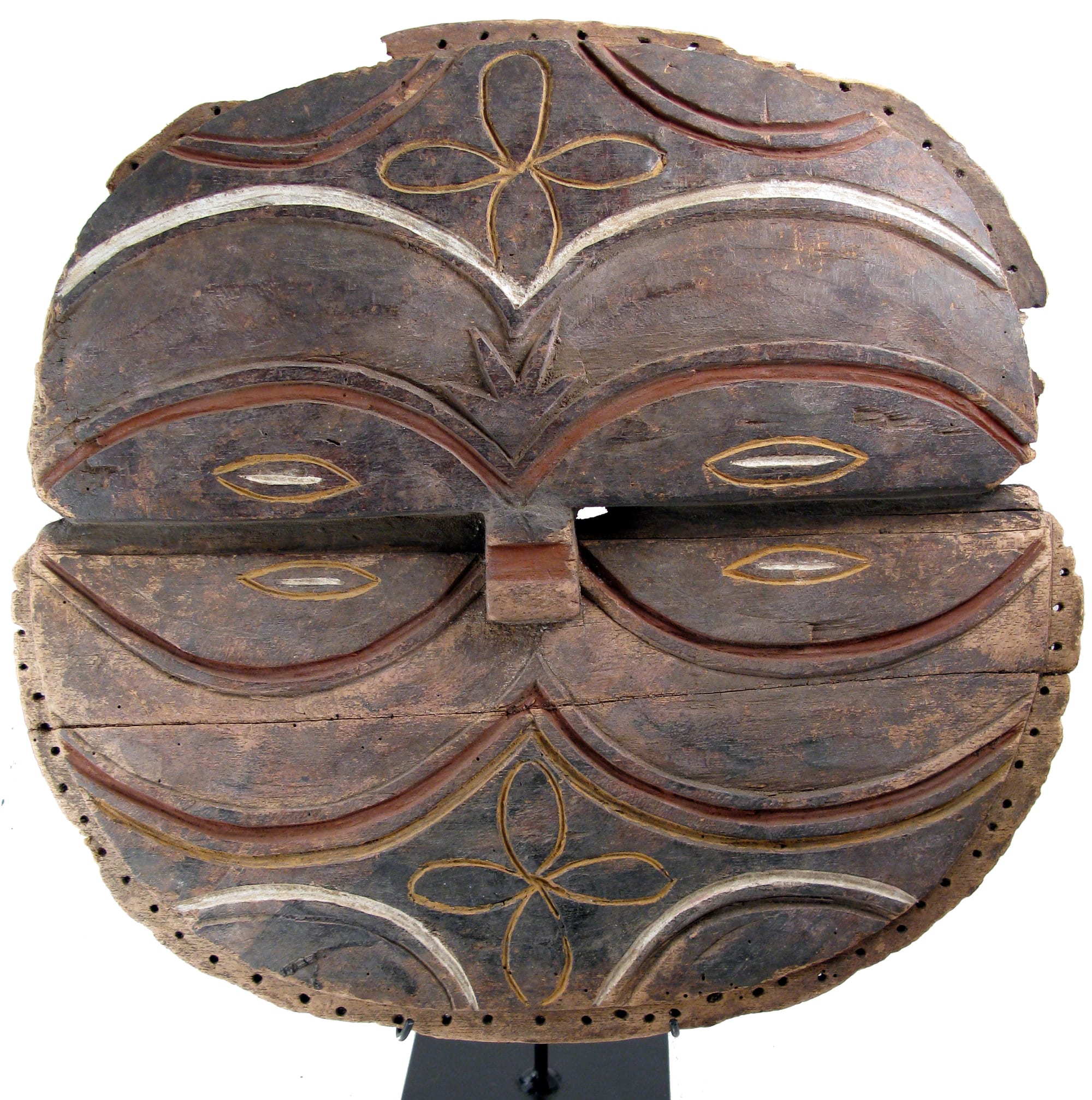
Older sculptural traditions endure in museum collections and in some communities. The kidumu masks of the Teke Tsaayi are flat discs of carved and painted wood, divided across the middle and laid out in strict symmetry, a design that Dupré links to the dual system of authority in Tsaayi society. After independence the dances enjoyed a revival, with new masks carved in villages following the model of the first, and kidumu dancers are still associated today with other masked and costumed dance groups.
Dos and don'ts for visitors
- Do check the latest government travel advice before any trip; the UK advises against all travel within 50 km of the border with the Central African Republic, and Canada advises against non-essential travel there.
- Do ask after a person's health and family when greeting, and greet elders first and with particular respect.
- Do dress neatly and modestly; clean, well-pressed clothes are read as a mark of respect.
- Do carry photo ID, or a colour copy of the passport and visa, at all times.
- Don't photograph government buildings, military sites, border crossings or transport infrastructure, and ask before photographing people.
- Don't contradict elders openly; agreement with seniors is valued above frankness.
- Don't show affection in public.
- Do accept food and drink graciously, without asking why a particular dish is not served.
What to take away
In the Republic of the Congo, respect flows through the family, from the elders and the maternal uncle to the ancestors themselves, and visitors who greet people fully, dress with care and treat the old with deference will find a warm and deeply sociable culture opening to them.