Culture & Customs · Qatar
Qatar: Sword Dance, Sadu and the Falcon
A small Muslim nation where the majlis is the heart of social life, coffee is poured with the right hand and elders served first, weddings are celebrated twice, and Bedouin crafts and falconry are guarded as living heritage
By Worldlore Editorial · 30 September 2026
In the evening, the men of a family gather in the majlis, the sitting room set aside for receiving guests. The floor is laid with carpets, the walls lined with cushions, and a younger member of the household moves around the room with a pot of Arabic coffee. He pours with his right hand, serving the eldest and any guests first, and each small cup is refilled until the drinker gives it a gentle shake to say he has had enough. Conversation moves from family news to local affairs, a line of poetry, perhaps a disagreement to be settled. Nothing about the scene is hurried. In a country of glass towers and global ambitions, the majlis remains the place where Qatari society talks to itself, and where its habits of generosity, respect for age and careful courtesy are passed from one generation to the next.
Faith, identity and values
Islam is the foundation of public and private life. The constitution declares Qatar an Arab state whose religion is Islam, with Islamic law as the main source of its legislation, while guaranteeing freedom of worship in accordance with the law and the protection of public order and morals. Prayers take place five times a day, and on Friday, business and commercial activity shuts down during the late morning for Friday prayers. The influence of faith can be seen in dress, in the separation of men and women in many social settings, and in the rhythm of the year.
The family is described in the constitution as the nucleus of society, built on religion, morals and love of the homeland, and loyalty to family and extended kin shapes much of social life. Elders are held in high esteem, and titles and status matter. Relationships come before transactions, whether in business or among neighbours, and trust is built patiently through repeated meetings, shared coffee and time spent together. Communication tends to be indirect, especially on sensitive matters, and open confrontation is avoided in favour of diplomacy.
Qatari citizens are a minority among the country's residents, and many of the customs that define national identity, from the majlis to traditional dress, are cherished all the more for that. Men commonly wear the white thobe and headcloth, and women the black abaya, often finely embroidered.
Greetings and meeting people
The standard greeting is "as-salamu alaykum", peace be upon you, to which the reply is "wa alaykum as-salam", and upon you be peace. Greetings are warm and are often followed by an extended exchange of enquiries about health and family before any business is discussed. Men shake hands with the right hand, and placing the right hand over the heart is a warm gesture of greeting in its own right.
Order and posture matter. A guest arriving at a majlis offers the greeting to the host and to everyone already seated, and in a Qatari home the elderly and those of higher standing are greeted first. In public places it is customary to stand up when greeting someone, particularly an older person, as a sign of respect.
Between men and women, the rules are different. Qatari women generally do not shake hands with men, and many men will not shake a woman's hand, as a gesture of respect. The best course is to wait for the Qatari person to take the lead, and a hand on the heart with a nod is a graceful alternative when no hand is offered.
Titles and formal address are used where appropriate, and respect for hierarchy is expected, particularly towards elders. Certain gestures are best avoided: pointing with a finger, a thumbs-up sign and showing the soles of the shoes or feet can all cause offence, including when sitting with legs crossed in front of a host.
Hospitality and being a guest
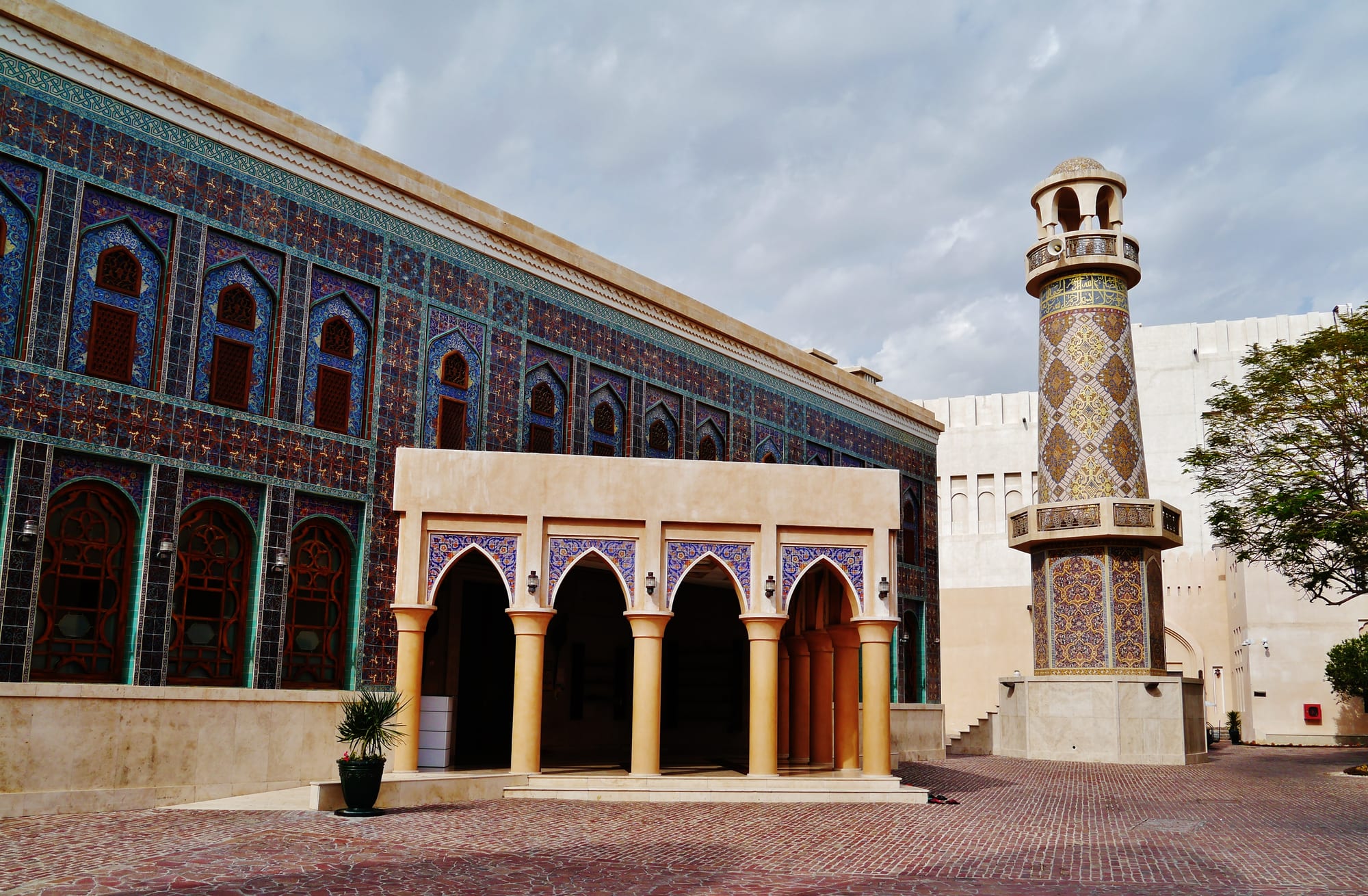
Generosity to guests is central to Qatari life, and nowhere is it more visible than in the majlis. These sitting places, furnished with carpets, cushions and the means to make coffee, are where families, neighbours and visitors gather to exchange news, receive guests, resolve disputes, offer condolences and celebrate weddings. Women have their own separate majlis. Children who accompany their elders absorb the manners of the community there, learning to listen, to take part in dialogue and to respect the opinions of others. The majlis is on UNESCO's list of intangible cultural heritage, and an invitation to a family's majlis is regarded as a mark of respect and trust.
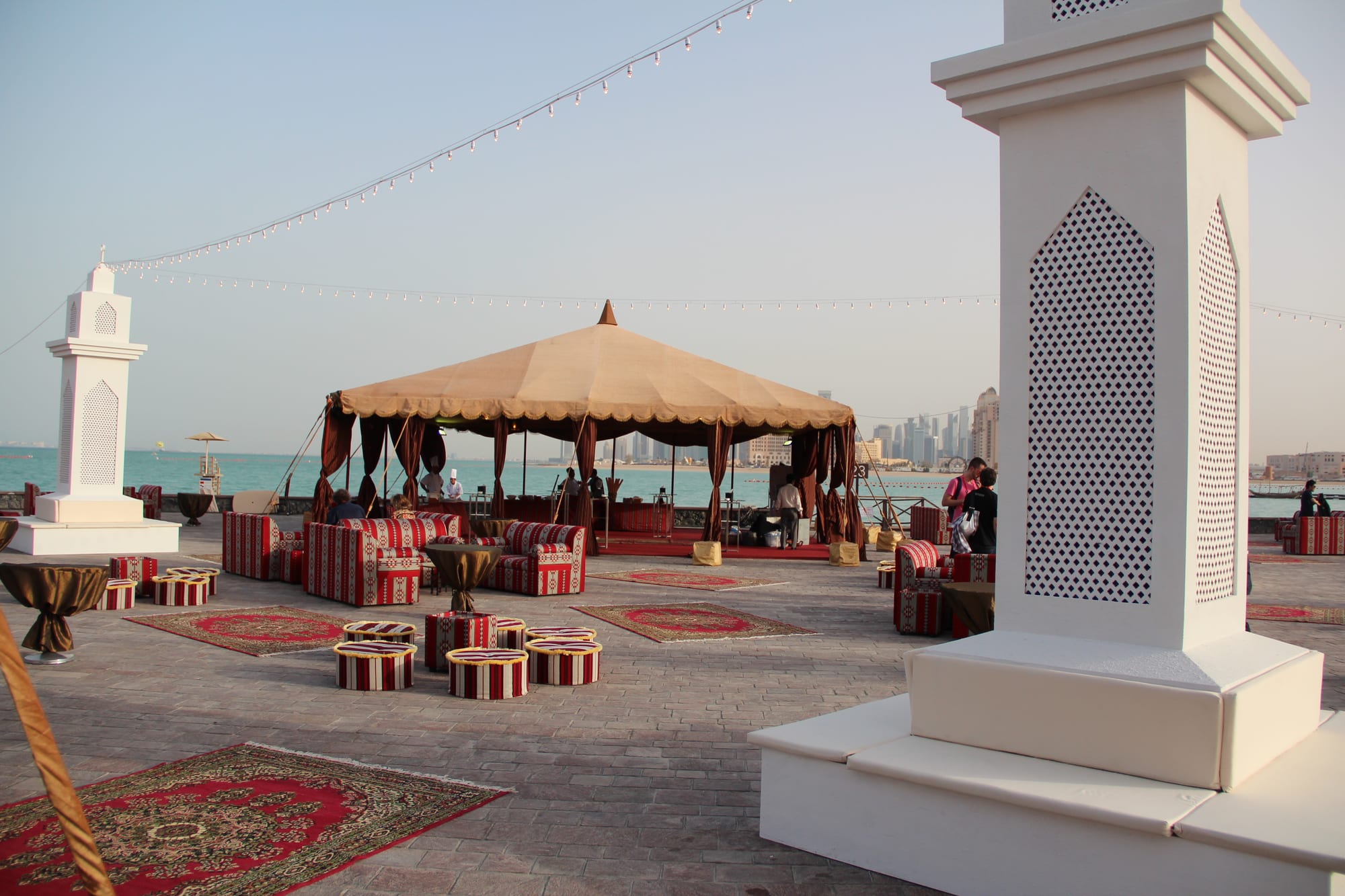
Arabic coffee is the centrepiece of hospitality, served daily and seen as a symbol of generosity, respect and peace. The host customarily tastes it first, to make sure it is good enough to offer. Each guest is then served in turn rather than from a tray, the small handleless cup filled only a little way so that the offer can be renewed. It is poured with the right hand, older people and guests are served first, and handing the cup straight back is a request for more; a guest who has had enough gives the cup a little shake from side to side instead.
Shoes are removed before entering the reception rooms of a home, and refreshments should be accepted and taken with the right hand. Food is eaten with the right hand too, and at a traditional meal people may sit on the floor and share one large platter, with a host sometimes placing food on a guest's plate by hand as a gesture of welcome. A host will usually offer food more than once, and offers of food and drink should be accepted; leaving a little on the plate can signal that the guest has had plenty. Some Qataris say "bismillah", in the name of God, before eating and "alhamdulillah", praise be to God, afterwards. Once the meal is over, a burner of smouldering bukhoor, fragrant incense, is carried around the room, and guests waft its smoke towards their hair, clothing and hands.
Gifts should never include alcohol, and they are usually not opened immediately. Perfume, clothing and food are traditional choices, especially during Ramadan.
Festivals and life's big moments
Ramadan shapes the year more than any other season. Muslims fast from dawn to sunset, and visitors are expected to refrain from eating, drinking and smoking in public places during daylight hours out of respect for those who are fasting. The month is also a time when many Qatari women take particular pride in wearing traditional dress.
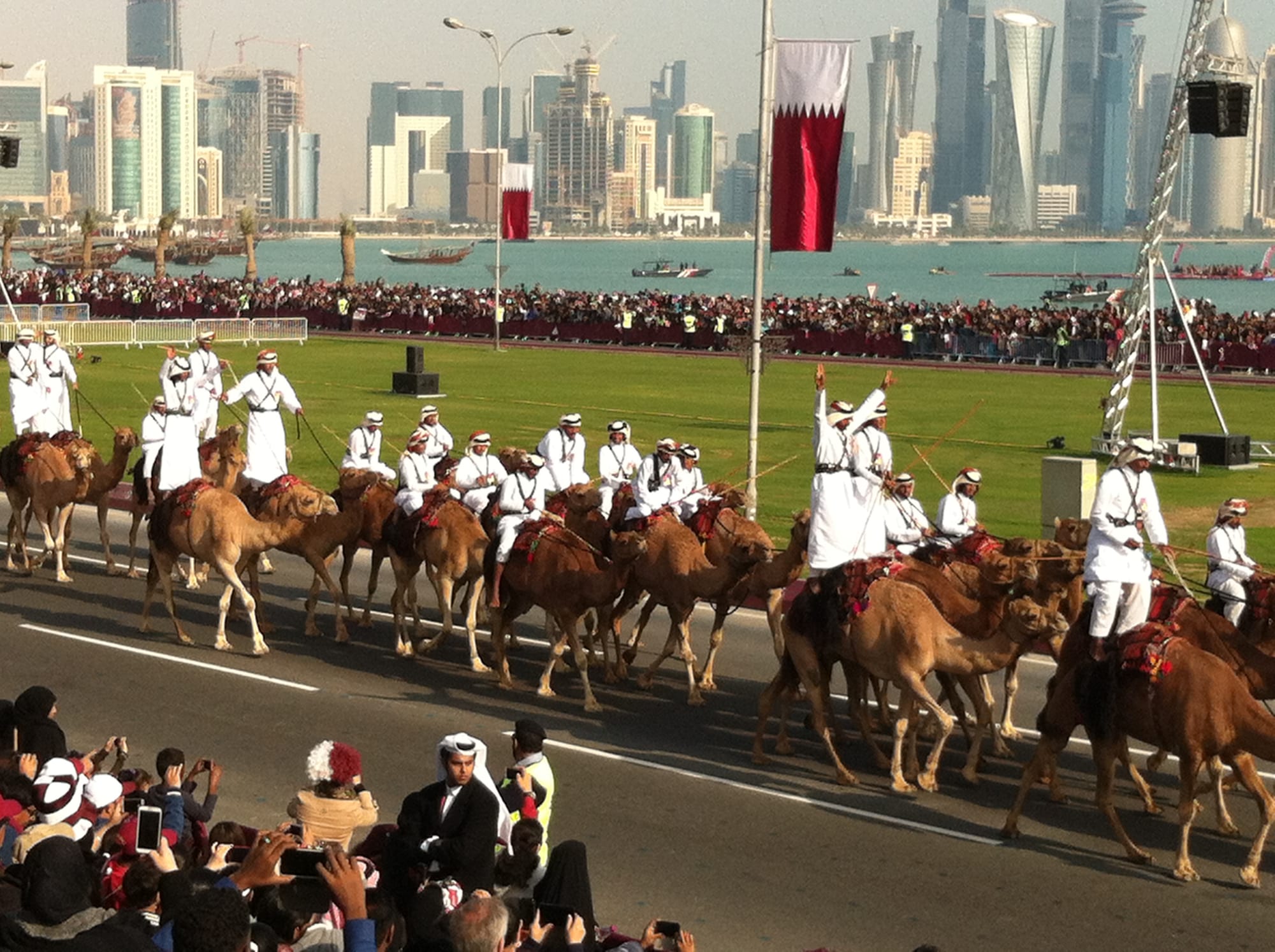
Eid brings the fast to a festive close. The day begins with prayers early in the morning, after which families visit one another with the greetings "Eid Mubarak" or "kul 'am wa enta bi-khair", may every year find you in good health. Many men have new thobes tailored for the occasion, and children go round the neighbourhood collecting eidiya, small gifts of money. Men mark the festival with al-ardah, the sword dance, performed after the afternoon prayer in public squares and along the coast, while women gather in private to perform al-muradah, a dance of two facing lines exchanging improvised verses in call and response. On 18 December, National Day commemorates the unification of the country in 1878 under its founder, Sheikh Jassim bin Mohammed bin Thani. Each year's slogan is drawn from the founder's poetry, and the celebrations centre on themes of unity, loyalty and pride in heritage.
Weddings are celebrated twice, because the festivities are separated by sex. The groom pays for both parties. The men's gathering is often simple, with guests greeting one another, eating and leaving, while the women's celebration is far more elaborate. Guest lists are long, since relatives expect to be invited, and a groom also gives his bride a marriage gift, the mahr, usually accompanied by jewellery. The division is an old one: in the past, the Qatar Tribune notes, the festivities could last a week, or three days by Bedouin custom, with the women celebrating at the bride's home and the men at the groom's, where sword dances were performed in front of the house. Henna, applied to decorate the hands and feet, is part of the celebrations for weddings and births and is regarded as a symbol of joy, and bukhoor takes on particular importance at weddings as it does at Eid. At births, weddings, funerals and ceremonies, many men wear the bisht, a long cloak draped over the shoulders.
When someone dies, it is considered important for everyone to offer their condolences at the burial itself. Relatives of the deceased then receive visitors for three days, often setting aside their work to do so, and condolences may be offered at any time during that period. Women are not obliged to attend in the first three days and may offer their condolences later. The custom holds at every level of society: when the Father Amir, Sheikh Hamad bin Khalifa Al Thani, died in July 2026, the funeral was held that same evening, the Amir received mourners over three consecutive days, and majlis gatherings and condolence meetings were held across the country.
Arts, crafts and music
Many of Qatar's most treasured arts come from its Bedouin and seafaring past. Al Sadu is a tightly woven textile made by Bedouin women on a ground loom, using natural fibres and dyes. Its geometric patterns, in reds, oranges and other bright colours, are built from rhythmic repetition and symmetry, and older women pass the skill down within families as well as through classes and workshops. Once made for everyday household use, Sadu has become a symbol of shared tradition and of the importance of women in Bedouin society.
The bisht is a masterpiece of tailoring. Made from wool, camel or goat hair, it passes through the hands of skilled artisans, men and women, who spin, dye, weave and tailor it, and its edges are embroidered by hand around the neckline and down the front with fine silk or gold and silver coated thread. It is worn so that one hand stays free for greeting.
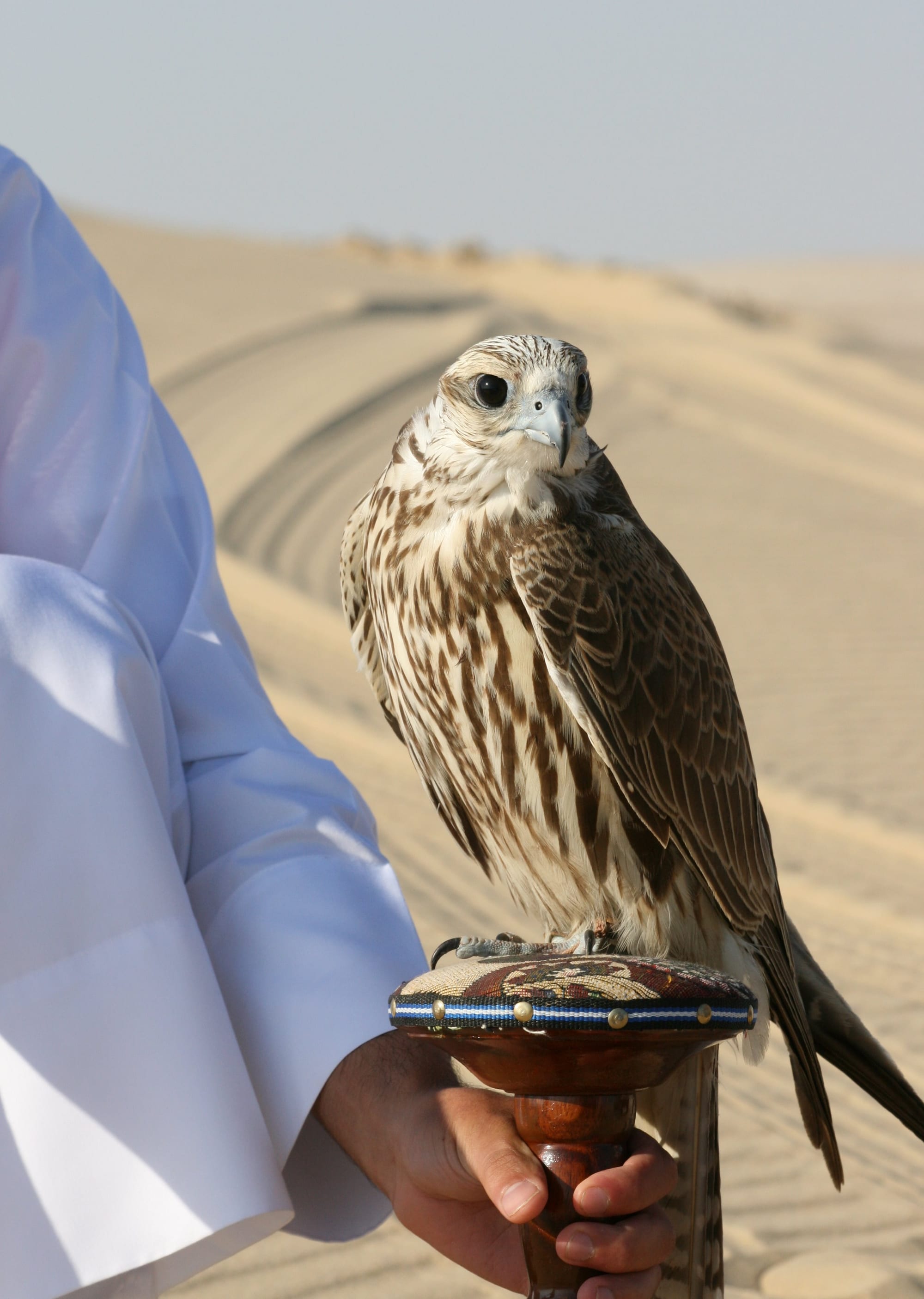
Falconry is practised with passion. Falconers breed, train and care for their birds, and the bond between falconer and falcon, built on patience and companionship, lies at the heart of the practice. The knowledge passes through families, mentors and clubs, and a whole world of falcon hospitals, breeders and equipment makers supports it.
The spoken and sung word carries great weight. Nabati poetry, folk stories and songs are shared in the majlis, and the folk dances of Eid have been carefully recorded by the national broadcaster and documented by Qatari heritage scholars. Falconry, the majlis, Arabic coffee, henna, Al Sadu and the bisht are all on UNESCO's list of intangible cultural heritage, most of them shared with neighbouring Arab countries.
Dos and don'ts for visitors
- Do check the latest official travel advice before going, as Qatar has been affected by the war with Iran that began in 2026.
- Do cover shoulders and knees in public, and dress more conservatively still at mosques and during Ramadan.
- Do greet with "as-salamu alaykum", stand to greet elders, and between men and women wait for the Qatari person to offer a hand; a hand on the heart is a gracious alternative.
- Do accept coffee when it is offered, take it with the right hand and give the cup a gentle shake when finished.
- Do eat, pass and receive things with the right hand, and accept offers of food and drink.
- Don't eat, drink or smoke in public during daylight hours in Ramadan.
- Don't show affection in public, and avoid pointing, the thumbs-up sign and showing the soles of the feet.
- Don't photograph people, especially women, without their consent, or photograph military sites.
- Don't give alcohol as a gift.
What to take away
Qatari customs revolve around faith, family and the generous welcome of the majlis, and visitors who dress with care, greet with respect and accept the coffee cup with the right hand will find a hospitality as old as the desert itself.