Culture & Customs · Poland
Poland: An Empty Chair at the Christmas Table
A Catholic calendar kept by believers and sceptics alike, handshakes and formal titles that thaw into warm informality, and a hospitality so deep-rooted that a place is still set at Christmas for a stranger who may never come
By Worldlore Editorial · 30 September 2026
On the afternoon of 24 December, a Polish family keeps glancing at the window. Nobody sits down to eat until the first star appears in the sky, a reminder of the star that led the Wise Men to Bethlehem. The table is laid with a white cloth, and beneath it lies a little hay, recalling the manger. Before anyone takes a seat, each person holds a thin wafer, the opłatek, and moves around the room breaking off a piece of everyone else's while exchanging wishes for the year ahead. And at the end of the table, one place stays empty, with its own plate and chair, in case a stranger should knock at the door. Few ever do, but the custom holds, because an old saying runs through Polish life: a guest at home is God at home.
Faith, identity and values
Poland is one of the most Catholic countries in Europe. In the 2021 census, 71.3 per cent of Poles identified as Catholic, down from 87.6 per cent in 2011, with small Orthodox and Protestant communities and a growing number who state no religion. The Church's weight is historical as much as spiritual. During the long periods when Poland had no state of its own, and again under communism, it was one of the few institutions able to speak with an independent voice, and faith became tightly bound up with national identity. The election of a Polish pope, John Paul II, in 1978 deepened that bond. Poland is nonetheless a constitutionally secular state with guaranteed freedom of religion, and many Poles who value the Church's traditions are critical of its role in politics; the place of religion in public life is one of the country's livelier debates.
The spiritual heart of Polish Catholicism is Jasna Góra, the Pauline monastery in Częstochowa, which houses the icon known as the Black Madonna. Venerated for around six centuries and hailed as queen and protector of Poland after the monastery withstood a Swedish siege in the 17th century, it draws millions of pilgrims a year.
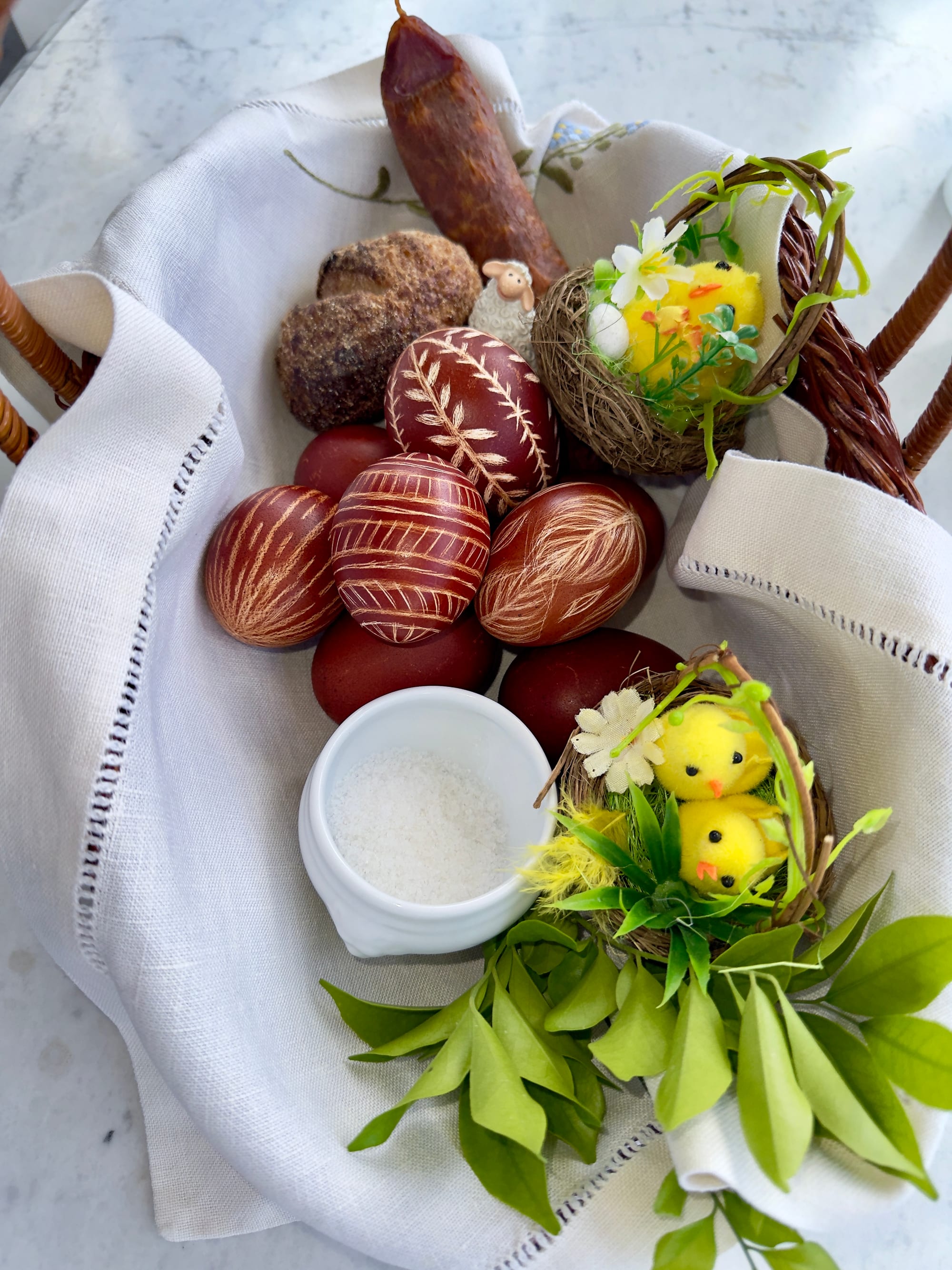
Religious customs are observed well beyond the ranks of regular churchgoers. At Easter, families of every degree of belief take part in the celebrations, and on Holy Saturday small baskets of food are carried to church to be blessed. Lined with a white napkin and decorated with sprigs of boxwood, they hold a little of everything for the Easter table: painted eggs, bread, salt and pepper, a piece of sausage or ham, cake, and a lamb made of sugar. On Easter Sunday morning, before breakfast, the blessed eggs are shared out in wedges while people exchange wishes, much as the opłatek is shared at Christmas.
Underneath the religious calendar sit values shaped by a demanding history. Poles tend to see themselves as a people guided by a sense of justice and moral duty, generous and quick to help others, and stoic in the face of hardship; the national anthem itself opens with the line that Poland has not yet perished. Family comes first and binds people across social backgrounds, and society is more collective in outlook than in much of Western Europe. There is also a well-known streak of improvisation and optimism, summed up in the phrase "jakoś to będzie", roughly "it will work out somehow".
Greetings and meeting people
First meetings are courteous and fairly reserved. The standard greeting is a firm handshake with direct eye contact, and women are traditionally greeted first, with older women given priority. Some older men still kiss a woman's hand in greeting; a woman who would rather not simply offers her hand to be shaken. Close friends, especially women, greet each other with three kisses on alternating cheeks. "Dzień dobry", or good day, is the everyday polite greeting, with "dobry wieczór" in the evening and the informal "cześć" kept for friends.
Formality shows most clearly in forms of address. Adults who do not know each other well use Pan for a man and Pani for a woman, followed by the surname, and switching to first names is something to wait to be invited to do. Professional titles are often folded into the same form, so that a manager might be addressed as Pan Kierownik and a professor as Pani Profesor.
Once the ice is broken, conversation is direct. Poles are generally comfortable giving frank opinions and correcting others, which can seem blunt to outsiders but is not meant unkindly, and humour leans heavily on irony, sarcasm and self-deprecation. Direct eye contact signals honesty, while avoiding someone's gaze can seem evasive. People tend to stand a little closer than in the English-speaking world. It is better to indicate something with an open hand than a pointed finger, and keeping hands in pockets while talking to someone looks careless.
Hospitality and being a guest
Hospitality is a point of national pride, and an invitation to a Polish home is generous in every sense. Punctuality matters, since lateness can be read as disrespect. Guests usually bring a small gift, such as flowers, chocolates or a bottle of wine, and it is courteous to offer to take off shoes at the door. Flowers carry their own rules: an odd number of stems, unwrapped, is the norm. Chrysanthemums are associated with cemeteries and funerals, red roses with romance, and carnations with the old labour movement, so all three are best avoided; gerberas are a safe choice.
At the table, guests are served first and pressed to eat heartily, so it pays to arrive hungry. It is worth pausing a moment before starting in case someone says grace. Hosts will keep offering more, and a polite, hesitant refusal is usually taken as good manners rather than a real no, so anyone who has genuinely had enough, or does not drink alcohol, needs to say so clearly and firmly. Toasts usually come before drinking, often to health and friendship; eye contact is kept while toasting, and if the host stands to propose a toast, guests stand too. In restaurants, a tip of around 10 per cent is polite but not obligatory.
Festivals and life's big moments
Christmas Eve, Wigilia, is for many Poles the most important family evening of the year, and it is traditionally a meatless meal. Families watch for the first star, share the opłatek, and keep the empty place at the table. The empty place is kept for the unexpected guest, understood as the Lord or a lost wanderer, and it celebrates hospitality.
Easter follows its own sequence, from Palm Sunday through the blessing of the baskets to the Easter breakfast. The day after, Easter Monday, is Śmigus-dyngus, when people drench one another with water from buckets, bottles and water pistols. The custom mixes a Christian echo of baptism with an old springtime game between young men and women, and anyone out on the streets that day should expect to get wet. In late spring, the feast of Corpus Christi brings outdoor processions, and in some communities the route is laid with carpets of flower petals, a tradition inscribed in 2021 on UNESCO's list of intangible cultural heritage.
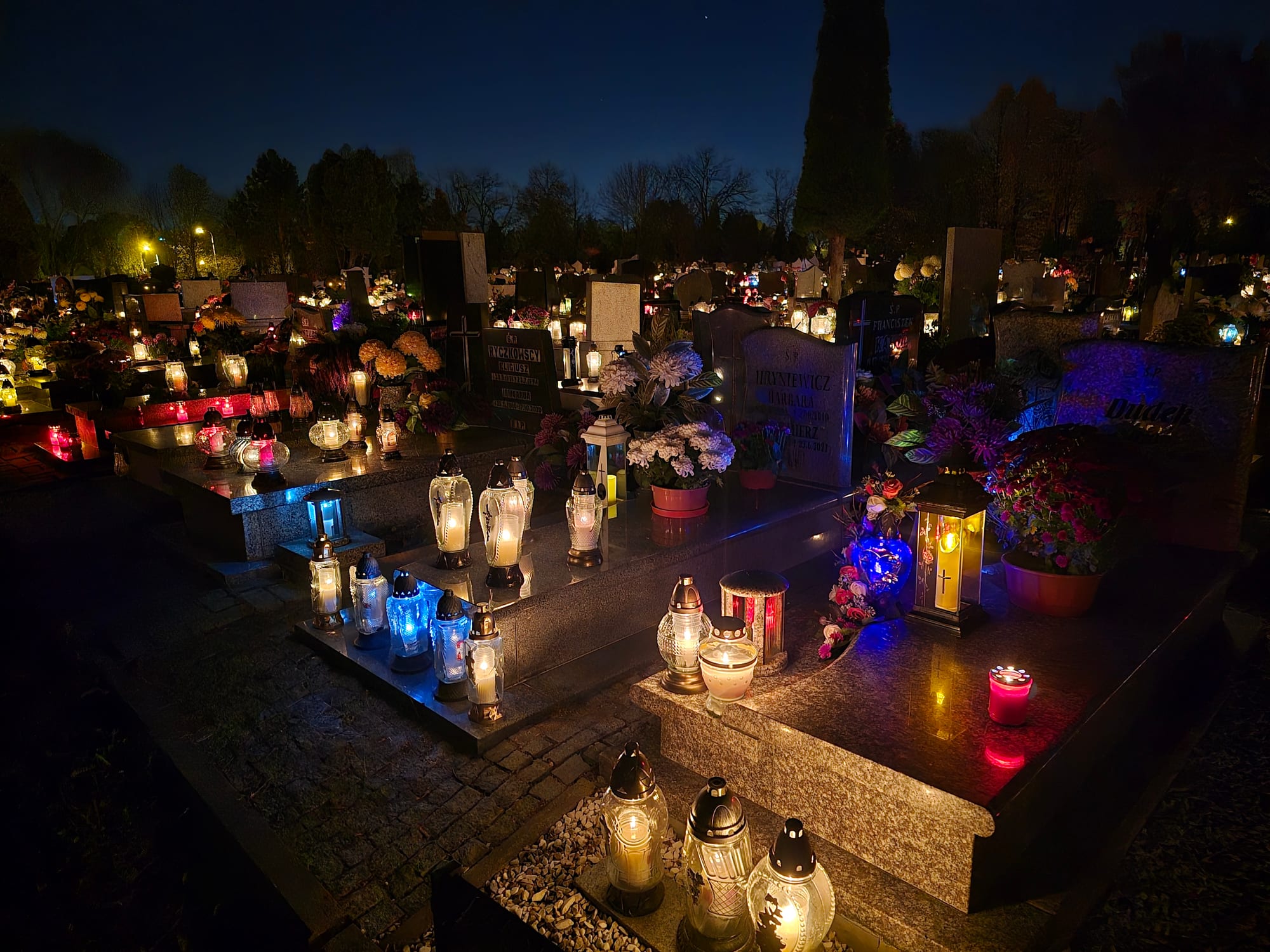
The most striking day in the calendar is All Saints' Day on 1 November, followed by All Souls' Day on the 2nd. Families travel long distances to their ancestral graves, sweep and scrub the stones, set down pots of chrysanthemums and light candles in glass lanterns, until cemeteries across the country glow with millions of flames after dark. It is a gathering as much as a commemoration, and people often light a candle on a neglected grave nearby or at the tomb of a writer or artist they admire. One firm rule applies: nobody blows out another person's candle, and a flame that the wind has put out is relit.
Personal milestones are celebrated with equal energy. Many Poles mark their imieniny, or name day, the feast of the saint whose name they bear, as much as their birthday, with wishes, flowers, small gifts and time together. Both occasions, like weddings, are greeted with "Sto lat", a song wishing the person a hundred years. A child's First Communion is also an important family occasion.
Weddings themselves are marathons. Many are still held in church, and on their return from the ceremony the newlyweds are traditionally greeted by their parents with bread and salt. On the way to the reception, friends may set up "passing gates" that the couple can only get through by handing the gatekeepers some vodka. Around midnight comes the oczepiny, in the old country ritual the moment when the bride's wreath was replaced with a married woman's cap, and celebrations may continue for two or three days.
Funerals are generally held with Catholic rites. Mourning continues long after the funeral in the regular care of the grave, which families visit on anniversaries and birthdays as well as in November.
Arts, crafts and music
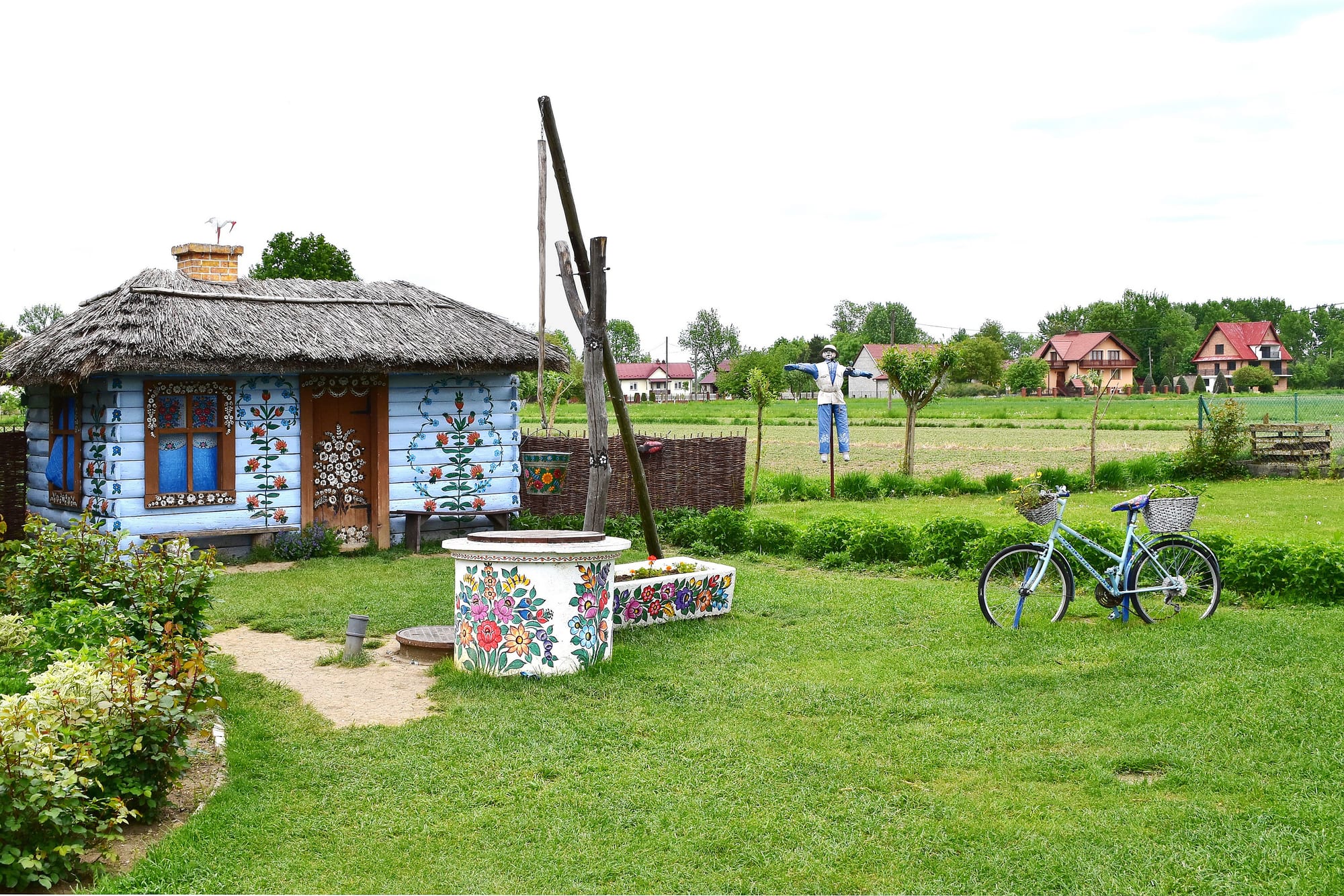
Poland's folk arts remain a visible part of everyday life and a growing source of pride. Wycinanki, intricate paper cut-outs traditionally made freehand with scissors, depict stars, flowers, cockerels and other birds in bright layers of coloured paper, with each region keeping its own style. Pisanki, decorated Easter eggs, are dyed with onion skins or other natural colours and scratched or wax-drawn with patterns. In the mountains of the south, the highlanders are known for carved wood, embroidery and a distinctive music and dance tradition. In the village of Zalipie, cottages and even wells are painted with bright floral designs. Hand-decorated pottery from Bolesławiec, patterned with small stamps and brushes, is one of the country's best-known crafts.
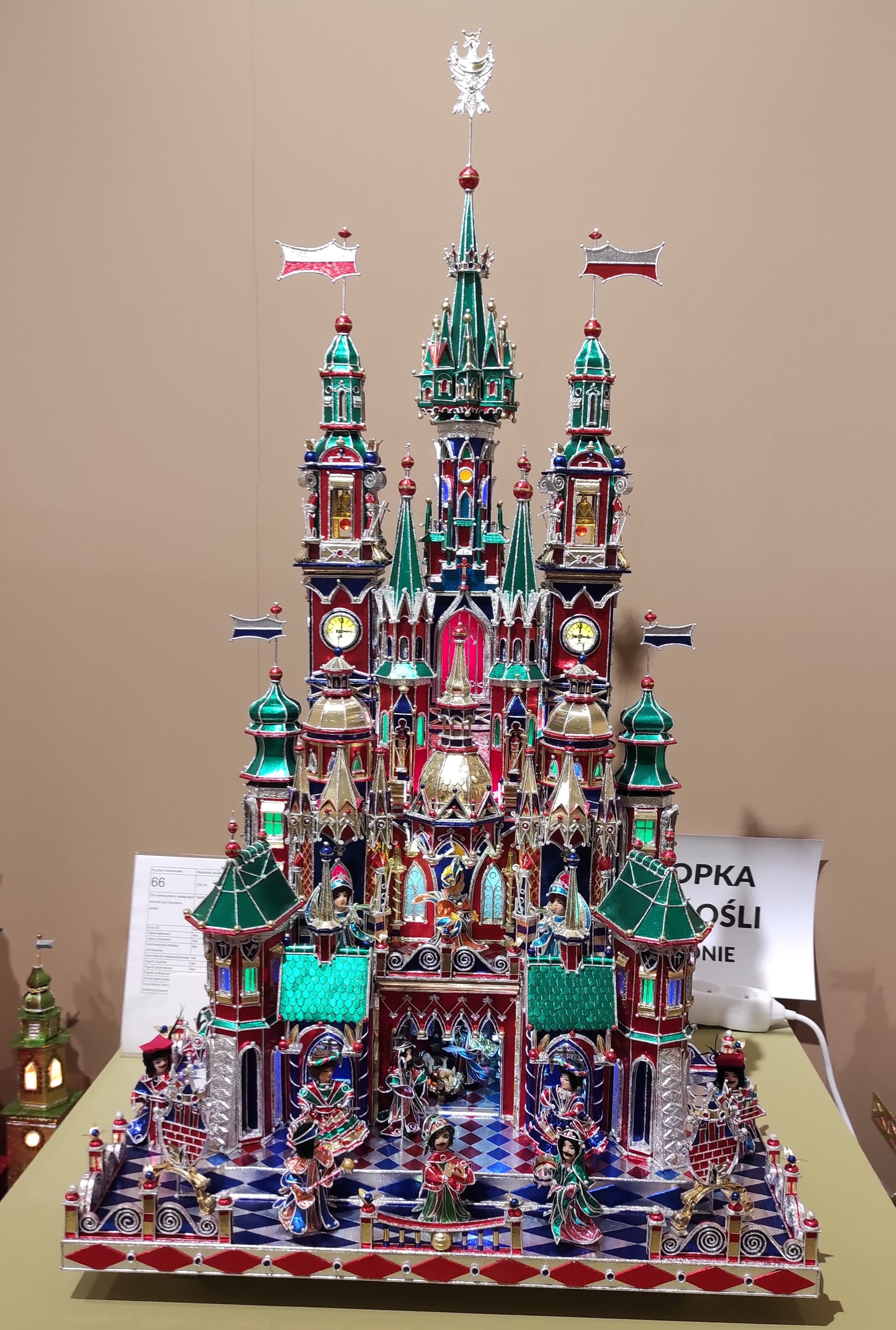
Several traditions are recognised by UNESCO as intangible cultural heritage. The Kraków szopka, inscribed in 2018, is a glittering nativity crib built as a model of the city's churches and towers, with figures drawn from history and current events alongside the Holy Family; on the first Thursday of each December, makers carry their creations to the city's main square to present them. The polonaise, inscribed in 2023, a stately processional dance in which couples follow the lead pair through a series of figures, is now closely linked with the ball held for final-year secondary school pupils, where it opens the evening.
Music holds a special place, above all the work of Fryderyk Chopin, composer of many polonaises and mazurkas. The International Chopin Piano Competition, held in Warsaw every five years, is one of the most prestigious in the world and is followed closely across the country.
Dos and don'ts for visitors
- Do shake hands firmly with direct eye contact, and greet women and older people first.
- Do use Pan or Pani with a surname until invited to switch to first names.
- Do arrive on time when invited to a home, bring a small gift, and offer to take off shoes at the door.
- Do give flowers in odd numbers and unwrapped, and avoid chrysanthemums, which belong to cemeteries.
- Do decline food or drink clearly and firmly if the answer really is no; a hesitant refusal will be overruled.
- Do stand for a toast if the host stands, and keep eye contact while raising a glass.
- Don't blow out, move or tidy away candles on other people's graves, especially around All Saints' Day.
- Don't point with a finger or keep hands in pockets while talking, and leave criticism of Poland to Poles.
What to take away
Polish customs can seem formal at first, but most of them lead back to the same generous instinct — to make room at the table, and in memory, for everyone who belongs there, and for the unexpected guest as well.