History · Philippines
The Philippines: The Islands in Between
An archipelago of 7,000 islands — 300 years under Spain and a name from a Spanish king, a revolution cut short by American conquest, a brutal Japanese occupation, and a democracy repeatedly strained by dictatorship and dynasty
By Worldlore Editorial · 19 September 2026
A country named for a king it never met
The Philippines is an archipelago of some 7,600 islands off Southeast Asia, with about 115 million people, most of them Catholic — the legacy of three centuries of Spanish rule — but with a large Muslim population in the south that predates and resisted that rule. The country's name comes from Philip II of Spain. Its modern history is unusual in the region: colonised first by Spain, then by the United States, then briefly by Japan, and independent only since 1946, with a democracy that has twice been overturned from within.
A short history
- to 1500s
Barangays and sultanates
Coastal chiefdoms; Islam spreads from Sulu and Mindanao.
- 1521
Magellan
The explorer reaches the islands and is killed on Mactan.
- 1565–1898
Spanish rule
Governed from Manila via Mexico; mass conversion to Catholicism.
- 1896
The revolution
The Katipunan rises against Spain; Rizal is executed.
- 1898
The American takeover
Spain cedes the islands to the US for $20 million.
- 1899–1902
The Philippine–American War
Hundreds of thousands of Filipinos die.
- 1935–1946
Commonwealth and war
Self-rule, then Japanese occupation, then independence.
- 1965–1986
The Marcos era
Martial law from 1972; plunder and repression.
- 1986
People Power
The EDSA revolution ousts Marcos.
- 2022
The return
Ferdinand Marcos Jr is elected president.
Before Spain
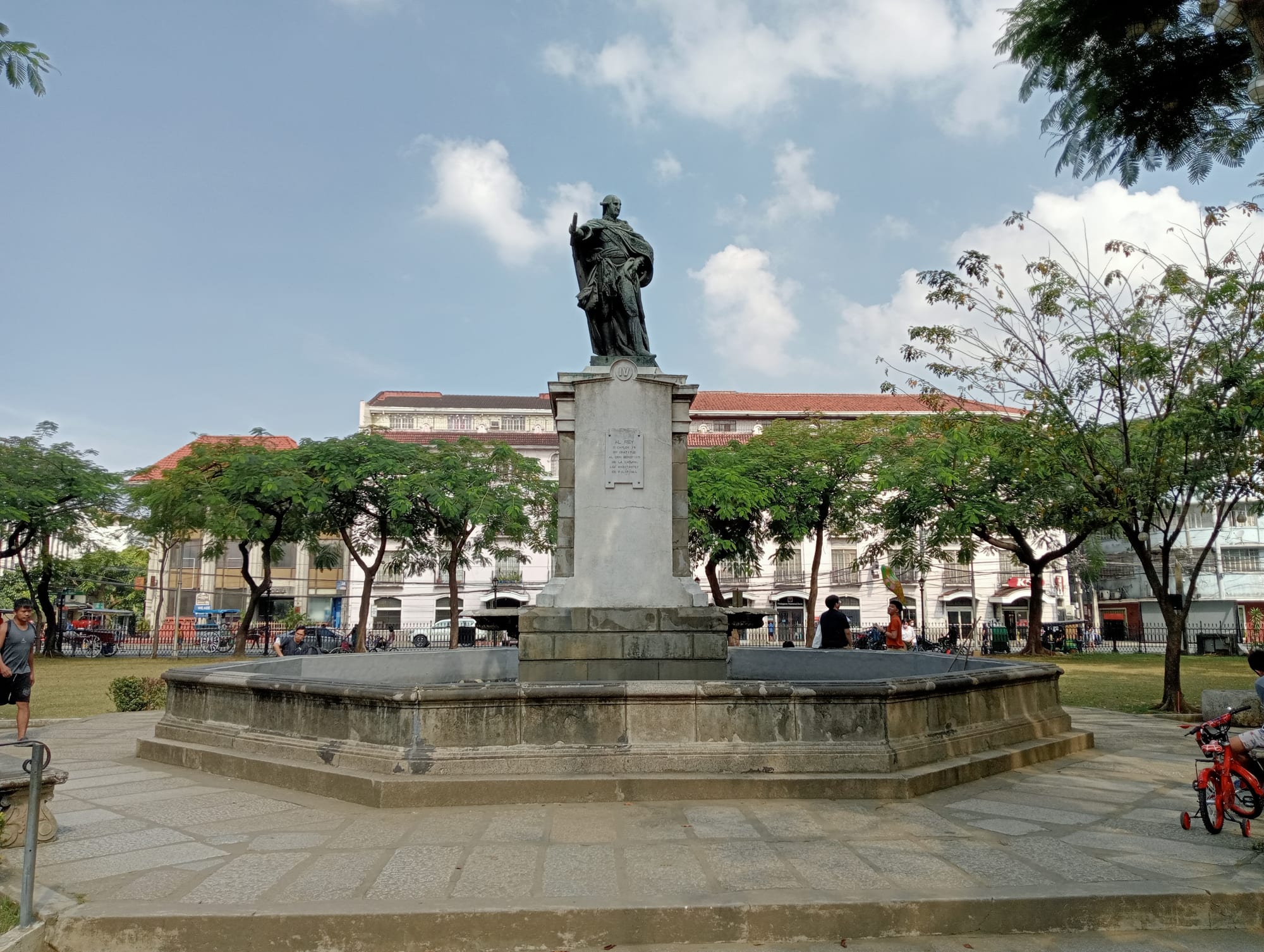
Filipino societies were organised in barangays — kin-based coastal settlements under a datu — trading with China, the Malay world and beyond. From the 14th century Islam spread up from the south, and the sultanates of Sulu and Maguindanao became powerful states. In 1521 Ferdinand Magellan's expedition made landfall, claimed the islands for Spain, and lost Magellan himself in a fight with the chief Lapu-Lapu on Mactan. Permanent Spanish settlement began in 1565, and Manila was founded in 1571 as the western terminus of the galleon trade that carried Mexican silver to China and Chinese goods to the Americas.
Revolution and the Americans
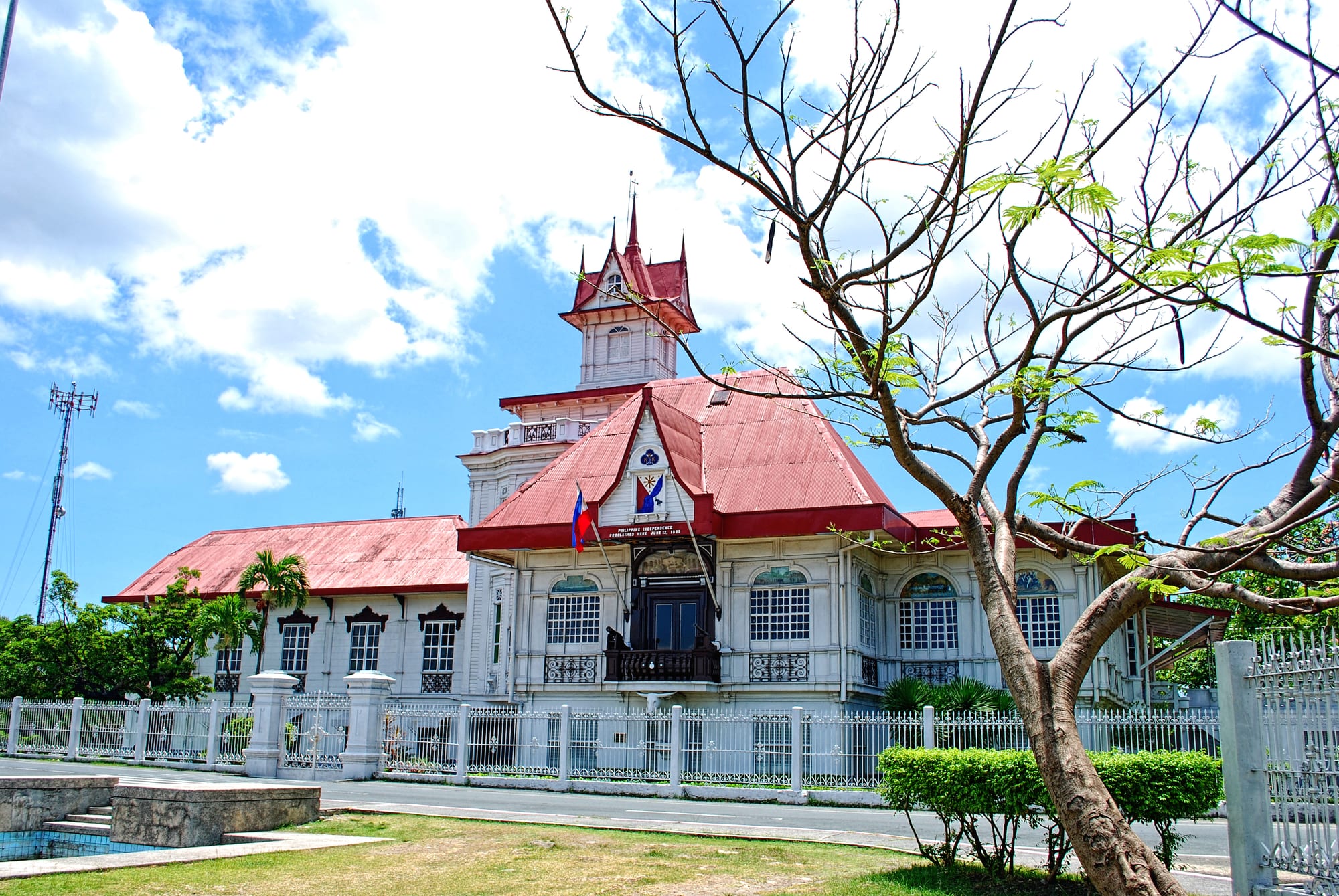
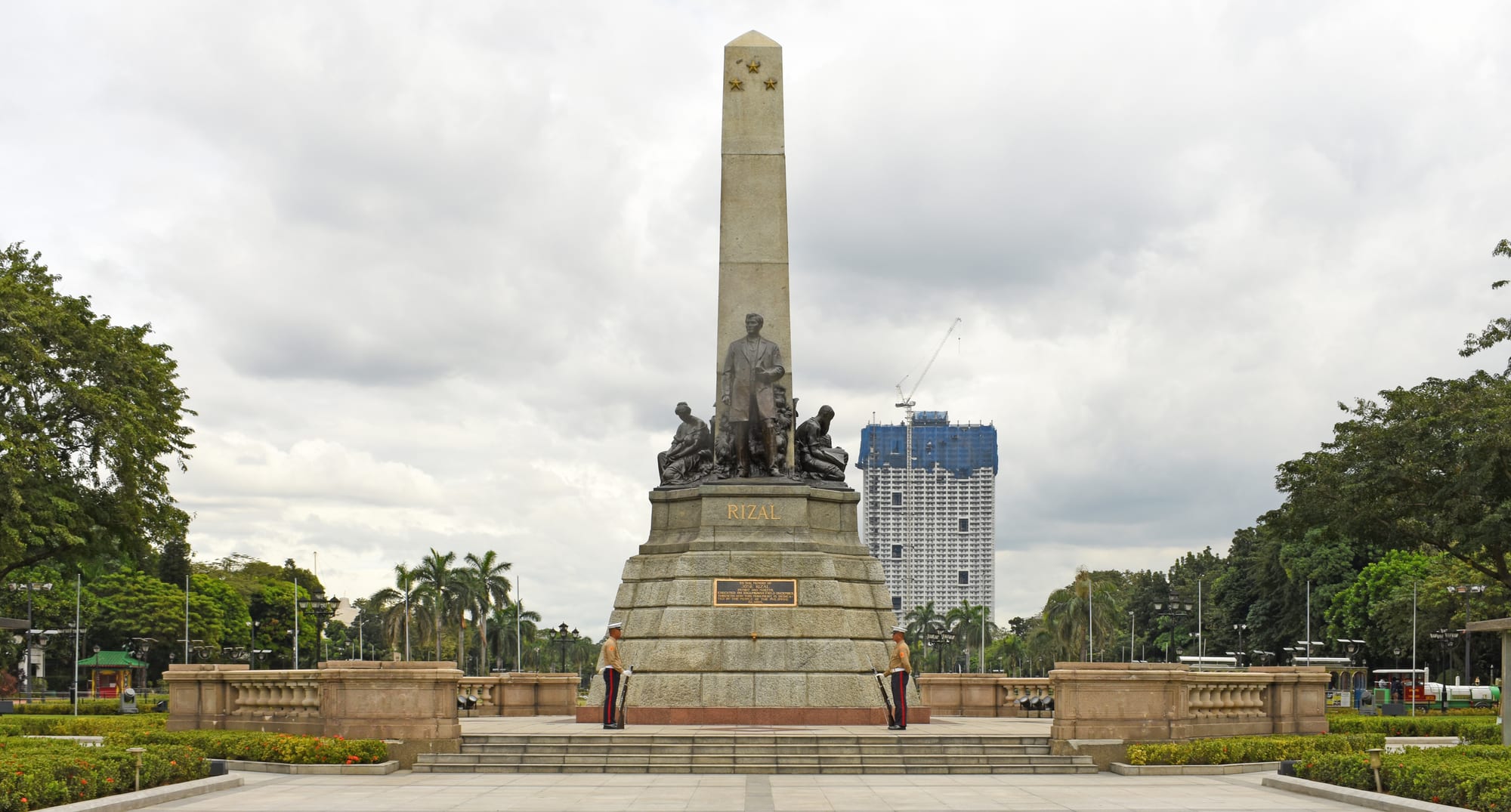
By the late 19th century a Filipino national consciousness had formed, articulated by educated "ilustrados" such as the writer José Rizal, whose novels attacked clerical abuses. Rizal's execution in December 1896 turned him into a martyr of the revolution already begun by the secret society Katipunan. As the revolutionaries gained ground, the Spanish–American War broke out; the US destroyed the Spanish fleet in Manila Bay, and by the 1898 Treaty of Paris Spain sold the Philippines to the United States. Filipino leaders had already declared independence; the US refused to recognise it, and the Philippine–American War followed. It lasted until 1902 (longer in the Muslim south) and killed an estimated 200,000 or more Filipinos, many from war-induced famine and disease.
American rule, war, independence
The United States built a school system in English, a public-health apparatus, and elective institutions, while keeping economic and military control and favouring a landowning elite. A Commonwealth with a Filipino president was established in 1935 as a ten-year step to independence. Japan invaded in December 1941; the occupation was harsh, resistance was widespread, and the 1945 battle to retake Manila devastated the city and killed some 100,000 civilians. The Philippines became fully independent on 4 July 1946, retaining close and unequal ties to the US, including large military bases.
Marcos, and after
Ferdinand Marcos, elected in 1965, declared martial law in 1972 rather than leave office, ruling for 14 more years. His government jailed, tortured and killed thousands of opponents, borrowed and stole on an enormous scale — estimates of the family's plunder run to billions of dollars — and left the economy in crisis. The 1983 assassination of the opposition leader Benigno Aquino at Manila airport galvanised resistance; after a fraudulent 1986 election, a military mutiny and massive street crowds on EDSA avenue, backed by the Catholic Church, forced Marcos into exile and made Aquino's widow Corazon president.
The Philippines now
The post-1986 republic restored democracy and a free press but not stability: it has seen coup attempts, another president ousted (Joseph Estrada, 2001), a long communist insurgency and a Moro separatist conflict in Mindanao that a 2014 peace deal has partly settled with an autonomous Bangsamoro region. Rodrigo Duterte's presidency (2016–22) featured a "war on drugs" in which thousands were killed by police and vigilantes, now under investigation by the International Criminal Court. In 2022 Ferdinand Marcos Jr won the presidency by a wide margin, returning the family to Malacañang 36 years after it was driven out.
What the Philippines carries
The Philippines was made a single country by Spain and a democracy by the United States, and it carries the marks of both — a Catholic majority, a legal and educational system in a borrowed language, a landed elite with roots in the colonial order, and a Muslim south that neither coloniser fully absorbed. The 1986 People Power revolt is the country's proudest modern moment; the 2022 election of a Marcos is a measure of how contested its memory of that period has become.