Culture & Customs · Philippines
Philippines: Mano, Fiesta and the Dawn Mass
A mostly Catholic nation with deep Muslim and Indigenous traditions, where elders are greeted with a hand pressed to the forehead, guests are never refused food, and Christmas begins with nine Masses before dawn
By Worldlore Editorial · 30 September 2026
It is still dark on the morning of 16 December. Families walk through quiet streets past star-shaped lanterns glowing in the windows, and the church fills for the first of nine Masses held before dawn, or in some parishes late at night, known together as Simbang Gabi. The series ends on Christmas Eve with the Misa de Gallo, the Rooster's Mass. Afterwards, stalls in the churchyard sell bibingka and puto bumbong, rice cakes eaten with hot chocolate or ginger tea, and the talk turns to whether everyone will manage all nine: those who do, it is said, will have their wish granted. The custom dates back to the seventeenth century, when early Masses let farmers attend church before heading to the fields. It captures much of Filipino life in a single scene: devout, communal, patient and warmly sociable.
Faith, identity and values
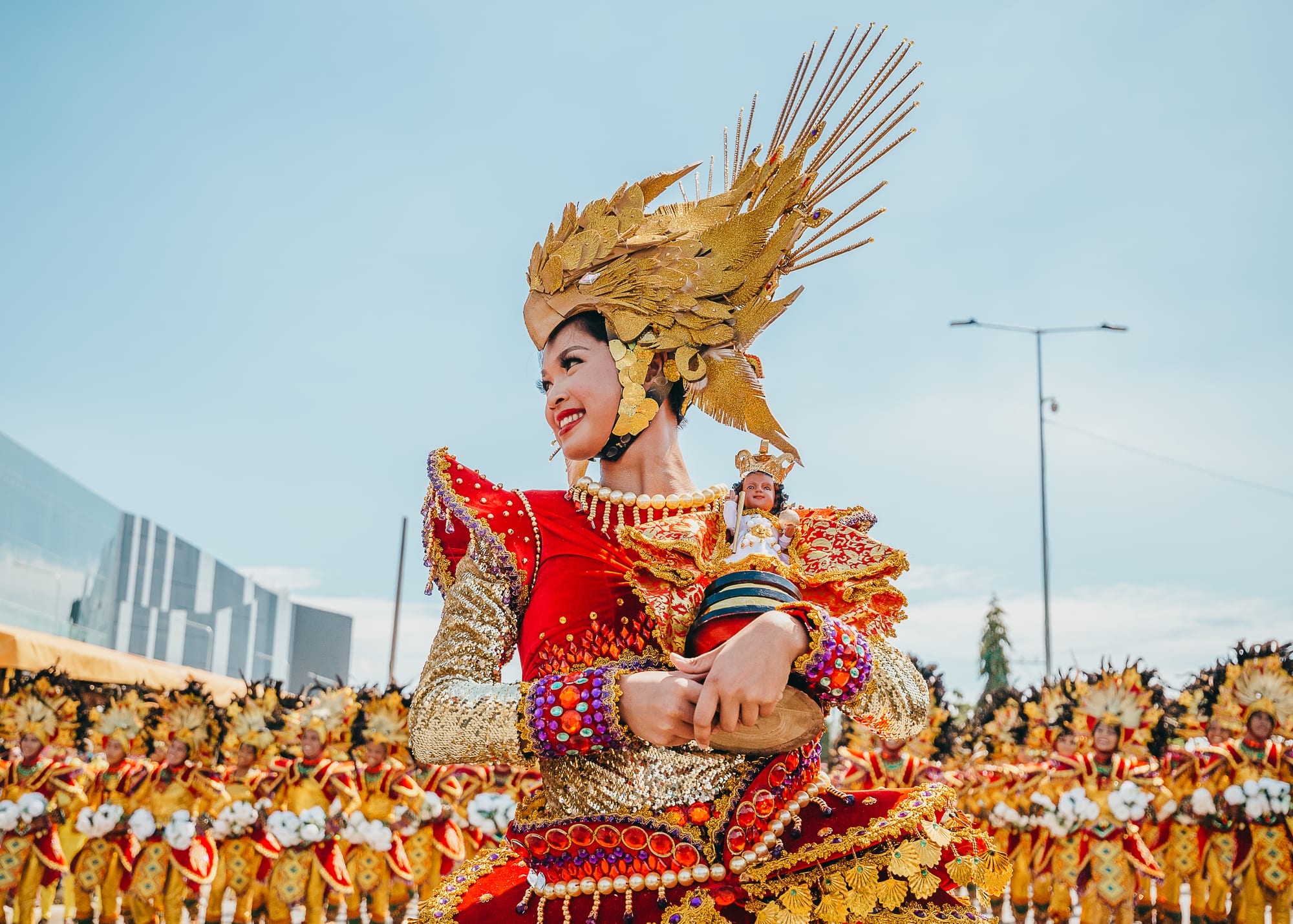
The Philippines is one of the most strongly Catholic countries in the world. In the 2020 census, 78.8 per cent of the population identified as Roman Catholic, 6.4 per cent as Muslim and 2.6 per cent as members of the Iglesia ni Cristo, a church founded in the Philippines, with smaller numbers belonging to the Seventh-day Adventists, the Aglipayan Church and other Christian groups. Although church and state are formally separate, Catholicism still plays a prominent part in political and social life, and Catholic teaching shapes widely held values on the sanctity of life and respect for hierarchy. Each town and village honours its patron saint with a fiesta that joins Mass with feasting and a chance for the whole community to come together.
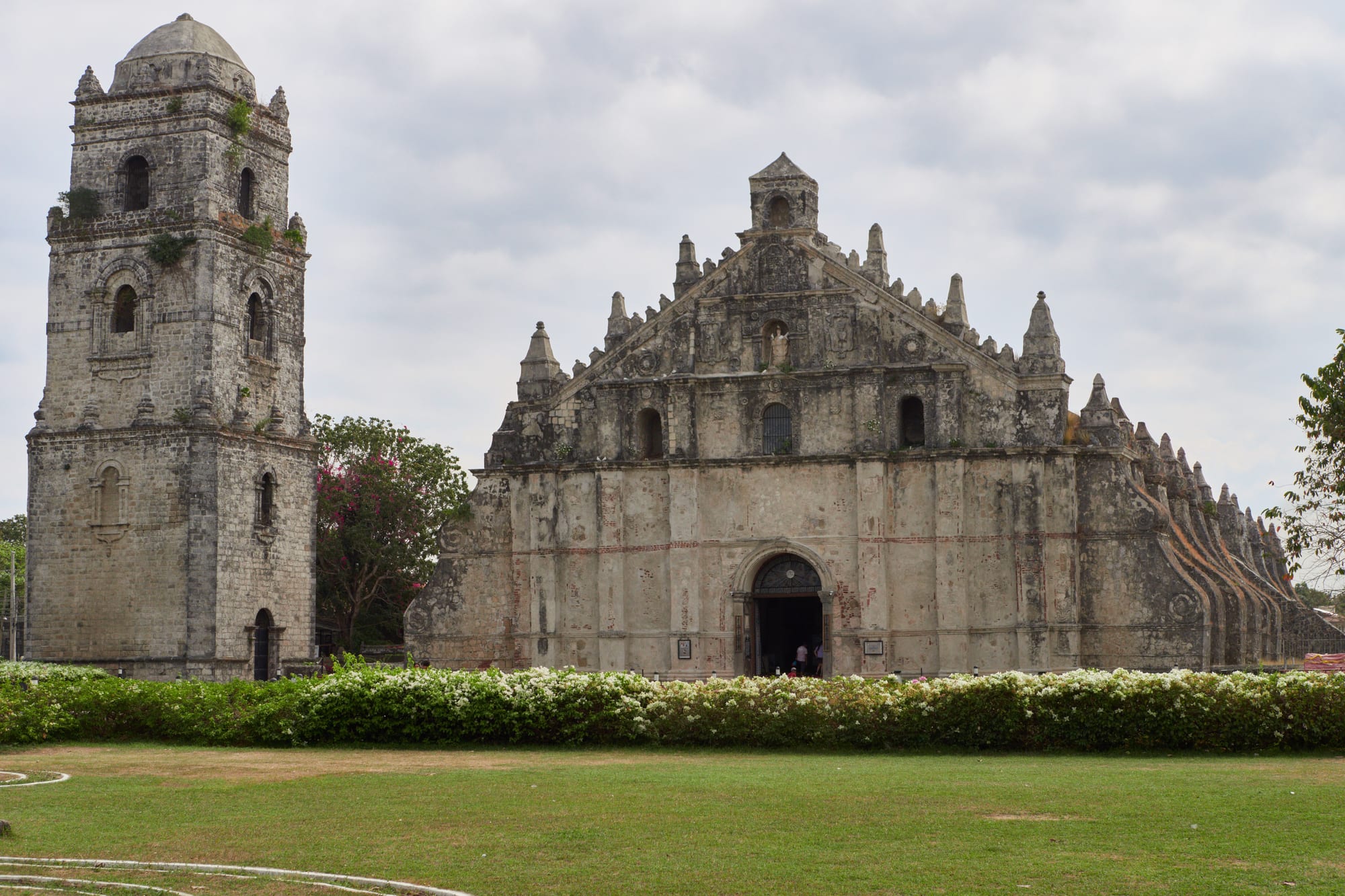
Islam reached the southern islands from neighbouring parts of Southeast Asia, including present-day Malaysia and Indonesia, and most Filipino Muslims, known as Moros, live in Mindanao, the Sulu archipelago and Palawan. Most follow Sunni Islam, which in the Philippines has absorbed some local elements drawn from older local custom. Many Indigenous peoples also keep their own belief systems and rituals alive, from the harvest chants of the Ifugao in the northern mountains to the thanksgiving rituals of the Subanen, which UNESCO has listed as in need of urgent safeguarding.
Several ideas run through social life across these communities. Hiya, often translated as shame, refers more deeply to a sense of self, propriety and respect, and much behaviour is aimed at sparing others embarrassment. Kapwa describes a shared identity that binds people together regardless of wealth or status, while bahala na, "come what may", expresses a widespread belief that whatever happens is part of God's will. Loyalty lies first with the family, then with the home province or town. Relationships are ordered by age and status, and elders, including the lola or grandmother, often hold great authority within the family.
Greetings and meeting people
Among men, a soft handshake with a smile is the usual greeting; among women, a smile and a wave are more common, and close female friends and relatives exchange beso-beso, a touch of cheek to cheek. The most distinctive greeting is the mano. A younger person takes the hand of an elder, bows and presses it lightly to their own forehead, a sign of respect and a way of receiving the elder's blessing.
Titles are essential, and elders are rarely addressed without one. Older people may be called Ma'am or Sir, an older man of the same generation Kuya and an older woman Ate, and grandparents Lolo and Lola. Family terms such as tita, aunt, are extended to distant relatives and even to family friends. The little word po is added to sentences when speaking to elders or people of higher status, and is one of the simplest ways to show respect.
Communication tends to be diplomatic, humble and indirect, with the aim of preserving dignity on all sides. A blunt "no" is rare, and a polite refusal may be wrapped in something that sounds much softer. Laughter does many jobs: it expresses joy, but it can also ease tension or cover embarrassment. Filipinos often point with their lips, beckon with the palm facing down and the fingers waved inwards, and attract attention with a short "psst". Standing with hands on the hips can signal anger. Frank remarks about someone's weight or appearance are common and are not generally meant to hurt.
Hospitality and being a guest
Hospitality is counted among the core Filipino virtues, and a guest can expect to be looked after. Shoes are usually removed before entering a home, and the host may offer slippers to wear inside. Refreshments will be offered almost at once, and refusing them is considered impolite, so it is best to accept at least a little. Complimenting the best dishes or the finest things on display is a gracious way of acknowledging the effort that has gone into welcoming a visitor.
At the table, meals are eaten with a spoon and fork, or with the hands for some dishes, and hosts will make sure a guest has suitable cutlery. Leaning on the arms at the table is considered rude. Families may wait until every dish has arrived before serving, and some food is often set aside for anyone who arrives late. Filipinos tend to hold back from taking the last serving when guests are present. Someone who is eating may invite a passer-by to join them; the offer is a courtesy rather than a literal invitation.
Gifts are chosen with care and presentation matters, so they are usually well wrapped, and they are generally not opened in front of the giver. Time is treated flexibly in social life, an attitude often called "Filipino time", although punctuality is observed for formal business meetings and appointments.
Festivals and life's big moments
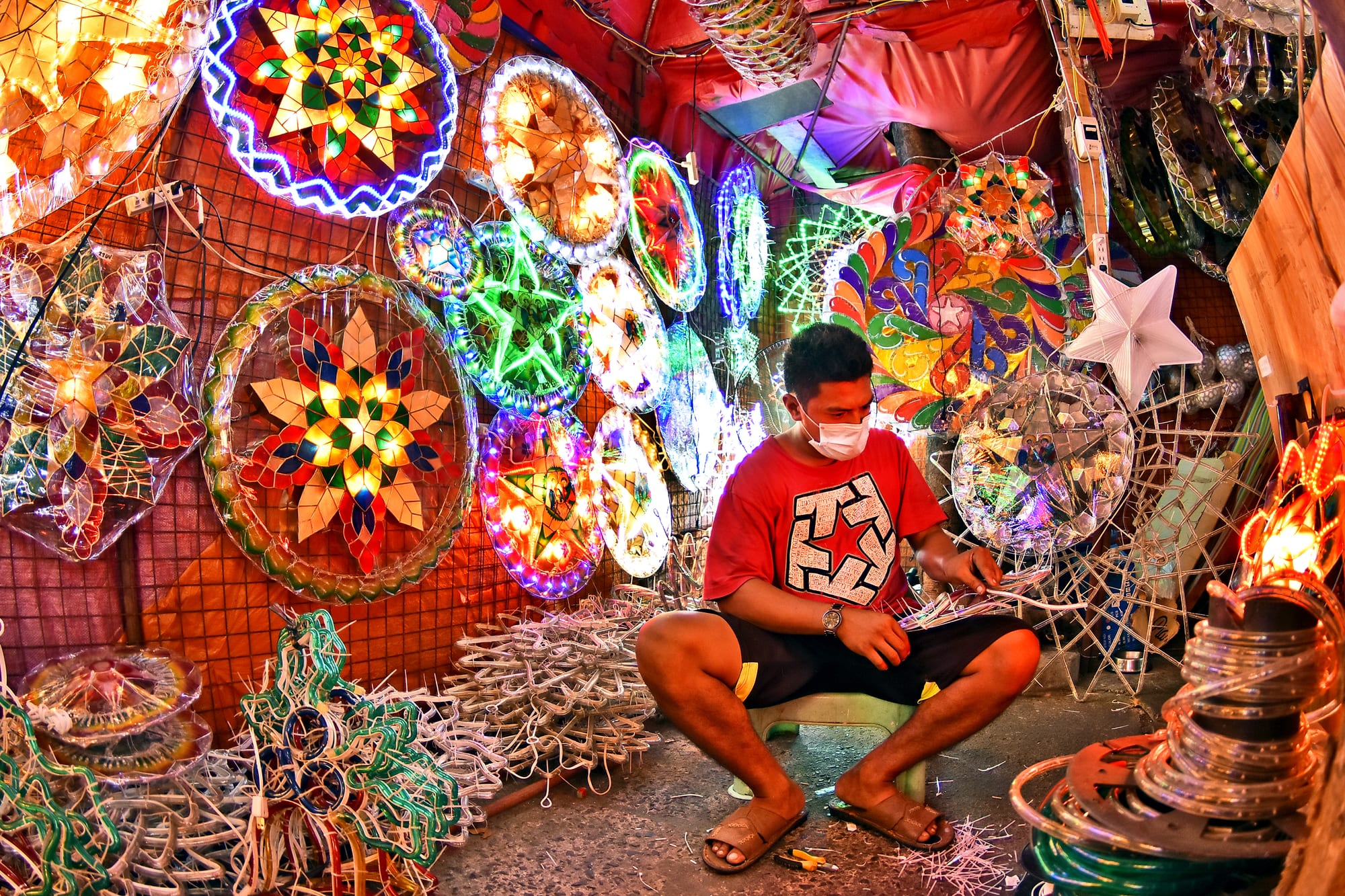
The festive year is dominated by the Christian calendar. At Christmas, the parol, a five-pointed star lantern, appears in windows and streets. It represents the Star of Bethlehem, which guided the Magi, and it once lit the way for worshippers walking to the early morning and midnight Masses. Traditional parols were made from bamboo sticks covered in coloured paper, while finer versions use translucent capiz shell, and today many glow with electric lights.
Holy Week is observed with equal devotion. The pabasa is the chanting of the Pasyon, the verse story of Christ's life and suffering introduced during the Spanish era. On Holy Thursday, many people make the Visita Iglesia, visiting seven churches in turn. The senakulo re-enacts the Passion with actors and props, from the Last Supper to the crucifixion, and processions carry statues of Christ and the saints through the streets. Before sunrise on Easter Sunday comes the salubong, a staged meeting of the risen Christ and his mother, at which the veil of mourning is lifted from the statue of Mary.
On 1 November, families gather at cemeteries and memorial parks to light candles and pray for their departed relatives, in the observance known as Undas. Remembrance of the dead continues through the year of mourning. After a death, the wake traditionally lasts for several days, with relatives and friends keeping vigil beside the deceased before the burial. Prayers continue until the ninth day, the pasiyam, when family and friends gather to pray, with refreshments served, and a further observance is held on the fortieth day.
Weddings, most often held in church, bring together a large entourage. Principal sponsors, known as ninong and ninang, stand with the couple, and secondary sponsors are given particular roles in the ceremony, each responsible for the candle, the veil or the cord, while coin bearers carry the wedding coins. Family life more broadly stretches well beyond the household, with several generations often living together and children expected to show respect to their elders at all times.
Arts, crafts and music
Some of the country's oldest traditions are sung. The Hudhud of the Ifugao is a body of more than 200 chants, each divided into some 40 episodes, performed during rice sowing and harvest and at funeral wakes. A complete recitation can last for several days. The lead narrator is usually an elderly woman, answered by a chorus, and the chants carry ancestral history, customary law and religious belief. Both the Hudhud and the Darangen are on UNESCO's list.
Textiles are another great art. Piña, woven by hand from the fibres of pineapple leaves, is considered the most esteemed traditional Philippine textile and is the preferred cloth for formal clothing; the skill is passed down within families, with children learning by working alongside their relatives. In the south, the T'boli weave t'nalak from fine abacá fibres, which are stripped, thinned and dyed by hand before weaving. The weaving alone can take up to two months. The master weaver Lang Dulay, who knew around 100 designs with names such as butterfly, clouds and hair, was named a National Living Treasure in 1998 and passed her techniques on to her grandchildren and students.
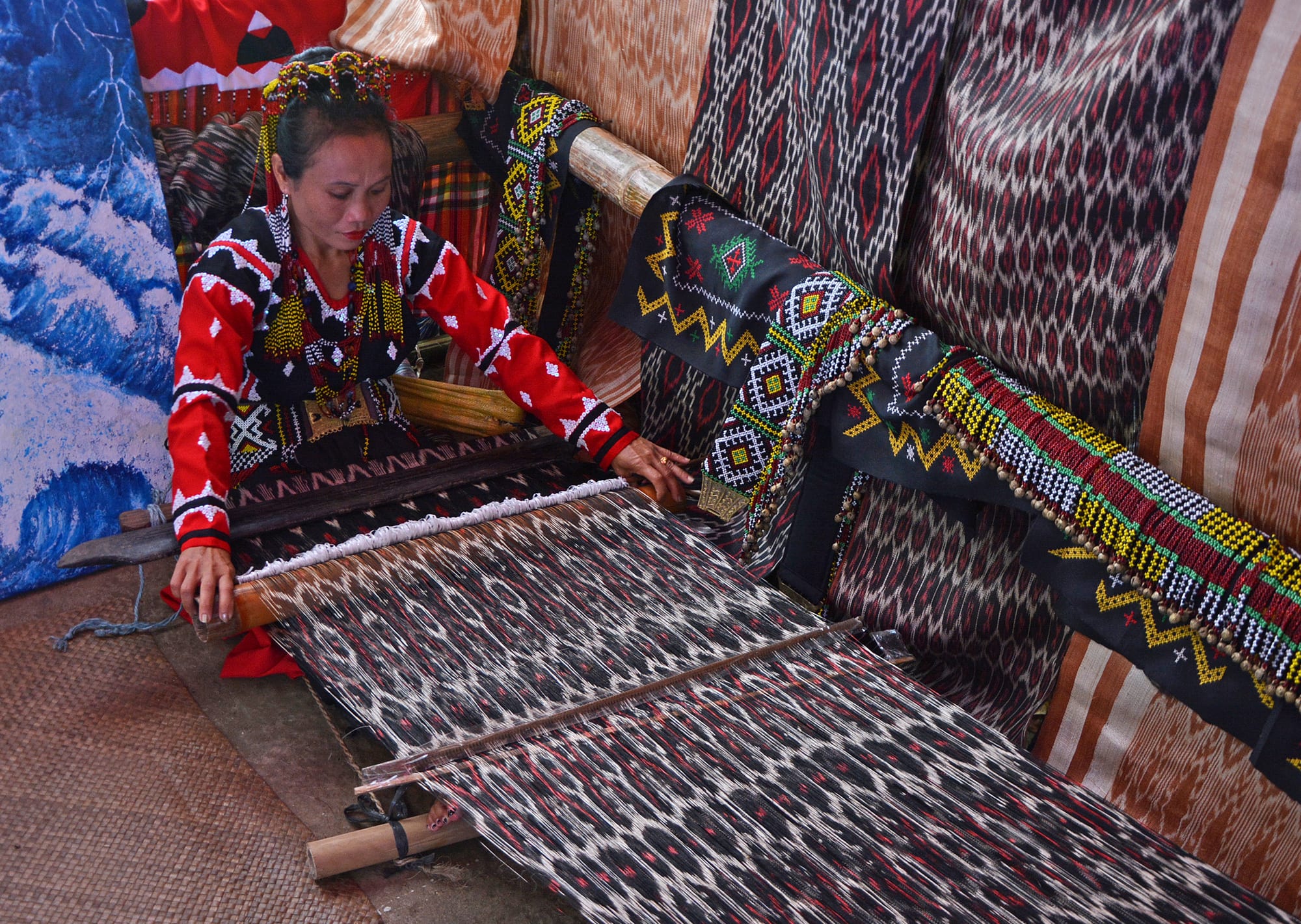
These arts are kept alive in part through the Schools of Living Traditions, community-based programmes that provide training in traditional skills such as weaving. UNESCO has recognised the programme as a model of good safeguarding practice.
Dos and don'ts for visitors
- Do check the latest government travel advice before any trip; governments advise against all travel to western and central Mindanao and the Sulu Archipelago.
- Do use titles such as Ma'am, Sir, Kuya or Ate, and add po when speaking to elders.
- Do take off shoes when entering a home, and accept at least some of the refreshments offered.
- Do compliment a host's food and hospitality, and hold back from taking the last serving.
- Don't show anger or raise a voice in public, especially in front of elders or seniors.
- Don't criticise the Philippines as a country, and approach questions about income or living standards with care.
- Don't carry or use illegal drugs: Philippine law punishes drug trafficking with life imprisonment, and possession can also bring long prison terms.
- Don't expect a gift to be opened on the spot; wrapping and presentation matter.
What to take away
Filipino customs rest on respect for elders, care for guests and a faith that fills the calendar, and visitors who greet warmly, eat what is offered and give the mano its due will find a welcome that feels like family.